Corvair Engine: The Complete Guide to America’s Most Controversial Air-Cooled Powerplant
What Is the Corvair Engine?
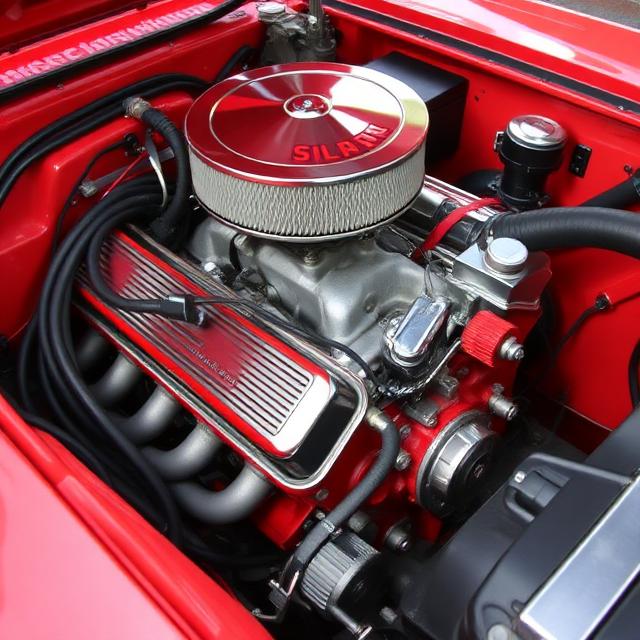
The Corvair engine is a rear-mounted, air-cooled, horizontally opposed six-cylinder internal combustion engine that powered Chevrolet’s Corvair automobile from 1960 to 1969. It stands as one of the most technically unique powerplants ever produced by an American automaker. Unlike the vast majority of American cars at the time — which used heavy, front-mounted V8 engines cooled by water — the Corvair engine was compact, lightweight, and cooled entirely by air.
General Motors engineers designed the corvair engine to bring a European flavor to the American market. The result was a flat-six layout, also called a boxer engine, where three cylinders sit on each side of the crankshaft and the pistons move horizontally in opposing pairs. This configuration lowers the engine’s center of gravity, contributes to better vehicle balance, and reduces vibration compared to inline or V-type engines.
Beyond its mechanical innovation, the Corvair engine became culturally significant — praised by engineers and enthusiasts, yet dragged into the center of one of America’s most famous automotive controversies. Today, the Corvair engine enjoys a dedicated cult following, and its influence can be felt in homebuilt aircraft, hot rods, kit cars, and Corvair-powered racing vehicles around the world.
“The Corvair was America’s most sophisticated automobile.” — Karl Ludvigsen, automotive historian and author
A Brief History of the Corvair Engine
Origins: GM’s Bold Experiment in the Late 1950s
General Motors conceived the Corvair project in the mid-1950s as a direct response to the growing popularity of European compact cars — particularly the Volkswagen Beetle, which had also adopted a rear-mounted, air-cooled engine. GM’s chief engineer Ed Cole championed the Corvair’s unconventional design philosophy. The goal was simple but ambitious: create a small, efficient, American-made car with a distinctive European soul.
The Corvair debuted in 1960 as a 1960 model year vehicle, and its engine was among the boldest decisions GM had made in years. The flat-six engine displaced 140 cubic inches (2.3 liters) in its original form, producing a modest 80 horsepower. But this was just the beginning of an engine lineage that would grow considerably over the decade.
The Rise of the Turbocharged Corvair Engine
In 1962, Chevrolet made history by introducing the first turbocharged engine ever offered on an American production car — the turbocharged Corvair engine producing 150 horsepower. This was revolutionary for its era. Turbocharging was then considered exotic technology, familiar only in aircraft and racing applications. The turbocharged Corvair engine, offered on the Monza Spyder models, proved that Chevrolet wasn’t afraid to push boundaries.
The Ralph Nader Controversy
The Corvair’s story took a dark turn in 1965 when consumer advocate Ralph Nader published Unsafe at Any Speed, a book sharply critical of the Corvair’s handling characteristics. Nader argued the rear-engine, rear-wheel-drive layout and unique suspension setup made the car prone to oversteer and rollovers, especially in the hands of inexperienced drivers.
What many people don’t know, however, is that a subsequent investigation by the National Highway Traffic Safety Administration (NHTSA) concluded that the 1960–1963 Corvair’s handling was comparable to other contemporary vehicles. The 1964 and later Corvairs received a completely redesigned rear suspension that significantly improved their handling dynamics.
Despite the engineering vindication, sales fell sharply. Chevrolet discontinued the Corvair after the 1969 model year, ending a decade-long run of one of America’s most innovative automobiles.
The Corvair Engine’s Second Life
Far from dying with the car, the Corvair engine gained a second life in the enthusiast community. Hot rodders, kit car builders, and eventually homebuilt aircraft constructors recognized the engine’s unique advantages — its light weight, compact dimensions, balanced firing order, and surprising tunability. Today, organizations like William Wynne’s Corvair Authority actively support the continued use of the Corvair engine in experimental aircraft.
Corvair Engine Specifications: What Numbers Tell the Story? {#corvair-engine-specifications}
Understanding the corvair engine means understanding how it evolved over nearly a decade of production. Below is a comprehensive table of the major Corvair engine variants and their specifications.
Corvair Engine Specifications Table
| Year | Displacement | Compression Ratio | Horsepower | Torque | Induction |
|---|---|---|---|---|---|
| 1960–1961 | 140 cu in (2.3L) | 8.0:1 | 80 hp | 128 lb-ft | Single carb |
| 1960–1961 | 140 cu in (2.3L) | 8.0:1 | 95 hp | 132 lb-ft | Twin carb |
| 1962–1963 | 145 cu in (2.4L) | 8.0:1 | 102 hp | 136 lb-ft | Twin carb |
| 1962–1963 | 145 cu in (2.4L) | 8.0:1 | 150 hp | 210 lb-ft | Turbocharged |
| 1964–1965 | 164 cu in (2.7L) | 9.25:1 | 95 hp | 146 lb-ft | Twin carb |
| 1964–1965 | 164 cu in (2.7L) | 9.25:1 | 110 hp | 155 lb-ft | Twin carb |
| 1965–1966 | 164 cu in (2.7L) | 9.25:1 | 140 hp | 166 lb-ft | Four carb |
| 1965–1966 | 164 cu in (2.7L) | 8.0:1 | 180 hp | 232 lb-ft | Turbocharged |
| 1967–1969 | 164 cu in (2.7L) | 9.25:1 | 110 hp | 155 lb-ft | Twin carb |
| 1967–1969 | 164 cu in (2.7L) | 9.25:1 | 140 hp | 166 lb-ft | Four carb |
Key Corvair Engine Dimensions
- Engine type: Horizontally opposed (flat) 6-cylinder
- Cooling system: Air-cooled (no coolant, no radiator)
- Engine orientation: Rear-mounted, longitudinal
- Bore × Stroke (164 cu in): 3.4375 in × 2.938 in
- Engine weight: Approximately 366 lbs (complete)
- Firing order: 1-6-3-4-2-5
The 164 cubic inch engine (introduced for 1964) is widely considered the definitive Corvair engine. Its larger displacement, improved breathing, and better cooling made it more reliable and tuneable than the early 140/145 cubic inch units.
How Does the Corvair Engine Work?
Air-Cooled Technology Explained
One of the most fascinating aspects of the Corvair engine is its reliance on air cooling rather than liquid cooling. In a typical water-cooled engine, coolant circulates through passages around the cylinders and absorbs heat before passing through a radiator. The Corvair engine, by contrast, uses a belt-driven cooling fan that forces air over the cylinders and cylinder heads, which are cast with deep cooling fins to maximize surface area and heat dissipation.
This approach has several important advantages:
- Lighter weight — no radiator, water pump, thermostat, hoses, or coolant
- Simpler design — fewer components means fewer potential failure points
- Cold weather performance — no risk of coolant freezing
- Compact packaging — makes a rear-engine layout more feasible
However, air cooling also has trade-offs. The engine relies heavily on its tin cooling shrouding — a system of sheet metal baffles that directs airflow precisely where it’s needed. When this shrouding is damaged, missing, or improperly reinstalled, overheating becomes a serious risk. This is one of the most common causes of Corvair engine problems in the modern era.
The Flat-Six Configuration
The horizontally opposed layout means each of the six cylinders fires in a pattern that naturally cancels out many of the vibrations common to other engine configurations. The result is an engine that runs smoothly and relatively quietly for its era. The low, wide profile of the flat-six also contributes to a low center of gravity, which aids vehicle handling — the very opposite of what Nader’s critics alleged.
The carburetion system on most Corvair engines uses twin carburetors — one serving the three cylinders on each bank. Proper synchronization of these carburetors is essential to smooth, efficient operation and is one of the fundamental skills of Corvair engine maintenance.
Corvair Engine Models and Variants
The 80 hp and 95 hp Early Engines (1960–1961)
The original 140 cubic inch Corvair engines came in two versions. The single-carburetor 80 hp version was the base powerplant, while the twin-carburetor 95 hp version provided more spirited performance. Both engines used pushrod-operated overhead valves (OHV) — a tried-and-true layout that GM would employ across all Corvair engine generations.
The 102 hp and 150 hp Turbocharged Engines (1962–1963)
The displacement increase to 145 cubic inches for 1962 brought better low-end torque. More significantly, the introduction of the Spyder turbocharged Corvair engine producing 150 horsepower marked a watershed moment in American automotive history. The turbocharger used in these early engines was a relatively simple unit by modern standards, but it demonstrated the viability of forced induction for passenger cars.
The 164 CID Corvair Engine (1964–1969) — The Definitive Version
The 164 cubic inch Corvair engine is the most beloved and widely used variant among enthusiasts. It came in multiple states of tune:
- 95 hp — base engine with twin carburetors
- 110 hp — standard performance version
- 140 hp — high-performance version with four carburetors (two per bank)
- 180 hp — turbocharged version (1965–1966), the most powerful Corvair engine ever offered
The 140 hp and 180 hp engines are particularly sought after today. They represent the Corvair engine at its most refined and powerful, capable of 0-60 mph times in the low-to-mid 8-second range — respectable performance for a compact car of the 1960s.
Performance Upgrades for Your Corvair Engine
The Corvair engine’s inherent design lends itself well to performance modifications. A thriving aftermarket — supported by companies like Clark’s Corvair Parts, Corvair Ranch, and individual specialists — makes it possible to extract significantly more power from these engines.
Carburetion Upgrades
Improving fuel delivery is one of the most effective ways to increase Corvair engine performance:
- Weber carburetors — Replacing the original Rochester carbs with Weber DCOE side-draft units is a popular and highly effective upgrade. Properly jetted Webers can increase airflow and improve throttle response significantly.
- Holley two-barrel carburetors — A more affordable alternative that still improves on stock carburetion
- Proper synchronization — Before any carburetion upgrade, ensuring all carburetors are properly balanced is essential
Cylinder Head Porting and Polishing
The stock Corvair engine cylinder heads have relatively restrictive ports that respond well to professional porting and polishing. Enlarging and smoothing the intake and exhaust ports can increase airflow by 15–25%, translating to meaningful horsepower gains. Pairing ported heads with a performance camshaft further amplifies the benefit.
Camshaft Upgrades
Aftermarket camshafts designed specifically for the Corvair engine are available from several suppliers. A performance camshaft with increased lift and duration can add 15–30 horsepower to a well-prepared engine. Key considerations include:
- Intended use (street, track, or combined)
- Compression ratio compatibility
- Idle quality and drivability requirements
- Matching valve springs
Increasing Displacement — The Stroker Corvair Engine
Some builders go beyond bolt-on modifications and increase engine displacement through stroker kits — aftermarket crankshafts with longer stroke that increase the swept volume of each cylinder. Corvair engines have been built to displacements of 180, 200, and even over 220 cubic inches, producing well over 200 horsepower in naturally aspirated form.
Turbocharging the Modern Corvair Engine
Inspired by the original Spyder turbocharged Corvair engine, modern builders have created sophisticated turbo installations for the 164 cubic inch engines. Using modern turbocharger technology — far more advanced than what was available in 1962 — these setups can produce 250–300+ horsepower from the stock-displacement Corvair engine with appropriate supporting modifications.
Ignition Upgrades
The points-and-condenser ignition system used on vintage Corvair engines is reliable but primitive by modern standards. Replacing it with an electronic ignition system (such as those made by Pertronix) improves starting reliability, reduces maintenance requirements, and can improve fuel economy and performance.
Common Corvair Engine Problems and How to Fix Them {#common-corvair-engine-problems}
Like any vintage engine, the Corvair engine has known weaknesses that owners and restorers must understand. The good news is that most of these issues are well-documented and have established solutions.
Problem 1: Oil Leaks
Cause: The Corvair engine uses gaskets and seals that harden and crack with age. The pushrod tube seals — rubber O-rings that seal the tubes carrying oil from the crankcase to the valve train — are a particularly common source of leaks.
Solution: Replacing all pushrod tube seals during an engine rebuild or teardown is essential. Modern replacement seals made from Viton rubber last significantly longer than original materials. Regular inspection and re-torquing of the cylinder head fasteners also helps prevent oil leaks.
Problem 2: Overheating from Damaged Cooling Shrouding
Cause: The tin cooling shrouding that directs airflow over the Corvair engine cylinders is easily damaged, often missing pieces on neglected vehicles, and sometimes left off after engine work because owners don’t realize its importance.
Solution: Inspect and restore all cooling shrouding to factory condition. Never operate a Corvair engine without complete cooling tin in place. A cylinder head temperature gauge is an excellent addition to any Corvair to monitor thermal status in real time.
You can learn more about protecting your engine cover systems to understand why intact shrouding and covers are critical to air-cooled engine longevity.
Problem 3: Carburetor Synchronization Issues
Cause: The twin- or four-carburetor setup requires precise synchronization. Over time, carburetors drift out of balance, causing rough idle, poor fuel economy, and uneven power delivery.
Solution: Use a vacuum gauge or carburetor synchronization tool to balance the carburetors. This is a maintenance task that should be performed at least once per season on regularly driven Corvair engines.
Problem 4: Head Gasket Failures
Cause: Overheating — often caused by missing cooling tin — is the most common reason for Corvair engine head gasket failures. The aluminum cylinder heads expand rapidly under heat, stressing the gasket seals.
Solution: Address the root cause of overheating first. Use quality multi-layer steel (MLS) head gaskets when rebuilding. Apply proper torque sequences and values during reassembly.
Problem 5: Worn Valve Train Components
Cause: The hydraulic lifters, pushrods, and rocker arms in the Corvair engine can wear significantly in high-mileage or poorly maintained examples.
Solution: Inspect all valve train components during any major service. Replace worn lifters and pushrods with new stock or upgraded units. Properly adjust valve lash according to factory specifications.
Common Corvair Engine Problem Summary
| Problem | Severity | DIY Difficulty | Estimated Cost |
|---|---|---|---|
| Oil leaks (pushrod tube seals) | Medium | Moderate | $50–$150 |
| Overheating (cooling tin) | High | Easy | $100–$400 |
| Carburetor sync issues | Medium | Moderate | $0–$100 |
| Head gasket failure | High | Hard | $300–$800 |
| Worn valve train | Medium | Hard | $200–$600 |
Corvair Engine vs. Other Classic American Engines
How does the Corvair engine compare to its contemporaries? The comparison is illuminating because it highlights just how unconventional GM’s approach was.
Corvair Engine vs. Volkswagen Beetle Engine
| Specification | Corvair 164 (1964) | VW Beetle 1200 (1964) |
|---|---|---|
| Configuration | Flat-6 | Flat-4 |
| Displacement | 164 cu in (2.7L) | 72.7 cu in (1.2L) |
| Horsepower | 95–140 hp | 40 hp |
| Cooling | Air-cooled | Air-cooled |
| Mounting | Rear | Rear |
| Weight | ~366 lbs | ~209 lbs |
The Corvair engine was significantly more powerful and complex than the Beetle’s engine. Both shared the rear-engine, air-cooled philosophy, but the Corvair aimed to deliver American performance expectations within a European concept.
Corvair Engine vs. Chevrolet 283 V8
| Specification | Corvair 164 (1964) | Chevy 283 V8 (1964) |
|---|---|---|
| Configuration | Flat-6 | V8 |
| Displacement | 164 cu in (2.7L) | 283 cu in (4.6L) |
| Max Horsepower | 140 hp | 220 hp |
| Cooling | Air-cooled | Water-cooled |
| Weight | ~366 lbs | ~540 lbs |
| Engine Position | Rear | Front |
The V8 wins on raw power, but the Corvair engine wins on weight savings, packaging efficiency, and balance. The flat-six’s lighter weight contributed to the Corvair’s more neutral handling compared to the nose-heavy V8 cars of the era.
The Corvair Engine in Aviation
Perhaps no other application better illustrates the Corvair engine’s qualities than its use in homebuilt experimental aircraft. The aviation community’s adoption of the Corvair engine is a remarkable chapter in the engine’s story.
Why Pilots Love the Corvair Engine
The aviation community — particularly builders of Light Sport Aircraft (LSA) and Experimental/Amateur-Built (E-AB) aircraft — has embraced the Corvair engine for several compelling reasons:
- Favorable power-to-weight ratio — At approximately 1 horsepower per 2.5 lbs of engine weight, the Corvair engine is competitive with aircraft-specific engines in this class
- Proven longevity — Properly maintained Corvair engines routinely achieve 1,500–2,000+ hours of operation between rebuilds
- Parts availability — Decades of automotive production mean Corvair engine parts are widely available and affordable
- Community support — A dedicated network of Corvair aviation builders and technicians exists, centered around resources like William Wynne’s Corvair Authority
- Cost effectiveness — Complete, rebuilt Corvair engines can be acquired for a fraction of the cost of certified aircraft engines with similar power output
Converting a Corvair Engine for Aircraft Use
Converting a Corvair engine for aircraft use requires several key modifications:
- Propeller reduction drive — The engine’s crankshaft speed must be reduced for efficient propeller operation
- Dual ignition system — Aviation regulations and safety practices require redundant ignition
- Oil cooling enhancements — Aircraft operations can stress the oil system differently than automotive use
- Custom engine mounts — The engine must be adapted to the aircraft’s mounting structure
- Modified cooling arrangement — The engine’s cooling fan system must be adapted for the aircraft environment
The 5th bearing conversion is a critical safety modification for aviation use. It adds a support bearing to the crankshaft, significantly reducing the risk of crankshaft failure under the vibration loads specific to propeller-driven aircraft.
How to Buy a Corvair Engine Today
Whether you’re restoring a classic Corvair, building a kit car, constructing an experimental aircraft, or looking for a unique engine for a hot rod project, finding the right Corvair engine requires knowing where to look and what to look for.
Where to Find a Corvair Engine
- Corvair-specific swap meets — Events like the Corvair Society of America (CORSA) convention gather enthusiasts and vendors who deal in engines and parts
- Online marketplaces — eBay, Craigslist, and Facebook Marketplace regularly list Corvair engines and Corvair engine cores
- Corvair specialists — Dedicated businesses like Clark’s Corvair Parts, Corvair Ranch, and others sell rebuilt and reconditioned Corvair engines
- Salvage yards — Some salvage yards still have Corvair engines, though they’re increasingly rare
What to Look for When Buying a Corvair Engine
Before purchasing any used Corvair engine, inspect or verify the following:
- Compression test results — All six cylinders should read within 10% of each other
- Oil pressure at operating temperature — Should be at least 30 PSI at idle
- Cooling tin completeness — Verify all shrouding is present and undamaged
- Pushrod tube seal condition — Look for oil weeping around the tubes
- Carburetor condition — Check for corrosion, worn throttle shafts, and float issues
- Cooling fan and belt condition — Critical for air-cooled operation
- Oil analysis results — If available, wear metal analysis reveals internal engine condition
Corvair Engine Price Ranges
| Engine Condition | Approximate Price Range |
|---|---|
| Core (rebuildable) | $100–$500 |
| Running, unrestored | $300–$1,000 |
| Professionally rebuilt, standard | $1,500–$3,000 |
| Rebuilt, high-performance | $3,000–$6,000+ |
| Aviation-converted, ready-to-fly | $5,000–$10,000+ |
Corvair Engine Case Studies
Case Study 1: The 200 HP Street Corvair Engine
Owner: Mike T., Ohio
Base engine: 1966 164 cu in, 140 hp four-carb unit
Modifications: Ported and polished cylinder heads, performance camshaft, dual Weber 40 DCOE carburetors, electronic ignition, high-flow exhaust system
Result: 205 hp at the crankshaft, strong drivability on 91-octane pump fuel, consistent 13-second quarter-mile times
Mike reports: “The Corvair engine responds to modifications better than almost any other vintage engine I’ve worked with. The flat-six layout means everything is accessible and the potential for improvement is enormous.”
Case Study 2: Corvair Engine in a Zenith Aircraft
Builder: Dave P., Texas
Aircraft: Zenith STOL CH750
Engine: Converted 164 cu in Corvair engine, 5th bearing mod, dual ignition
Power output: 110 hp (converted, derated for reliability)
Hours flown: 847 hours over 6 years at time of reporting
Dave notes: “I chose the Corvair engine for cost and parts availability. I’ve had zero unscheduled maintenance events in 847 hours. The engine’s reliability has exceeded my expectations.”
Corvair Engine Citation and Authority
The Corvair engine is well-documented in automotive engineering literature. Primary technical references include:
- The Corvair service manuals published by General Motors Corporation (1960–1969)
- Corvair by Chevrolet: Experimental and Production Cars 1957–1969 by Karl Ludvigsen
- William Wynne’s technical documentation at the Corvair Authority, the leading resource for Corvair engine aviation conversions
- The Corvair Society of America (CORSA) technical archives, maintained at corvaircorsa.org
- Corvair engine — Wikipedia, which provides a well-sourced technical overview of the engine’s development history
FAQs About the Corvair Engine {#faqs-about-the-corvair-engine}
What is a Corvair engine?
A Corvair engine is a rear-mounted, air-cooled, horizontally opposed six-cylinder engine produced by General Motors for the Chevrolet Corvair from 1960 to 1969. It was unique among American production car engines of its era for its air-cooling, flat-six layout, and rear placement.
How much horsepower does a Corvair engine produce?
Depending on the variant, a stock Corvair engine produces between 80 and 180 horsepower. The base 80 hp engine was offered in 1960–1961, while the turbocharged 180 hp engine was the most powerful factory option, available in 1965–1966. Modified and rebuilt Corvair engines can produce well over 200 horsepower.
Is the Corvair engine reliable?
Yes — a properly maintained and correctly assembled Corvair engine is quite reliable. Many engines have achieved well over 100,000 miles in automotive use and 1,500+ hours in aviation applications. The key to reliability is maintaining the cooling tin system, keeping the carburetors synchronized, and using quality replacement seals and gaskets.
Can a Corvair engine be used in an aircraft?
Absolutely. The Corvair engine has become one of the most popular powerplants for homebuilt experimental aircraft in the Light Sport and Ultralight categories. With proper conversion modifications — including a propeller reduction drive, dual ignition, and the critical 5th bearing modification — the Corvair engine is a proven and affordable aircraft powerplant.
Why was the Corvair engine discontinued?
The Corvair engine was discontinued in 1969 primarily due to falling sales of the Corvair automobile. Sales declined sharply after Ralph Nader’s 1965 book Unsafe at Any Speed raised concerns about the car’s handling, and Chevrolet’s own Camaro — introduced in 1967 — directly competed for buyers who might have chosen the sporty Corvair. With car sales declining, continuing engine production was not economically viable.
What are common problems with the Corvair engine?
The most common Corvair engine problems include oil leaks from aged pushrod tube seals, overheating caused by missing or damaged cooling tin, carburetor synchronization issues, and head gasket failures resulting from overheating events. All of these are well-understood problems with established solutions within the Corvair community.
How much does a rebuilt Corvair engine cost?
A professionally rebuilt Corvair engine in standard configuration typically costs between $1,500 and $3,000. High-performance rebuilds with ported heads, upgraded camshafts, and premium carburetion can cost $3,000–$6,000 or more. Aviation-converted and certified Corvair engines can reach $5,000–$10,000 depending on specification.
Where can I find Corvair engine parts?
Corvair engine parts are available from several dedicated suppliers, most notably Clark’s Corvair Parts (clarks-corvair.com) and Corvair Ranch, as well as through the Corvair Society of America and numerous online sellers. Parts availability is generally good for standard components, though some rare or high-performance pieces may require searching.
Conclusion
The Corvair engine stands as one of the most fascinating, misunderstood, and ultimately celebrated powerplants in American automotive history. From its debut as a bold departure from convention in 1960 to its continued life in hot rods, kit cars, and experimental aircraft today, this remarkable air-cooled flat-six has proved its worth many times over.
Whether you’re a Corvair enthusiast seeking to restore or upgrade your existing engine, an experimental aircraft builder looking for an affordable and proven powerplant, or simply someone fascinated by the technical history of American engineering, the Corvair engine offers endless depth and reward. Its combination of unique design, tunability, parts availability, and community support makes it unlike any other vintage engine in existence.
The Corvair’s story is a reminder that unconventional doesn’t mean inferior — and that with the right knowledge and care, even a half-century-old engine can deliver modern levels of performance and reliability.
Ready to Explore More About the Corvair Engine?
Are you ready to dive deeper into the world of the corvair engine? Whether you’re planning a restoration, a performance build, or an aviation conversion, the knowledge you need is within reach. Connect with the Corvair Society of America, explore dedicated Corvair engine parts suppliers, and join the passionate community of enthusiasts who keep this legendary powerplant alive and thriving.
Don’t forget: Before any engine work, always inspect your engine cover and cooling shrouding systems — they’re the first line of defense for your Corvair engine’s longevity.
Sources and Further Reading:
- Corvair Engine — Wikipedia
- Corvair Society of America: corvaircorsa.org
- William Wynne’s Corvair Authority: flycorvair.net
- Clark’s Corvair Parts: clarks-corvair.com
- GM Corvair Service Manuals, 1960–1969
Related Engine Guides