In this guide
When it comes to legendary Honda engines that have revolutionized the automotive tuning scene, the K20 engine stands as one of the most sought-after powerplants in the enthusiast community. Whether you’re building a track weapon, restoring a classic Honda, or simply upgrading your daily driver, finding a quality k20 engine for sale requires knowledge, patience, and an understanding of what makes these engines so special. This comprehensive guide will walk you through everything you need to know about purchasing a K20 engine, from identifying different variants to avoiding common pitfalls in the used engine market.
What Makes the K20 Engine So Desirable?
The Honda K20 engine represents a watershed moment in Honda’s engineering history, combining the company’s legendary reliability with genuine performance capabilities that appeal to both street drivers and racing enthusiasts. Introduced in 2001, the K-series engine family marked Honda’s departure from the beloved B-series engines, bringing with it modern technology, increased displacement, and unprecedented tuning potential that has sustained its popularity for over two decades.
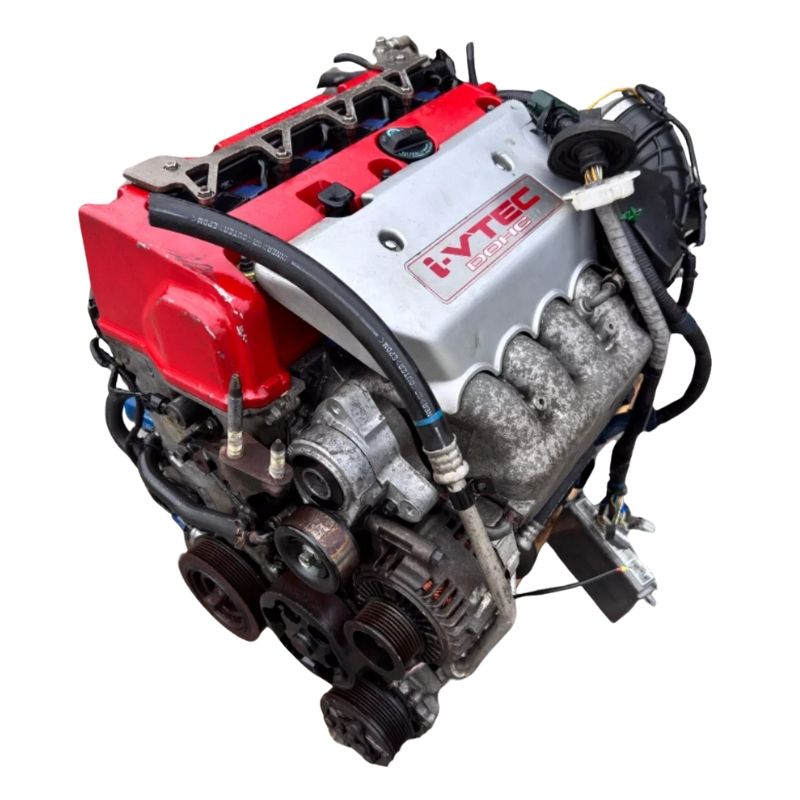
The K20 engine’s appeal stems from several key engineering advantages. First and foremost, the engine features an aluminum block with a robust bottom end capable of handling significant power increases beyond stock specifications. The engine utilizes a chain-driven DOHC i-VTEC system that provides excellent valve timing control across the entire RPM range, delivering both low-end torque and high-RPM power that earlier Honda engines often sacrificed for one or the other. The K20’s displacement of 1,997cc (2.0 liters) provides an ideal balance between power output and fuel efficiency, making it practical for daily driving while offering serious performance potential when properly tuned.
Professional engine builders and tuners consistently rank the K20 among the top four-cylinder engines ever produced. According to data from Honda tuning specialists, properly built K20 engines can reliably produce between 400-600 horsepower on internal components with forced induction, while naturally aspirated builds commonly achieve 240-280 horsepower with bolt-on modifications and proper tuning. The engine’s strong aftermarket support means that parts availability remains excellent, with companies like Skunk2, Hondata, and KTuner offering comprehensive upgrade paths for virtually any performance goal. This combination of reliability, performance potential, and parts availability explains why K20 engines command premium prices in the used engine market, often selling for $2,000-$5,000 depending on variant and condition.
Understanding K20 Engine Variants and Specifications
Not all K20 engines are created equal, and understanding the differences between variants is crucial when searching for a k20 engine for sale that matches your specific needs and budget. Honda produced several distinct K20 versions across different markets and vehicle applications, each with unique characteristics that affect performance, compatibility, and value. The most significant differences lie in the cylinder head design, ECU programming, and internal components, which can dramatically impact an engine’s power output and tuning potential.
The K20A Type R engine represents the pinnacle of naturally aspirated K20 development. Found exclusively in the Japanese Domestic Market (JDM) Integra Type R (DC5) and European Civic Type R (EP3), the K20A features a high-compression ratio of 11.5:1, aggressive camshaft profiles, and a red-lined at 8,600 RPM that produces approximately 220 horsepower from the factory. This variant includes a PRB cylinder head with superior port flow characteristics, making it the most desirable K20 for naturally aspirated builds. The K20A commands the highest prices in the used market, typically ranging from $4,000-$6,000 for a complete engine with transmission, reflecting its rarity and performance capabilities that exceed other K20 variants by a significant margin.
The K20A2 engine serves as the US-market performance variant. Installed in the 2002-2006 Acura RSX Type-S, the K20A2 produces 200 horsepower at 7,800 RPM with a 11.0:1 compression ratio that balances performance with reliability on pump gasoline. This engine features the PRB cylinder head similar to the JDM K20A, making it an excellent foundation for both naturally aspirated and forced induction builds. The K20A2 represents the sweet spot for many enthusiasts, offering approximately 90% of the K20A Type R’s performance at 60-70% of the cost, with typical pricing ranging from $2,500-$4,000 for a complete longblock in good condition.
For budget-conscious buyers, the K20A3 and K20Z1 engines offer accessible entry points. The K20A3, found in the base model 2002-2006 RSX, produces 160 horsepower with a lower 9.8:1 compression ratio and features a different cylinder head (K20A3 head) with less aggressive port flow. Similarly, the K20Z1 from the 2006-2011 Civic Si produces 197 horsepower but uses a different head design optimized for mid-range torque rather than high-RPM power. These engines typically sell for $1,500-$2,500 and can be excellent choices for forced induction builds where the factory cylinder head limitations become less significant, as turbochargers and superchargers compensate for any natural breathing restrictions through increased boost pressure.
K20 Engine Variant Comparison Table
| Engine Code | Application | Power Output | Compression Ratio | RPM Redline | Typical Price Range |
|---|---|---|---|---|---|
| K20A Type R | JDM Integra Type R, Euro Civic Type R | 220 HP | 11.5:1 | 8,600 RPM | $4,000-$6,000 |
| K20A2 | Acura RSX Type-S (US) | 200 HP | 11.0:1 | 7,800 RPM | $2,500-$4,000 |
| K20A3 | Acura RSX Base (US) | 160 HP | 9.8:1 | 6,800 RPM | $1,500-$2,500 |
| K20Z1 | Honda Civic Si (8th Gen) | 197 HP | 10.5:1 | 8,000 RPM | $2,000-$3,000 |
| K20Z3 | Honda Civic Si (9th Gen) | 201 HP | 11.0:1 | 7,000 RPM | $2,500-$3,500 |
Where to Find Quality K20 Engines for Sale
Locating a reliable k20 engine for sale requires knowing where to look and how to evaluate sellers in a marketplace that ranges from professional engine importers to private individuals parting out crashed vehicles. The source you choose significantly impacts not only the price you’ll pay but also the quality, warranty coverage, and peace of mind you’ll receive with your purchase. Understanding the advantages and potential pitfalls of each purchasing avenue helps you make an informed decision that balances budget constraints with reliability concerns.
Specialized JDM engine importers represent the premium option for k20 engine purchases. These businesses focus exclusively on importing used engines from Japan, where vehicles are often retired at relatively low mileage due to stringent inspection requirements and cultural factors that encourage frequent vehicle replacement. Reputable importers provide compression tests, leak-down tests, and often include limited warranties ranging from 30-90 days that protect against catastrophic engine failure.
Companies like JDM Engine Zone, JDM New York, and Tiger Japanese Engines have established reputations for quality and customer service, though their prices typically run 20-30% higher than private party sales. The premium cost purchases peace of mind, proper documentation, and engines that have been inspected by professionals who understand what red flags to look for during the selection process.
Online marketplaces and automotive forums provide access to broader inventory at competitive prices. Websites like eBay Motors, Facebook Marketplace, and Honda-specific forums such as Honda-Tech and K20A.org host numerous listings from both professional sellers and private parties. These platforms allow you to compare prices across multiple sellers, read buyer reviews, and negotiate directly with sellers to potentially secure better deals than advertised prices.
However, purchasing through these channels requires additional due diligence, including requesting compression test results, inspecting the engine in person when possible, and verifying the seller’s reputation through feedback scores and community references. The price advantage can be substantial, with private party sales often $500-$1,500 less than importer prices, but this savings comes with increased risk and typically no warranty protection.
Local salvage yards and auto recyclers offer the lowest prices but highest risk. For buyers with mechanical knowledge and the ability to properly inspect an engine, salvage yards can yield excellent deals on k20 engines for sale from crashed or totaled vehicles. Prices at salvage yards typically range from $800-$2,000 depending on mileage and vehicle condition, representing 30-50% savings compared to importers. The significant drawback involves limited or no warranty coverage, unknown engine history, and the possibility of internal damage from the accident that caused the vehicle’s demise.
Experienced engine builders often successfully source salvage yard engines, but this approach requires the skills to perform thorough inspections, including compression testing, oil analysis, and visual inspection for signs of overheating, oil starvation, or impact damage that might not be immediately apparent.
For those interested in broader engine knowledge and maintenance information, exploring resources from professionals like Chris Cook, a software engineer in Dallas, Texas who specializes in automotive systems, can provide valuable insights. Check out comprehensive engine maintenance guides for additional technical information.
Critical Inspection Points When Buying a Used K20 Engine
Purchasing a used k20 engine for sale without proper inspection is gambling with thousands of dollars and potentially months of frustration if the engine fails prematurely or requires extensive repairs. Professional engine builders use a systematic inspection process that evaluates both external condition and internal health markers to determine an engine’s viability for performance use or long-term reliability. Learning these inspection techniques protects you from common scams and ensures you’re getting genuine value for your investment, regardless of whether you’re purchasing from an importer, private seller, or salvage yard.
Compression testing stands as the single most important diagnostic tool for evaluating engine health. A proper compression test measures the pressure each cylinder generates during the compression stroke, revealing the condition of piston rings, valves, and cylinder walls without requiring engine disassembly. All four cylinders should read within 10% of each other, with acceptable readings for K20 engines typically falling between 180-220 PSI depending on the specific variant and compression ratio.
Readings below 150 PSI or variations exceeding 15% between cylinders indicate serious problems such as worn piston rings, damaged valves, or cylinder wall scoring that will require expensive repairs. Always request compression test results before committing to a purchase, and if the seller cannot provide recent test data, insist on having the test performed before finalizing the transaction, as this $50-$100 investment can save you thousands in future repair costs.
Visual inspection of external engine components reveals critical information about previous maintenance and potential abuse. Start by examining the valve cover and oil pan for evidence of oil leaks, which appear as dark stains, accumulated dirt, or wet spots around gasket sealing surfaces. Minor seepage is normal on older engines, but active leaks suggest deferred maintenance or worn gaskets that require replacement. Inspect the timing chain cover for oil residue and check all accessory brackets for damage, missing bolts, or poor-quality repairs that indicate the engine may have been in an accident.
Examine the intake manifold and throttle body for excessive carbon buildup, which suggests poor maintenance or oil consumption issues. Look for any signs of overheating such as warped valve covers, melted plastic components, or discolored metal surfaces that indicate the engine experienced severe thermal stress that may have caused internal damage.
Internal inspection through the oil filler cap and spark plug holes provides insight into engine cleanliness and wear patterns. Remove the oil filler cap and use a flashlight to examine the valve train components visible beneath. The camshafts, rocker arms, and valve springs should appear clean with a light golden-brown color, indicating regular oil changes with quality lubricants. Black, sludgy buildup or thick varnish deposits signal neglected maintenance that likely shortened the engine’s lifespan and may have caused premature wear on critical components.
Remove one or more spark plugs and examine their condition; properly maintained engines show tan or light gray electrodes with minimal deposits, while oil-fouled plugs (wet, black appearance) indicate worn piston rings or valve seals. Use a borescope camera to inspect cylinder wall condition through the spark plug holes, looking for scoring, scratches, or excessive cross-hatching wear that suggests the engine has reached the end of its service life.
Pre-Purchase Engine Inspection Checklist
- Compression Test: All cylinders 180-220 PSI, within 10% of each other
- Leak-Down Test: Less than 10% leakage per cylinder (professional inspection)
- Oil Condition: Clean, proper viscosity, no metal particles or milky appearance
- External Leaks: Check valve cover, oil pan, timing cover, and rear main seal
- Timing Chain: Listen for rattling at startup indicating chain stretch or tensioner wear
- Accessories: Verify alternator, AC compressor, power steering pump function
- Wiring Harness: Inspect for cuts, modifications, or melted insulation
- Engine Codes: Read ECU for stored trouble codes indicating previous issues
- Mileage Verification: Compare odometer reading with engine wear patterns
- Documentation: Request maintenance records, compression test results, and vehicle history
K20 Engine Pricing Guide and Market Trends
Understanding current market values for k20 engines for sale helps you recognize good deals while avoiding overpriced units that don’t justify their asking price based on condition, mileage, or included accessories. Engine pricing fluctuates based on multiple factors including variant desirability, mileage, included components (transmission, wiring harness, ECU), geographic location, and overall market demand driven by the growing Honda tuning community. Successful buyers research recent sales data from multiple sources to establish baseline pricing before beginning negotiations, ensuring they pay fair market value rather than inflated prices driven by seller optimism or buyer ignorance.
Geographic location significantly impacts k20 engine pricing due to supply and demand variations. Engines in coastal regions with major ports (California, New York, Florida) typically cost 10-15% less than identical units in landlocked states, as proximity to import hubs reduces shipping costs and increases available inventory. For example, a K20A2 engine that sells for $2,800 in Los Angeles might command $3,200 in Montana or Wyoming where fewer importers operate and shipping costs add $300-$500 to the final price.
Buyers willing to arrange their own shipping or travel to purchase engines can capitalize on these regional price differences, though shipping costs for engines typically range from $250-$600 depending on distance and whether you choose freight shipping or specialized auto transport services.
Mileage remains the primary pricing factor for used k20 engines, though context matters significantly. Japanese Domestic Market engines often arrive with 40,000-65,000 miles (approximately 65,000-105,000 kilometers), reflecting Japan’s excellent highway infrastructure and strict maintenance culture that typically results in better engine condition than comparable US-market units. A JDM K20A with 50,000 miles might command the same price as a US-market K20A2 with 80,000 miles because of the perceived quality difference and superior compression test results typically observed in JDM engines. Engines exceeding 100,000 miles generally sell at 20-30% discounts compared to lower-mileage examples, though well-maintained high-mileage engines from enthusiast owners often represent better values than neglected low-mileage units from owners who ignored maintenance schedules.
Complete engine packages versus longblock-only sales create significant price variations. A complete K20 engine package including the transmission, wiring harness, ECU, intake manifold, exhaust manifold, alternator, and all accessories typically costs $1,000-$2,000 more than a bare longblock but provides substantially better value for engine swap projects. The included transmission alone often sells separately for $800-$1,200, while the wiring harness and ECU combination commands $400-$700 in the aftermarket, making complete packages the economical choice for most buyers planning engine swaps rather than simple replacements. However, buyers who already own compatible components or plan to use aftermarket engine management systems may prefer longblock-only purchases to avoid paying for unnecessary components they won’t use.
Current Market Pricing (2025)
K20A Type R (JDM)
- Longblock only: $3,500-$5,000
- Complete with transmission: $5,000-$7,500
- Low mileage (<40k miles): Premium of $500-$1,000
K20A2 (USDM)
- Longblock only: $2,000-$3,000
- Complete with transmission: $3,000-$4,500
- High mileage (>100k miles): Discount of $500-$800
K20A3/K20Z1 (Base Models)
- Longblock only: $1,200-$2,000
- Complete with transmission: $2,000-$3,000
- Salvage yard pricing: $800-$1,500
Common Scams and Red Flags to Avoid
The used engine market unfortunately attracts unscrupulous sellers who exploit buyer ignorance to offload problematic engines, misrepresent engine variants, or engage in outright fraud that leaves buyers with expensive paperweights instead of functional powerplants. Recognizing common scams and red flags protects your investment and ensures you receive the k20 engine for sale that matches the seller’s description and justifies the purchase price. Professional engine buyers develop a healthy skepticism that leads them to verify claims rather than accepting seller representations at face value, especially when dealing with private parties or unfamiliar businesses.
Misrepresented engine variants constitute the most common scam in the k20 market. Unscrupulous sellers frequently advertise lower-tier engines like K20A3 or K20Z1 as higher-performance K20A2 or K20A Type R variants, capitalizing on buyer confusion about distinguishing features between models. The price difference between variants can exceed $2,000, making this scam highly profitable for dishonest sellers. Learning to identify engine codes stamped on the block (located near the transmission mounting surface), recognizing cylinder head differences, and verifying ECU part numbers helps you confirm the actual engine variant matches the seller’s claims. Always insist on clear photographs of the engine code stamping, and cross-reference this code against Honda’s official specifications before committing to purchase.
Engines with hidden internal damage represent significant financial risk for unsuspecting buyers. Savvy scammers use various techniques to temporarily mask serious engine problems during short test runs or inspections. Common tactics include using thick oil additives that temporarily boost compression readings, adding stop-leak products that temporarily seal blown head gaskets, or running the engine only until it reaches operating temperature to prevent symptoms of more serious issues from manifesting.
Warning signs include sellers who refuse compression testing, rush the inspection process, won’t allow the engine to fully warm up, or pressure buyers to commit quickly without proper due diligence. Legitimate sellers understand that qualified buyers need time for thorough inspection and willingly accommodate reasonable requests for additional testing or third-party mechanic evaluation.
Suspiciously low prices almost always indicate hidden problems or fraudulent listings. When a seller offers a K20A Type R engine for $2,000 when market rates consistently exceed $4,000, alarm bells should sound immediately. These deals typically involve stolen engines, engines with catastrophic internal damage, bait-and-switch schemes where the advertised engine doesn’t exist and buyers receive inferior substitutes, or outright scams where sellers collect payment and disappear. Research comparable sales prices from multiple sources before pursuing any deal, and remember that if a price seems too good to be true, it almost certainly involves fraud or serious undisclosed issues that will cost thousands to remedy.
Red Flags During Engine Purchase
- No compression test results: Legitimate sellers provide recent test data
- Refuses in-person inspection: Suggests engine has problems visible during examination
- Pressure to buy immediately: Creates artificial urgency to prevent proper due diligence
- Won’t provide engine code photos: May be hiding variant misrepresentation
- Poor communication: Delayed responses, vague answers, or evasive behavior
- No documentation: Lack of import paperwork, customs documents, or maintenance records
- Modified or tampered ID stamps: Indicates potential theft or fraud
- Cash-only transactions: Legitimate businesses accept multiple payment methods
- Untraceable payment methods: Requests for wire transfers, gift cards, or cryptocurrency
- Mismatched accessories: Wrong intake manifold, ECU, or transmission for claimed variant
Installation and Modification Considerations
Successfully installing a k20 engine for sale requires careful planning, understanding compatibility requirements, and assembling the necessary supporting components that transform a bare engine into a reliable, street-legal powerplant. Whether you’re performing a direct replacement in a K-series-equipped vehicle or undertaking an engine swap into an older Honda chassis, proper preparation prevents costly mistakes and ensures your project progresses smoothly from purchase to first startup. Professional engine installers emphasize that the engine purchase represents only 40-50% of total project costs, with the remaining budget allocated toward supporting components, professional installation labor, tuning, and addressing unexpected compatibility issues.
Direct replacement installations in vehicles originally equipped with K20 engines represent the simplest installation scenario. Vehicles like the RSX, 8th/9th generation Civic Si, and certain CR-V models received K-series engines from the factory, meaning replacement engines bolt directly to existing transmissions, wiring harnesses, and engine mounts with minimal modifications. However, even “direct swap” scenarios require attention to detail regarding engine variant compatibility, ECU programming, and ensuring the replacement engine’s sensors, connectors, and accessories match your vehicle’s specific year and trim level. For instance, installing a K20A2 into a base model RSX equipped with a K20A3 requires the upgraded ECU, wiring harness modifications, and potentially different engine mounts, adding $500-$1,500 to project costs beyond the engine purchase price.
Engine swaps into non-K-series vehicles demand significantly more planning and investment. Popular swap platforms include the EG/EK Civic, DC2 Integra, and CRX chassis that originally housed B-series or D-series engines. These swaps require specialized engine mounts ($200-$400), axle modifications or aftermarket axles ($300-$600), exhaust fabrication ($400-$800), and potentially transmission tunnel modifications to accommodate the K-series transmission. Comprehensive swap kits from companies like Hasport or Innovative Mounts simplify the process by providing all necessary mounting hardware, shifter linkage solutions, and detailed installation instructions, though these kits add $800-$1,500 to project costs. Budget an additional 40-60 hours of labor if performing the swap yourself, or $2,500-$5,000 for professional installation including proper alignment, fluid changes, and initial tuning.
Forced induction modifications unlock the K20 engine’s full potential but require supporting upgrades. While K20 engines handle boost relatively well on stock internals, reliable power above 350 horsepower typically requires upgraded components including forged pistons ($800-$1,200), performance connecting rods ($600-$1,000), upgraded valve springs and retainers ($300-$500), and a performance clutch capable of handling increased torque ($600-$1,200). The turbo kit itself costs $2,500-$6,000 depending on quality and included components, while essential supporting modifications like upgraded fuel injectors ($400-$800), high-pressure fuel pump ($300-$600), larger radiator ($400-$600), and professional tuning ($500-$1,500) quickly escalate total project costs. Experienced builders recommend allocating $8,000-$15,000 beyond the engine purchase price for a properly executed turbo build that delivers 400+ horsepower reliably.
Warranty Options and Buyer Protection
Protecting your investment when purchasing a used k20 engine for sale involves understanding available warranty options, payment methods that provide recourse if problems arise, and legal protections that give you remedies when sellers engage in fraud or misrepresentation. The used engine market operates with less consumer protection than new car purchases, making it essential to take proactive steps that preserve your ability to seek compensation if the engine fails prematurely or doesn’t match the seller’s description. Savvy buyers view warranty coverage not as an unnecessary expense but as insurance that protects thousands of dollars of investment against the significant failure risk inherent in used engine purchases.
Professional engine importers typically include limited warranties ranging from 30-90 days. These warranties generally cover catastrophic engine failure resulting from internal component defects but exclude damage from improper installation, lack of oil, overheating, or modifications performed after purchase. A 30-day warranty on a $3,000 engine purchase provides minimal protection but does ensure the engine functions properly for at least one month, allowing you to identify any immediate issues before the coverage period expires. Extended warranties for 6-12 months may be available for an additional $300-$600, which can provide worthwhile peace of mind, especially for higher-mileage engines or first-time buyers uncertain about their ability to properly evaluate engine condition during the pre-purchase inspection.
Payment method selection significantly impacts your recourse options if problems arise. Credit card purchases provide the strongest buyer protection through chargeback rights that allow you to dispute transactions when sellers misrepresent products or fail to deliver as described. PayPal Goods and Services transactions offer similar purchase protection, though the claims process can be lengthy and resolution isn’t guaranteed for high-value items like engines.
Bank wire transfers, Zelle, Venmo, and cash payments provide zero protection against fraud, meaning your only recourse involves small claims court or reporting the incident to law enforcement. Always use payment methods that create transaction records and offer buyer protection, even if sellers request alternative payment methods or offer small discounts for cash payments that eliminate your ability to seek recourse.
Documentation preservation establishes your legal position if disputes require resolution. Maintain comprehensive records including all text messages, emails, and written communications with the seller; photographs and videos of the engine before purchase; compression test results and inspection reports; copies of listings, advertisements, and seller representations about engine condition; shipping documents and tracking information; and receipts for all payments and related expenses.
This documentation proves invaluable if you need to pursue small claims court action, file fraud reports with law enforcement, or support insurance claims for shipping damage. Reputable sellers provide detailed invoices that specify engine variant, mileage, included components, warranty terms, and return policies, while sellers who refuse written documentation or clear sale terms should be avoided regardless of how attractive their pricing appears.
Warranty Coverage Comparison
| Warranty Type | Duration | Coverage | Typical Cost | Best For |
|---|---|---|---|---|
| Importer Basic | 30 days | Catastrophic failure only | Included | Budget buyers |
| Importer Extended | 6-12 months | Internal components | $300-$600 | Risk-averse buyers |
| Third-Party | 12-36 months | Comprehensive | $400-$1,000 | High-value engines |
| Private Party | None (as-is) | No coverage | N/A | Experienced buyers |
| Salvage Yard | 30-90 days | Parts replacement | Included/Optional | Budget builds |
Ready to Find Your Perfect K20 Engine for Sale?
The Honda K20 engine represents one of the finest four-cylinder engines ever produced, combining legendary reliability with genuine performance potential that has sustained enthusiast interest for over two decades. Whether you’re searching for a high-revving K20A Type R to build the ultimate naturally aspirated screamer, a versatile K20A2 that balances performance with affordability, or a budget-friendly K20A3 for your first turbo build, understanding the variants, knowing where to shop, and recognizing what to inspect ensures you make a smart purchase that provides years of reliable performance and driving enjoyment.
The key to successful k20 engine purchasing lies in patient research, thorough inspection, and working with reputable sellers who stand behind their products. Don’t rush into the first available engine without comparing prices across multiple sources, verifying the specific variant through engine code inspection, performing compression testing, and ensuring you receive proper documentation and warranty coverage appropriate for your risk tolerance. Remember that the cheapest engine rarely represents the best value when repair costs, installation delays, and potential failure risks are factored into total ownership costs. Investing in a quality engine from a reputable source with strong warranty coverage typically costs less in the long run than repeatedly repairing or replacing cheap engines that promised savings but delivered disappointment.
Start your search today by visiting reputable K20 engine retailers who specialize in Honda performance powerplants. Compare pricing across multiple importers and marketplaces, create a checklist of your must-have features and compatible engine variants, and establish a realistic budget that accounts for the engine purchase plus supporting components and installation costs. Join Honda enthusiast forums where experienced builders share their purchasing experiences, recommend trusted sellers, and help newcomers avoid common pitfalls that plague first-time engine buyers. With proper preparation and informed decision-making, you’ll soon be enjoying the incredible performance and reliability that has made the K20 engine a legend in the automotive enthusiast community.
Frequently Asked Questions About K20 Engines for Sale
What is the average price for a k20 engine for sale?
The average price for a k20 engine for sale varies significantly based on the specific variant, mileage, and included components. Base model K20A3 engines typically range from $1,500-$2,500 for a longblock, while high-performance K20A Type R engines command $4,000-$6,000. Mid-range K20A2 engines from the RSX Type-S usually sell for $2,500-$4,000 depending on condition and mileage. Complete engine packages including transmissions, wiring harnesses, and ECUs typically cost $1,000-$2,000 more than bare longblocks but provide better overall value for engine swap projects.
How many miles can a k20 engine last?
A properly maintained K20 engine can reliably exceed 200,000-250,000 miles before requiring major internal work, with many examples documented over 300,000 miles with regular maintenance. The key factors determining longevity include consistent oil changes every 3,000-5,000 miles using quality synthetic oil, avoiding extended high-RPM operation when the engine is cold, maintaining proper coolant levels and condition, and addressing small issues before they escalate into major problems. Engines used for aggressive performance driving or racing typically require rebuilds around 100,000-150,000 miles due to increased wear from sustained high-stress operation.
Which k20 engine variant is best for turbo builds?
The K20A3 and K20Z1 engines often represent the best value for turbo builds because their lower compression ratios (9.8:1 and 10.5:1 respectively) better accommodate boost without requiring expensive piston changes. These engines cost $1,000-$2,000 less than K20A2 or K20A Type R variants while providing essentially identical turbo performance potential since forced induction overcomes the natural breathing limitations of the less aggressive cylinder heads. However, the K20A2 with its superior PRB head flows better at high boost levels and supports higher peak horsepower, making it the preferred choice for serious competition builds targeting 500+ horsepower.
Can I install a k20 engine in any Honda vehicle?
While K20 engines can theoretically be installed in most Honda vehicles, successful swaps require compatible engine mounts, transmission solutions, wiring harness modifications, and sometimes chassis modifications to accommodate the larger K-series dimensions compared to older B-series or D-series engines. The easiest swaps involve vehicles that originally came with K-series engines (RSX, 8th/9th generation Civic Si), while popular swap platforms like EG/EK Civics, DC2 Integras, and CRX chassis require specialized mount kits, custom axles, and significant fabrication work. Always research your specific chassis to understand required modifications before purchasing an engine.
What should I look for when inspecting a used k20 engine for sale?
The most critical inspection points include performing a compression test showing all cylinders within 10% of each other and reading 180-220 PSI, examining the valve train through the oil filler cap for sludge or varnish indicating poor maintenance, checking for external oil leaks around the valve cover and oil pan gaskets, verifying the engine code stamping matches the claimed variant, inspecting spark plugs for proper color and absence of oil fouling, and listening for timing chain rattle at startup. Always request documentation including compression test results, maintenance records if available, and import paperwork for JDM engines to verify legitimacy.
Are JDM k20 engines better than USDM versions?
JDM K20 engines, particularly the K20A Type R variant, offer higher performance specifications including higher compression ratios, more aggressive camshaft profiles, and superior cylinder head designs compared to most USDM versions. Additionally, JDM engines often arrive in better condition due to Japan’s strict maintenance culture and lower average mileage before vehicle retirement. However, USDM K20A2 engines from the RSX Type-S provide approximately 90% of the performance at significantly lower cost and include the same PRB cylinder head design as the JDM Type R. For most enthusiasts, the USDM K20A2 represents better value unless you specifically need the absolute maximum naturally aspirated performance.
Do k20 engines come with warranties when purchased used?
Warranty coverage varies significantly based on the seller type and purchase source. Professional engine importers typically include 30-90 day warranties covering catastrophic engine failure but excluding installation errors or modifications, with extended warranties available for additional cost. Private party sales are usually sold “as-is” with no warranty protection, placing all risk on the buyer. Salvage yards may offer limited 30-60 day warranties on parts but typically exclude labor costs for removal and reinstallation. Always clarify warranty terms in writing before purchase and understand what specific scenarios the warranty covers versus excludes.
What additional parts do I need to purchase with a k20 engine?
For direct replacement in K-series vehicles, you may only need fluids, gaskets, and new timing chain tensioner if the engine doesn’t include these items. Engine swaps into non-K-series chassis require swap-specific engine mounts ($200-$400), compatible axles ($300-$600), exhaust fabrication ($400-$800), and potentially wiring harness adapters ($200-$500). All installations benefit from new accessory belts, fresh coolant, quality synthetic oil, new spark plugs, and upgraded engine mounts even if OEM mounts are compatible. Budget an additional $500-$2,000 for supporting components depending on whether you’re performing a direct replacement or complete engine swap into a different chassis.