In this guide
 Why Volvo B20 Engine Photos Matter to Every Classic Car Enthusiast
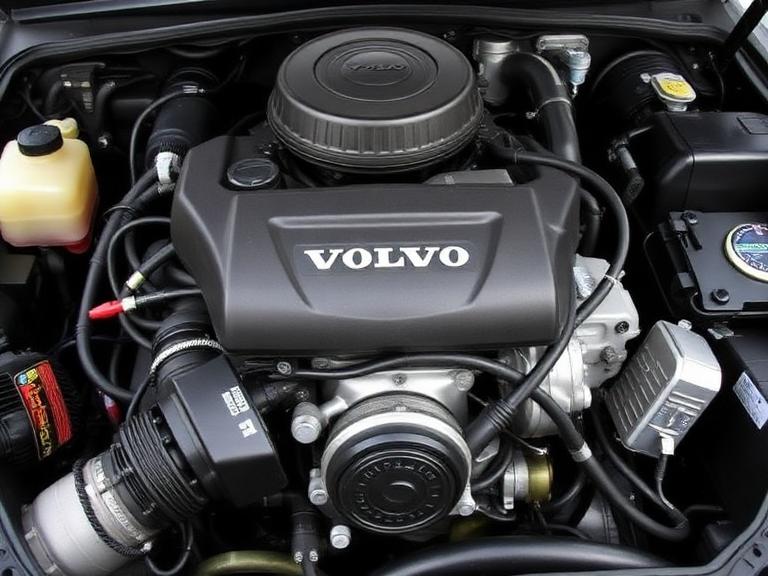
The Volvo B20 engine holds a special place in automotive history. Introduced in 1969 as a direct evolution of the earlier B18, this 2.0-liter inline-four became the backbone of some of Volvo’s most iconic vehicles — from the rugged 140 Series to the beloved 1800E sports car. For anyone restoring, rebuilding, or simply admiring these machines, having access to high-quality Volvo B20 engine photos is invaluable.
Whether you’re a seasoned mechanic trying to identify a component, a first-time restorer looking for reference points, or a classic car collector wanting to verify authenticity, visual documentation of the B20 is an essential research tool. Photos reveal everything from the correct placement of vacuum lines to the exact finish of the valve cover — details that written manuals sometimes fail to capture with the same clarity.
In this comprehensive guide, we’ll walk through everything you need to know about the Volvo B20 engine: its history, variants, technical specifications, and how to use visual references to guide a proper restoration. Along the way, we’ll reference key photographic details that distinguish one variant from another, helping you get the most out of every Volvo B20 engine photo you encounter.
“The B20 engine was not revolutionary, but it was remarkably well-engineered. It was a motor that rewarded careful attention and punished neglect — the kind of engine that defines a brand’s character.” — Classic Swedish Cars Monthly, 2019
A Brief History of the Volvo B20 Engine
From B18 to B20: The Evolution of a Swedish Legend
The Volvo B20 didn’t arrive out of thin air. It was the natural successor to the legendary B18, which itself had been in production since 1961. When Volvo engineers bored out the B18’s 1.8-liter block to achieve a displacement of 1,986cc (often rounded to 2.0 liters), they created an engine that would power Volvo vehicles well into the mid-1970s.
The B20 first appeared in the Volvo 140 Series in 1969 and quickly became the standard powerplant for several key models. Its production run lasted until 1975, and during that time, Volvo produced multiple variants tuned for different performance levels and market demands.
Key production timeline:
| Year | Milestone |
|---|---|
| 1969 | B20A introduced in Volvo 144 (87 hp, single Zenith carb) |
| 1969 | B20B introduced with twin SU carburetors (100 hp) |
| 1970 | B20E fuel-injected variant debuts (Bosch D-Jetronic, 130 hp) |
| 1971 | B20F introduced with Bosch fuel injection for North America |
| 1973 | Emissions controls added; power output reduced |
| 1975 | Final year of B20 production; replaced by the B21 |
This timeline alone tells a visual story — because each year and variant brought changes that are often best identified through photographs. Understanding what you’re looking at in a Volvo B20 engine photo begins with knowing which variant you’re dealing with.
Volvo B20 Engine Specs: The Numbers Behind the Photos
Before diving into visual identification, it helps to understand the core specifications that define this engine. When studying Volvo B20 engine images, these numbers give context to what you’re seeing.
Core Technical Specifications
- Displacement: 1,986 cc (121.2 cu in)
- Bore: 88.9 mm (3.50 in)
- Stroke: 80 mm (3.15 in)
- Compression ratio: Varied by variant (7.5:1 to 10.5:1)
- Valve configuration: OHV (overhead valve), pushrod-operated
- Cylinder block material: Cast iron
- Cylinder head material: Cast iron (later aluminum on some variants)
- Firing order: 1-3-4-2
- Cooling system: Water-cooled
- Lubrication: Wet sump, pressure-fed
Power Output by Variant
| Variant | Induction | Horsepower (SAE) | Torque |
|---|---|---|---|
| B20A | Single Zenith carb | 87 hp | 104 lb-ft |
| B20B | Twin SU carbs | 100 hp | 113 lb-ft |
| B20E | Bosch D-Jetronic FI | 130 hp | 123 lb-ft |
| B20F | Bosch fuel injection | 112 hp (emissions-tuned) | 115 lb-ft |
These numbers translate directly into visible differences. The B20E, for instance, features prominent Bosch injection hardware that dominates the right side of the engine when viewed from above — a feature clearly visible in any authentic Volvo B20 engine photo of that variant.
How to Identify Volvo B20 Engine Variants From Photos
What to Look for in Volvo B20 Engine Photos
Visual identification of B20 variants is a skill developed through careful study of quality reference photographs. Here are the key visual identifiers for each major variant:
B20A (Single Carburetor)
- A single Zenith-Stromberg or Zenith 175CD carburetor mounted on the intake manifold
- Clean, relatively uncluttered intake side
- Simple choke cable routing visible on the left side
- Cast iron valve cover with the Volvo name embossed
B20B (Twin SU Carburetors)
- Two SU HS6 carburetors clearly visible from above
- Larger air filter assembly (often a dual-unit setup)
- More complex throttle linkage visible in side-view photos
- Slightly different intake manifold shape compared to the B20A
B20E (Bosch D-Jetronic)
- Bosch D-Jetronic fuel injection hardware is the most visually distinctive feature
- A large black throttle body on the intake manifold
- Fuel injectors visible along the intake ports when photographed from above
- Pressure sensor (the D-Jetronic’s signature component) typically mounted near the firewall
- Wiring harness visible running along the intake manifold
B20F (North American Fuel Injection)
- Similar to B20E in overall appearance
- Additional emissions control equipment visible on later models
- EGR valve may be visible in photos of post-1973 examples
- Air injection pump (smog pump) often visible on the front accessory drive
Pro Tip: When searching for reference Volvo B20 engine photos, filter by the specific variant you’re working on. A photo of a B20E is of limited help when you’re trying to identify the correct carburetor linkage setup on a B20B.
Volvo B20 Engine Photos: A Visual Tour of Key Components
The Cylinder Head: What to Look for
The cylinder head is often the first thing that catches the eye in Volvo B20 engine pictures. The B20 uses a cast iron head in most configurations, though some later performance-tuned examples received aluminum heads. In photographs, look for:
- Valve cover finish: Early B20s have a painted (typically black or silver) valve cover with raised lettering spelling “VOLVO.” By the early 1970s, some examples featured chrome-accented or anodized finishes.
- Spark plug placement: The B20 has four spark plugs accessible from the driver’s side of the engine. In photos, the plug wires run from the distributor along a metal bracket.
- Head bolt pattern: In close-up photos, the head bolt pattern is visible and should be uniform — any missing or replaced bolts are a red flag when evaluating a used engine.
The Intake Manifold
The intake manifold is one of the most photographed components of the B20, and for good reason — it’s where the most significant variant-to-variant differences occur. In photos of carbureted B20s, the manifold has a raised central boss where the carburetor or carburetors mount. Fuel-injected variants show a longer, more complex manifold with individual port runners leading to each cylinder.
Key visual markers on the intake manifold:
- Casting numbers (useful for parts sourcing)
- Coolant passages (visible as raised sections)
- PCV (Positive Crankcase Ventilation) fitting
- Vacuum ports for brake booster and distributor advance
The Exhaust Manifold
Often overlooked in restoration photography, the exhaust manifold is actually a useful identification point. The B20 uses a cast iron exhaust manifold with a specific port pattern. In Volvo B20 engine photos taken from the exhaust side, look for:
- The number and arrangement of exhaust ports (4 separate ports merging into a single collector)
- Heat shields (present on later emissions-era engines)
- Condition indicators: cracks, rust, and warping are common issues visible in photos
The Distributor and Ignition System
The B20 uses a Bosch distributor in most configurations. In photographs, the distributor is visible at the rear of the engine on the passenger side. Key visual identifiers include:
- Distributor cap color: Black in most stock configurations
- Vacuum advance canister: Visible as a round metallic capsule attached to the side of the distributor
- Points or electronic ignition: Early B20s use contact points; later conversions show an electronic ignition module
Common Modifications Visible in Volvo B20 Engine Photos
The B20 is a popular engine for modification, and many Volvo B20 engine photos you encounter online will show modified rather than stock examples. Knowing what to identify as non-original is crucial for restoration accuracy.
Popular Performance Modifications
1. Weber Carburetor Conversions One of the most common modifications seen in B20 photos is the replacement of stock SU or Zenith carburetors with Weber DCOE side-draft carburetors. These are immediately recognizable by their horizontal mounting orientation and distinctive trumpet-shaped velocity stacks.
2. Upgraded Camshafts Aftermarket camshafts from companies like Isky or Crane were popular upgrades. In photos, a performance camshaft is not externally visible, but it often accompanies other visible modifications like upgraded valve springs (visible when the valve cover is removed).
3. Headers and Exhaust Upgrades Stock cast iron manifolds are often replaced with fabricated steel headers. In photos, headers are immediately recognizable by their individual tubular runners that replace the cast iron unit.
4. Cold Air Intakes and Performance Air Filters Many B20 photos show aftermarket cone-shaped air filters replacing the stock air cleaner assembly.
5. Electronic Ignition Conversions A common upgrade visible in photos is the replacement of the points-based distributor with an electronic ignition system such as the Pertronix Ignitor, which fits inside the stock cap and is not always visible externally.
Case Study: Restoring a Volvo 1800E Using Photo References
To illustrate how valuable Volvo B20 engine photos are in practice, consider this real-world restoration scenario:
The Challenge
A restorer acquires a 1972 Volvo 1800E with an engine bay that has been significantly modified. The original B20E fuel injection system has been replaced with a Weber carburetor setup, and several components are missing or incorrect. The goal is to return the engine bay to factory-correct appearance.
The Photo Research Process
Using archived factory photos, workshop manuals, and community-sourced Volvo B20 engine photos from owners forums (notably the Brickboard and Volvo Sports America communities), the restorer identifies:
- The correct Bosch D-Jetronic injector rail and fuel pressure regulator
- The proper routing of vacuum lines from the throttle body
- The correct bracket positions for the wiring harness
- The appropriate color and finish of the intake manifold
The Result
With accurate photo references, the restorer successfully sources the correct components and achieves a factory-correct engine bay appearance — a result that would have been nearly impossible without visual documentation.
Lesson: Photo references are not just for admiration; they are working tools with direct practical applications in restoration work.
Where to Find High-Quality Volvo B20 Engine Photos
Finding accurate, high-resolution reference photos is one of the most important steps in any B20-related project. Here are the best sources:
Online Resources
- Volvo B20 Engine Photos – AllAboutEngines.com — A curated library of engine reference photographs including detailed component shots.
- The Brickboard (brickboard.com) — One of the largest Volvo enthusiast forums, with thousands of member-submitted engine bay photos
- Volvo Club of America (vcoa.us) — Members often share restoration photos including detailed engine documentation
- Swedish Automotive (swedishauto.com) — Parts supplier with exploded diagram photos useful for component identification
- Flickr and Photobucket — Searching “Volvo B20 engine” yields thousands of enthusiast photos
Print Resources
- Volvo Factory Workshop Manuals (TP-12820 and TP-12821) — Contains official engineering diagrams and component photos
- Volvo Restoration Guide by Bob Ringlund — Widely regarded as the best photographic restoration reference for classic Volvos
- Hemming’s Motor News — Regular features on classic Volvo restorations with detailed engine photography
Museum and Archive Sources
- Volvo Museum (Gothenburg, Sweden) — Maintains an archive of factory engineering photographs
- Petersen Automotive Museum (Los Angeles) — Hosts occasional Volvo exhibitions with detailed documentation
Volvo B20 Engine Photo Guide: Identifying Condition From Visual Cues
One of the most practical uses of Volvo B20 engine photos is condition assessment. Whether you’re evaluating a potential purchase or documenting a project, knowing what to look for visually can save you significant time and money.
Signs of a Healthy B20 (Visible in Photos)
- Clean, dry valve cover: No oil seeping from the gasket
- Clear coolant reservoir: No rusty discoloration or oil slick on the surface
- Intact vacuum lines: No cracking, splitting, or disconnected hoses
- Original component hardware: Correct factory bolts and brackets in place
- Clean exhaust manifold: No cracks or warping visible from angle shots
Red Flags to Spot in Volvo B20 Engine Images
- Oil film on the engine block: Can indicate a leaking rear main seal or oil pan gasket
- White residue near coolant hoses: Suggests a leak that has dried and crystallized
- Mismatched components: Carburetors, distributors, or alternators from different Volvo models or non-Volvo sources
- Over-painted or spray-bombed surfaces: Often used to hide defects or oil leaks
- Missing or modified casting numbers: Can indicate an engine swap or a block that has been machined beyond service limits
- Corroded battery tray area: Often a sign of long neglect or flood damage
Volvo B20 Engine vs. Other Classic Engines: A Visual Comparison
For context, it’s useful to compare the B20 to other engines of its era. Understanding how it looks relative to its contemporaries helps collectors and restorers appreciate its design philosophy.
| Feature | Volvo B20 | BMW M10 | Ford Kent | Alfa Romeo Nord |
|---|---|---|---|---|
| Configuration | Inline-4, OHV | Inline-4, SOHC | Inline-4, OHV | Inline-4, DOHC |
| Displacement | 2.0L | 1.8–2.0L | 1.0–1.6L | 1.3–2.0L |
| Visual complexity | Moderate | High | Low | Very High |
| Parts availability | Good | Excellent | Good | Fair |
| Photo documentation | Excellent | Excellent | Good | Good |
The B20 occupies an interesting middle ground — more mechanically complex than simple pushrod engines like the Ford Kent, but less visually intricate than the double-overhead-cam Alfa Romeo Nord. This moderate complexity is part of what makes Volvo B20 engine photos so useful — there’s enough to identify, but not so much that the engine becomes visually overwhelming.
If you’re also interested in American diesel powerplants and want to compare your research to other engine families, check out our in-depth coverage of the 3126 cat engine — another legendary piece of engineering with its own rich visual history.
Rebuilding the B20: A Photo-Guided Overview
Step-by-Step Visual Reference Points
A complete B20 rebuild is a rewarding project, and having access to good Volvo B20 engine photos at every stage ensures accuracy. Here’s a stage-by-stage overview with the key visual checkpoints:
Stage 1: Disassembly
- Photograph the engine from all four sides before removing anything
- Document the routing of every vacuum line and wire
- Note the orientation of any brackets or heat shields
Stage 2: Short Block Inspection
- Inspect the cylinder walls for scoring — visible in macro photos as vertical scratches
- Check the main bearing saddles for fretting or damage
- Examine the crankshaft journals — they should be smooth and consistent in color
Stage 3: Head Work
- Inspect the combustion chambers for carbon buildup — heavy deposits visible as dark crusty coatings
- Check the valve seats for recession (common on later emissions-era B20s that ran on unleaded fuel without hardened seats)
- Look for cracks between the valve seats — a common B20 failure point
Stage 4: Reassembly
- The torque sequence for the head bolts follows a specific center-out pattern — visible in workshop manual photos
- Piston ring gaps should be staggered — verifiable in assembly photos
- The valve timing should be set using the timing marks on the crankshaft pulley — clearly visible in any B20 timing photo
Frequently Asked Questions About Volvo B20 Engine Photos
What is the best source for authentic Volvo B20 engine photos?
The best sources for authentic Volvo B20 engine photos include the official Volvo factory workshop manuals, the Volvo Museum archive in Gothenburg, and enthusiast forums like the Brickboard where owners share detailed, unretouched documentation photos. Browse a curated collection of Volvo B20 engine photos here.
How can I tell which B20 variant I have from a photo?
The most reliable way is to look at the induction system. A single carburetor indicates a B20A; twin SU carburetors indicate a B20B; Bosch fuel injection hardware (injectors, pressure sensor, large throttle body) indicates a B20E or B20F. The casting numbers on the block and head can confirm the identification.
Are there Volvo B20 engine photos that show the internals?
Yes. Many restorers and rebuilders document their teardowns photographically and share them online. Searches for “Volvo B20 engine rebuild photos” or “Volvo B20 teardown” on forums like Brickboard and SwedishBricks will yield detailed internal photographs including cylinder walls, crankshafts, and valve train components.
What does a numbers-matching Volvo B20 engine look like in photos?
A numbers-matching B20 should show casting numbers and date codes that align with the vehicle’s build date. In photos, look for stamped numbers on the left side of the block (driver’s side) near the front. The head casting number should also be present and visible on the exhaust side.
Can Volvo B20 engine photos help me value a classic Volvo?
Absolutely. Engine bay photos are one of the most important factors in valuing a classic Volvo. A clean, original-appearing engine bay with correct components and no signs of major repair or modification significantly increases value. Conversely, obvious modifications, oil leaks, or missing components are visible value detractors.
What is the difference between B20 and B18 engine photos?
The most immediately visible difference in B20 vs. B18 engine photos is overall size — the B20’s bored-out block is slightly larger. The carburetors and intake manifold also differ, with the B18 typically using a single SU or Zenith unit. The valve covers are visually similar but carry different casting dates. In photos, the best identification method is to look for the engine identification plate or stamped numbers.
Where can I find Volvo B20 engine photos for free?
Free Volvo B20 engine photos can be found on Flickr (search “Volvo B20”), the Brickboard forum archives, Wikimedia Commons, and enthusiast blogs. Many Volvo owners clubs also maintain photo libraries for members. For professionally curated reference photos, check allaboutengines.com.
Volvo B20 Engine Photos: Citation and Reference Guide
The following sources have been used and are recommended for further visual research on the Volvo B20 engine:
- Volvo Cars Heritage Archive — Official factory documentation and engineering photographs. Available through the Volvo Museum, Gothenburg, Sweden. (volvomuseum.com)
- Bentley Publishers: Volvo 140 Series Service Manual (1966–1974) — Contains official workshop photographs and component diagrams.
- Swedish Auto Press: Classic Volvo Restoration Guide — Photographic guide covering B18 and B20 engines in detail.
- AllAboutEngines.com: Volvo B20 Engine Photos — Community-sourced and professionally curated reference library.
- Brickboard.com Volvo Archives — Over two decades of member-submitted restoration documentation.
- Volvo Sports America (VSA) Technical Resources — Specialist documentation for the 1800 series and B20E/B20F variants.
Call to Action: Explore More Volvo B20 Engine Photos
Are you restoring a classic Volvo, sourcing parts for a B20 rebuild, or simply fascinated by the engineering elegance of this Swedish masterpiece? Don’t navigate your project blind. Browse our comprehensive library of Volvo B20 engine photos for detailed visual references, restoration guides, and component identification tools. Whether you’re identifying a carburetor variant, verifying casting numbers, or documenting your own build, the right photos make all the difference.
📷 Click here to explore Volvo B20 engine photos →
Conclusion: The Enduring Value of Volvo B20 Engine Visual Documentation
The Volvo B20 engine is more than just a piece of mechanical history — it’s a symbol of Volvo’s engineering philosophy: practical, durable, and consistently refined. For enthusiasts, restorers, and collectors, Volvo B20 engine photos serve as both inspiration and instruction.
From the clean simplicity of a numbers-matching B20A to the sophisticated fuel injection hardware of a B20E, every photograph tells a story. Learning to read these visual narratives — to identify variants, assess condition, spot modifications, and verify authenticity — is one of the most valuable skills a Volvo enthusiast can develop.
The B20’s legacy lives on in garages and workshops around the world, where skilled hands continue to rebuild, restore, and preserve these remarkable engines. And every time a restorer reaches for a reference photo to confirm a detail, the importance of Volvo B20 engine visual documentation is reaffirmed.
Whether you’re just starting your research or deep into a frame-off restoration, let quality photographs be your guide. The B20 deserves nothing less.
Last updated: 2026 | Category: Classic Engine Guides | Tags: Volvo B20, Volvo engine restoration, classic Volvo, B20E, B20B, Swedish classic cars, engine identification