In this guide
Understanding the EEE Engineering Course Curriculum Modules List
Electrical and Electronic Engineering (EEE) programs across United States universities follow a structured progression that balances mathematical foundations, core circuit theory, and specialized upper-division modules. The curriculum typically requires a minimum of 122 credit hours to graduate, with a heavy emphasis on laboratory work and design projects integrated throughout the four-year timeline [2]. While specific course codes and sequencing vary by institution, the underlying module architecture consistently moves from general engineering fundamentals toward advanced signal processing, power systems, and microelectronics [5]. Prospective students should review their target university’s official catalog, as prerequisite chains and elective tracks determine how quickly you can progress through each semester [3].
Foundational Year Structure
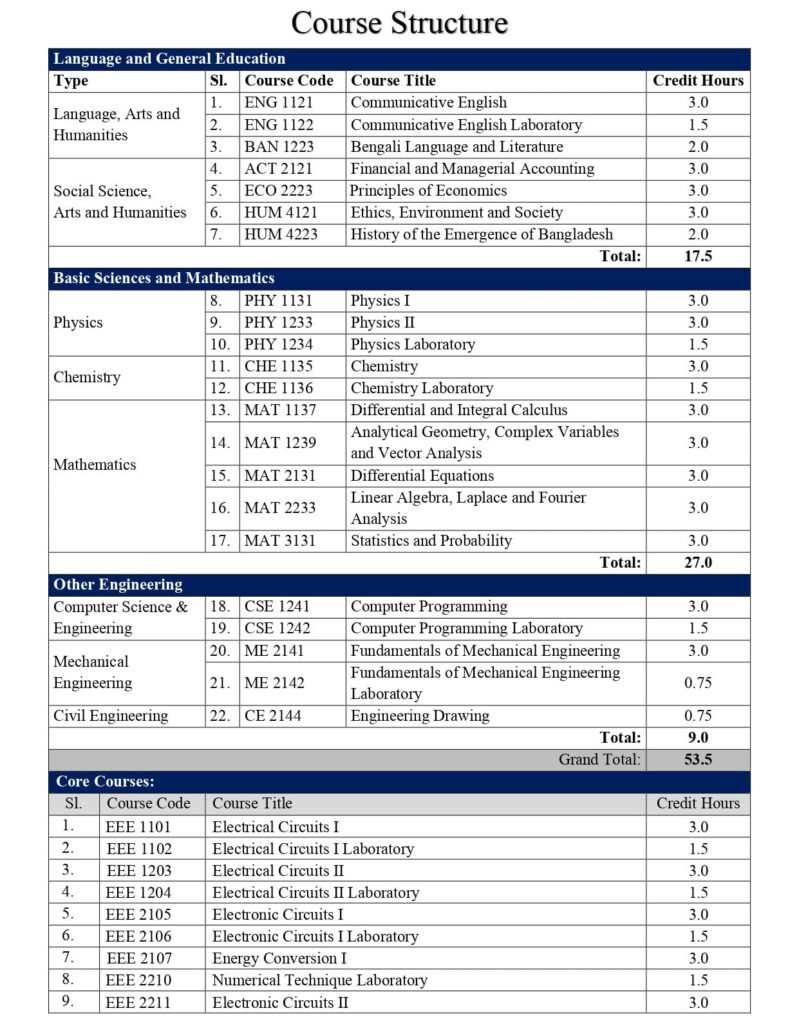
The freshman and sophomore years establish the mathematical and physical frameworks necessary for advanced EEE coursework. Core requirements typically include calculus sequences, differential equations, linear algebra, and physics covering mechanics and electromagnetism [5]. General engineering modules introduce academic writing, computational environments, and introductory programming, often using microprocessor-based boards to bridge software and hardware concepts [2][6].\n
Circuit analysis and electromagnetic theory form the technical baseline. Courses such as Network Analysis and Applied Electromagnetics teach Kirchhoff’s laws, node and mesh analysis, Thevenin and Norton equivalents, and steady-state versus transient behavior [2][3]. These modules are almost always paired with dedicated laboratory sessions where students measure real-world signals, calibrate test equipment, and compare theoretical calculations against physical measurements [5]. Because mathematics and circuit theory are deeply interconnected, students frequently encounter difficulty when transitioning from abstract differential equations to practical circuit modeling [6]. Building a consistent study routine focused on problem-solving rather than passive reading helps mitigate this gap.
Core Technical Modules and Laboratory Integration
As students advance, the curriculum shifts toward signals, systems, and communication architectures. A standard sequence begins with Signals & Systems, followed by Probability and Random Processes, which introduces stochastic modeling, Markov chains, and time-series analysis essential for modern filtering and control applications [3]. These prerequisites unlock upper-division modules like Modern Communication Systems, which covers sampling theorems, Nyquist criteria, analog and digital modulation schemes, line coding, and signal-to-noise ratio comparisons [3].\n
Laboratory components run parallel to lecture courses to reinforce theoretical concepts. Communication Systems Laboratories typically involve experimental modulation and demodulation using AM, FM, and digital protocols, alongside analog-to-digital conversion and frequency-domain noise characterization [3]. Similarly, power engineering tracks integrate hands-on work with electromechanical conversion, renewable energy grid integration, and smart grid architecture testing [1]. The pedagogical goal remains consistent: laboratories develop measurement proficiency and train students to reconcile simulation outputs with observable hardware behavior [5].
Computational methods also play a critical role. Courses in electrical engineering computational applications require familiarity with numerical analysis and programming, ensuring students can model complex systems before prototyping [3]. Many programs now embed machine learning fundamentals and field-programmable gate array (FPGA) deployment directly into digital signal processing and feedback systems modules, reflecting industry demand for algorithmic hardware integration [4].
Upper-Division Specializations and Track Selection
By the junior and senior years, students typically select concentration areas aligned with career objectives. Common specializations include communications and signal processing, control systems, circuits and electromagnetic systems, nano systems, and power systems [2]. Each track dictates a specific set of depth electives that must be completed alongside capstone design projects.
In communications and signal processing, students might enroll in Digital Communications, which examines optimum demodulation, detection methods in additive white Gaussian noise (AWGN) channels, and error-rate performance evaluation [3]. Information theory, coding, and detection modules build on probability and communication foundations to explore channel capacity and error-correcting algorithms [3]. Students interested in hardware implementation often take courses in real-time DSP systems, analog integrated circuits, or microwave and antenna design [4].
Power engineering concentrations emphasize grid stability, energy conversion, and semiconductor device physics. Courses cover renewable electrical energy sources, smart electric power grids, energy systems with power electronics, and solid-state devices including CMOS and MEMS fabrication practices [1][4]. Capstone requirements usually mandate two-semester product or power design projects, where teams prototype functional systems under faculty supervision and industry advisory input [1][6].
Practical Limitations and Verification Steps
While published curricula provide a reliable roadmap, several structural factors require proactive management. First, prerequisite enforcement is strict across most accredited programs. Missing a single foundational course, such as Probability and Random Signals or Signals & Systems, can delay enrollment in critical upper-division modules like Digital Communications or Applied Stochastic Processes [3]. Students should map out their degree plan early and confirm concurrent enrollment permissions with academic advisors.
Second, laboratory access and equipment availability fluctuate based on department budgets and enrollment caps. Not every university offers the same breadth of specialized labs, such as traveling wave facilities, electro-optical engineering labs, or cleanroom semiconductor training [1][4]. If a program emphasizes theoretical coursework over hands-on prototyping, students may need to supplement their education through independent maker projects or external certification programs.
Third, recommended reference materials and starter kits frequently update pricing, bundle contents, and regional availability. Resources like comprehensive circuit analysis textbooks, multi-volume engineering reference sets, or microcontroller development boards should be cross-checked against current retailer listings before purchase, as specifications and stock levels change without notice [P1][P2][P3]. Always verify the exact package contents, compatible accessories, and current model-year revisions directly with the manufacturer or authorized distributor.
Balanced Recommendations for Navigating the Curriculum
Successful completion of an EEE degree requires strategic planning, consistent lab engagement, and early alignment with specialization tracks. Begin by securing a complete copy of your university’s official course catalog and verifying accreditation status through recognized engineering bodies, as these standards dictate minimum competency benchmarks across circuit analysis, probability, and design projects [2][5].\n
Prioritize mastering computational and programming skills during the first two years. Even if your track leans toward power systems or electromagnetics, familiarity with C-language programming, assembly translation, and data structure implementation significantly improves performance in computer-controlled systems and embedded hardware modules [2][4]. When laboratory sections fill quickly, explore alternative simulation platforms that mirror industry-standard tools, allowing you to practice circuit validation and signal processing workflows independently.
Choose upper-division electives that complement both your primary concentration and emerging industry trends. For example, pairing traditional analog circuit design with machine learning deployment courses creates versatility in modern sensor networks and automated control systems [4]. Attend departmental advising sessions each semester to confirm that your selected modules satisfy graduation requirements and maintain eligibility for co-op placements or graduate school applications.
Finally, treat the four-year curriculum as a foundation rather than a finished product. Engineering education research consistently shows that graduates benefit from continuous skill refinement, particularly in interdisciplinary domains like quantum information science, big data networking, and advanced semiconductor manufacturing [4][6]. Verify all course offerings, lab schedules, and recommended equipment against your institution’s current academic calendar and approved vendor lists before committing resources.
Sources
[1] https://catalog.csus.edu/colleges/engineering-computer-science/engineering-electrical-electronic/bs-in-electrical-and-electronic-engineering
[2] https://ece.ncsu.edu/ugrad/ee
[3] https://catalog.csus.edu/courses-a-z/eee
[4] https://degrees.asu.edu/checksheet/2025/CES/ESEEEBSE/null
[5] https://technav.ieee.org/topic/electrical-engineering-education
[6] https://peer.asee.org/14383.pdf
[P1] https://www.amazon.com
[P2] https://www.elsevier.com
[P3] https://www.adafruit.com
Reader discussion