In this guide
Fundamentals of Electric Circuits vs Electrical Engineering Reference Book Set (3rd Edition)
Understanding the Educational Divide: Textbook vs. Reference Collection
When navigating academic and professional literature in electrical engineering, readers frequently encounter two distinct categories of publications: structured instructional textbooks and comprehensive technical reference collections. The comparison between *Fundamentals of Electric Circuits* and the *Electrical Engineering Reference Book Set (3rd Edition)* reflects this fundamental divide in engineering literature. One resource is engineered to guide students through core analytical methods and foundational theory, while the other serves as a broad, research-aligned compendium designed for practitioners and advanced learners who require immediate technical consultation. Understanding how each publication approaches circuit theory, problem-solving methodologies, and technical documentation will help you select the material that aligns with your immediate academic or professional objectives.
Foundational Circuit Analysis (Alexander & Sadiku)
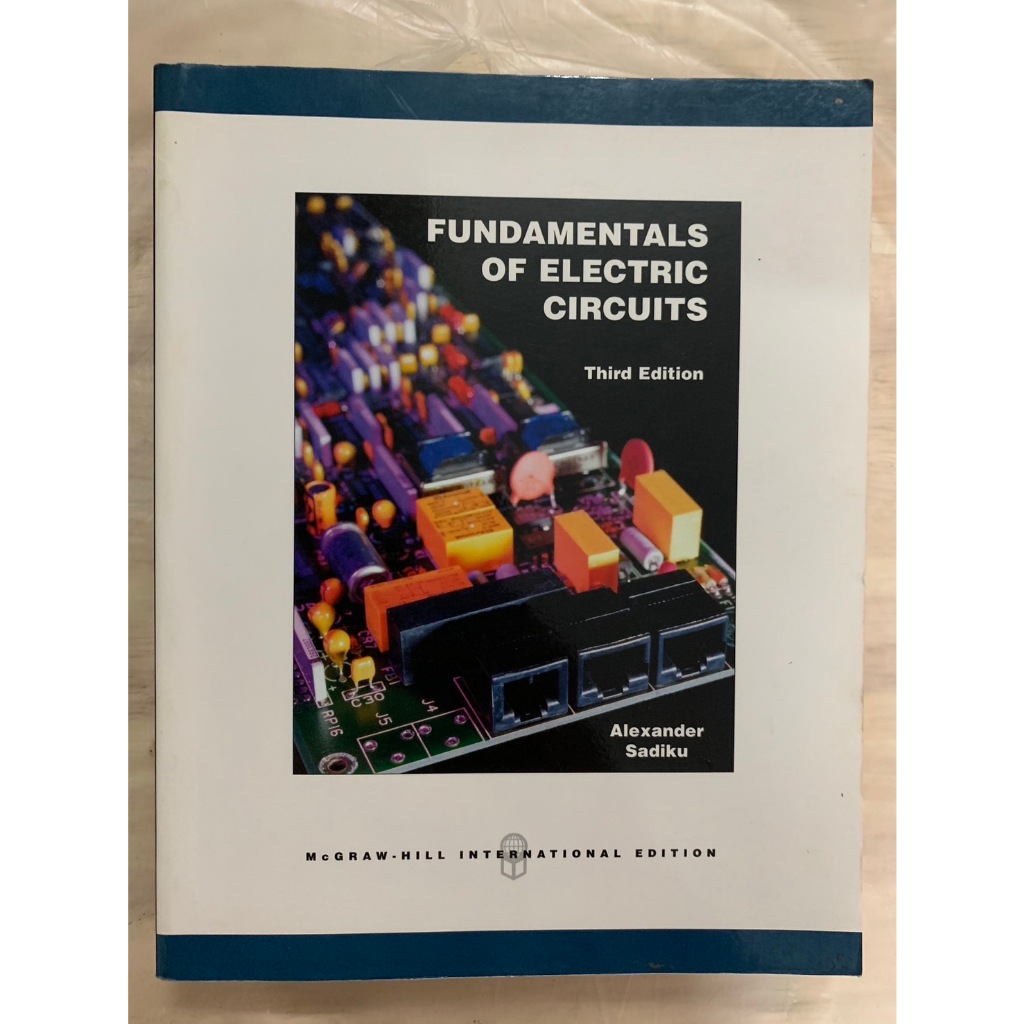
The primary textbook in this comparison, *Fundamentals of Electric Circuits*, is designed around a clear instructional objective: presenting circuit analysis in a manner that is clearer, more interesting, and easier to understand than earlier texts [6]. This deliberate focus on accessibility drives its structural and pedagogical choices throughout the volume. Rather than assuming prior familiarity with highly complex mathematical modeling, the material introduces direct current (DC) and alternating current (AC) circuit concepts in a systematic, graduated sequence [4]. The publication maintains a consistent balance between theoretical explanations and worked or extended examples, which actively supports readers who are building foundational competency from the ground up [2].\n
Academic tracking confirms the widespread adoption of this edition across university curricula, as evidenced by established ISBN identifiers such as 9780073256436 and 9781260226409 [1], [2]. To further support student success, supplementary study materials including dedicated solutions manuals are published alongside the main text, enabling self-paced review and independent homework validation [3]. This ecosystem of primary instruction paired with verified problem-solving pathways creates a robust learning environment for introductory learners. The emphasis remains firmly on conceptual clarity and methodical skill development, ensuring that students internalize core analytical techniques before advancing to more specialized domains.
Comprehensive Professional Reference (The Electrical Engineering Handbook)
In contrast, the *Electrical Engineering Reference Book Set (3rd Edition)*, often cataloged under titles such as *The Electrical Engineering Handbook, Third Edition*, operates distinctly outside the traditional classroom framework. Industry catalogs describe it as an attractive addition to any professional collection, emphasizing its critical role in keeping reference volumes current alongside evolving research trends [5]. Rather than walking readers through step-by-step derivations or pedagogical scaffolding, a reference handbook typically consolidates established formulas, design tables, industry standards, and cross-disciplinary applications into a single, highly accessible volume.\n
This format inherently prioritizes rapid lookup and comprehensive breadth over sequential pedagogy. Readers seeking a compilation of validated engineering data, component parameters, and system-level guidelines will find this structural approach far more aligned with professional workflow demands than introductory coursework requirements. The handbook functions as a static-yet-updated repository of verified information, allowing engineers to bypass theoretical instruction and directly access the technical specifications required for design verification, compliance checking, and project documentation. Its utility lies not in teaching how to derive equations, but in providing authoritative data points that reflect contemporary engineering practices.
Pedagogical Design and Reading Experience
The reading experience differs significantly between these two formats because their underlying purposes diverge fundamentally. A structured textbook like *Fundamentals of Electric Circuits* anticipates linear progression. Chapters are organized to build upon one another sequentially, introducing new variables, circuit topologies, and analytical techniques in a controlled, scaffolded manner. The explicit emphasis on clarity and engagement means that dense mathematical notation is typically introduced gradually, accompanied by illustrative diagrams and incremental practice problems [2]. This deliberate design reduces cognitive overload for newcomers and reinforces long-term retention through repeated application of core principles. The inclusion of extended examples further bridges the gap between passive reading and active problem-solving, allowing learners to observe methodology before attempting independent exercises.
A professional reference set takes a decidedly non-linear approach. Engineers, technicians, and researchers rarely read handbooks cover-to-cover; instead, they navigate them using indexed topics, cross-references, standardized abbreviations, and tabular data. The third edition’s stated goal of keeping each volume as fresh as the latest research indicates that the compilation likely incorporates updated industry benchmarks, revised safety thresholds, and newly documented performance metrics [5]. This dynamic updating process makes the handbook highly valuable for professionals who need authoritative, current data points without sifting through peer-reviewed journals or technical whitepapers. However, it does not replace the guided instruction required to learn how to derive equations, troubleshoot unfamiliar circuit configurations, or understand the underlying physical principles governing electrical behavior.
Scope of Technical Coverage
When evaluating technical depth, it is essential to distinguish between foundational coverage and comprehensive archival storage. The textbook concentrates heavily on the mathematical and conceptual foundations of electric circuits. It addresses both AC and DC systems, providing the necessary groundwork for subsequent coursework in electronics, control systems, and power distribution [4]. By focusing exclusively on core analytical methods, it ensures that readers develop the ability to simplify complex networks, apply fundamental circuit laws, and utilize standard transformation techniques. This concentrated scope is intentional; introductory texts prioritize mastery of essential tools before expanding into specialized or interdisciplinary domains. The curriculum is tightly bounded to guarantee proficiency in the basics.
The reference handbook, conversely, casts a much wider net. Electrical engineering spans multiple overlapping disciplines, and a third-edition reference set typically aggregates these areas to serve as a single-point resource for working engineers. While the textbook teaches you how to calculate circuit responses and analyze network behavior, the reference set provides pre-calculated component tolerances, thermal management charts, regulatory guidelines, and compliance documentation relevant to manufacturing and deployment. Neither resource replaces the other; they occupy entirely different tiers of the engineering knowledge pipeline. The textbook builds the analytical engine, while the handbook supplies the calibrated instruments and operational manuals required to run it in real-world conditions.
How to Align Each Resource With Your Goals
Selecting the appropriate material depends entirely on your current stage of study or professional development trajectory. If you are enrolled in an introductory university course, preparing for certification exams that test circuit analysis fundamentals, or attempting to bridge gaps in your undergraduate training, the textbook offers the structured pathway you need. The inclusion of worked examples and solution guides creates a continuous feedback loop that accelerates comprehension and corrects misconceptions early in the learning process [3]. You will benefit most from this resource when your priority is building analytical confidence, understanding theoretical relationships, and mastering equation derivation through guided practice.
If you are already comfortable with basic circuit mathematics and require a reliable desk companion for design work, laboratory calibration, or technical documentation, the reference handbook becomes indispensable. Professionals frequently rely on these compilations to verify standard values, check against updated regulatory guidelines, and streamline repetitive calculations that do not require first-principles derivation. The handbook’s emphasis on maintaining currency with recent research ensures that you are consulting data that reflects modern manufacturing practices, updated safety protocols, and contemporary industry benchmarks [5]. This resource shines when your objective shifts from learning theory to applying validated engineering standards efficiently and accurately in time-sensitive environments.
Critical Verification Steps Before Purchase
Several operational details surrounding these publications require direct confirmation before finalizing a purchase or academic assignment. Market listings occasionally display placeholder pricing, fluctuating inventory levels, or incomplete metadata that do not reflect actual retail or institutional conditions. Because academic publishing schedules, distributor agreements, and retailer promotions shift frequently, listed prices, discount tiers, shipping windows, and stock levels can change without notice. Always verify the current manufacturer or retailer listing to confirm accurate pricing, edition accuracy, and fulfillment options. Academic institutions often mandate specific ISBNs to ensure alignment with syllabus pacing, problem-set numbering, and instructor solution keys [1], [2]. Checking the publisher’s official catalog or contacting authorized academic distributors will prevent mismatches between assigned coursework and purchased materials.\n
Additionally, certain physical and digital specifications are not fully detailed in available summaries. You should verify the exact page count, physical dimensions, binding type, and whether the reference set includes supplementary digital access codes, separate volume breakdowns, or online database subscriptions. Course instructors may require exact print runs to guarantee compatibility with grading rubrics. For hardware integration or laboratory compatibility, verify that any accompanying software licenses, simulation files, or dataset supplements match your operating system version and academic institution requirements. If you require bundled accessories, instructor resources, or institutional licensing terms, those details must be confirmed directly with the vendor or academic department before ordering.
Making the Final Selection
The choice between a foundational textbook and a professional reference set ultimately depends on whether your immediate need is structured skill acquisition or rapid technical consultation. Students and early-career engineers will gain substantial advantage from the structured progression, balanced theory-to-practice ratio, and solution-oriented layout of the circuit analysis textbook [2], [6]. The gradual introduction of concepts, paired with extended examples and verified problem sets, builds a durable foundation for advanced study. Practitioners, researchers, and senior technicians will find greater utility in the consolidated data, research-aligned updates, and cross-disciplinary indexing of the engineering reference handbook [5]. Its format supports efficient decision-making, compliance verification, and rapid data retrieval in professional settings.
Many successful engineering professionals eventually maintain both: a curated textbook shelf for concept reinforcement, refresher study, and mentoring junior staff, alongside a reference collection for daily workflow support and design validation. Evaluate your current projects, academic requirements, and long-term career trajectory before committing funds. Confirm all purchasing details through official channels, track edition revisions closely, and prioritize resources that match your active learning or working environment. When applied correctly, either publication delivers measurable value to the electrical engineering community, fulfilling distinct but equally vital roles in technical education and professional practice.
Sources
https://www.ebay.com/itm/336544470529
https://www.abebooks.com/9781260226409/Fundamentals-Electric-Circuits-Alexander-Charles-1260226409/plp
https://www2.internationalinsurance.org/publication/332yfkcNcOGX/Fundamentals-Of-Electric-Circuits-3rd-Edition-Solutions
https://dokumen.pub/fundamentals-of-electrical-circuits.html
https://www.amazon.com/Electrical-Engineering-Handbook-Third/dp/084932274X
https://d1.amobbs.com/bbs_upload782111/files_43/ourdev_663717W2QIE9.pdf