In this guide
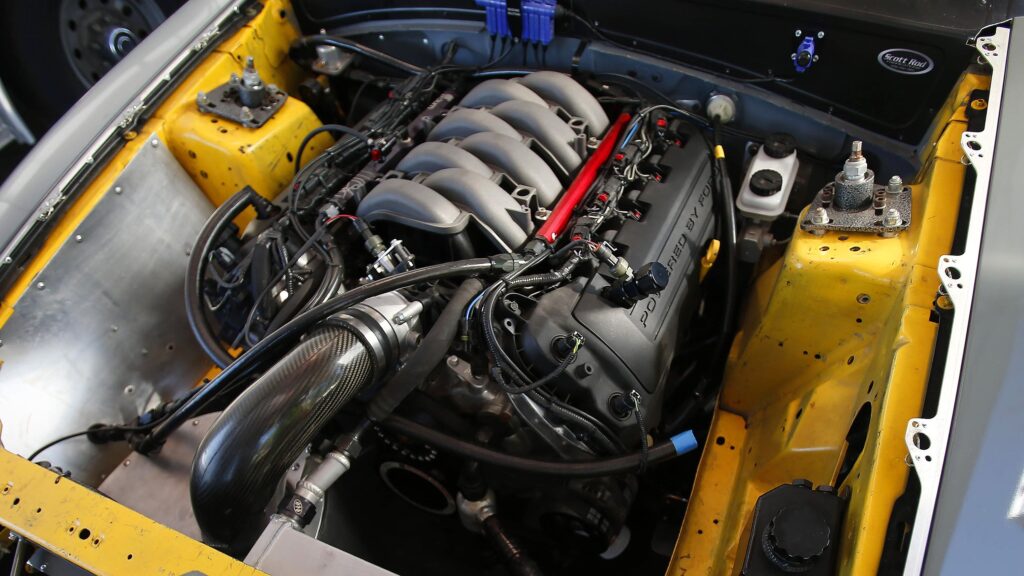
The Ford Coyote engine represents one of the most significant achievements in modern American V8 engineering. Since its introduction in 2011, this naturally aspirated 5.0-liter powerplant has become the beating heart of Ford’s performance lineup, powering everything from the iconic Mustang GT to the F-150 pickup truck. Named after the A. J. Foyt racing team’s Coyote Stock Car program, this engine has redefined what enthusiasts can expect from a production V8, combining old-school displacement with cutting-edge technology to deliver impressive power, remarkable efficiency, and exceptional reliability. Whether you’re a weekend warrior looking to upgrade your Mustang, a professional mechanic seeking technical knowledge, or simply an automotive enthusiast curious about what makes this engine so special, understanding the Coyote engine’s design, capabilities, and potential is essential in today’s performance landscape.
What is the Coyote Engine?
The Coyote engine is Ford’s modular 5.0-liter (302 cubic inch) naturally aspirated V8 engine that debuted in the 2011 Ford Mustang GT. This engine marked Ford’s return to the legendary “5.0” badge that had been absent from Mustangs since 1995, but it brought much more than just nostalgia to the table. The Coyote represents a complete ground-up redesign rather than an evolution of previous modular motors, incorporating advanced technologies like dual overhead camshafts (DOHC), four valves per cylinder (32 valves total), and Twin Independent Variable Camshaft Timing (Ti-VCT). Unlike its predecessors, the Coyote was engineered from the start to be a high-revving, high-output engine that could meet modern emissions standards while still delivering the visceral V8 experience that enthusiasts demand.
The engine’s architecture features an aluminum block with pressed-in iron cylinder liners, forged steel crankshaft, powder-forged connecting rods, and aluminum pistons with cooling oil jets. This combination of materials provides an excellent balance between weight savings and durability, allowing the Coyote to achieve a compression ratio of 11:1 while still running on regular unleaded gasoline. The cylinder heads feature high-flow ports and optimized combustion chambers that promote efficient burning, while the intake manifold utilizes a composite design that reduces weight and improves airflow characteristics. The result is an engine that produces between 412 and 480 horsepower (depending on generation and application) while maintaining excellent fuel economy for a V8, capable of achieving over 25 mpg on the highway in Mustang GT applications.
Evolution and Generations of the Coyote Engine
Generation 1 (2011-2014): The Revolutionary Beginning
The first-generation Coyote engine launched in 2011 with an impressive 412 horsepower at 6,500 rpm and 390 lb-ft of torque at 4,250 rpm. This represented a massive 100+ horsepower increase over the outgoing 4.6L three-valve engine it replaced, accomplished without resorting to forced induction. Ford achieved this through aggressive cam profiles, high compression, and exceptional cylinder head design that allowed the engine to breathe efficiently at high RPMs. The Gen 1 Coyote featured a 92mm bore and 92.7mm stroke, giving it an oversquare design that favored high-revving performance with a 7,000 rpm redline. The engine utilized a composite intake manifold, chain-driven dual overhead camshafts, and a drive-by-wire throttle body system that provided precise control over engine parameters.
This first generation established the Coyote’s reputation for reliability and tunability, with stock engines regularly withstanding significant power increases through bolt-on modifications. The forged steel crankshaft and robust connecting rods proved capable of handling forced induction applications with minimal internal upgrades, making the Gen 1 Coyote an instant favorite among tuners and racers. However, this generation did have some limitations, including intake manifold runner control (IMRC) issues and occasional spark plug blowout problems in early production examples, though Ford addressed these concerns through improved installation procedures and parts revisions. Despite these minor teething issues, the first-generation Coyote successfully reestablished Ford’s performance credentials and proved that naturally aspirated V8s still had a place in the modern automotive landscape.
Generation 2 (2015-2017): Refinement and Power Gains
The second-generation Coyote engine arrived in 2015 with significant updates that pushed output to 435 horsepower and 400 lb-ft of torque. Ford engineers made over 200 changes to the engine, though it retained the same basic architecture as the original. Key improvements included redesigned cylinder heads with larger exhaust valves (33mm vs. 32mm), revised intake and exhaust camshaft profiles for better mid-range torque, and an improved intake manifold with larger runners for better high-RPM breathing. The Gen 2 also featured a stiffer engine block with additional ribbing to reduce noise, vibration, and harshness (NVH), along with improved piston oil cooling jets that enhanced durability under high-load conditions.
One of the most significant changes in the Gen 2 Coyote was the introduction of direct and port fuel injection in certain applications, though the base Mustang GT continued using port injection only. This dual-injection system allowed for more precise fuel delivery, improved throttle response, and better resistance to carbon buildup on intake valves, a common problem with direct-injection-only engines. The Gen 2 also received an upgraded oil pump with higher flow capacity, revised valve springs capable of supporting more aggressive camshaft profiles, and improved gasket materials throughout the engine for better sealing and longevity. These refinements made the second-generation Coyote even more capable as a foundation for performance builds while maintaining the excellent reliability that had become a hallmark of the platform.
Generation 3 (2018-2020): The Mustang Bullitt Special
The third-generation Coyote engine appeared in the 2018 Mustang Bullitt and 2019 Mustang GT California Special, producing 480 horsepower and 420 lb-ft of torque. This substantial power increase came from the addition of an Open Air Induction System with a larger 87mm throttle body (up from 80mm), higher-flow intake manifold borrowed from the Shelby GT350, revised ECU calibration with higher redline capability, and a true dual-exhaust system with active exhaust valves. The Gen 3 represented the pinnacle of naturally aspirated Coyote performance, demonstrating just how much potential remained in the basic architecture when freed from certain cost and packaging constraints that limited the standard Mustang GT.
The Gen 3 Coyote also featured upgraded powertrain control module software that allowed for more aggressive ignition timing and fuel delivery strategies, contributing to the significant power gains. The engine retained the excellent reliability characteristics of earlier generations while pushing performance boundaries, proving that careful calibration and improved breathing could extract substantial additional power from the proven architecture. This generation became highly sought after by enthusiasts due to its combination of high output, excellent sound character thanks to the active exhaust system, and relative rarity compared to standard GT applications. The Gen 3 Coyote demonstrated that traditional hot-rodding principles of improving airflow and optimizing tune still worked effectively on modern, electronically controlled engines.
Generation 4 (2021-Present): The Modern Marvel
The fourth and current-generation Coyote engine, introduced in the 2021 Mustang GT, represents the most advanced iteration yet. It produces 460 horsepower at 7,000 rpm and 420 lb-ft of torque at 4,600 rpm, with a higher 7,500 rpm redline that makes it the highest-revving production pushrod or OHC V8 Ford has ever built. The Gen 4 features dual direct and port fuel injection across all applications, which provides optimal fuel delivery at all engine speeds and loads while preventing carbon buildup on intake valves. The intake manifold was completely redesigned with a shorter overall height and optimized runner length that improves power across the entire RPM range, while new cylinder heads feature revised port shapes and combustion chamber designs that promote more efficient burning.
Additional improvements in the Gen 4 include new piston designs with reduced weight and improved strength, upgraded connecting rods with better material properties, revised oil pump with improved flow characteristics, and completely new engine control software that takes advantage of more powerful processing capabilities. The Gen 4 Coyote also benefits from improved manufacturing processes and tighter tolerances throughout the engine, resulting in reduced friction and improved efficiency. Ford claims the Gen 4 is the most powerful naturally aspirated V8 they’ve ever produced for a Mustang GT, and dyno testing confirms that these engines produce power numbers that were once the exclusive domain of supercharged applications. The combination of traditional V8 character with cutting-edge technology makes the Gen 4 Coyote a fitting evolution of this legendary engine family.
Technical Specifications and Engineering Deep Dive
Engine Architecture and Block Design
The Coyote engine block is constructed from A356-T6 aluminum alloy with plasma-transferred wire arc (PTWA) sprayed iron bore liners, a manufacturing process that creates an extremely durable cylinder wall surface without requiring heavy cast-iron sleeves. This technology, borrowed from Formula 1 and high-end European engines, involves spraying molten iron wire onto the aluminum bore surface at supersonic speeds, creating a bond that’s actually stronger than traditional cast-iron sleeves. The result is a block that’s significantly lighter than iron while maintaining excellent wear characteristics and thermal conductivity. The block features a deep-skirt design with six-bolt main bearing caps on the center three main bearings and four-bolt caps on the end mains, providing exceptional rigidity and stability for the crankshaft under high loads.
The cylinder bank angle is 90 degrees, which provides perfect primary balance for a V8 configuration and contributes to the engine’s smooth operation throughout the RPM range. The block deck height is 8.937 inches, and the main bearing housing is line-bored for precision alignment that reduces friction and improves durability. Oil passages throughout the block are strategically positioned to ensure adequate lubrication to all critical components, including piston cooling jets that spray oil on the underside of the pistons to reduce temperatures during high-load operation. The block also features integrated provisions for the variable valve timing actuators, high-pressure fuel rail mounting, and numerous sensors that provide data to the engine control unit. This sophisticated architecture demonstrates how modern manufacturing techniques can create a lightweight yet robust foundation capable of withstanding both stock power levels and significant performance upgrades.
Cylinder Head Design and Valve Train
The Coyote engine’s cylinder heads are perhaps its most impressive feature, representing a significant departure from previous Ford modular engine designs. These aluminum heads feature a four-valve-per-cylinder configuration with dual overhead camshafts, providing excellent breathing capability across a wide RPM range. The intake valves measure 37mm in diameter, while exhaust valves are 33mm (Gen 2 and later), and both feature lightweight hollow-stem construction filled with sodium for improved heat dissipation. The valves are actuated through direct-acting mechanical buckets (often called “bucket tappets”) rather than traditional rocker arms, reducing reciprocating mass and allowing for more aggressive cam profiles and higher RPM operation. This design also provides more precise valve control and reduces the number of components in the valve train, improving reliability and reducing maintenance requirements.
The combustion chambers feature a pent-roof design that promotes efficient flame propagation and allows for the high compression ratio that contributes to the Coyote’s impressive power output. Port designs were developed using computational fluid dynamics (CFD) and extensive flow bench testing to optimize airflow velocity and turbulence characteristics. The intake ports feature a relatively straight design that minimizes flow restrictions, while exhaust ports are carefully shaped to extract spent gases efficiently. Valve springs in later generations are beehive-style designs that reduce weight and allow for higher RPM operation without valve float. The camshafts are chain-driven from the front of the engine through a sophisticated timing chain system that includes hydraulic tensioners and guides to maintain proper timing throughout the engine’s life. Twin Independent Variable Camshaft Timing (Ti-VCT) allows the engine control unit to adjust intake and exhaust cam timing independently, optimizing valve timing for power, efficiency, or emissions depending on operating conditions.
Fuel Delivery and Intake Systems
The Coyote engine utilizes sophisticated fuel delivery systems that have evolved throughout its generations to meet increasing performance and efficiency demands. Early Gen 1 and Gen 2 engines used port fuel injection exclusively, with eight high-impedance fuel injectors mounted in the intake manifold runners, spraying fuel onto the back of the intake valves. This traditional approach provides excellent fuel atomization and prevents carbon buildup on intake valves, a common problem with direct-injection-only systems. The fuel system operates at approximately 60 psi and is managed by a returnless fuel delivery system that uses a fuel pump control module to vary fuel pressure based on demand, improving efficiency and reducing heat buildup in the fuel tank.
Later Gen 3 and all Gen 4 engines incorporate both direct and port injection, a dual-injection system that provides the benefits of both technologies. The direct injection system sprays fuel directly into the combustion chambers at pressures up to 2,175 psi, allowing for more precise fuel metering, improved fuel atomization, and better cooling of the intake charge through evaporative cooling. This enables more aggressive ignition timing and higher compression ratios without detonation. The port injection system continues to operate during certain conditions, particularly during cold starts and high-load situations, preventing carbon buildup on intake valves while providing additional fuel when maximum power is needed. The engine control unit seamlessly transitions between injection modes or uses both simultaneously based on a complex algorithm that considers engine speed, load, temperature, and numerous other parameters.
The intake manifold on the Coyote has seen significant evolution, with each generation receiving improvements to optimize airflow characteristics. The Gen 1 featured a composite plastic manifold with intake manifold runner control (IMRC) that used electronically actuated flaps to change runner length based on RPM, optimizing torque across the power band. Later generations simplified this design while improving overall flow characteristics, with the Gen 4 featuring a shorter, more compact manifold design that improves packaging and weight distribution. The throttle body has grown from 80mm in early generations to 87mm in high-performance applications, reducing restriction and allowing more air to enter the engine at high RPM. A mass airflow sensor measures incoming air quantity, allowing the ECU to calculate proper fuel delivery, while manifold absolute pressure sensors provide additional data for optimal engine management.
Performance Characteristics and Real-World Output
Stock Power Figures and Dyno Results
The Coyote engine has consistently impressed enthusiasts with power output that often exceeds Ford’s conservative factory ratings. Independent dyno testing of stock Gen 1 Coyotes typically shows rear-wheel horsepower figures between 370-380 whp on manual transmission cars and 350-360 whp on automatics, accounting for approximately 10-15% drivetrain loss. These numbers suggest the engine actually produces closer to 425-430 flywheel horsepower, exceeding Ford’s stated 412 hp rating. This underrating has been a consistent theme across all Coyote generations, with Ford seemingly building in a safety margin that allows the engines to overperform relative to their advertised specifications. Gen 2 Coyotes show similar patterns, with dyno results suggesting actual output closer to 450 flywheel horsepower rather than the advertised 435 hp.
The Gen 3 and Gen 4 Coyotes push these numbers even higher, with Gen 4 engines regularly showing 410+ rear-wheel horsepower in stock form, suggesting true flywheel output approaching 480 horsepower. Torque figures also exceed ratings, with stock engines producing robust mid-range punch that makes them feel stronger than their peak numbers suggest. The Coyote’s power delivery is characterized by strong low-end torque that builds progressively through the mid-range before pulling aggressively to redline, a characteristic that makes these engines feel powerful across the entire RPM range rather than being peaky or requiring high RPMs for maximum performance. Quarter-mile times reflect this broad powerband, with stock manual transmission Mustang GTs running low-12-second passes at 115+ mph without any modifications, impressive numbers for a naturally aspirated production car.
Reliability and Longevity Factors
The Coyote engine has earned a well-deserved reputation for exceptional reliability, with many examples exceeding 200,000 miles with only routine maintenance. This durability stems from conservative internal component design, excellent materials selection, and sophisticated engine management that protects the engine from damaging conditions. The forged steel crankshaft is virtually indestructible at stock power levels and can handle significant power increases with forced induction. Connecting rods are powder-forged, a process that creates a grain structure superior to conventional forging, giving them excellent strength-to-weight ratios. The piston design includes oil cooling jets that spray oil on the underside of the pistons, dramatically reducing thermal stress during sustained high-load operation.
Common maintenance items include regular oil changes using 5W-20 or 5W-30 synthetic oil (Ford specifies 5W-30 for Gen 4 engines), spark plug replacement every 100,000 miles (though performance-oriented owners often change them more frequently), and coolant replacement according to the maintenance schedule. The timing chain system is designed to last the life of the engine and typically doesn’t require replacement unless the engine accumulates extremely high mileage or experiences a catastrophic failure. Some early Gen 1 engines experienced spark plug blowout issues due to insufficient thread engagement in the aluminum cylinder heads, but this was addressed through revised installation torque specifications and upgraded spark plugs with longer ground straps. Later generations largely eliminated this concern through improved cylinder head casting and better thread preparation during manufacturing.
Performance Modifications and Tuning Potential
Bolt-On Modifications for Increased Power
The Coyote engine responds exceptionally well to bolt-on modifications, with significant power gains available without touching internal components. The most popular and effective modifications include cold air intakes, which replace the restrictive factory airbox with a more free-flowing system that can add 10-15 horsepower while improving throttle response and engine sound. High-quality intake systems from companies like Steeda, JLT Performance, and Roush use larger diameter tubing and high-flow filter elements to reduce intake restriction, though it’s important to choose systems that maintain proper mass airflow sensor positioning for accurate fueling. Exhaust modifications provide even more substantial gains, with long-tube headers, high-flow catalytic converters, and cat-back exhaust systems combining to unlock 25-40 additional horsepower by reducing backpressure and improving exhaust scavenging.
Throttle body and intake manifold upgrades offer another avenue for improvement, particularly on Gen 1 and Gen 2 engines. Aftermarket throttle bodies up to 90mm+ diameter reduce restriction at high RPM, while ported or aftermarket intake manifolds improve airflow distribution and velocity. The combination of intake, exhaust, throttle body, and a proper dyno tune can push stock Gen 2 Coyotes to over 450 rear-wheel horsepower (500+ flywheel hp) without any internal modifications. Camshaft upgrades represent the next level of modification, with numerous aftermarket cam profiles available that shift the powerband, improve peak power, or enhance low-end torque depending on intended use. These modifications typically require upgraded valve springs and careful tuning but can add 30-50 horsepower when combined with supporting modifications. The key to successful Coyote modification is maintaining proper air-fuel ratios and ignition timing through professional tuning, as the sophisticated factory engine management requires recalibration to optimize performance with aftermarket parts.
Forced Induction Applications
The Coyote engine’s robust internal components make it an excellent candidate for forced induction, with both supercharger and turbocharger systems producing dramatic power increases. Factory supercharger systems from Ford Performance, including the Phase 1, Phase 2, and Phase 3 kits, use Eaton TVS (Twin Vortices Series) Roots-style superchargers that provide immediate throttle response and linear power delivery. These systems range from 600-800 horsepower depending on boost levels and supporting modifications, with the stock bottom end typically considered safe up to approximately 600 rear-wheel horsepower (about 700 flywheel hp) on pump gas. Aftermarket supercharger systems from companies like Whipple, Procharger, and Magnuson offer even more power potential, with some twin-screw and centrifugal designs capable of producing over 1,000 flywheel horsepower on built engines with forged internal components.
Turbocharger systems offer different characteristics, with twin-turbo setups providing the highest power potential for drag racing applications while single-turbo systems offer a balance between street manners and track performance. Quality turbo kits from companies like Hellion, On3 Performance, and Precision Turbo can produce 800-1,200+ horsepower depending on turbo size, fuel system capacity, and engine internals. The Coyote’s direct-injection capability (on Gen 3 and Gen 4 engines) provides excellent resistance to detonation, allowing for higher boost pressures on pump fuel compared to port-injection-only engines. Most experts recommend upgrading fuel system components (larger fuel pump, bigger injectors, higher-capacity fuel rails) and ensuring proper engine management calibration before attempting serious power levels. At extreme power levels above 700-800 wheel horsepower, internal upgrades including forged pistons, upgraded connecting rods, and sometimes even a forged crankshaft become necessary to ensure reliability.
Engine Management and Tuning Solutions
Proper tuning is absolutely critical for maximizing Coyote engine performance while maintaining reliability, as the sophisticated factory engine management system controls hundreds of parameters that affect power output, efficiency, and durability. The most popular tuning solution is custom calibration using HP Tuners or SCT (formerly Superchips) software, which allows professional tuners to modify fuel tables, ignition timing maps, rev limiters, speed limiters, and countless other parameters. These handheld devices or laptop-based systems connect to the vehicle’s OBD-II port and can read, modify, and write calibration files to the powertrain control module. Custom tuning typically adds 10-20 horsepower on completely stock engines simply by optimizing the factory-conservative calibration, with even larger gains possible when combined with modifications.
Standalone engine management systems like Holley Dominator, AEM Infinity, or Motec represent the ultimate in tuning capability, replacing the factory ECU entirely with aftermarket units that provide complete control over every aspect of engine operation. These systems are typically reserved for serious race applications producing over 1,000 horsepower where the factory ECU’s processing power becomes a limitation. For most street applications, modified factory tuning provides an excellent balance between capability and cost. Key tuning parameters include air-fuel ratio targets (typically 12.5-13:1 at wide-open throttle for maximum power), ignition timing curves (carefully optimized to prevent detonation while maximizing power), cam timing adjustments (using the variable valve timing system to optimize powerband characteristics), and throttle response calibration. Professional dyno tuning is highly recommended, as improperly calibrated engines can suffer from detonation, excessive exhaust gas temperatures, or lean conditions that can cause catastrophic engine damage.
Applications Beyond the Mustang
F-150 and Truck Applications
The Coyote engine found its way into Ford’s truck lineup starting with the 2011 F-150, where it provides an excellent balance between power and fuel economy for buyers who don’t need the towing capacity of the larger V8 options. In F-150 applications, the Coyote is tuned slightly more conservatively than in Mustang applications, with power output typically around 385-395 horsepower and 387 lb-ft of torque, though exact figures vary by model year. The truck version features modifications to accommodate the different operating characteristics required for a pickup, including revised camshaft profiles that emphasize low-end torque for towing and hauling, different exhaust manifolds designed to fit the truck chassis, and specific tuning that prioritizes drivability and fuel economy over outright performance. Despite these compromises, the Coyote-powered F-150 offers impressive acceleration for a full-size truck, with 0-60 mph times in the mid-5-second range and quarter-mile passes in the high-13 to low-14-second range.
The Coyote in trucks also includes specific hardware differences such as integrated exhaust manifolds that combine the manifold and catalytic converter into a single unit for packaging efficiency, though these restrict exhaust flow compared to the separate components used in Mustang applications. Oil pan design differs to accommodate the truck’s front suspension geometry and provide adequate ground clearance for off-road use. The transmission options also differ, with trucks typically using Ford’s 10-speed automatic transmission (co-developed with General Motors) that provides smooth shifting and excellent fuel economy through its wide ratio spread. Towing capacity with the Coyote is rated up to 8,000-8,500 pounds when properly equipped, making it suitable for recreational towing while consuming less fuel than the larger engine options. The Coyote’s presence in the F-150 lineup demonstrates its versatility beyond pure performance applications, proving that the same basic engine architecture can serve multiple market segments effectively.
Limited Edition and Special Models
The Coyote engine has powered numerous limited-edition and special-model Fords that have become highly collectible. The 2019 Mustang Bullitt used a specially tuned Gen 3 Coyote producing 480 horsepower, featuring unique intake components, revised exhaust, and special calibration that made it the most powerful Mustang GT ever produced at the time. This engine included an Open Air Induction system with a larger 87mm throttle body and the GT350’s intake manifold, components that significantly improved breathing at high RPM. The Bullitt also received active exhaust valves that could be opened for maximum flow and a signature sound that honored the original 1968 film car. Only produced for two model years (2019-2020), these Bullitt Mustangs have become sought-after collectibles that command premium prices in the used market.
Other special applications include the Australian Ford Falcon GT F, which used a supercharged version of the Coyote producing over 470 horsepower before that model line was discontinued in 2016. Custom coach builders and specialty vehicle manufacturers have also utilized the Coyote in various applications, from factory-five kit cars to custom hot rods, taking advantage of the engine’s combination of modern reliability, strong power output, and relatively compact dimensions. Ford Performance also sells complete Coyote crate engines in various configurations, allowing enthusiasts to transplant the modern V8 into classic vehicles, creating “restomod” builds that combine vintage aesthetics with contemporary performance and drivability. These crate engine programs have been hugely successful, with many muscle car and hot rod builders choosing the Coyote over traditional pushrod V8s for its superior power-to-weight ratio, fuel injection, and emissions compliance.
Common Issues and Troubleshooting
Known Problems and Solutions
While the Coyote engine is generally very reliable, certain issues have emerged over the years across different generations. Early Gen 1 engines (2011-2012) experienced spark plug blowout problems where the spark plugs could eject from the cylinder head under heavy load, caused by insufficient thread engagement in the aluminum cylinder head. Ford addressed this through updated installation procedures requiring specific torque values and sequence, along with revised spark plug designs featuring longer reach and different thread specifications. Aftermarket companies also developed thread repair kits and insert systems for affected engines, though proper installation torque largely eliminated this issue on later production examples. Some owners also reported intake manifold runner control (IMRC) failures on Gen 1 and early Gen 2 engines, where the electronically actuated flaps in the intake manifold would stick or fail, causing rough idle, reduced power, and check engine lights with codes P2004-P2009.
Another issue affecting some Coyotes, particularly in hot climates or track use scenarios, involves inadequate oil cooling leading to elevated oil temperatures that can affect engine longevity. While not a “defect” per se, the factory oil cooling system can be overwhelmed during sustained high-load operation, with oil temperatures sometimes exceeding 280°F. Aftermarket oil cooler kits from companies like Mishimoto, Setrab, or Improved Racing significantly improve oil temperature control and are considered essential for track use or aggressive driving. Some Gen 3 and Gen 4 engines with direct injection have experienced high-pressure fuel pump failures, typically manifesting as hard starting, rough running, or reduced power. These fuel pumps are relatively expensive to replace but failure rates are low overall. Throttle body failures have also been reported occasionally, usually presenting as rough idle, stalling, or throttle response issues, and replacement typically resolves these symptoms completely.
Maintenance Best Practices
Maintaining a Coyote engine properly ensures maximum longevity and performance, starting with religious adherence to oil change intervals using high-quality synthetic oil. Ford specifies 5W-30 full synthetic oil for Gen 4 engines and allows 5W-20 or 5W-30 for earlier generations, with change intervals of 7,500-10,000 miles under normal conditions or 5,000 miles for severe duty (track use, towing, extreme temperatures). Many performance-oriented owners change oil every 3,000-5,000 miles regardless of usage, particularly when using forced induction or aggressive driving. Oil filter quality matters significantly, with premium filters from Motorcraft, Wix, or K&N providing better filtration and flow than economy alternatives. Checking oil level regularly is important as these engines can consume small amounts of oil under high-load conditions, though excessive consumption (more than 1 quart per 3,000 miles) may indicate worn piston rings or valve guides requiring investigation.
Cooling system maintenance includes replacing coolant according to Ford’s specifications (typically every 100,000 miles or 10 years) using the correct orange-colored Motorcraft coolant specified for aluminum engines. Thermostat replacement around 100,000 miles provides cheap insurance against overheating issues. Spark plug replacement every 100,000 miles (or sooner for modified engines) using the correct factory-specified plugs ensures reliable ignition and prevents potential blowout issues. Air filter replacement or cleaning (if using a reusable filter) according to driving conditions maintains proper airflow and protects the mass airflow sensor from contamination. For direct-injected Gen 3 and Gen 4 engines, periodic intake valve cleaning (walnut blasting) around 80,000-100,000 miles prevents carbon buildup despite the dual-injection system. Finally, monitoring for error codes using an OBD-II scanner allows early detection of sensor failures or developing problems before they cause significant damage, a preventive approach that can save thousands in repair costs.
Coyote Engine vs. Competitors
LS/LT Engine Comparison
The eternal debate between the Coyote engine and GM’s LS/LT engines represents one of the most passionate discussions in automotive enthusiast circles, with both platforms offering distinct advantages. The Coyote’s DOHC 32-valve architecture provides excellent high-RPM breathing and allows it to rev to 7,000-7,500 rpm, producing its power through higher engine speeds rather than pure displacement. In contrast, the pushrod LS/LT engines use two valves per cylinder and typically redline around 6,500 rpm, making their power through larger displacement (typically 6.2 liters) and more torque at lower RPM. From a packaging standpoint, the LS/LT engines are more compact despite their larger displacement, making them easier to fit into tight engine bays, while the Coyote’s wider heads increase overall engine width. The LS/LT engines are also typically lighter, with some versions weighing 100+ pounds less than a comparable Coyote despite being entirely aluminum in both cases.
From a modification perspective, the LS platform has a longer history and thus more extensive aftermarket support, with parts availability and tuning knowledge being particularly deep for older LS engines. However, the Coyote’s aftermarket has matured significantly and now offers comparable parts selection for common modifications. Forced induction responds differently on both platforms, with the LS/LT engines’ simpler valvetrain providing fewer potential failure points at extreme power levels, while the Coyote’s sophisticated factory engine management and variable valve timing provide better drivability in forced induction applications. Cost comparisons favor the LS platform for junkyard engine swaps, as these engines were produced in huge numbers across many GM vehicles, while Coyote engines are primarily found in Mustangs and F-150s, limiting availability and increasing prices. Ultimately, both engines are excellent performers with the choice often coming down to brand loyalty, specific application requirements, or personal preference regarding engine characteristics.
Mopar Hemi Comparison
Comparing the Coyote engine to Chrysler’s modern Hemi engines (5.7L, 6.4L, and supercharged 6.2L Hellcat variants) reveals interesting differences in engineering philosophy and performance characteristics. The Hemi engines use a traditional pushrod, two-valve-per-cylinder design with hemispherical combustion chambers that give the engine family its name, creating strong low-end torque and mid-range power rather than high-RPM performance. The naturally aspirated 6.4L Hemi (392 cubic inches) produces around 485 horsepower, slightly more than a Gen 4 Coyote, but achieves this through considerably more displacement rather than high engine speeds. The Hemi’s torque output typically exceeds the Coyote’s across the lower and middle RPM ranges, making these engines feel stronger in everyday driving despite similar peak power numbers.
Where the comparison becomes more interesting is in forced induction applications, where the supercharged Hellcat Hemi produces a factory-rated 717-807 horsepower (depending on variant), dramatically exceeding any factory Coyote application. However, the Hellcat engine starts with 6.2 liters of displacement and a large Eaton supercharger, while Coyote engines can achieve similar power levels with aftermarket forced induction on the 5.0-liter naturally aspirated foundation. Build quality and reliability records show the Coyote having fewer reported issues overall, though the modern Hemi engines are generally reliable when maintained properly. The Coyote’s fuel economy tends to be slightly better than comparable Hemi applications, likely due to its smaller displacement and more sophisticated engine management. Pricing favors the Coyote for entry-level performance, as Mustang GTs with Coyote engines start thousands of dollars less than Hellcat-powered Challengers and Chargers, though the Hemi family’s displacement advantage provides a foundation for extreme power builds.
Swapping and Crate Engine Options
Coyote Swap Considerations
Installing a Coyote engine into classic or custom vehicles has become increasingly popular, though these swaps present unique challenges compared to traditional pushrod V8 conversions. The Coyote’s DOHC configuration makes it significantly wider than traditional small-block V8s, with the cylinder heads extending outward enough to potentially interfere with shock towers, steering components, or chassis rails in older vehicles. Measuring engine bay clearances carefully before committing to a swap is essential, as some chassis may require modifications like relocating suspension mounting points, notching frame rails, or even using aftermarket front suspension systems designed specifically for DOHC engine swaps. The Coyote’s overall height is also greater than most pushrod engines due to the overhead camshafts, which can create hood clearance issues in vehicles with low hood lines, requiring either cowl induction hoods or significant firewall modifications.
Beyond physical dimensions, the Coyote’s sophisticated electronic systems require careful planning regarding wiring harnesses, engine management, and supporting electrical components. Ford Performance sells complete Control Packs that include the engine control unit, wiring harness, accelerator pedal assembly, and all necessary sensors pre-configured for specific transmission choices, dramatically simplifying the electrical integration process. These Control Packs support both manual and automatic transmissions and come pre-programmed to eliminate unnecessary features like anti-theft systems or vehicle communication protocols that aren’t needed in swap applications. Cooling system design requires attention as well, since the Coyote produces substantial heat and needs adequate radiator capacity, electric fan airflow, and proper coolant routing to maintain appropriate operating temperatures. Most successful swaps use modern aluminum radiators with dual electric fans capable of moving 4,000+ CFM to ensure adequate cooling even during hot weather or stop-and-go traffic conditions.
Transmission selection represents another critical decision, with the Coyote’s electronic throttle-by-wire system requiring compatible transmissions and control systems. The Tremec TR-3160 six-speed manual transmission bolts directly to the Coyote and provides excellent strength for street and moderate racing use, while the Tremec Magnum six-speed offers even greater torque capacity for heavily modified engines. Automatic transmission options include the Ford 10R80 ten-speed automatic or the 6R80 six-speed automatic, both of which require compatible transmission control modules and proper integration with the engine management system. Bellhousing options and adapter plates allow fitment of other transmissions, though ensuring proper clutch disc compatibility and hydraulic throw-out bearing clearance requires careful parts selection. Exhaust fabrication typically requires custom headers due to the DOHC configuration, with most swap builders opting for stainless steel headers custom-built to fit their specific chassis and provide adequate ground clearance.
Ford Performance Crate Engine Programs
Ford Performance offers multiple Coyote engine crate configurations through their performance parts division, providing turnkey solutions for enthusiasts who want factory-fresh engines with warranty coverage. The basic M-6007-M50C Gen 3 crate engine produces 460 horsepower and includes the complete long block assembly with all internal components, cylinder heads, timing system, oil pan, and front covers, though buyers must source their own intake manifold, fuel system components, and accessories. This configuration sells for approximately $8,500-$9,500 depending on supplier and represents excellent value considering the engineering and manufacturing quality. For those wanting a complete drop-in solution, Ford offers the M-6007-M50D kit that includes everything needed except the transmission and exhaust system, bundling the engine with a Control Pack, wiring harness, fuel rails, throttle body, intake manifold, and all necessary sensors for around $10,000-$12,000.
Ford also sells the M-6007-M50B Boss 302 crate engine featuring components from the Boss 302 Mustang, including unique cylinder heads with CNC-ported intake and exhaust ports, higher-lift camshafts, upgraded valve springs, and a higher 7,500 rpm redline. This engine produces approximately 444 horsepower with more aggressive power delivery characteristics that favor high-RPM performance, making it ideal for road racing or autocross applications where maintaining higher engine speeds is advantageous. The Boss engine commands a premium price of around $12,000-$14,000 but provides components that would cost significantly more if purchased separately and assembled individually. For forced induction applications, Ford Performance sells complete supercharger systems that can be added to any Coyote crate engine, including the M-6066-M50A TVS2650 supercharger kit producing approximately 700 horsepower on pump gasoline with supporting modifications.
Additionally, Ford offers the Aluminator series of crate engines, which feature upgraded internal components including forged pistons, upgraded connecting rods, and enhanced valvetrain components designed specifically for forced induction or nitrous oxide applications. The Aluminator NA (naturally aspirated) version produces around 500 horsepower in stock form and can reliably handle 1,000+ horsepower with proper supporting modifications and forced induction. These engines typically cost $15,000-$18,000 but eliminate concerns about internal component strength when building high-horsepower combinations. All Ford Performance crate engines include detailed installation instructions, technical support from Ford engineers, and limited warranty coverage (typically 24 months/unlimited miles for non-racing use), providing peace of mind that aftermarket engine builders often cannot match. The availability of these comprehensive crate engine programs has made Coyote swaps increasingly accessible to enthusiasts who might otherwise lack the expertise or resources to source and assemble components independently.
Cost Analysis and Value Proposition
Initial Purchase and Ownership Costs
The Coyote engine presents an interesting value proposition when analyzing total cost of ownership compared to competing powerplants. New Mustang GTs equipped with the latest Gen 4 Coyote start around $40,000-$45,000 MSRP, providing 460+ horsepower for significantly less money than most competitors offering similar performance. This translates to approximately $87-$98 per horsepower, an excellent value in the performance car market where many alternatives exceed $100-$150 per horsepower. Used Coyote-powered Mustangs represent even better value, with early Gen 1 and Gen 2 examples available for $15,000-$25,000 depending on mileage and condition, providing strong performance at prices accessible to enthusiast buyers with modest budgets. The depreciation curve for Coyote Mustangs follows typical patterns with steepest losses in the first three years, then flattening considerably, meaning well-maintained examples retain value reasonably well for performance vehicles.
Maintenance costs for the Coyote remain reasonable despite its sophisticated engineering, with routine oil changes costing $60-$80 using quality synthetic oil and filters, comparable to other modern engines. Spark plug replacement runs approximately $150-$200 in parts for a complete set of eight premium plugs (Ford Motorcraft or equivalent), with many owners performing this straightforward job themselves to save the $200-$300 labor charge dealers typically request. Major service items like coolant replacement, transmission fluid changes, and differential service align with other modern vehicles, typically totaling $400-$600 every 100,000 miles when performed at independent shops. Insurance costs for Coyote Mustangs vary dramatically based on driver age, location, and driving record, but generally fall into performance vehicle categories that command higher premiums than economy cars, with young drivers sometimes facing prohibitively expensive insurance rates that must be factored into ownership decisions.
Fuel costs represent an ongoing consideration, with Coyote Mustangs achieving 15-18 mpg in city driving and 24-28 mpg on highways depending on generation, transmission type, and driving style. At current fuel prices, owners driving 12,000 miles annually might spend $2,000-$2,500 on premium fuel (though the Coyote runs fine on 87 octane regular), falling in the middle range for performance vehicles. The engine’s ability to run on regular unleaded gasoline provides flexibility that some high-compression competitors lack, allowing owners to reduce fuel costs when maximum performance isn’t required. Over a typical five-year ownership period, total costs including purchase price, insurance, fuel, maintenance, and depreciation might total $50,000-$70,000 for a new Mustang GT or $25,000-$40,000 for a well-chosen used example, positioning the Coyote as an accessible path to legitimate V8 performance for many enthusiasts.
Performance Per Dollar Analysis
When evaluating performance per dollar, the Coyote engine consistently ranks among the best values in modern automotive performance. A stock Gen 4 Coyote Mustang GT delivering 460 horsepower can achieve 0-60 mph times around 4.2-4.5 seconds and quarter-mile passes in the high-11 to low-12-second range at 120+ mph, performance that once required six-figure exotic cars but now costs less than many family sedans. Comparing this to competitors, the Coyote offers similar straight-line performance to BMW M3/M4 models costing $70,000-$80,000, Chevrolet Camaro SS models priced similarly, and various AMG Mercedes models exceeding $60,000-$100,000. While these competitors may offer superior handling, luxury features, or brand prestige, pure acceleration and engine performance metrics favor the more affordable Coyote-powered Mustang.
For enthusiasts interested in modification, the Coyote’s value proposition becomes even more compelling. Bolt-on modifications totaling $2,000-$3,000 (intake, exhaust, tune) can push a stock Gen 2 or Gen 3 Coyote to 450+ rear-wheel horsepower (500+ flywheel), delivering performance comparable to factory supercharged vehicles costing $60,000-$80,000. A well-executed supercharger installation might cost $6,000-$8,000 including parts and professional installation with tuning, resulting in a 600-700 horsepower street car for a total investment of $25,000-$35,000 if starting with a used Mustang GT. This power level matches or exceeds exotic sports cars costing $100,000-$200,000, though obviously other aspects like handling dynamics, interior quality, and brand perception differ significantly. The modification-friendly nature of the Coyote means enthusiasts can start with a stock vehicle and progressively build performance as budget allows, adding intake and exhaust initially, then a supercharger later, followed by transmission upgrades and suspension improvements, spreading costs over time rather than requiring massive upfront investment.
Racing and Motorsports Applications
Drag Racing Performance and Setup
The Coyote engine has become a dominant force in various drag racing classes, with proper setup allowing these engines to propel cars into the 8-second quarter-mile range while maintaining street drivability with the right combination. In stock-style naturally aspirated classes, Gen 3 and Gen 4 Coyotes with only bolt-on modifications routinely run high-10 to low-11-second passes at 125-130 mph, demonstrating the engine’s strong out-of-the-box performance. The key to maximizing drag strip performance involves optimizing launch technique with the factory launch control system (when available), proper tire selection with drag radials or slicks providing adequate traction to put the power down, and careful weight reduction focusing on removing unnecessary interior components, swapping to lightweight wheels, and using lightweight racing seats with proper safety equipment.
Supercharged Coyotes dominate many street car racing scenes, with 700-800 horsepower combinations running consistent 9-second passes at 145-150 mph on pump gas with proper traction. These setups typically include a Whipple or Roush supercharger kit running 8-12 psi of boost, supporting modifications like upgraded fuel system components (larger fuel pump, 60 lb/hr+ fuel injectors), cold air intake, long-tube headers with high-flow catalytic converters or off-road pipes, and aggressive custom tuning optimized for race fuel or E85 ethanol blend. Suspension modifications become critical at these power levels, with drag-specific rear suspension setups including adjustable shocks, racing springs, and specialized differential mounting systems that control axle movement during launch. Transmission upgrades are mandatory, with the stock MT-82 manual transmission being the weak link in many builds, typically replaced with Tremec Magnum six-speed units capable of handling 800+ lb-ft of torque without failure.
At the extreme end, purpose-built drag racing Coyotes with turbocharged or heavily modified supercharged configurations producing 1,500-2,000+ horsepower have run 7-second quarter-miles at 180+ mph, though these engines feature completely rebuilt internals including billet aluminum blocks, forged crankshafts, custom connecting rods, forged pistons, upgraded valvetrain components, and extensive modifications that essentially create race-only engines sharing only basic architecture with production Coyotes. These builds demonstrate the platform’s ultimate potential but cost $40,000-$80,000 for engine builds alone, placing them firmly in professional racing territory rather than street/strip applications. The beauty of the Coyote platform is its scalability, allowing everything from mild street modifications to full race builds depending on budget, goals, and intended use.
Road Racing and Road Course Setup
The Coyote engine has proven equally capable on road courses, with proper setup allowing these engines to provide reliable power delivery lap after lap in endurance racing conditions. Road racing places different demands on engines compared to drag racing, emphasizing thermal management, consistent power delivery, and reliability over peak horsepower numbers. Critical modifications for road racing include comprehensive oil cooling systems with large oil coolers (34-row or larger), proper oil pans with baffling and trap doors to maintain oil pickup during high lateral G-forces, upgraded cooling systems with high-capacity radiators and transmission coolers, and brake cooling ducting to manage the extreme temperatures generated during repeated hard braking from high speeds.
Engine tuning for road racing differs from drag racing, prioritizing consistent power delivery across a broader RPM range rather than peak numbers, with calibrations that provide strong mid-range torque for corner exit acceleration and good throttle modulation for technical sections. Camshaft selection typically favors profiles with more conservative lift and duration compared to drag racing applications, maintaining good low-end and mid-range power that proves more useful on road courses where engines rarely reach peak RPM except on long straightaways. Supercharged road racing Coyotes typically run lower boost pressures (6-8 psi) compared to drag applications, prioritizing reliability and consistent performance over maximum power, as engine failure during an endurance race negates any advantage from a few extra horsepower.
Successful road racing Coyote builds also emphasize durability, with many racers installing upgraded head gaskets, ARP head studs for improved clamping force, improved cooling system components including high-flow water pumps and thermostats, and comprehensive engine monitoring systems that track oil pressure, oil temperature, coolant temperature, and air-fuel ratios in real-time. Professional teams often perform preventive maintenance like changing oil after every race weekend, inspecting critical components regularly, and replacing wear items before they fail rather than waiting for problems to develop. The Coyote’s strong factory engineering provides an excellent foundation for road racing, with many successful club racers running near-stock engines with only supporting modifications, demonstrating that the basic architecture can handle track duty when properly maintained and equipped with adequate cooling systems.
Future Outlook and Evolution
Hybrid and Electric Transition Considerations
The future of the Coyote engine exists within the broader context of Ford’s transition toward electrification, raising questions about how long this naturally aspirated V8 will remain in production. Ford has committed to expanding its electric vehicle lineup significantly over the coming years, with the Mustang Mach-E electric SUV already in production and rumors of a hybrid or electric Mustang sports car potentially arriving in future generations. However, enthusiast demand for traditional V8 power remains strong, and Ford has indicated the current S650 Mustang generation (which launched for 2024) will continue using the Coyote engine through at least the middle of this decade, likely through 2028 or beyond given typical product cycles.
Industry analysts suggest that rather than disappearing entirely, the Coyote might eventually be offered alongside hybrid or electrified powertrains, giving customers choice between traditional V8 power and more efficient alternatives. This mirrors strategies employed by other manufacturers who continue offering internal combustion performance engines alongside hybrid variants, recognizing that different market segments value different attributes. The Coyote’s strong performance, relatively good fuel economy for a V8, and proven reliability position it well to continue serving enthusiast customers who prioritize engine character and sound over maximum efficiency. Some speculation suggests future iterations might incorporate mild-hybrid systems with 48-volt electrical architectures that could add electric boost at low RPMs while maintaining the V8’s character, though Ford has not confirmed any such plans publicly.
Gen 5 Speculation and Potential Improvements
While Ford hasn’t officially announced a fifth-generation Coyote engine, enthusiasts and industry observers speculate about what improvements might appear in future iterations. Potential enhancements could include increased displacement to 5.2 liters or beyond (following the Shelby GT500’s Predator engine path), advanced cylinder deactivation technology that shuts down four cylinders under light loads for improved fuel economy, more sophisticated hybrid integration with electric motor assistance, or further refinement of the dual-injection system with higher fuel pressure and more precise control. Advanced materials like 3D-printed components or advanced alloys could reduce weight while maintaining or improving strength, addressing one area where pushrod competitors maintain advantages.
Other possibilities include variable compression ratio technology that adjusts compression based on load and fuel quality, allowing higher compression for maximum efficiency on premium fuel while avoiding detonation when running regular unleaded gasoline. Advanced coatings and surface treatments on internal components could further reduce friction and improve durability, while more sophisticated engine management with faster processors and additional sensors could optimize performance across even broader operating conditions. Some industry watchers suggest Ford might develop a clean-sheet replacement for the Coyote rather than continuing to evolve the existing architecture, potentially introducing completely new technology while retiring the Coyote name after a successful run, much as the Coyote itself replaced earlier modular engines. Regardless of specific changes, any future evolution will likely need to balance increasingly strict emissions regulations, fuel economy requirements, and electrification mandates while maintaining the performance and character that made the Coyote successful.
Buying Guide for Coyote-Powered Vehicles
Model Year Recommendations and Considerations
Selecting the right Coyote engine generation involves balancing budget, desired features, and intended use. First-generation Coyotes (2011-2014) represent the most affordable entry point into V8 Mustang ownership, with well-maintained examples available for $15,000-$22,000 depending on mileage and condition. These engines provide strong performance at 412 horsepower and have proven extremely reliable, though they lack some refinements found in later versions. Buyers should check for proper spark plug installation (the blowout issue primarily affected 2011-2012 models), verify the IMRC system functions properly without sticking or error codes, inspect for oil leaks around valve covers and oil pan, and request maintenance records confirming regular oil changes with proper synthetic oil. Test drives should include full-throttle acceleration to ensure smooth power delivery without hesitation, checking that the engine revs freely to redline without unusual noises or vibrations.
Second-generation Coyotes (2015-2017) offer the best balance of performance, features, and value for most buyers, combining 435 horsepower with improved refinement and upgraded components at prices ranging from $20,000-$30,000 for used examples. These model years also received significant chassis and suspension improvements in the S550 Mustang platform, making them better-handling cars overall compared to the earlier S197 chassis. Third-generation Coyotes (2018-2020) primarily appear in special editions like the Bullitt and are relatively rare, commanding premium prices ($35,000-$45,000+) that may not justify the additional cost over Gen 2 models for many buyers, though their 480 horsepower output and collectibility appeal to enthusiasts seeking the most powerful naturally aspirated Coyote experience. Fourth-generation Coyotes (2021-present) offer the latest technology and highest revving capability but come with new-car pricing starting around $40,000+, making them less accessible though offering warranty coverage and the peace of mind of buying new.
When shopping for used Coyote-powered vehicles, prioritize examples with documented maintenance history showing regular oil changes, avoid cars with evidence of track use or racing unless properly built with supporting modifications, inspect for aftermarket modifications that might indicate hard use or improper tuning, and have pre-purchase inspections performed by mechanics familiar with these engines to identify potential issues before buying. Carfax or similar vehicle history reports help identify accident damage, title issues, or odometer discrepancies. For F-150 buyers, similar considerations apply though trucks typically show higher mileage than Mustangs, making maintenance history even more critical in evaluating condition. Extended warranties or certified pre-owned programs can provide additional protection for buyers concerned about repair costs, though these add to purchase price.
What to Look for During Inspection
Thoroughly inspecting a Coyote engine before purchase can reveal potential issues and provide negotiating leverage on price. Start with a cold engine inspection, checking for oil leaks around valve covers (relatively common on higher-mileage examples), oil pan gasket, front and rear main seals, and timing cover areas where gasket failures can cause messy but generally minor leaks. Pull the oil dipstick and examine oil condition; dark oil suggests recent change, milky or foamy oil indicates possible coolant contamination from head gasket failure (rare but serious), and metal flakes in oil suggest internal damage requiring immediate attention. Check coolant level and condition in the overflow tank, looking for proper color (orange Motorcraft coolant) without contamination, oil, or excessive rust particles that might indicate neglected cooling system maintenance.
Start the engine and listen carefully for unusual noises including ticking from the valvetrain (some noise is normal, but excessive clicking might indicate worn cam followers or low oil pressure), knocking or pinging sounds suggesting detonation or worn bearings, rattling from timing chains indicating worn chain guides or tensioners (rare but expensive to repair), and exhaust leaks producing ticking sounds that intensify with RPM. Check exhaust smoke during startup and under acceleration; blue smoke indicates oil consumption from worn rings or valve seals, white smoke suggests coolant entering combustion chambers from head gasket failure, and black smoke indicates excessively rich fuel mixture from injector or sensor problems. Monitor engine temperature during test drive, ensuring it reaches operating temperature (approximately 190-200°F) and remains stable without overheating, with cooling fans cycling on and off normally when idling after hard driving.
Perform a thorough test drive covering various scenarios including cold start behavior (should start quickly and idle smoothly), gentle acceleration and cruising (engine should run smoothly without hesitation or surging), wide-open throttle acceleration pulls (power should build smoothly and progressively through the RPM range), and deceleration (smooth without rough idle or stalling). Have a mechanic perform a compression test if possible, with all cylinders showing similar readings (ideally within 10% of each other) and meeting Ford’s specifications. Leak-down testing provides even more detailed information about internal condition, identifying whether any compression loss stems from rings, valves, or head gaskets. Check for stored error codes using an OBD-II scanner even if the check engine light isn’t illuminated, as pending codes might indicate developing problems. These thorough inspections take time but can save thousands in unexpected repairs or help buyers avoid problematic vehicles entirely.
Real-World Owner Experiences
Track Day and Performance Driving Feedback
Enthusiasts who regularly track their Coyote engine Mustangs consistently praise the engine’s performance characteristics and reliability under demanding conditions. Multiple owners report running dozens of track days spanning thousands of hard miles without mechanical issues when equipped with proper cooling systems and maintenance schedules. The engine’s broad powerband and progressive power delivery receive particular praise for making cars predictable and controllable at the limit, with power available across a wide RPM range rather than requiring perfect gear selection to access peak performance. The high redline (particularly on Gen 4 engines) allows drivers to extend gears longer through faster corners without upshifting, maintaining momentum and reducing drivetrain shock loads from frequent shifting.
Common feedback includes appreciation for the Coyote’s sound character, with the DOHC configuration producing a more exotic, higher-pitched exhaust note compared to traditional pushrod V8s, especially with performance exhaust systems and proper tuning. Many owners note that aftermarket exhaust systems dramatically enhance this characteristic, with popular options from Borla, Corsa, or Ford Performance providing louder, more aggressive tones without excessive drone during highway cruising. Track day participants emphasize the importance of upgraded oil cooling, with many reporting oil temperatures exceeding 280°F on stock cooling systems during consecutive hot laps, dropping to manageable 220-240°F ranges with properly sized aftermarket coolers. Brake cooling receives similar attention, as the Coyote’s power allows these cars to reach speeds requiring serious braking performance that can overwhelm stock brake systems during extended track sessions.
Daily Driving and Livability Reports
Daily drivers with Coyote engine Mustangs report excellent livability and practicality for a performance vehicle, noting the engine’s surprising fuel economy, smooth idle quality, and refined operation during normal driving. Highway fuel economy of 25-28 mpg makes these cars reasonable for longer commutes or road trips, with the large fuel tank providing 400+ mile range between fill-ups when driven conservatively. The engine’s willingness to run on regular unleaded gasoline (though premium is recommended for maximum performance) provides cost flexibility that some competitors lack, saving money during periods when fuel budget matters more than maximum acceleration. Owners appreciate that the Coyote delivers strong low-end torque making around-town driving effortless without requiring high RPMs, contrasting with highly-tuned engines that feel sluggish unless revved hard.
Cold weather operation receives mostly positive feedback, with engines starting reliably even in sub-zero temperatures when using proper oil viscosity and maintaining good battery condition. Some owners report slightly longer warm-up times in extreme cold, recommending allowing oil temperature to reach 180°F+ before aggressive driving to ensure proper lubrication throughout the engine. Long-term reliability experiences align with the Coyote’s strong reputation, with many owners reporting 100,000-150,000+ miles with only routine maintenance and no major mechanical issues. Several owners note that well-maintained examples continue running strong even at high mileages, citing examples with 200,000+ miles still making full power and running smoothly. Common long-term wear items include valve cover gaskets beginning to seep around 80,000-100,000 miles (inexpensive and easy to replace), minor oil consumption increasing gradually after 150,000 miles (typically still within acceptable limits), and accessory components like water pumps or alternators requiring replacement at typical intervals.
Environmental Considerations and Efficiency
Emissions Compliance and Clean Air Technology
The Coyote engine incorporates sophisticated emissions control technology enabling it to meet increasingly strict federal and California Air Resources Board (CARB) standards while maintaining high performance. The engine utilizes close-coupled catalytic converters mounted near the cylinder heads that reach operating temperature quickly after cold starts, dramatically reducing cold-start emissions that contribute disproportionately to overall pollution despite representing only minutes of operation time. These high-efficiency catalysts contain precious metals including platinum, palladium, and rhodium that facilitate chemical reactions converting harmful emissions (hydrocarbons, carbon monoxide, and nitrogen oxides) into less harmful substances (water vapor, carbon dioxide, and nitrogen). The Gen 3 and Gen 4 engines’ dual port and direct injection systems further improve emissions by providing more precise fuel metering and better combustion control across all operating conditions.
The engine’s sophisticated evaporative emissions control system captures fuel vapors from the tank and fuel system, storing them in a charcoal canister before purging them into the intake manifold during normal operation rather than venting them to atmosphere. The positive crankcase ventilation system routes crankcase vapors back into the intake for combustion rather than releasing them as blow-by emissions. Multiple oxygen sensors (upstream and downstream of catalytic converters) continuously monitor exhaust composition, allowing the engine control unit to make real-time adjustments maintaining optimal air-fuel ratios for both performance and emissions. Despite producing 400+ horsepower, modern Coyotes emit significantly fewer pollutants per mile than V8 engines from even 10-15 years ago, demonstrating that performance and environmental responsibility aren’t mutually exclusive when advanced technology is properly applied.
Fuel Economy and Efficiency Improvements
The Coyote engine achieves impressive fuel economy for a 5.0-liter V8, with EPA ratings for Mustang GT applications typically showing 15-17 mpg city and 24-28 mpg highway depending on transmission type and model year. These numbers significantly exceed previous-generation V8 Mustangs and compete favorably with some turbocharged four-cylinder and V6 engines offering similar performance. Credit for this efficiency goes to numerous technologies including Twin Independent Variable Camshaft Timing that optimizes valve timing for efficiency during cruising, direct injection (on Gen 3 and Gen 4) providing precise fuel metering, aggressive transmission gearing with the 10-speed automatic featuring deep overdrive ratios that lower highway RPM, and sophisticated engine management that reduces pumping losses and optimizes combustion timing throughout the operating range.
Real-world fuel economy reports from owners generally align with EPA figures, with highway-focused drivers regularly achieving 26-29 mpg on long trips when maintaining steady speeds around 70 mph. City driving varies more widely depending on traffic conditions and driving style, with aggressive drivers reporting 12-14 mpg while more conservative operators achieve 16-18 mpg. The Coyote’s relatively high compression ratio and ability to run on regular unleaded gasoline contribute to its efficiency, though most enthusiast owners choose premium fuel for maximum performance and slight efficiency gains. Compared to competitor V8s, the Coyote’s efficiency positions it among the class leaders, generally matching or exceeding similar-displacement naturally aspirated engines from other manufacturers. This efficiency advantage becomes more pronounced when considering performance per gallon metrics, as the Coyote delivers high output without the efficiency penalties typically associated with forced induction engines that consume more fuel under boost to prevent detonation.
Technical Resources and Community Support
Online Communities and Knowledge Bases
The Coyote engine benefits from extensive online community support providing invaluable resources for owners, enthusiasts, and builders. Mustang6G.com serves as the primary forum for S550/S650 generation Mustangs (2015-present), featuring dedicated sections for Coyote engine discussions, modification guides, troubleshooting help, and member build threads documenting detailed projects from mild bolt-ons to extreme race builds. The site’s search function provides access to thousands of threads covering virtually every question a Coyote owner might have, from basic maintenance procedures to complex tuning discussions. Similar communities like The Mustang Source, Mustang Evolution, and various Facebook groups provide additional perspectives and expertise, with some groups specializing in specific topics like forced induction, drag racing, or road course setup.
YouTube has become an invaluable resource for Coyote enthusiasts, with channels like LMR (Late Model Restoration), AmericanMuscleHD, and numerous individual builders documenting installation procedures, product reviews, and technical discussions through video content. These visual guides prove particularly helpful for mechanical procedures where seeing the process helps significantly more than written instructions alone. Ford Performance’s official website provides technical documentation including installation instructions for their crate engines and performance parts, service bulletins addressing known issues, and specifications for various Coyote configurations. Tuning-specific forums like HPTuners Forum and SCT’s forums offer detailed discussions of calibration strategies, data logging analysis, and troubleshooting tuning-related issues with input from professional tuners and experienced enthusiasts.
Professional Support and Specialist Shops
Finding qualified professional support for Coyote engine work has become easier as these engines have matured and gained popularity, with specialist shops emerging across the country offering everything from basic maintenance to complete race engine builds. Shops specializing in late-model Mustangs typically have extensive Coyote experience and proper diagnostic equipment including Ford IDS (Integrated Diagnostic System) scan tools that provide factory-level diagnostics unavailable through generic code readers. These specialists can diagnose complex issues involving the sophisticated engine management systems, perform proper calibration after modifications, and provide expert advice on modification paths suitable for specific goals and budgets. National chains like Livernois Motorsports, Steeda Autosports, and American Muscle employ specialists with deep Coyote knowledge and can ship parts nationwide or perform installation work for customers willing to travel.
For tuning specifically, professional dyno tuning facilities with experience on Coyote engines provide critical services ensuring modified engines run safely and make maximum power. Reputable tuners like Palm Beach Dyno, Lund Racing, and VMP Performance have extensive experience optimizing Coyotes across various configurations from mild bolt-ons to extreme forced induction builds producing over 1,000 horsepower. These professionals use chassis dynamometers to precisely measure power output while monitoring critical parameters like air-fuel ratio, ignition timing, and exhaust gas temperature to develop calibrations that maximize performance without risking engine damage. Many tuners offer remote tuning services for customers without local access to quality tuning, where owners install provided calibrations, perform data logging runs following specific instructions, send log files back to the tuner for analysis, and receive revised calibrations through iterative process until optimal results are achieved.
Learn more about the Coyote engine specifications and history
If you’re experiencing issues with your vehicle, you might also find this helpful: understanding your service engine soon light
Frequently Asked Questions About the Coyote Engine
Q: What makes the Coyote engine different from previous Ford V8 engines?
The Coyote engine represents a complete redesign featuring dual overhead camshafts, four valves per cylinder, and Twin Independent Variable Camshaft Timing, allowing it to produce significantly more power (412-480 hp) than previous modular engines while maintaining excellent fuel economy and emissions compliance. Unlike its predecessors, it was engineered specifically for high-revving performance with a 7,000-7,500 rpm redline.
Q: How reliable is the Coyote engine for daily driving?
The Coyote engine has proven exceptionally reliable, with many examples exceeding 200,000 miles with only routine maintenance. Its robust internal components, including a forged steel crankshaft and powder-forged connecting rods, combined with sophisticated engine management, make it one of the most durable modern performance engines available.
Q: Can a Coyote engine run on regular unleaded gasoline?
Yes, the Coyote engine is designed to run safely on 87-octane regular unleaded gasoline thanks to its 11:1 compression ratio and advanced engine management. However, premium fuel is recommended for maximum performance, as the engine control unit can adjust timing to prevent detonation on regular fuel, which slightly reduces power output.
Q: What generation Coyote engine is best for modifications?
Generation 2 and 3 Coyote engines (2015-2020) are often considered the best for modifications due to their improved cylinder heads, stronger internal components, and more refined factory calibration compared to Gen 1. Gen 4 engines offer the latest technology but command premium prices, while Gen 1 engines remain excellent budget-friendly options for basic bolt-on builds.
Q: How much horsepower can a stock Coyote engine handle with forced induction?
A stock Coyote engine with factory internal components is generally considered safe up to approximately 600-650 rear-wheel horsepower (roughly 700-750 flywheel horsepower) on pump gas with proper tuning. Beyond this level, upgraded internal components including forged pistons, stronger connecting rods, and improved head gaskets become necessary to ensure reliability.
Q: What are the most common problems with Coyote engines?
The most common issues include spark plug blowout on early Gen 1 models (2011-2012), intake manifold runner control failures on Gen 1 and early Gen 2 engines, inadequate oil cooling during track use or aggressive driving, and occasional high-pressure fuel pump failures on direct-injected Gen 3 and Gen 4 engines. Most of these issues have been addressed in later production or can be prevented through proper maintenance and upgrades.
Q: How does the Coyote engine compare to GM’s LS engines?
The Coyote uses DOHC architecture allowing it to rev higher (7,000-7,500 rpm vs. 6,500 rpm) and produce power through engine speed, while LS engines use pushrod design making power through larger displacement and torque. The LS is more compact and lighter, while the Coyote offers more sophisticated factory engine management and variable valve timing. Both are excellent engines with the choice often coming down to personal preference and specific application requirements.
Q: What maintenance schedule should I follow for a Coyote engine?
Follow Ford’s recommended maintenance schedule including oil changes every 5,000-7,500 miles using 5W-20 or 5W-30 full synthetic oil (5W-30 for Gen 4), spark plug replacement every 100,000 miles, coolant replacement every 100,000 miles or 10 years, and regular inspection of belts, hoses, and fluid levels. Performance-oriented owners often change oil more frequently (3,000-5,000 miles) especially with track use or forced induction.
Q: Can I install a Coyote engine in my classic car or truck?
Yes, Coyote swaps into classic vehicles are popular and feasible, though the engine’s DOHC configuration makes it wider than traditional small-blocks, potentially requiring chassis modifications. Ford Performance sells complete Control Packs with wiring harnesses and engine control units specifically designed for swap applications, simplifying the electrical integration process significantly.
Q: What transmission options work with the Coyote engine?
The Coyote can be paired with various transmissions including the Tremec TR-3160 or Magnum six-speed manuals, Ford’s 10R80 ten-speed automatic or 6R80 six-speed automatic, and with adapters, other transmissions like TH400 or Powerglide for drag racing. Ford Performance Control Packs support most common transmission choices with pre-configured wiring and calibration.
Q: How much does a Coyote crate engine cost?
Ford Performance Coyote crate engines range from approximately $8,500-$9,500 for basic long-block assemblies to $10,000-$12,000 for complete engines with Control Packs and all necessary components. Upgraded versions like the Boss 302 or Aluminator engines cost $12,000-$18,000 depending on specifications and included components.
Q: What fuel economy can I expect from a Coyote engine?
In Mustang GT applications, expect 15-17 mpg city and 24-28 mpg highway depending on driving style, transmission type, and model year. Real-world reports show highway-focused drivers regularly achieving 26-29 mpg on long trips, while city driving varies from 12-18 mpg based on traffic conditions and driving habits.
Q: Does the Coyote engine require premium fuel for daily driving?
No, the Coyote engine runs safely on 87-octane regular unleaded gasoline. However, the engine produces maximum power on 91-93 octane premium fuel, as the engine control unit advances ignition timing when detecting higher-octane fuel. For daily driving without performance demands, regular fuel works fine and saves money.
Q: What are the best bolt-on modifications for a Coyote engine?
The most effective bolt-on modifications include a cold air intake (10-15 hp gain), long-tube headers with high-flow catalytic converters (15-20 hp), cat-back exhaust system (10-15 hp), larger throttle body (5-10 hp), and professional dyno tuning (10-20 hp alone). Combined, these modifications can add 50-70 horsepower to stock engines without touching internal components.
Q: How long will a Coyote engine last with proper maintenance?
With proper maintenance including regular oil changes, coolant replacement, and timely spark plug replacement, Coyote engines regularly exceed 200,000 miles with strong performance. Several documented examples have surpassed 250,000-300,000 miles in daily driver applications, demonstrating exceptional longevity when maintained according to Ford’s specifications.
Q: What is the difference between the Coyote and Voodoo engines?
The Voodoo engine (used in Shelby GT350) shares basic architecture with the Coyote but features a flat-plane crankshaft (vs. cross-plane in Coyote), higher redline (8,250 rpm), larger displacement (5.2L vs. 5.0L), and more aggressive camshaft profiles. The Voodoo produces 526 horsepower and has a distinctive high-pitched exhaust note, while the Coyote emphasizes broader usability and lower-cost production.
Q: Can a Coyote engine be turbocharged successfully?
Yes, the Coyote responds excellently to turbocharging with both single and twin-turbo systems available producing 800-1,200+ horsepower depending on turbo size and supporting modifications. The engine’s direct injection capability (Gen 3 and 4) provides excellent detonation resistance allowing higher boost pressures on pump gas compared to port-injection-only configurations.
Q: What oil should I use in my Coyote engine?
Ford specifies 5W-20 full synthetic oil for Gen 1-3 Coyotes and 5W-30 full synthetic for Gen 4 engines. Many performance-oriented owners use 5W-30 or 5W-40 in older generations, particularly in hot climates or track use. Popular choices include Motorcraft synthetic blend, Pennzoil Ultra Platinum, Royal Purple, or Amsoil Signature Series.
Q: Are there any recalls affecting Coyote engines?
Ford has issued various recalls affecting Mustangs and F-150s with Coyote engines, though most relate to other vehicle systems rather than the engine itself. Some early production examples had recalls addressing fuel line routing, software calibration updates, or accessory component issues. Check with Ford or NHTSA using your VIN to determine if your specific vehicle has outstanding recalls.
Q: What is the warranty coverage for Coyote engines?
New Coyote engines in Ford vehicles come with a 3-year/36,000-mile bumper-to-bumper warranty and 5-year/60,000-mile powertrain warranty. Ford Performance crate engines typically include a 24-month/unlimited-mile warranty for non-racing use. Extended warranty options are available from Ford and third-party providers, though modifications typically void factory warranty coverage.
Ready to Experience Coyote Power?
Whether you’re shopping for your first Coyote engine Mustang, planning modifications for your current ride, or considering a Coyote swap into a classic vehicle, this legendary powerplant offers an unbeatable combination of performance, reliability, and value. From bone-stock daily drivers delivering 25+ mpg on the highway to thousand-horsepower drag monsters running 8-second quarters, the Coyote’s versatility and robust engineering make it one of the best V8 engines ever produced.
Start your Coyote journey today by exploring available vehicles, researching modifications that match your goals, and connecting with the passionate community of enthusiasts who have made this engine a modern legend. The combination of traditional V8 character with cutting-edge technology ensures the Coyote engine will remain relevant and desirable for decades to come, representing the peak of naturally aspirated American V8 engineering.