In this guide
Systems Engineering Plan Mistakes: Top 7 SEP Pitfalls to Avoid
A well-crafted Systems Engineering Plan (SEP) serves as the technical backbone of complex project delivery. It defines how engineering activities will be organized, executed, and controlled throughout the system lifecycle. Yet practitioners across defense, aerospace, and commercial sectors consistently encounter the same documentation pitfalls that lead to audit findings, schedule delays, and stakeholder misalignment. This guide presents seven critical mistakes in systems engineering plan development, grounded in INCOSE best practices and ISO/IEC/IEEE 15288 terminology, offering root cause analysis, warning signs, and actionable mitigation strategies for each.
Whether you are drafting your first SEP or seeking to improve existing documentation practices, understanding what reviewers and auditors commonly flag will help you build plans that pass scrutiny and, more importantly, actually guide successful project delivery. Each section below addresses a distinct failure pattern, providing the insights needed to transform your SEP from a compliance checkbox into a living technical roadmap.
Learn more: Systems Engineering Fundamentals | INCOSE Best Practices Guide
What is a Systems Engineering Plan and Why Does It Matter?
A Systems Engineering Plan documents the approach for performing and controlling technical effort on a program or project. It establishes the framework for technical processes, defines stakeholder interfaces, and identifies the resources, methods, and milestones required to transform stakeholder needs into deployable solutions. Per INCOSE guidance and ISO/IEC/IEEE 15288, this foundational planning artifact defines how engineering work will be conducted.
The SEP differs fundamentally from a Project Management Plan. While the PMP addresses schedule, budget, resource allocation, and administrative controls, the SEP defines the technical “what” and “how” of engineering activities. It answers questions such as: Which technical processes will be applied? How will requirements be managed? What technical reviews will gate progress? How will the system baseline be controlled?
In complex systems development, the SEP serves multiple critical functions. It provides a common understanding among stakeholders about technical approach, establishes the basis for evaluating technical progress at milestones, and guides the integration of systems engineering activities across organizational boundaries. Auditors examine the SEP to verify that appropriate technical rigor exists; reviewers look to it for evidence of sound engineering judgment. A well-developed SEP can contribute to reduced rework, improved communication, and demonstration of professional practice—though actual outcomes depend on implementation quality and organizational commitment.
With this foundation established, the following sections examine the seven most impactful mistakes practitioners make when developing their systems engineering plans.
Mistake #1: Generic, Non-Tailored SEP Templates in Systems Engineering Plan Development
Root Cause Analysis
Perhaps the most prevalent mistake in SEP development is using template-based documentation without proper tailoring. Organizations often maintain standard SEP templates intended to streamline documentation, but practitioners under time pressure frequently copy these templates wholesale without evaluating their relevance to the specific project at hand. This approach stems from several factors: limited training on tailoring guidance, assumption that template content equals compliance, and insufficient organizational maturity to recognize when adaptation is needed.
Warning Signs
- SEP sections reference phases or milestones that do not exist in your project lifecycle
- Documentation density matches a large defense program despite small team size
- No distinction exists between core requirements and optional extensions
- Reviewers note that sections “don’t apply” or “seem copied”
- Baseline control mechanisms assume organizational infrastructure you do not have
Mitigation Strategies
Tailoring your SEP requires first understanding the project scope, complexity, and contract requirements. The SEBoK offers frameworks for matching documentation rigor to project characteristics. For a small commercial project, you might abbreviate the SEP to focus on requirements management, technical reviews, and configuration identification. For a defense acquisition program, comprehensive coverage of all process elements becomes necessary. Document your tailoring rationale explicitly, noting which sections are abbreviated, expanded, or omitted and why.
Example: A software development team of five working on a twelve-month contract should not produce a 50-page SEP identical to one for a 200-person aerospace development effort. Instead, they might create a streamlined plan addressing stakeholder needs, system requirements, verification approach, and one formal technical review—the system demonstration.
Mistake #2: Weak Requirements Traceability and Requirements Management in SEP
Root Cause Analysis
Requirements traceability is a fundamental aspect of technical process planning, yet SEPs consistently exhibit weak or missing traceability planning. This failure arises from treating traceability as documentation rather than as a technical process. Practitioners document that traceability will occur but fail to plan the mechanisms, tools, and activities that will make it operational. Root causes include inadequate understanding of traceability purpose, tool selection after plan approval, and assumption that spreadsheets suffice for complex systems.
Note: References to specific standard clauses for requirements traceability should be verified against the current version of IEEE Std 15288.1 and related technical process guidance.
Warning Signs
- Traceability matrices are mentioned but no tool or format is specified
- No distinction exists between forward traceability (needs to requirements) and backward traceability (requirements to verification)
- The SEP references “all requirements” without defining how many exist or how they are organized
- No linkage is described between verification activities and specific requirements
- Change impact analysis processes are absent or vague
Mitigation Strategies
Your SEP should explicitly address the traceability approach, including the method for linking stakeholder needs to system requirements and then to verification criteria. Specify whether you will use commercial tools, database solutions, or managed spreadsheets. Define the granularity of traceability—whether you trace at the requirement level or at the specification level. Include the process for maintaining traceability when changes occur, ensuring that impact assessment considers downstream effects on validated requirements.
Example: Rather than stating “requirements traceability will be maintained,” specify: “Forward traceability from stakeholder needs (captured in the Stakeholder Requirements Specification) to system requirements (captured in the System Requirements Specification) will be maintained using a relational database. Each system requirement will link to at least one verification method. When requirements change, the affected verification activities will be identified within five business days.”
Tools to consider: Requirements management environments such as DOORS, JAMA, Confluence-based solutions, or integrated ALM platforms that support bidirectional traceability.
Mistake #3: Stakeholder Alignment Failures in Systems Engineering Plan Documentation
Root Cause Analysis
Stakeholder needs identification and alignment forms a cornerstone of systems engineering practice, yet practitioners frequently develop SEPs with insufficient stakeholder consideration. This failure manifests in two patterns: insufficient stakeholder identification (assuming known stakeholders represent complete coverage) and assumption-based planning (proceeding without validated stakeholder input). Root causes include schedule pressure that discourages stakeholder engagement, organizational culture that treats stakeholder input as optional, and failure to recognize stakeholders beyond the immediate contracting party.
Warning Signs
- Stakeholder lists are limited to the customer and program office
- No process is described for identifying conflicting stakeholder needs
- “Vague stakeholder requirements” appears in review findings
- The SEP assumes rather than validates stakeholder priorities
- No mechanism exists for capturing changing stakeholder expectations
Mitigation Strategies
Per SEBoK guidance, stakeholder needs identification requires systematic identification of all parties who affect or are affected by the system. Your SEP should describe how stakeholders will be identified, what information will be captured from them, and how conflicts among stakeholder needs will be resolved. Include provisions for maintaining stakeholder alignment throughout the lifecycle, recognizing that needs evolve. Specify the artifacts that will capture stakeholder input, such as stakeholder needs documents or market studies, and define review mechanisms to validate alignment.
Example: For a medical device development, stakeholders include not only the healthcare provider purchasing the system, but also clinicians who will use it, patients who will be affected by its operation, maintenance technicians, regulatory bodies, and IT departments who must integrate the device with existing infrastructure. Each stakeholder category brings distinct needs that must be identified, documented, and reconciled.
Related guidance: Stakeholder Requirements Validation Methods
Mistake #4: Superficial Risk Management Integration in SEP Planning
Root Cause Analysis
Risk management frequently appears in SEPs as a perfunctory section containing a generic risk list or boilerplate language. This superficial treatment reflects a fundamental misunderstanding: risk management in systems engineering must be integrated with technical planning, not isolated as an administrative function. Root causes include organizational separation of risk management into project management domains, failure to identify technical risks distinct from schedule and cost risks, and treating risk registers as deliverable rather than as decision-support tools.
Warning Signs
- Risk sections contain only generic entries like “schedule delay” and “resource constraints”
- No linkage exists between identified risks and technical decisions or architecture choices
- Risk likelihood and impact assessments are absent or uniform across all entries
- No connection is described between risk mitigation activities and technical milestones
- Opportunity management—capturing upside risks—is entirely absent
Mitigation Strategies
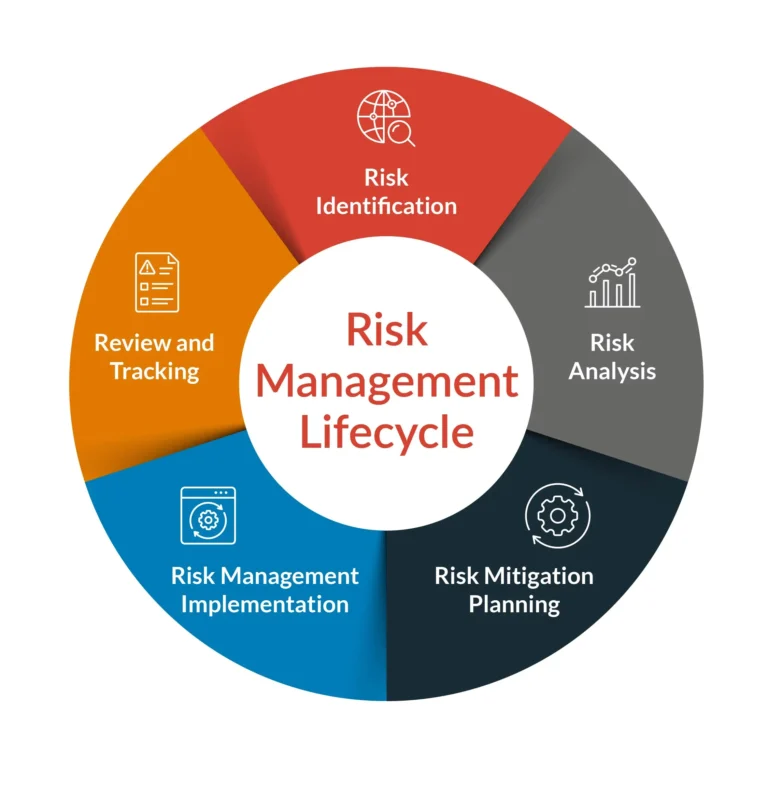
Your SEP should describe how risk identification will be integrated with technical planning activities. When you define system architecture approaches, technical review milestones, or technology maturation activities, simultaneously identify the risks that could affect those technical decisions. Link risk likelihood and consequence to specific technical outcomes. Define the risk lifecycle: how risks will be identified, analyzed, prioritized, monitored, and how response strategies will be integrated with technical planning. Include opportunity management, recognizing that systems engineering often encounters situations where proactive steps can improve outcomes beyond baseline expectations.
Example: When planning integration testing of a complex subsystem, technical risks include interface compatibility failures, performance shortfalls under load, and environmental sensitivity. Each risk should link to specific technical response strategies—early interface verification, staged performance testing, or environmental characterization—that integrate with your test plan and affect system architecture decisions if risks materialize.
Learn more: Risk Management Integration in Technical Planning
Mistake #5: SEP vs. Project Management Plan Boundary Confusion
Root Cause Analysis
Organizational role confusion frequently leads to SEPs that contain project management content or PMPs that attempt to address technical processes. This boundary violation stems from unclear role definitions, shared authorship without clear boundaries, and insufficient understanding of how technical and administrative processes differ. In smaller organizations where individuals perform both project management and systems engineering functions, the temptation to consolidate documentation becomes especially strong.
Warning Signs
- Your SEP contains detailed schedule milestones, work breakdown structures, or budget estimates
- Risk sections focus exclusively on cost and schedule without technical content
- No clear distinction exists between who reviews the SEP versus the PMP
- Reviewers note duplication between documents
- Technical processes are described in management terminology
Mitigation Strategies
Various frameworks from defense and aerospace sectors provide guidance on document boundaries. The SEP should address technical processes: requirements management, architecture definition, design, integration, verification, validation, and transition. The PMP should address management processes: schedule development, resource allocation, procurement, and control mechanisms. When overlap naturally exists—such as in risk management, where both technical and schedule risks exist—clearly delineate scope. The SEP addresses technical risks and their integration with engineering decisions; the PMP addresses programmatic risks and their integration with project controls.
Example: Your SEP should not contain a detailed project schedule showing when design reviews occur. It should contain a description of technical review entrance and exit criteria, what will be evaluated at each review, and what technical artifacts must be available. The PMP contains the actual schedule dates and who is responsible for logistics. These documents complement each other but serve distinct purposes.
Reference: Defense Acquisition University guidance and NASA Systems Engineering Handbook (NPR 7123.1) address technical planning documentation boundaries.
Mistake #6: Neglecting Configuration Management and Verification Planning in SEP
Root Cause Analysis
Configuration management and verification planning often receive inadequate attention in SEPs because practitioners view them as implementation activities rather than planning concerns. This perspective leads to vague descriptions that satisfy documentation requirements without providing meaningful guidance. Root causes include insufficient training on configuration management technical processes, assumption that organizational procedures are sufficient, and failure to recognize that verification planning drives design constraints.
Warning Signs
- Verification criteria are absent or stated only in general terms
- No distinction exists between verification methods (analysis, demonstration, inspection, test)
- Configuration item selection is not addressed
- Baseline definitions are vague or missing
- No process is described for handling non-conformances discovered during verification
Mitigation Strategies
Your SEP should define the configuration management approach: which items will be controlled, what baselines will be established, how changes will be managed, and what documentation will record configuration status. For verification, specify the methods that will apply to each requirement category, define acceptance criteria that are measurable and achievable, and link verification activities to specific lifecycle phases. Address validation planning separately—how you will confirm that the system addresses stakeholder needs in its intended environment.
Example: For a safety-critical control system, verification planning should specify that each safety requirement will be verified through testing, that test procedures will be reviewed against requirements prior to execution, and that test results will be documented in verification evidence packages that feed configuration management. The SEP should note that all verification evidence must be available prior to each technical review as exit criteria.
Standards references: ECSS-E-ST-10C (European Space Standards) and NASA Systems Engineering Handbook provide guidance on configuration management and verification planning in technical planning documentation.
Learn more: Verification Planning Methods | Configuration Management and Baseline Control
Mistake #7: Ignoring Modern Systems Engineering Practices: MBSE and Digital Transformation
Root Cause Analysis
Model-based systems engineering represents an evolving approach to engineering practice that many organizations are exploring. Yet many SEPs continue to describe workflows that assume traditional document-centric approaches. This may limit efficiency and traceability potential for organizations pursuing digital transformation. Root causes include organizational inertia, lack of MBSE training, assumption that MBSE applies only to architecture work, and insufficient guidance on transitioning from document-based to model-based approaches.
Warning Signs
- No mention of model-based approaches despite project complexity that would benefit
- Documentation workflows assume manual creation and maintenance
- Traceability is described as linking documents rather than model elements
- No consideration is given to digital thread or digital twin integration
- Stakeholder reviews are described entirely in terms of document approval
Mitigation Strategies
Your SEP should address whether and how MBSE will be integrated into technical processes. This does not require immediate adoption of full model-based approaches, but it does require acknowledgment of the transition path for organizations pursuing this direction. Describe how models will support requirements management, architecture definition, and verification. Specify what modeling tools will be used, how model elements will link to requirements and verification evidence, and how model-based information will be shared among stakeholders. Address the skills required for model-based work and how team members will develop those capabilities.
Example: A modern SEP might state: “Systems modeling will be performed using SysML-based tools to capture stakeholder needs, system requirements, and logical architecture. The model will serve as the authoritative source for traceability, with automated linking between model elements. Document generation will pull from model content, reducing manual duplication and ensuring consistency. Team members will receive training on model-based requirements management prior to the requirements development phase.”
Resources: OMG SysML Specification | INCOSE MBSE Initiative
Learn more: Model-Based Systems Engineering (MBSE) Overview
Best Practices Comparison: Systems Engineering Plan Approaches
| SEP Element | Incorrect Approach | Correct Approach |
|---|---|---|
| Structure and Tailoring | Uses standard template without modification; matches a large program template regardless of project size | Tailors content to project complexity; documents rationale for tailoring decisions |
| Requirements Management | Mention that “traceability will be maintained” without specifying tools, methods, or granularity | Defines traceability approach including tool selection, forward and backward linkage strategy, and change impact processes |
| Stakeholder Alignment | Identifies only the customer; assumes needs are known without validation processes | Systematically identifies all stakeholders; describes needs validation and conflict resolution processes |
| Risk Integration | Lists generic risks unrelated to technical decisions; no integration with milestones | Links technical risks to architecture decisions; integrates risk mitigation with engineering activities |
| SEP vs. PMP Boundaries | Contains schedule details, WBS elements, or budget information; duplicates PMP content | Addresses only technical processes; references PMP for management content without duplication |
| Configuration Management | States that “CM will follow organizational procedures” with no specific planning | Defines configuration items, baselines, change processes, and status accounting approaches |
| Verification Planning | States that “verification will be performed” without specifying criteria or methods | Maps verification methods to requirement types; defines acceptance criteria and evidence requirements |
| Modern Approaches | Describes only document-based workflows; no mention of MBSE or digital transformation | Addresses model-based approaches where applicable; describes transition path from document-centric practice |
This table maps common SEP deficiencies to recommended practices aligned with ISO/IEC/IEEE 15288 technical process guidance.
Mapping Common Mistakes to Typical Audit Findings
The following mapping connects each SEP mistake to typical audit findings and compliance gaps observed in systems engineering documentation reviews. Use this as a self-assessment rubric for evaluating your own documentation practices.
| Common Mistake | Typical Audit Finding | Compliance Gap |
|---|---|---|
| Generic Template Approach | “SEP content does not reflect project-specific scope or lifecycle” | Gap in tailoring documentation per contract requirements |
| Weak Traceability | “No evidence of bidirectional traceability between requirements and verification” | Inadequate requirements traceability planning per ISO/IEC/IEEE 15288 technical processes |
| Stakeholder Misalignment | “Stakeholder needs not validated; requirements may not address user expectations” | Insufficient stakeholder needs identification and validation |
| Superficial Risk Integration | “Risk items are programmatic only; no technical risks identified” | Risk not integrated with technical planning activities |
| SEP/PMP Confusion | “Duplicate content between SEP and PMP; unclear document boundaries” | Document boundary definitions unclear |
| Missing CM and Verification | “No configuration items identified; verification approach undefined” | Configuration management and verification planning gaps |
| No Modern Approaches | “SEP does not address MBSE adoption or digital transformation path” | Gap in contemporary engineering practice planning |
Note: Specific audit findings vary by organization, contract type, and applicable standards. Consult your specific program guidance and applicable standards for audit criteria.
Actionable Takeaways: Building Your Robust Systems Engineering Plan
Translating these lessons into practice requires systematic action. Use the following checklist to evaluate and improve your SEP development process:
Essential Checklist for SEP Improvement
- Evaluate tailoring decisions: Does your SEP content match your project scope, complexity, and contract requirements? Have you documented why each section is included at its current depth?
- Strengthen traceability planning: Have you specified the tools, methods, and processes for maintaining bidirectional traceability? Is change impact analysis integrated with your requirements process?
- Enhance stakeholder coverage: Have you identified all stakeholder categories, not just the primary customer? Do you have processes for validating and reconciling stakeholder needs?
- Integrate risk with technical planning: Are your identified risks specific to technical decisions? Do risk mitigation activities appear in your technical planning?
- Clarify document boundaries: Does your SEP address technical processes exclusively? Have you removed schedule details, WBS elements, and budget information that belong in the PMP?
- Define verification and configuration management: Have you specified verification methods and acceptance criteria? Have you defined configuration items and baseline control mechanisms?
- Address modern engineering practices: Does your SEP acknowledge MBSE and digital transformation opportunities relevant to your project?
Resources for Continued Learning
Deepen your systems engineering plan expertise through these authoritative references:
- INCOSE Systems Engineering Handbook: Comprehensive guidance on SEP content and development processes
- ISO/IEC/IEEE 15288: International standard defining system life cycle processes including technical planning
- Systems Engineering Body of Knowledge (SEBoK): Reference material on tailoring SEP for different project contexts
- NASA Systems Engineering Handbook: Practical guidance on documentation practices for space and aeronautics systems
- ECSS-E-ST-10C: European Space Agency standard addressing systems engineering planning and documentation
- IEEE Std 15288.1-2014: Technical processes implementation guidance aligned with ISO/IEC/IEEE 15288
- OMG SysML Specification: Standard for model-based systems engineering notation
Continue learning: Systems Engineering Best Practices | Technical Review Gates Planning | Systems Engineering Documentation Guide
Frequently Asked Questions About Systems Engineering Plans
What is a Systems Engineering Plan (SEP) and why is it important?
A SEP is a document that describes how technical effort will be organized and executed throughout a project’s lifecycle. It is critical because it provides the roadmap for systems engineering activities, ensures stakeholder alignment, and serves as the basis for evaluating technical progress. The SEP defines the technical approach, establishes process requirements, and guides the integration of engineering work across organizational boundaries.
What are the most common mistakes made when developing a SEP?
The seven most impactful mistakes include: (1) adopting generic non-tailored approaches regardless of project size or complexity, (2) weak requirements traceability that treats documentation as sufficient rather than establishing operational processes, (3) stakeholder misalignment stemming from insufficient identification and engagement, (4) superficial risk integration that treats risk as a checkbox rather than integrated technical planning, (5) confusion between SEP and Project Management Plan content, (6) missing configuration management and verification planning, and (7) neglecting modern MBSE and digital transformation trends.
What is the difference between a SEP and a Project Management Plan?
A SEP focuses specifically on technical processes, systems engineering activities, and technical baseline management. It addresses requirements management, architecture definition, design, integration, verification, validation, and transition. A Project Management Plan addresses schedule, budget, resource allocation, and administrative controls. The SEP defines what technical work will be performed and how, while the PMP defines how that work is managed, resourced, and scheduled.
How do I avoid misalignment between the SEP and project requirements?
Establish clear traceability matrices linking stakeholder needs to system requirements to verification activities. Conduct regular stakeholder reviews to validate that documented needs remain current. Ensure SEP elements directly address documented requirements, and include processes for managing requirement changes with appropriate impact analysis. Early validation of assumptions prevents downstream misalignment that becomes expensive to correct.
What role does risk management play in a SEP?
Risk management should be an integrated, recurring process documented in the SEP—not a static section. It must identify technical risks specific to system architecture decisions and engineering choices, link them to project milestones, and integrate risk mitigation activities with technical planning. Technical risks differ from schedule and cost risks; they affect the feasibility, performance, or safety of system solutions and must be managed as part of engineering decisions.
How should a SEP adapt to different project lifecycles and scopes?
Tailor SEP content based on project complexity, contract requirements, and organizational standards. Smaller projects with limited teams may abbreviate or combine certain sections while emphasizing core processes like requirements management and verification. Complex defense or aerospace projects require comprehensive documentation addressing all technical processes per standards like ISO/IEC/IEEE 15288, ECSS-E-ST-10C, or NASA guidance. Always document your tailoring rationale to demonstrate that content matches project needs rather than following templates blindly.
What tools support SEP development and requirements traceability?
Requirements management tools such as IBM Engineering Requirements Management DOORS, Jama Connect, and Atlassian Confluence-based solutions support SEP development and traceability maintenance. Model-based systems engineering environments including Cameo Systems Modeler, MagicDraw, and Rhapsody support architecture and requirements management. Configuration management tools such as Git-based repositories, Perforce, or specialized CM tools support baseline control. Select tools based on project scale, integration requirements, and organizational maturity.
Conclusion
Rigorous systems engineering plan development provides the foundation for successful complex system delivery. The seven mistakes examined in this guide—generic tailoring, weak traceability, stakeholder misalignment, superficial risk integration, document boundary confusion, missing configuration and verification planning, and neglect of modern approaches—represent patterns that auditors and reviewers frequently encounter across organizations and sectors.
Addressing these mistakes transforms your SEP from a compliance document into a genuine engineering tool. When your plan accurately reflects project scope, integrates traceability as an operational process, engages stakeholders systematically, treats risk as a technical concern, maintains clear boundaries with project management, plans configuration and verification explicitly, and acknowledges contemporary engineering practices, you create the conditions for successful technical delivery.
Use the comparison tables in this guide as self-assessment tools. Compare your current SEP practices against the correct approaches described. Identify gaps, prioritize improvements based on project risk, and develop an action plan for enhancement. Share findings with your team to build organizational awareness of these common pitfalls.
Begin immediately by selecting one mistake from this guide that most closely matches challenges you have observed. Review the warning signs, assess your current practice against the mitigation strategies, and implement at least one improvement within your current project. Systems engineering excellence develops incrementally; each improvement compounds with the next. Your robust SEP will become a living document that guides delivery success and earns positive evaluation from reviewers and auditors alike.
Ready to improve your SEP? Conduct a Systems Engineering Assessment | Speak with a Systems Engineering Expert