In this guide
Systems Engineering Plans in Action: Case Studies from Aerospace, Defense, and Beyond
How do organizations translate systems engineering theory into working plans that deliver results? This article examines case studies across aerospace and defense to reveal patterns in successful systems engineering plan execution, from NASA’s Mars rover development to DoD acquisition programs and ESA international collaborations.
Effective Systems Engineering Plans: Key Characteristics and Industry Frameworks
The international standard ISO/IEC/IEEE 15288 provides the foundational framework for systems engineering, describing it as a transdisciplinary approach that enables successful system realization. Within this framework, a systems engineering plan serves as the governing document coordinating technical effort, stakeholder needs, and project constraints.
Effective plans share several consistent characteristics:
- Requirements traceability that links stakeholder requirements to technical solutions, enabling change impact assessment and delivery confirmation
- Technical review cycles that serve as decision gates, providing structured opportunities to assess progress and authorize continued investment
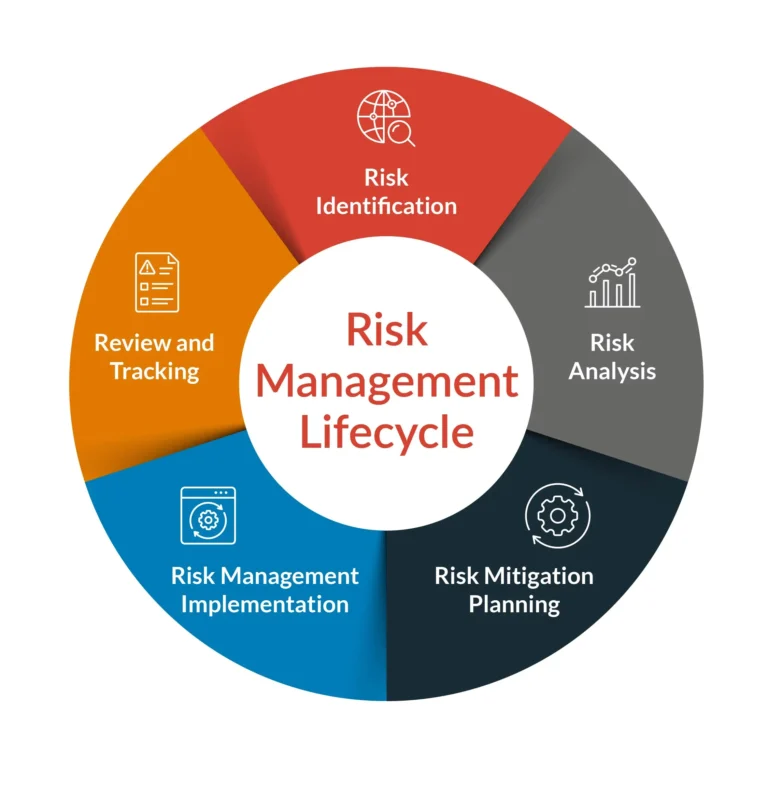
- Integrated risk management as a continuous activity rather than a one-time exercise, with mechanisms for monitoring technical risks throughout the program lifecycle
- Appropriate sizing to project complexity, as emphasized in the INCOSE Systems Engineering Body of Knowledge
Interface management represents another distinguishing factor. Complex systems comprise multiple organizations, subsystems, and stakeholder groups. Effective plans define how these interfaces will be managed, how information will flow across boundaries, and how conflicts will be resolved.
NASA JPL Mars Rover Development: Requirements Traceability Best Practices
NASA’s Jet Propulsion Laboratory has developed numerous planetary missions that exemplify systems engineering planning at the edge of technical possibility. The development of Mars rovers illustrates how organizations approach systems engineering planning when failure consequences are extreme and resource constraints are real.
Requirements traceability forms the backbone of JPL’s approach for planetary missions. Each mission begins with hierarchical decomposition linking high-level science objectives to specific instrument requirements, subsystem specifications, and component-level design. This traceability chain enables engineers to evaluate proposed changes against mission objectives, understanding downstream impacts before modifications are approved.
Technical review cycles at JPL follow a disciplined cadence aligned with program milestones. These reviews provide external stakeholders with evidence of technical progress, create internal accountability for addressing known risks, and establish formal decision points where program leadership authorizes continued funding.
Risk management integration in high-stakes environments demonstrates how systems engineering plans must accommodate uncertainty. JPL’s approach embeds risk assessment throughout the technical review cycle, with each subsystem team maintaining risk registers aggregated at the program level. Risk identification is treated as a continuous activity with mechanisms for surfacing emerging concerns between formal review cycles.
JPL’s approach allocates significant planning attention to operations scenarios that may never occur. Contingency procedures, fault isolation logic, and communication protocols receive systematic engineering attention because inadequate operational preparation can negate years of development investment.
DoD Acquisition Programs: Risk Management Integration Across Lifecycle Phases
Department of Defense acquisition programs face distinctive challenges: developing systems that must operate in environments shaped by adversarial innovation. Case studies from major defense contractors reveal how systems engineering plans evolve across program phases.
Programs managed by Boeing, Lockheed Martin, and Raytheon demonstrate consistent patterns in how systems engineering plans accommodate lifecycle evolution. Initial plans focus on establishing baseline requirements and architecture definitions that can accommodate anticipated growth. Rather than specifying every detail upfront, effective plans build in margin and flexibility that allow for requirement evolution without fundamental redesign.
The transition from development to production represents a critical inflection point where plans must shift emphasis from design definition to manufacturing consistency. Boeing’s experience with aircraft programs illustrates this shift, incorporating statistical process control, supply chain management, and configuration management practices that ensure delivered systems conform to approved designs.
Fighter aircraft development demonstrates how defense programs manage the tension between schedule pressure and technical discipline. Systems engineering plans in this context accommodate concurrent engineering activities, where subsystem development proceeds in parallel while maintaining interface compatibility. Stage-gate processes establish integration points before subsystem designs diverge excessively, preventing late-stage integration surprises.
Missile programs provide case studies in systems engineering planning under extreme performance requirements. Plans must address verification strategies that cannot rely on extended flight testing. Simulation-based verification, hardware-in-the-loop testing, and analysis substitute for operational testing when system performance envelopes cannot be fully explored through live fire.
ESA ExoMars Mission: Interface Management in International Collaboration
European Space Agency programs provide instructive case studies in systems engineering planning across national boundaries. ESA coordinates contributions from national space agencies, each with their own traditions, capabilities, and industrial bases.
Interface management across ESA programs demonstrates how plans must accommodate distributed decision-making authority. When a major program like the ExoMars mission involves contributions from multiple national agencies, no single organization controls all development activities. The systems engineering plan establishes the framework for interface control, defining how specifications will be allocated and how discrepancies will be resolved when national implementations conflict with overall system objectives.
Configuration management in multi-organizational contexts requires explicit attention that less distributed programs can defer. ESA’s approach maintains rigorous configuration control at the system level while allowing national agencies flexibility in achieving allocated requirements. This layered approach ensures the integrated system maintains consistency even when individual contributors optimize local implementations.
Stakeholder coordination across national boundaries introduces communication challenges that systems engineering plans must address. Different national agencies may have different expectations about review formats, documentation standards, and decision authority. Effective ESA program plans establish common frameworks that accommodate these differences while maintaining coherence.
ESA case studies illustrate how systems engineering plans must accommodate varying maturity levels across contributing organizations. Plans define what support will strengthen less experienced contributors, what oversight mechanisms will ensure capability gaps do not compromise program success, and how technical expertise will be shared across the distributed team.
Cross-Industry Patterns: Common Success Factors in Systems Engineering
Comparing systems engineering plan approaches across industries reveals both common success factors and meaningful contextual differences.
- Requirements traceability appears universally valued, though implementation approaches vary. Organizations that maintain living traceability linkages report better ability to assess change impacts and confirm delivery against objectives.
- Technical review discipline appears in every successful case study, but cadence and formality varies significantly with project scale and organizational culture.
- Risk management integration shows interesting variation: defense programs incorporate formal risk review boards, aerospace programs emphasize technical risk through technology readiness levels, and commercial sectors sometimes treat risk more informally.
Contextual differences matter significantly. Aerospace and defense programs often operate in regulatory environments that mandate specific documentation and review approaches. Commercial programs have more flexibility but face tighter cost constraints that can lead to under-investment in systems engineering activities.
Model-Based Systems Engineering (MBSE): Methodology Frameworks and Implementation Trade-offs
Perhaps no trend has reshaped systems engineering planning more significantly than the shift from document-centric to model-based approaches. Model-based systems engineering replaces traditional document-based specifications with integrated models capturing system structure, behavior, and requirements in executable formats.
Common MBSE methodology frameworks include:
- SysML (Systems Modeling Language) as the standard notation for representing systems architecture, requirements, and behavior
- OOSEM (Object-Oriented Systems Engineering Method) for applying object-oriented techniques to systems engineering
- MagicGrid for comprehensive MBSE implementation guidance
The promise of MBSE includes improved traceability, earlier validation of system properties through simulation, and better communication of complex relationships. The reality involves significant investment in tooling, training, and process adaptation.
Successful transitions to MBSE typically share several characteristics. Organizations approached the transition as a multi-year capability development effort rather than a single implementation project. Successful transitions began with clear executive sponsorship that sustained investment through the productivity dip during learning. They typically started with pilot projects on new programs where teams were not simultaneously managing legacy process expectations.
Organizations that attempted wholesale transformation overnight commonly struggled with adoption, tool limitations, and workforce resistance. Some discovered their existing processes were deeply anchored in document-based practices, requiring more organizational change than anticipated. Others found that available MBSE tools did not adequately support their specific domain requirements.
The decision points in transitioning often revolve around timing and scope. Organizations have found success starting MBSE pilots on new programs. Others have successfully introduced MBSE elements incrementally, adding simulation capability or interface modeling without abandoning existing documentation practices.
Metrics and Indicators for Systems Engineering Plan Success
Case studies across industries reveal measurable indicators that distinguish successful systems engineering plan execution from troubled programs.
- Requirements volatility serves as an early warning indicator. Programs experiencing frequent requirements changes often face systemic problems with planning.
- Traceability completeness offers another diagnostic indicator. Programs maintaining comprehensive traceability demonstrate better change impact assessment capability.
- Technical review outcomes provide insight into program health. Programs where reviews identify significant risks early demonstrate effective planning.
- Risk management metrics reveal how well organizations anticipate challenges. The ratio of proactively managed risks to reactively addressed problems indicates organizational capability.
- Interface specification currency serves as a leading indicator for integration risk. Programs where interface control documents are regularly updated demonstrate smoother integration phases.
Applying Case Study Lessons: Actionable Guidance for Systems Engineers
The case studies offer lessons that organizations can adapt to their own contexts. Translating these lessons into actionable guidance requires considering organizational size, industry context, and existing systems engineering maturity.
For organizations beginning to develop or strengthen systems engineering planning capabilities, the most important first step is sizing the plan to project complexity. The sizing decision should explicitly consider stakeholder expectations, regulatory requirements, and organizational capabilities.
Building requirements traceability capability deserves priority attention regardless of organizational maturity level. Even organizations that cannot implement sophisticated traceability tools can maintain spreadsheet-based traceability matrices. The key is establishing discipline to maintain traceability as a living artifact.
Technical review processes should be designed to serve decision-making rather than documentation compliance. Effective reviews create structured opportunities to assess progress, identify risks, and authorize continued investment.
Organizations considering transitions to model-based systems engineering should approach the change as a multi-year capability development initiative. Starting with pilot projects on new development efforts allows teams to build competence without simultaneously managing legacy expectations.
Risk management integration should be treated as a continuous activity. Teams that maintain living risk registers, revisit assessments regularly, and integrate risk thinking into technical decisions demonstrate better anticipation capability.
Interface management deserves explicit attention even in organizations that do not operate across external organizational boundaries. Internal interfaces between subsystems, between development and production, and between technical teams and program management all benefit from explicit specification and control.
Emerging Trends in Systems Engineering: Digital Twins and AI-Assisted Approaches
The systems engineering field continues to evolve with emerging technologies that promise to reshape planning and execution practices. Digital engineering approaches, including digital twin technologies, increasingly supplement traditional systems engineering methods by enabling continuous simulation and performance monitoring throughout system lifecycles.
Organizations exploring these emerging approaches should consider how digital representations might enhance requirements validation, risk assessment, and stakeholder communication. However, as with MBSE transitions, successful adoption requires realistic assessment of organizational readiness and investment requirements.
Frequently Asked Questions
What distinguishes an effective systems engineering plan from an ineffective one based on documented case studies?
Effective systems engineering plans share several characteristics identified across case studies. They establish clear traceability linking stakeholder requirements to technical solutions, enabling impact assessment for proposed changes. They define appropriate technical review cycles that serve decision-making rather than merely satisfying documentation requirements. They integrate risk management as a continuous activity throughout the program. They are sized appropriately to project complexity. Effective plans are maintained as living documents that evolve with project understanding rather than static artifacts created during planning.
How do organizations adapt systems engineering plans across different industries and project scales?
Organizations adapt systems engineering plans primarily by sizing the planning and control approach to the specific project context. Large aerospace and defense programs with extensive stakeholder networks require more elaborate planning than small commercial development efforts. Industry context shapes adaptations: defense programs incorporate threat-driven requirements analysis, aerospace programs emphasize verification approaches that cannot rely on operational testing, and commercial programs often emphasize schedule discipline and cost efficiency.
What common pitfalls in systems engineering plan execution have case studies revealed?
Several recurring pitfalls emerge across case studies examined. Plan sizing errors appear frequently, where organizations apply templates without adequately considering whether the approach matches their project context. Requirements instability represents another common pitfall, where organizations fail to establish adequate requirements baseline discipline. Inadequate interface management creates problems when organizations defer attention to cross-boundary coordination until integration phases reveal incompatibilities. Insufficient risk integration results in programs that address problems reactively rather than anticipating challenges.
What metrics and indicators predict systems engineering plan success or failure?
Several metrics have shown predictive value across case studies. Requirements volatility rates provide early warning of planning instability. Traceability completeness indicates whether organizations can assess change impacts effectively. Technical review findings patterns reveal whether systems engineering processes are identifying issues at appropriate stages. Risk management currency shows whether organizations anticipate challenges or merely respond to problems. Interface specification maintenance predicts integration phase smoothness.
How have organizations successfully transitioned from document-based to model-based systems engineering approaches?
Successful transitions share common characteristics. Organizations approached the transition as a multi-year capability development initiative rather than attempting immediate wholesale transformation. They maintained executive sponsorship that sustained investment through the learning curve period. They typically began with pilot projects on new efforts rather than attempting transformation on programs under delivery pressure. Organizations that attempted revolutionary transformation or pursued transitions without adequate sponsorship consistently struggled with adoption.
What role do stakeholder requirements play in shaping systems engineering plans across case studies?
Stakeholder requirements serve as the foundation that systems engineering plans build upon throughout program lifecycles. Effective plans establish requirements baseline discipline early, defining what constitutes approved requirements and how changes will be controlled. Plans address how stakeholder input will be gathered, analyzed, and prioritized when requirements compete for limited resources. Programs that establish strong requirements foundations early consistently demonstrate better ability to manage change and deliver against stakeholder expectations.
Conclusion
The case studies examined reveal consistent patterns that distinguish effective systems engineering plan execution from troubled programs. Requirements traceability, appropriate technical review cycles, integrated risk management, and interface management appear as foundational elements across aerospace and defense contexts.
The transition from document-based to model-based systems engineering represents a significant opportunity for organizations seeking to improve their systems engineering capabilities. Successful transitions require patient, incremental capability building supported by sustained executive sponsorship.
The metrics and indicators identified from these case studies offer practical tools for assessing systems engineering health: requirements volatility, traceability completeness, technical review outcomes, risk management currency, and interface specification maintenance all provide insight into whether plans are functioning effectively.
Applying these lessons requires adaptation to organizational context. Organizations must consider their specific stakeholder expectations, regulatory environments, existing capabilities, and project contexts when determining how to implement identified patterns. The sizing discipline observed consistently across successful programs suggests that more important than adopting any specific practice is ensuring that the approach adopted fits the complexity of the work being performed.