In this guide
Advanced Strategies for Systems Engineering Plan Development
Most systems engineers possess a solid understanding of systems engineering principles. They can recite the INCOSE definitions, reference ISO/IEC/IEEE 15288 processes, and describe stakeholder analysis techniques. Yet when it comes to creating plans that actually work in real organizational contexts—where legacy constraints, resource limitations, and evolving requirements constantly collide—many find themselves struggling to translate theoretical rigor into practical implementation.
This gap between knowing systems engineering principles and effectively planning systems engineering work represents one of the most persistent challenges in engineering organizations today. Advanced strategies for developing robust systems engineering plans bridge this gap by providing frameworks that honor traditional rigor while embracing modern digital transformation imperatives.
Throughout this article, you will find actionable guidance for creating plans that scale with complexity, integrate seamlessly with program management, and evolve with organizational maturity. Whether you are overseeing a defense acquisition program, developing medical devices under IEC 62304 requirements, or architecting enterprise software systems, these strategies will help you build planning processes that work in your context—not just in idealized textbook scenarios.
Understanding the Advanced Systems Engineering Planning Landscape
Advanced systems engineering planning differs fundamentally from basic approaches in its treatment of uncertainty, complexity, and stakeholder dynamics. Where basic planning assumes relatively stable requirements and linear development progression, advanced planning acknowledges that systems engineering in complex organizations requires adaptive frameworks capable of accommodating change while maintaining technical integrity.
The INCOSE Systems Engineering Handbook (versions 4 and 5) establishes the foundational expectations for systems engineering planning, defining the activities, outputs, and technical rigor expected of any systems engineering effort. ISO/IEC/IEEE 15288:2015 complements this by providing an international standard for life cycle processes, offering a structured vocabulary for describing systems engineering work across different domains and organizational contexts.
Several complexity drivers necessitate advanced planning strategies. First, modern systems increasingly comprise software-intensive components where requirements volatility challenges traditional sequential planning approaches. Second, stakeholder ecosystems have expanded beyond traditional customer-contractor relationships to include regulators, users, maintainers, and numerous internal organizational functions. Third, supply chain complexity means that architecture decisions increasingly depend on supplier capabilities and commercial-off-the-shelf availability.
Advanced planning addresses these complexity drivers through explicit uncertainty management, iterative refinement mechanisms, and configuration management processes that scale with program size. The distinguishing characteristic of advanced approaches is not complexity for its own sake, but rather intentional design of planning processes that match the actual complexity of the system being developed.
Foundational Elements of a Comprehensive Systems Engineering Plan
Every robust systems engineering plan must address several non-negotiable core components. These foundational elements provide the structural framework within which all other planning activities occur.
Stakeholder Identification and Analysis forms the first critical element. Effective plans explicitly identify all stakeholder categories, document their needs and constraints, and establish engagement strategies for ongoing communication throughout the system life cycle. This goes beyond initial requirements gathering to include maintenance stakeholders, operators, and end users whose perspectives shape system success but whose input often arrives too late to influence design decisions.
System Boundary Definition establishes what the system under development includes and excludes. This seemingly straightforward element often proves contentious in practice, as stakeholders may have different understandings of system scope. Advanced plans address boundary definition through explicit context diagrams, interface identification at system boundaries, and review mechanisms that catch boundary creep before it creates integration problems.
Life Cycle Stage Delineation maps the technical work to appropriate life cycle phases. Per ISO/IEC/IEEE 15288:2015 (clause 6.2), standard stages include concept, development, production, utilization, support, and retirement, but advanced planning tailors stage definitions to program-specific needs. A software-intensive system might emphasize iterative development stages aligned with NIST systems security engineering practices, while a defense platform might require more formal stage-gate transitions between concept, demonstration, and production phases consistent with DoD adaptive acquisition framework guidance.
Technical Process Alignment connects planning to organizational governance requirements. This includes mapping systems engineering activities to program management milestones, establishing review and audit requirements, and identifying decision authority for technical trade-offs.
The critical balance in foundational planning is right-sizing rigor to project complexity. Over-engineering plans for small efforts wastes resources and creates bureaucratic overhead that frustrates teams. Under-engineering plans for large programs leaves critical integration risks unaddressed. Advanced planning provides decision criteria for determining appropriate rigor levels based on factors including program size, regulatory environment, technology maturity, and organizational complexity.
Stakeholder Requirements Architecture and Traceability Framework
Translating stakeholder needs into technical requirements represents one of the most consequential planning decisions. The architecture of requirements capture, decomposition, and allocation determines how well the final system addresses actual stakeholder needs versus technically elegant but irrelevant specifications.
Requirements decomposition follows a hierarchical structure from stakeholder needs through system requirements to subsystem and component specifications, as outlined in ISO/IEC/IEEE 29148 for requirements engineering. At each level, requirements should ideally be derived from parent requirements, enabling verification that lower-level specifications contribute to higher-level needs. In practice, derivation chains may contain gaps or undocumented assumptions that require ongoing attention throughout the development lifecycle.
Bidirectional traceability constitutes the often-neglected second direction of effective traceability architecture. Forward traceability connects stakeholder needs through requirements to design elements and verification evidence. Backward traceability enables impact analysis when requirements change by identifying which lower-level specifications derive from changing requirements. Without backward traceability, requirements changes cascade through the design space without systematic assessment of their implications.
Practical traceability architecture scales from small teams to enterprise programs through tiered organization. At the enterprise level, a small number of capability requirements connect to program-level system requirements. At the program level, system requirements decompose to segment and component specifications. At the team level, component specifications may further decompose to detailed design specifications or software requirements.
Large-scale systems benefit from automated traceability linking between requirements management tools and design models. Manual traceability maintenance becomes error-prone and unsustainable at scale. When selecting traceability tools, prioritize integration capability between requirements management and modeling environments, coverage analysis reporting features, and change impact assessment automation.
Model-Based Systems Engineering Adoption Without Disruption
Organizations recognize MBSE‘s value proposition for managing complex system design, yet many struggle with adoption that does not disrupt active program execution. The elephant in the room remains: document-based approaches dominate because they work for many organizations, and abandoning them overnight creates more problems than it solves.
Pragmatic MBSE adoption begins with readiness assessment. Evaluate organizational maturity across several dimensions including modeling skill levels, tool infrastructure, process integration capability, and leadership support. The INCOSE MBSE Maturity Model provides a useful framework for assessing organizational readiness before committing to adoption timelines. Organizations lacking fundamental requirements management discipline will struggle with MBSE adoption, as the approach amplifies both good and poor practices in requirements engineering.
Pilot program selection significantly influences adoption success. Choose programs with moderate complexity where MBSE benefits are achievable, team members motivated to learn new approaches, and leadership willing to accept imperfect initial results. Avoid selecting high-stakes programs where MBSE learning curves create unacceptable risk, and avoid trivial programs where MBSE benefits are hard to demonstrate.
Toolchain evaluation should align with SysML standards while matching organizational needs. Core MBSE tools include Cameo Systems Modeler (current versions 19.0+), IBM Engineering Systems Design Rhapsody, and open-source options like Modelio or the Eclipse Capella tool implementing the Arcadia method. Evaluate tools based on SysML language coverage, collaboration capabilities for distributed teams, integration with existing design and analysis tools, and learning curve for target users.
Incremental adoption follows pilot success. Start with requirements visualization and stakeholder needs modeling. Progress to functional architecture modeling before attempting full behavioral or parametric modeling. Expand MBSE scope gradually as organizational competency grows, always maintaining parallel document-based approaches until MBSE reliability is established.
System Architecture Planning and Trade-off Analysis Methodology
Architecture decisions made early in planning significantly influence the system’s life cycle cost and operational capabilities. Studies from organizations like NASA and various defense programs have documented substantial cost implications of early architectural choices, though specific percentages vary by program context and methodology. Advanced planning treats architecture as a deliberate decision-making process supported by structured trade-off analysis rather than a creative exercise yielding optimal solutions.
Trade-off analysis frameworks must balance competing stakeholder priorities with technical constraints. Establish explicit constraint categories including budget limitations, schedule requirements, technology maturity assessments, regulatory requirements (such as DO-178C for aerospace software or ISO 26262 for automotive functional safety), and manufacturing capabilities. Define evaluation criteria within each category with weighted importance reflecting stakeholder priorities.
Architecture views communicate design decisions to different audiences. Management stakeholders need architectural summaries emphasizing cost, schedule, and risk implications. Technical teams need detailed specifications enabling implementation. Customers and users need views showing how the architecture satisfies their requirements. Advanced planning identifies required views and establishes review processes for each audience.
The trade-off analysis methodology should include formal decision points where architectural alternatives are evaluated against defined criteria. Document decision rationale for future reference when circumstances change or when successors need to understand why the architecture evolved in particular directions. This decision documentation supports both continuous improvement and regulatory compliance requirements in many domains.
Interface Management and Integration Planning Strategies
Parallel development without proper interface control frequently contributes to integration failures. Research into program failures has identified interface management deficiencies as a recurring issue in complex system development, though attributing such failures to any single cause oversimplifies the multi-factor nature of integration challenges.
Interface management approaches begin with comprehensive interface identification at system boundaries and between major segments. Each identified interface requires documentation including data formats, timing requirements, physical characteristics, and functional responsibilities. Interface Control Documents establish formal agreements between interface partners and provide baselines against which changes are evaluated.
Interface specification standards ensure consistency across the program. Establish naming conventions, data dictionary entries for interface data elements, and protocol definitions for communication interfaces. These standards enable automated compliance checking and reduce misinterpretation during implementation.
Integration event planning prevents late discovery of incompatibilities. Schedule integration events progressively from component integration through segment integration to system-level integration. Define entry and exit criteria for each integration event, establish problem reporting and resolution processes, and allocate time and resources for resolving discovered incompatibilities before proceeding to subsequent integration stages.
Verification, Validation, and Certification Planning for Complex Systems
Verification and validation planning frequently begins too late in the development cycle. Advanced planning addresses this by establishing V&V strategies at requirements definition, ensuring that verification feasibility informs requirements feasibility.
Test strategy development connects verification methods to requirements characteristics. Per ISO/IEC/IEEE 15288 and the INCOSE Handbook, the four primary verification methods offer different trade-offs: analysis provides cost-effective verification for well-understood phenomena; demonstration confirms system capabilities under operating conditions; examination inspects design artifacts and physical properties; testing exercises the system under controlled conditions. Requirements should be written with verification method feasibility in mind.
Certification evidence management becomes critical in regulated domains. Defense, aerospace, and medical device development require documented evidence chains linking requirements through design to verification artifacts. Planning must identify evidence requirements, establish evidence collection responsibilities, and define retention and access protocols for regulatory review. The IEEE 829 standard provides a framework for test documentation that supports evidence management in these contexts.
Integration testing progression requires explicit planning attention. Establish test events that progressively increase integration scope, from component verification through subsystem validation to system-level verification. Define test article requirements specifying build status, documentation availability, and environmental conditions for each test event. Risk-based prioritization helps allocate verification resources to high-criticality requirements when resource constraints preclude comprehensive verification.
Risk Management and Hazard Analysis Integration
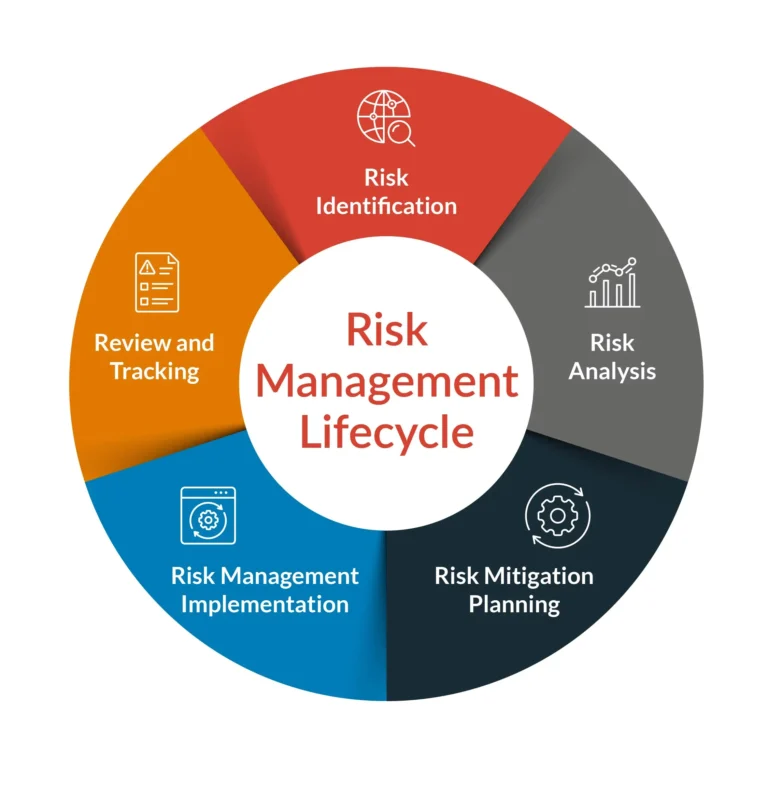
Risk management often treated as a separate programmatic function creates redundant analysis and missed integration opportunities. Advanced planning embeds risk thinking within systems engineering processes, making risk identification and mitigation a continuous activity rather than periodic assessment exercise.
Hazard analysis techniques including Fault Tree Analysis (FTA), Failure Mode and Effects Analysis (FMEA), and Hazard and Operability Studies (HAZOP) provide systematic approaches to identifying and categorizing hazards. These techniques integrate most effectively when applied to specific architecture alternatives, requirements sets, or operational scenarios rather than attempting comprehensive hazard identification for entire systems.
Software-intensive systems require hazard analysis adaptations. Software failures may be systematic rather than random, occurring under conditions not anticipated during development. Advanced planning addresses software hazard analysis through rigorous software requirements review, architecture analysis for single-point-of-failure identification, and testing strategies that explore boundary conditions and unexpected input combinations.
Integration between risk management and systems engineering occurs through shared data architectures. When risk items are linked to requirements, architecture elements, or verification artifacts, the impact of risk events or risk mitigation actions can be traced systematically. This integration supports both proactive risk management and post-incident analysis when risks materialize.
Hybrid Approaches: Integrating Agile with Traditional Systems Engineering
The Agile versus waterfall debate has produced more heat than light in systems engineering communities. Advanced planning sidesteps ideological positioning by advocating hybrid approaches that preserve systems engineering rigor while gaining Agile responsiveness where it provides genuine benefit.
Hybrid approaches recognize that systems engineering encompasses many activities with different characteristics. Requirements elaboration benefits from iterative refinement as stakeholder understanding evolves. Architecture exploration may proceed through rapid prototyping before committing to detailed design. Component development can embrace iteration where technology is mature and requirements are stable. Configuration management and interface control, however, require rigor that pure Agile approaches struggle to provide.
Sprint planning at the system level translates program requirements into time-boxed increments while maintaining system-level perspective. Each sprint should contribute to defined system capabilities, with sprint reviews assessing progress against system-level requirements rather than merely completed stories. This discipline maintains architectural integrity even as development teams work in parallel on different system segments.
Requirements volatility management addresses change within iterative contexts. Establish change review processes that evaluate proposed changes against current sprint commitments and system architecture implications. Some changes can be absorbed within current sprints; others require deferral to subsequent increments. Explicit criteria for this distinction prevent continuous replanning that undermines Agile predictability.
Configuration control in iterative development requires particular attention. While individual component configurations may evolve rapidly, system-level baselines provide stability for integration activities. Define baseline establishment and maintenance strategies that balance change accommodation with integration predictability.
Digital Engineering and Digital Thread Implementation
Digital engineering extends MBSE beyond design modeling to encompass the entire system life cycle. The digital thread concept connects requirements through design, manufacturing, verification, and operations, creating a continuous information backbone that enables data-driven decision making throughout the system life cycle.
Digital thread implementation does not require organizational reinvention. Start with existing data flows and identify integration points that provide high value with manageable implementation complexity. Requirements management systems often provide natural digital thread starting points, connecting to downstream design models, manufacturing planning systems, and maintenance databases.
Integration architecture determines digital thread sustainability. Point-to-point integrations become unmanageable as organizations scale digital thread scope. Enterprise integration approaches using standardized data exchange formats, common vocabularies, and centralized master data management provide the foundation for sustainable digital thread implementation.
Realistic implementation roadmaps acknowledge that digital transformation is a journey, not a destination. Initial digital thread implementations may connect a small number of systems, demonstrating value while building organizational capability. Progressive expansion adds connected systems, improves data quality, and extends thread coverage across more life cycle phases. Measure progress through data accessibility improvements, reduced manual reentry, and faster information retrieval rather than assuming immediate full life cycle integration.
Configuration Management and Change Control at Scale
Configuration management challenges grow non-linearly with system complexity. Early planning attention to configuration management architecture prevents late surprises that disrupt program execution and regulatory compliance.
Change control board operations require clear governance structures. Define board membership representing affected stakeholder categories, establish decision criteria for different change categories, and document escalation paths for changes exceeding board authority. Advanced planning addresses change review frequency, ensuring responsiveness to urgent needs while maintaining deliberate evaluation of change implications.
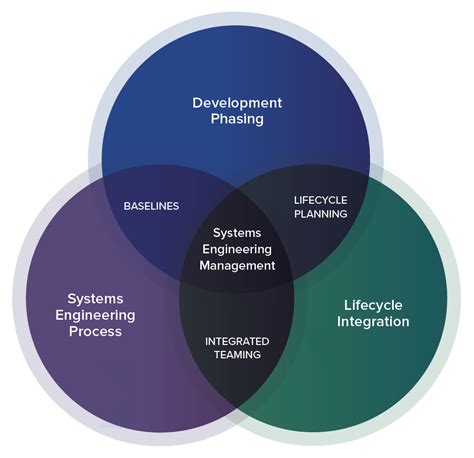
Baseline management provides stability within change processes. Identify baseline levels appropriate to program complexity, establish baseline establishment and maintenance procedures, and define relationships between baselines at different levels. System baselines provide stability for segment development; segment baselines provide stability for component development; configuration baselines define approved system configurations for production or deployment.
Impact analysis methodologies connect changes to their downstream implications. Automated impact analysis tools examine change propagation through requirements, design, and verification artifacts, identifying affected items and suggesting areas requiring evaluation. Manual impact analysis remains necessary for complex changes where automated tools cannot fully capture implications.
Distributed team configuration management addresses challenges in organizations with geographically dispersed development teams. Centralized configuration databases with replicated access, clear authority definitions for configuration changes by location, and robust communication protocols for configuration status reporting enable effective configuration management across organizational boundaries.
Building Your Implementation Roadmap: Incremental Maturity Advancement
Synthesizing the guidance throughout this article, organizations need actionable roadmaps for advancing systems engineering planning maturity. Incremental advancement preserves program execution capability while systematically improving processes.
Current-state assessment establishes baseline maturity. Evaluate planning processes against the key components identified throughout this article: stakeholder engagement continuity, requirements traceability architecture, risk integration, interface management, V&V planning timing, digital thread connectivity, and configuration management scalability. Document both strengths and improvement opportunities.
Prioritized improvement pathways sequence capability development based on impact and feasibility. High-impact, feasible improvements should be prioritized over transformational changes requiring years to implement. Where possible, select improvements that address multiple capability gaps simultaneously, maximizing return on improvement investment.
Metrics for measuring planning process improvement include cycle time measures, defect escape rates, change impact analysis accuracy, and stakeholder satisfaction. Define measurement approaches before implementing improvements to enable before-after comparison. Avoid measuring everything and tracking nothing; focus on metrics directly connected to improvement objectives.
Active program integration allows improvement activities without disrupting program execution. Embed improvement initiatives within normal program activities, treating capability development as part of ongoing work rather than additional burden. Pilot new approaches on selected programs before enterprise rollout, learning from implementation experience before scaling.
Frequently Asked Questions
What are the key components that distinguish an advanced systems engineering plan from a basic one?
Advanced systems engineering plans distinguish themselves through bidirectional requirements traceability architecture, integrated risk and hazard analysis woven throughout rather than siloed, explicit interface management with baseline control, V&V planning that begins at requirements definition, digital thread connectivity between artifacts, and configuration management that scales with complexity. They also address stakeholder engagement continuity, not just initial capture, and include explicit decision review points with criteria.
How should systems engineering planning differ between complex and simple projects?
The core processes remain consistent, but complexity determines rigor and formality levels. Simple projects may use streamlined stakeholder analysis and lightweight traceability, while complex programs require formal stakeholder identification matrices, comprehensive requirements decomposition trees, dedicated interface control documentation, and multi-tiered verification strategies. The key is right-sizing—not over-engineering plans for simple efforts or under-engineering for complex ones.
What methodologies and frameworks should be incorporated for advanced planning?
Advanced plans should draw from ISO/IEC/IEEE 15288 for life cycle process alignment, INCOSE standards for systems engineering practice, NASA Systems Engineering Handbook for complex system guidance, MBSE with SysML for model-based approaches, and Agile hybrid frameworks for iterative contexts. Domain-specific standards such as DO-178C for aerospace, ISO 26262 for automotive, and IEC 62304 for medical devices should inform planning in regulated domains. The integration point is the plan itself, which must accommodate multiple methodologies without creating contradictory requirements.
How do you balance stakeholder requirements with technical constraints in planning?
Balancing requires explicit trade-off analysis frameworks integrated into the planning process. Establish constraint categories including budget, schedule, technology maturity, and regulations. Define evaluation criteria with weighted importance and create formal review gates where trade-off decisions are documented with rationale. The plan should identify these decision points and define authority for different constraint categories.
What tools and techniques support effective systems engineering planning?
Core techniques include requirements management tools with traceability capabilities, MBSE modeling environments (such as Cameo, Rhapsody, or Modelio), simulation tools for architecture trade-off analysis, risk management databases, configuration management systems, and collaboration platforms for distributed teams. Selection criteria should include integration capability between tools, scalability to program size, and learning curve appropriateness for team maturity.
How do you handle requirements traceability in large-scale systems?
Large-scale traceability requires tiered architecture with parent-child relationships, automated linking between requirements management tools and design models, coverage analysis reporting, and impact assessment capability for changes. Establish traceability at each decomposition level from system through segment to component, and maintain cross-linkage to verification artifacts and downstream life cycle data.
What are common pitfalls in systems engineering planning and how do you avoid them?
Critical pitfalls include insufficient stakeholder engagement leading to requirements gaps, overly complex planning that impedes execution, poor traceability causing integration failures, inadequate risk anticipation, disconnects between systems engineering and program management, premature MBSE adoption without readiness assessment, scope creep without configuration control, and late V&V planning. Avoidance requires explicit planning attention to these risk areas and periodic plan health checks.
How should verification and validation be planned in advanced systems engineering?
V&V planning must begin during requirements definition, not after development begins. Identify verification methods per ISO/IEC/IEEE 15288: analysis, demonstration, examination, and test for each requirement. Establish test article requirements, plan certification evidence collection, and create integration test events progressing from component through system to operational testing. The plan should include risk-based prioritization for verification resource allocation.
Conclusion
Advanced strategies for developing robust systems engineering plans represent a practical bridge between traditional systems engineering rigor and modern digital transformation imperatives. The frameworks presented throughout this article share a common thread: they honor the discipline that has made systems engineering effective while embracing the adaptability that contemporary development contexts demand.
The key insight underlying advanced planning is that organizations do not need revolutionary change. Incremental advancement, carefully sequenced based on organizational readiness and program priorities, delivers sustainable capability growth without the disruption that revolutionary approaches often create. Start with foundational elements that provide immediate value, build traceability and configuration management capabilities that enable more advanced practices, and progressively introduce MBSE, digital thread concepts, and hybrid Agile approaches as organizational maturity supports their effective implementation.
Your next step is straightforward: assess your current planning maturity against the components outlined in this article. Identify one improvement area where increased capability would deliver meaningful program benefit with manageable implementation effort. Begin that improvement now, using incremental approaches that build success and organizational confidence for subsequent capability advancement.
Advanced systems engineering planning is not a destination you reach but a continuous journey of improvement. Each increment of capability builds on previous foundations, ultimately achieving planning processes that effectively bridge the gap between theoretical rigor and practical implementation in your organizational context.
Ready to assess your current systems engineering plan maturity? Connect with our engineering excellence team to discuss your planning improvement priorities.