In this guide
The Ford Coyote V8: From Factory Engineering to Aftermarket Performance
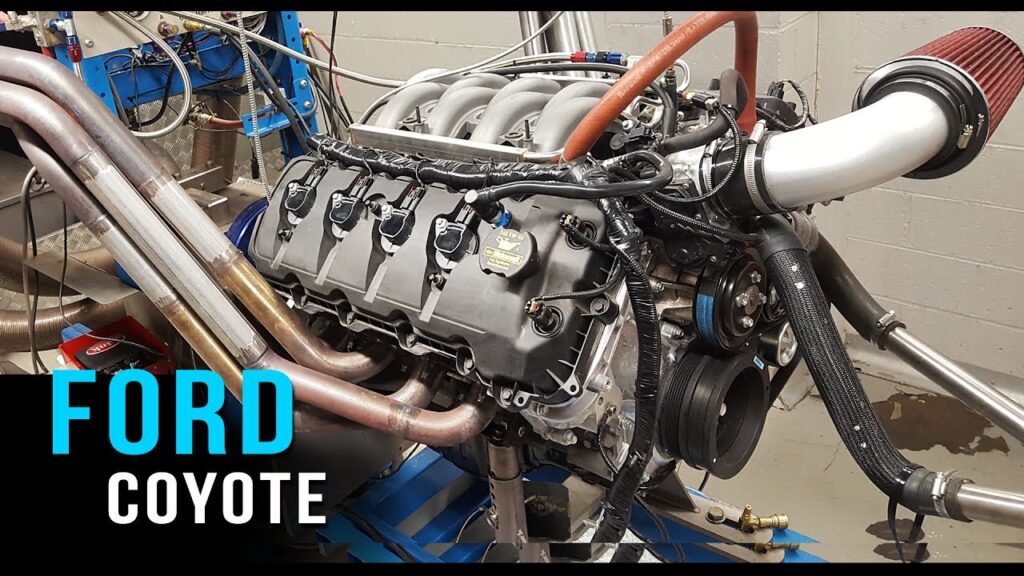
The Ford Coyote 5.0-liter V8 represents one of the most significant achievements in modern American performance engine design. Since its debut in 2011, this powerplant has become the cornerstone of Ford’s performance lineup, powering everything from the iconic Mustang GT to the legendary Ford GT supercar. The engine combines cutting-edge technology with legendary Ford durability, creating a platform that appeals equally to daily commuters seeking refinement and enthusiasts pursuing maximum performance.
This guide serves as your definitive resource for understanding the Coyote engine inside and out. We will explore the engine’s technical specifications across all production years, trace its evolutionary development, examine real-world reliability data, provide practical maintenance guidance, and survey the extensive aftermarket ecosystem that has grown around this remarkable powerplant. Whether you are a prospective buyer evaluating a used Coyote-powered vehicle, a current owner looking to optimize your investment, or an enthusiast planning your next build, this article delivers the information you need to make informed decisions.
Our approach balances technical depth with accessibility, ensuring that newcomers to the world of performance V8s can grasp the fundamentals while seasoned enthusiasts discover nuanced details that enhance their understanding of this remarkable engine.
What is the Ford Coyote V8? – Background and Vehicle Applications
The Ford Coyote is a 5.0-liter, naturally aspirated V8 engine developed by Ford’s performance division, formerly known as Special Vehicle Team (SVT) and now branded as Ford Performance. This engine represents Ford’s commitment to delivering modern performance without sacrificing everyday drivability or fuel efficiency.
Ford engineers designed the Coyote from a clean sheet of paper, incorporating technologies that had proven successful in motorsport while meeting the rigorous demands of mass production. The engine features an aluminum construction for weight savings, advanced variable valve timing for optimal power delivery, and a robust rotating assembly designed to handle both stock power levels and significant aftermarket modifications.
Primary Vehicle Applications
The Coyote engine powers several significant Ford vehicles across different market segments:
Ford Mustang S197 (2011-2014): The Coyote made its debut in the fifth-generation Mustang GT, replacing the previous 4.6-liter modular V8. This application established the engine’s reputation for delivering modern performance in an iconic package. The S197 platform offered the perfect introduction for the new engine, combining classic muscle car styling with contemporary performance.
Ford Mustang S550 (2015-Present): When Ford introduced the sixth-generation Mustang, the Coyote received significant upgrades including the addition of direct injection. The S550 platform has served as the primary showcase for the engine’s evolution, with each model year bringing incremental improvements to power, efficiency, and refinement.
Ford F-150 13th Generation (2015-2020): Ford’s decision to install the Coyote in the F-150 light-duty truck demonstrated the engine’s versatility and durability. This application required different tuning to deliver the low-end torque that truck customers expect while maintaining acceptable fuel economy for a full-size pickup.
Ford GT (2016): The limited-production Ford GT hypercar featured a twin-turbocharged derivative of the Coyote architecture, producing over 600 horsepower in production form. While this version differs significantly from the naturally aspirated Coyote, it proves the fundamental strength and adaptability of the platform’s engineering.
This broad application across sports cars, muscle cars, and trucks speaks to the engine’s inherent balance of performance, durability, and versatility that Ford’s engineers achieved in the original design.
Core Technical Specifications Across Generations
Understanding the Coyote’s specifications across its production history helps owners and prospective buyers appreciate how the engine has evolved and what improvements each generation offers. The following table summarizes key specifications for primary production years.
| Model Year | Displacement | Horsepower | Torque (lb-ft) | Compression Ratio | Fuel System | Redline (RPM) |
|---|---|---|---|---|---|---|
| 2011-2012 | 5.0L (302 cid) | 412 hp | 390 | 11.0:1 | Port Injection | 6,500 |
| 2013-2014 | 5.0L (302 cid) | 420 hp | 390 | 11.0:1 | Port Injection | 6,700 |
| 2015-2017 | 5.0L (302 cid) | 435 hp | 400 | 11.0:1 | Direct + Port | 7,000 |
| 2018-2020 | 5.0L (302 cid) | 460 hp | 420 | 12.0:1 | Direct + Port | 7,300 |
| 2021-2023 | 5.0L (302 cid) | 450-480 hp* | 410-415 | 12.0:1 | Direct + Port | 7,500 |
| 2024 | 5.0L (302 cid) | 480 hp | 415 | 12.0:1 | Direct + Port | 7,500 |
*2021-2023: Base Mustang GT produced 450 hp; the Mach 1 variant produced 480 hp. Specifications vary by vehicle application and trim level.
Several technical details remain consistent throughout production: the iron-lined aluminum block provides strength without excessive weight, the cross-plane crankshaft delivers the deep rumbling exhaust note that enthusiasts love, and the 3.66-inch bore combined with a 3.65-inch stroke represents the dimensional choices Ford engineers selected to balance high-RPM power output with low-end torque characteristics. Oil capacity typically ranges from 7 to 8 quarts depending on the specific application, with the S550 Mustang requiring approximately 7 quarts with a filter change—though owners should consult their vehicle’s official Ford Service Workshop Manual for application-specific specifications.
Evolution of the Coyote: 2011-2024
The Coyote engine has undergone continuous refinement since its introduction, with each model year bringing meaningful improvements that address weaknesses, enhance performance, or improve efficiency. Understanding this evolution helps owners appreciate their engine’s specific capabilities and potential.
First Generation (2011-2014): Establishing the Foundation
The initial Coyote design introduced Ford’s Twin Independent Variable Camshaft Timing (Ti-VCT) system, which allowed precise control over valve timing for both intake and exhaust camshafts. This technology improved power output across the entire RPM range while enhancing fuel efficiency during light throttle operation. The first-generation engine produced 412 horsepower in its debut application, representing a significant improvement over the outgoing 4.6-liter modular V8.
During this period, Ford made minor improvements to the engine’s breathing and durability. The 2013 model year brought a boost to 420 horsepower, achieved through refined cam profiles and improved exhaust flow. These early engines established the platform’s reputation for reliability but also revealed some areas where future development could yield improvements.
Second Generation (2015-2017): The Direct Injection Transformation
The introduction of direct injection in 2015 represented the most significant single upgrade to the Coyote platform. This technology allowed fuel to be injected directly into the combustion chamber at high pressure, improving atomization, cooling the intake charge, and enabling higher compression ratios. The 2015 Mustang GT with the updated Coyote produced 435 horsepower, a 15-horsepower increase over the previous year despite the same basic displacement.
Beyond raw power gains, direct injection enabled better fuel economy during typical driving conditions. The engine could now operate with stratified charge during light loads, using less fuel while maintaining stable combustion. Ford also revised the intake manifold design to work with the new fuel system, creating a more efficient air path into the cylinders.
Third Generation (2018-Present): Refinement and Performance
The 2018 model year brought another substantial power increase to 460 horsepower, achieved through a combination of higher compression ratio (12.0:1 compared to 11.0:1), revised cylinder head porting, and updated engine management calibrations. Ford engineers also improved the engine’s thermal efficiency through better piston crown designs and enhanced cooling passages.
The introduction of the Performance Package for the Mustang GT in 2018 demonstrated Ford’s commitment to the performance market. This option included a uniquely tuned engine calibration, improved cooling systems, and enhanced structural components that allowed the Coyote to operate at its limits on track days. The engine’s redline also increased to 7,300 RPM, giving drivers access to more of the powerband during aggressive driving.
Most recently, the 2024 refresh brought updated styling to the engine cover and minor calibrations that increased output to 480 horsepower in the Mustang GT. Ford also improved the engine’s compatibility with various fuel grades, allowing owners to run lower-octane fuel during normal driving without sacrificing performance.
Key Technologies and Engineering Highlights
The Coyote engine incorporates numerous advanced technologies that work together to deliver its impressive performance. Understanding these systems helps owners appreciate the engineering sophistication behind this powerplant and makes informed decisions about modifications that respect these carefully designed systems.
Twin Independent Variable Camshaft Timing (Ti-VCT)
The Ti-VCT system provides independent control of intake and exhaust camshaft timing, allowing the engine to optimize valve overlap for different operating conditions. During low-speed cruising, the system can reduce valve overlap to improve idle stability and fuel economy. Under heavy acceleration, the engine advances intake timing and increases valve overlap to maximize cylinder filling and power output.
What distinguishes Ford’s system from simpler variable valve timing designs is its ability to adjust both camshafts independently rather than as a linked pair. This provides greater flexibility in optimizing the engine’s breathing characteristics across the RPM range, contributing to both improved low-end torque and higher peak horsepower.
Dual-Fuel Injection System
Beginning with the 2015 model year, the Coyote features a dual-injection system that combines direct injection with traditional port fuel injection. This design offers the best of both technologies: direct injection enables higher compression ratios and better charge cooling for peak power, while port injection provides cleaner intake valve operation and more tolerant fuel delivery for various fuel qualities.
The dual-injection system requires separate high-pressure and low-pressure fuel pumps, along with unique fuel injectors for each mode. Ford’s engine management system decides which injection mode to use based on load, temperature, and other parameters, seamlessly transitioning between modes during normal driving.
Variable-Length Intake Manifold
The Coyote utilizes an intake manifold with variable runner lengths, a technology typically reserved for high-performance applications. Short runners provide high airflow velocity at high RPM, improving cylinder filling when the engine is spinning quickly. Long runners provide better torque at low RPM by maintaining high airflow velocity despite the larger displacement. The engine management system controls which runner configuration is active based on engine speed.
Lightweight Forged Crankshaft and Rotating Assembly
Ford specified a forged crankshaft for the Coyote, using lighter materials to reduce rotating mass and improve engine response. The connecting rods are also forged items, capable of handling the significant forces generated during high-RPM operation. These durable components provide the foundation for the engine’s ability to handle forced induction modifications without internal reinforcement.
Active Fuel Management (AFM) – Truck Applications
In F-150 applications, Ford implemented a cylinder-deactivation system that can shut down four cylinders during light-load driving conditions. When cruising on level roads at steady speeds, the engine operates as a V4, significantly reducing fuel consumption. The transition between V8 and V4 operation is designed to be imperceptible to drivers, maintaining refinement while improving efficiency.
Real-World Performance: Dyno Results and Driving Impressions
Factory horsepower and torque figures represent only part of the performance story. Real-world dyno testing and driving impressions from automotive journalists provide a more complete picture of how the Coyote performs in actual driving conditions and what owners can expect from their vehicles.
Dyno testing typically shows that Coyote-powered vehicles produce less power at the wheels than their factory-rated horsepower suggests, which is normal for all production vehicles due to drivetrain losses. Drivetrain efficiency varies between transmissions and vehicles, with manual transmissions generally exhibiting slightly lower parasitic losses than automatic transmissions. Independent dyno runs from automotive testing facilities confirm that Ford’s conservative ratings often understate actual performance.
Driving impressions from major automotive publications highlight the engine’s broad powerband and refined character. The Coyote delivers smooth, linear power delivery that makes it feel faster than its specifications suggest during street driving. The engine’s willingness to rev and its responsive throttle calibration create an engaging driving experience whether navigating city streets or attacking back roads.
Track testing reveals that the Coyote maintains its performance under sustained high-load operation. Vehicles equipped with the Performance Package show minimal power loss during extended sessions, with cooling system performance proving adequate for most enthusiast track day activities. The engine’s oiling system provides consistent lubrication even during aggressive cornering that might cause oil starvation in less sophisticated designs.
Comparison testing consistently places the Coyote-powered Mustang GT among the top performers in its class. The engine’s combination of high redline, broad torque curve, and refined character makes it a favorite among automotive journalists conducting comparison tests against competitors like the Chevrolet Camaro and Dodge Challenger.
Common Reliability Concerns and Warranty Insights
While the Coyote engine has proven generally reliable, prospective buyers and current owners should understand the most frequently reported issues. Being aware of these concerns enables proactive maintenance and helps owners identify problems before they become serious.
Oil Consumption
Some Coyote owners report higher-than-expected oil consumption between changes. While a small amount of oil usage is normal for any high-performance engine, consumption exceeding one quart per 1,000 miles may indicate a problem with piston rings, valve guides, or PCV system components. Owners experiencing significant oil loss should consult their authorized Ford dealer about their specific situation and any applicable service actions or warranty coverage that may apply to their vehicle.
Cam Phaser Noise
The Ti-VCT phasers that control camshaft timing can develop a rattling or ticking noise, particularly during cold starts. This noise typically subsides after the engine warms to operating temperature. While some noise is considered normal, persistent loud rattling that does not diminish with temperature may indicate worn phasers or low oil pressure. Regular oil changes with the manufacturer-recommended specification help extend phaser life and maintain quiet operation.
Valve-Cover Gasket Leaks
Oil leaks from the valve covers are among the most common complaints from Coyote owners, particularly on higher-mileage vehicles. The factory gasket material can degrade over time, allowing oil to seep onto the exhaust headers where it burns and creates an unpleasant odor. Replacement with improved aftermarket gaskets or updated factory parts provides a permanent fix for this issue.
Direct Injection Carbon Buildup
The direct injection system, while providing performance benefits, also allows carbon deposits to accumulate on intake valves since fuel no longer passes through the port and washes the valves clean. This buildup can restrict airflow and affect idle quality over time. Symptoms include rough idle, reduced throttle response, and minor performance loss. Walnut blasting or chemical cleaning can remove these deposits and restore proper operation.
Spark Plug Wear
Coyote engines can experience premature spark plug wear, particularly in vehicles that see frequent high-RPM operation. The factory spark plugs may require replacement more often than the standard maintenance schedule suggests if the vehicle regularly operates near redline. Signs of worn plugs include misfires, rough running, and reduced performance. Upgrading to iridium or platinum spark plugs with the correct heat range typically provides longer service life.
Ford’s warranty coverage for Coyote-powered vehicles generally mirrors the rest of the drivetrain, providing 5 years or 60,000 miles of bumper-to-bumper coverage and 6 years or 70,000 miles for powertrain components. Most common issues fall under warranty during the covered period, though owners should document all maintenance and keep records of any repairs.
Maintenance Schedule and Service Best Practices
Proper maintenance is essential for maximizing the Coyote’s performance, reliability, and longevity. Following manufacturer recommendations while adapting them to your specific usage patterns ensures your engine continues to deliver excellent service for years to come.
Oil Selection and Change Intervals
Ford recommends 5W-30 or 0W-30 synthetic oil for the Coyote engine, depending on climate conditions. The viscosity grade must meet or exceed API SN or ILSAC GF-5 specifications. Most Coyote owners find that premium synthetic oils from major brands provide provide excellent protection and allow extended drain intervals up to 7,500 miles without concern.
However, vehicles that see frequent track use, extreme temperatures, or extended idling should adhere to shorter intervals. Oil degrades over time regardless of mileage, so vehicles that accumulate fewer miles per year still benefit from annual oil changes even if they have not reached the mileage threshold.
Spark Plug Replacement
Factory recommendations suggest spark plug inspection or replacement at 30,000 to 60,000 miles depending on model year and usage. Performance-oriented driving that frequently pushes the engine near redline accelerates plug wear and may require more frequent replacement. When installing new spark plugs, use the factory-specified part number or quality equivalents, and always replace the ignition coils if they show signs of wear or failure.
Timing Chain and Phaser Inspection
The Coyote uses a chain-driven camshaft timing system that is designed to last the engine’s lifetime under normal operation. However, high-mileage engines or those that have experienced oiling issues may show signs of timing chain stretch or phaser wear. Inspection points occur during major services, where technicians can measure chain tension and check for abnormal noise or wear patterns.
Fluid Capacities
Mustang GT applications require approximately 7 quarts of oil with filter changes, while F-150 applications may require slightly more depending on whether the vehicle has a rear differential. Coolant capacity varies by application but typically ranges from 12 to 14 quarts when performing a complete cooling system drain and fill. Owners should verify exact specifications in their vehicle’s official Ford Service Workshop Manual.
DIY Service Considerations
The Coyote engine’s front-mounted accessory drive layout provides reasonable access for DIY maintenance on the Mustang platform. Oil filter changes, air filter replacements, and spark plug swaps are accessible without special tools. However, certain services like valve cover gasket replacement and intake manifold removal require more specialized tools and experience. Owners attempting their own maintenance should invest in quality tools and consult official Ford service procedures before beginning work.
Aftermarket Performance Ecosystem: Intake, Exhaust, and Forced Induction
The Coyote engine benefits from one of the most comprehensive aftermarket support networks in the performance automotive world. Every aspect of the engine can be upgraded, from simple bolt-ons that require no tuning to complete engine builds capable of producing over 1,000 horsepower. This ecosystem provides options for every budget and performance goal.
Cold Air Intakes
Cold air intake systems replace the factory airbox with a larger, more efficient design that draws cooler air from outside the engine bay. Cooler intake air contains more oxygen molecules per volume, supporting better combustion and increased power. Popular options include systems from manufacturers such as K&N, AFE (Advanced Flow Engineering), Roush, and Steeda. Most cold air intake installations can be completed in under an hour and provide measurable power gains without requiring a tune.
Cat-Back and axle-Back Exhaust Systems
Exhaust modifications provide both performance and sound character improvements. Cat-back systems replace everything from the catalytic converters back to the tips, while axle-back systems only replace the mufflers and tailpipes. Popular manufacturers include Borla, Flowmaster, MagnaFlow, Roush, and American Racing Headers. These systems typically provide modest power gains while significantly improving the engine’s exhaust note.
Headers and Long-Tube Exhaust Systems
Long-tube headers replace the factory exhaust manifolds with equal-length tubes that improve exhaust flow efficiency. This modification typically provides the largest power gains of any exhaust component but may require tuning to ensure proper air-fuel ratios. Headers from manufacturers like American Racing Headers, BBK Performance, and Kooks represent the most popular choices for Coyote applications.
Throttle Body Upgrades
Larger throttle bodies improve airflow into the engine by providing a larger opening for the incoming air charge. While the factory throttle body is adequate for stock and mild-performance applications, upgraded units from companies like BBK Performance, Accufab, and Ford Performance provide measurable improvements when combined with other bolt-on modifications.
Forced Induction Systems
Superchargers and turbochargers can transform the Coyote from a strong naturally aspirated engine into an absolute powerhouse. Several manufacturers offer complete, warranty-compatible supercharger kits that can reliably push the engine well beyond 700 horsepower with supporting modifications.
Roush Performance offers the R2300 and R2650 TVS supercharger kits, which represent the most popular factory-supported forced induction options. These kits include all necessary components for installation and have been refined through years of development and testing.
Whipple Superchargers provides twin-screw supercharger kits known for their efficient operation and impressive power potential. The Whipple 3.0L and 4.0L kits can push Coyote engines well beyond 800 wheel horsepower with supporting modifications.
Edelbrock offers supercharger systems designed for reliable performance and ease of installation, serving enthusiasts seeking proven bolt-on power.
Magnuson Superchargers offers MP2300 and Heartbeat series superchargers that provide excellent value and proven reliability. Their positive displacement designs deliver instant throttle response while producing impressive power throughout the RPM range.
Kenne Bell has developed both twin-screw and centrifugal supercharger options specifically designed for Coyote applications, with a focus on low-end torque and drivability.
Turbocharger options are also available, though they generally require more extensive installation work and custom fabrication. Precision Turbo, Garrett, and other major turbo manufacturers supply components for custom turbo builds that can exceed 1,000 horsepower on the Coyote platform.
ECU Tuning: Gains, Safety, and Warranty Considerations
Electronic Control Unit (ECU) tuning represents one of the most effective methods for extracting additional performance from the Coyote engine. However, tuning requires careful attention to safety considerations and understanding of how modifications interact with the engine’s management system.
Reputable Tuning Platforms
Several tuning companies have established strong reputations in the Coyote community for providing safe, effective tuning solutions:
SCT Performance offers hand-held tuners that allow owners to load pre-configured tunes or customize calibrations for their specific modifications. Their device is user-friendly and supports a wide range of modification combinations.
HP Tuners provides more advanced tuning capabilities with their VCM Suite software, allowing tuners to adjust virtually every parameter in the engine management system. This platform is favored by serious enthusiasts and professional tuners who want complete control over their calibration.
Lund Racing has developed an extensive library of proven tunes specifically optimized for various Coyote modification combinations. Their customer support and track-proven calibrations have earned strong reviews from the enthusiast community.
AED (Advanced Engine Dynamics) specializes in Coyote tuning and offers custom calibrations tailored to specific vehicle configurations and geographic locations.
Custom Tunes vs. Pre-Built Tunes
While pre-built tunes from reputable companies provide excellent results for common modification combinations, a custom tune from an experienced calibrator will always provide optimal results. Custom tuning accounts for variations in your specific engine, your geographic altitude, local fuel quality, and your particular modification combination. The investment in a dyno-proven custom tune typically pays for itself through better performance, improved driveability, and increased reliability.
Safe Power Limits
Understanding the Coyote’s structural limits helps owners make informed decisions about power goals. The stock engine rotating assembly can reliably handle approximately 500-550 wheel horsepower with bolt-on modifications and a proper tune. Exceeding this level requires forged internal components to ensure longevity. With forged internals and supporting modifications, the Coyote platform can support well over 1,000 horsepower, though such builds require significant investment and ongoing maintenance attention.
Warranty Implications
Installing a tune or other performance modifications will