In this guide
Systems Engineering Plan – Practical Guide
This practical guide provides step-by-step templates and techniques for developing a comprehensive Systems Engineering Plan aligned with ISO/IEC/IEEE 15288. Learn how to structure, tailor, and execute a SEP for projects of any size or complexity.
Table of Contents
- 1. Introduction to Systems Engineering Planning
- 2. Stakeholder Needs and Requirements Definition
- 3. System Requirements and Architecture Design
- 4. Integration and Interface Management
- 5. Verification, Validation, and Testing Planning
- 6. Operations, Support, and Disposal Planning
- 7. Configuration Management and Data Management
- 8. Risk Management and Decision Support
- 9. Metrics, Performance Indicators, and Continuous Improvement
- 10. Tailoring the SEP for Agile, Iterative, and MBSE Approaches
- 11. Documentation Standards, Templates, and Artifacts
- 12. Review, Approval, and Lifecycle Governance
- 13. Tool Support for SEP Development
- Frequently Asked Questions
- Glossary of Acronyms
- References and Standards
1. Introduction to Systems Engineering Planning
A Systems Engineering Plan (SEP) documents the technical management approach for a system’s entire lifecycle. It establishes how stakeholder needs will be translated into requirements, how engineering activities will be coordinated, and how risk, quality, and schedule objectives will be achieved. The SEP functions as the authoritative reference for all technical decisions and provides stakeholders with visibility into engineering progress.
Scope and Purpose: The SEP defines the technical work packages, milestones, and deliverables that map directly to the project schedule and budget. It aligns engineering activities with organizational processes and industry standards, including ISO/IEC/IEEE 15288 for system lifecycle processes and related engineering standards.
Key Benefits of a Well-Crafted SEP:
- Provides a shared understanding of technical approach among all stakeholders
- Ensures traceability from stakeholder needs to final product
- Identifies risks early and establishes mitigation strategies
- Facilitates communication between engineering and program management
- Supports compliance with contractual and regulatory requirements
When to Develop the SEP: Begin SEP development during the earliest concept phase, typically after project initiation but before detailed planning commences. The SEP should be a living document, updated as the project evolves through subsequent lifecycle phases.
2. Stakeholder Needs and Requirements Definition
The foundation of any system lies in understanding what stakeholders truly need. This section of the SEP establishes how stakeholder expectations will be identified, documented, and translated into actionable requirements.
Stakeholder Identification: Begin by mapping all individuals and organizations who have a vested interest in the system outcome. This includes end users, operators, maintainers, acquirers, regulators, and even neighboring systems that will interface with your solution.
Elicitation Techniques:
- Stakeholder Workshops: Bring representatives together to discuss needs, constraints, and priorities in facilitated sessions
- Use-Case Analysis: Capture system behavior from the user perspective through scenarios and workflow descriptions
- Surveys and Interviews: Gather individual perspectives when group settings are impractical
- Observational Studies: Watch users perform their current tasks to identify pain points and improvement opportunities
Requirements Framework: Structure requirements in a hierarchy that separates what the system must do (functional requirements) from the qualities it must exhibit (non-functional requirements such as performance, reliability, and security). Each requirement should be verifiable, unambiguous, and traceable to a stakeholder need.
Template Snippet for Stakeholder Requirements:
Requirement ID: SR-001
Source Stakeholder: Operations Manager
Need Statement: Reduce average response time for customer inquiries
Derived Requirement: System shall process and display customer records within specified threshold
Validation Method: Performance test under defined load conditions
3. System Requirements and Architecture Design
Once stakeholder requirements are established, the next step involves translating them into system specifications and designing the architecture that will satisfy those specifications.
Requirements Allocation: Decompose high-level system requirements into lower-level subsystem and component requirements. This allocation process ensures that each engineering team understands their specific technical obligations.
Architecture Development: Create both logical and physical architectures that represent the system structure and behavior. The logical architecture shows how the system functions regardless of implementation technology, while the physical architecture addresses how components will be realized in hardware and software.

Design Rationale Documentation: For each significant design decision, record the alternatives considered, the evaluation criteria, the preferred solution, and the reasoning behind the choice. This documentation supports future maintenance and enables traceability during verification activities.
Example Architecture Description:
Logical Architecture:
├── User Interface Layer
│   ├── Web Portal Module
│   └── Mobile Application Module
├── Business Logic Layer
│   ├── Customer Management Service
│   ├── Order Processing Service
│   └── Reporting Service
├── Data Access Layer
│   ├── Relational Database Interface
│   └── File Storage Interface

Physical Architecture:
├── Application Servers (Cloud-hosted)
├── Database Server (Primary + Replica)
├── Load Balancer
└── CDN for Static Content
4. Integration and Interface Management
Integration planning ensures that individually developed components come together to form a cohesive system. This section establishes the strategy for combining system elements and managing the interfaces between them.
Integration Strategy: Define whether integration will proceed bottom-up, top-down, or through a hybrid approach. Bottom-up integration begins with low-level components and progressively adds higher-level elements, while top-down integration starts with the system framework and inserts components incrementally.
Interface Control Documentation: Create Interface Control Documents (ICDs) that precisely define each interface between system elements. Each ICD should specify data formats, communication protocols, timing requirements, and any dependencies that must be satisfied.
Integration Test Schedule: Establish a timeline for integration activities that accounts for component availability, dependency relationships, and the availability of test environments. Build contingency time into the schedule to accommodate unexpected delays.
Key Integration Planning Outputs:
- Integration Master Schedule showing build sequences
- Interface Control Documents for all internal and external interfaces
- Environment requirements and availability dates
- Criteria for successful integration at each stage
5. Verification, Validation, and Testing Planning
Testing activities demonstrate that the system meets both stakeholder needs and technical specifications. This section outlines the comprehensive test strategy that will be employed throughout the project lifecycle.
Verification vs. Validation: Verification answers the question, “Did we build the system right?” by confirming that each requirement has been satisfied through approaches such as analysis, inspection, demonstration, or testing (per ISO/IEC/IEEE 15288 clause 6.4.4). Validation answers, “Did we build the right system?” by confirming that the delivered system fulfills the intended use and stakeholder expectations.
Test Strategy Components:
- Test Levels: Unit testing, integration testing, system testing, and acceptance testing
- Test Types: Functional testing, performance testing, security testing, usability testing, and regression testing
- Test Environments: Development, integration, qualification, and production environments
- Test Automation: Identification of opportunities for automated test execution to improve repeatability and coverage
Test Criteria Definition: For each requirement, define specific, measurable criteria that constitute successful verification. Avoid vague pass/fail statements; instead, specify thresholds, tolerances, and conditions that define acceptable performance.
Example Verification Entry:
Requirement: SR-001
Verification Method: Testing
Test Procedure: Load customer database with representative test dataset; measure response time
Success Criteria: [Define based on stakeholder performance expectations and system constraints]
Responsible Party: Test Engineering Team
Scheduled Date: Phase 3 Milestone
6. Operations, Support, and Disposal Planning
A system that cannot be sustained in operations fails to deliver value to its stakeholders. This section addresses the activities required to maintain system viability from initial deployment through end-of-life.
Operations Planning: Define how the system will be operated day-to-day, including operator responsibilities, shift schedules, monitoring procedures, and incident response protocols. Specify any operator training requirements and certification criteria.
Support and Maintenance: Establish the maintenance approach, including preventive maintenance schedules, corrective maintenance procedures, and evolutionary enhancement processes. Define the logistics chain for spare parts, the service level agreements with support providers, and the process for handling defect reports.
Training and Documentation: Identify training requirements for operators, maintenance personnel, and end users. Specify the training materials, delivery methods, and qualification criteria. Ensure that technical documentation remains current and accessible throughout the system lifecycle.
Disposal Planning: Address end-of-life considerations including data archiving or destruction, equipment decommissioning, environmental compliance, and the transition of responsibilities. Early planning prevents surprises during the disposal phase and ensures regulatory compliance.
7. Configuration Management and Data Management
Configuration management provides the discipline needed to control changes and maintain integrity across all project artifacts. This section establishes how configuration items will be identified, baselined, controlled, and audited.
Configuration Items: Identify all artifacts that require configuration control, including requirements documents, design models, code, test procedures, user manuals, and tool configurations. Assign unique identifiers and establish ownership for each item.
Baseline Management: Create formal baselines at each major milestone—concept baseline, product baseline, and allocated baseline—that define the approved state of each configuration item. Changes to baselined items require formal change control approval.
Change Control Process: Establish a Change Control Board (CCB) with defined membership, authority levels, and procedures. Document the workflow from change request submission through impact assessment, approval decision, and implementation verification.
Traceability Maintenance: Maintain traceability links between stakeholder requirements, system requirements, design elements, implementation components, and verification artifacts. This traceability enables impact analysis when changes occur and supports compliance demonstrations.
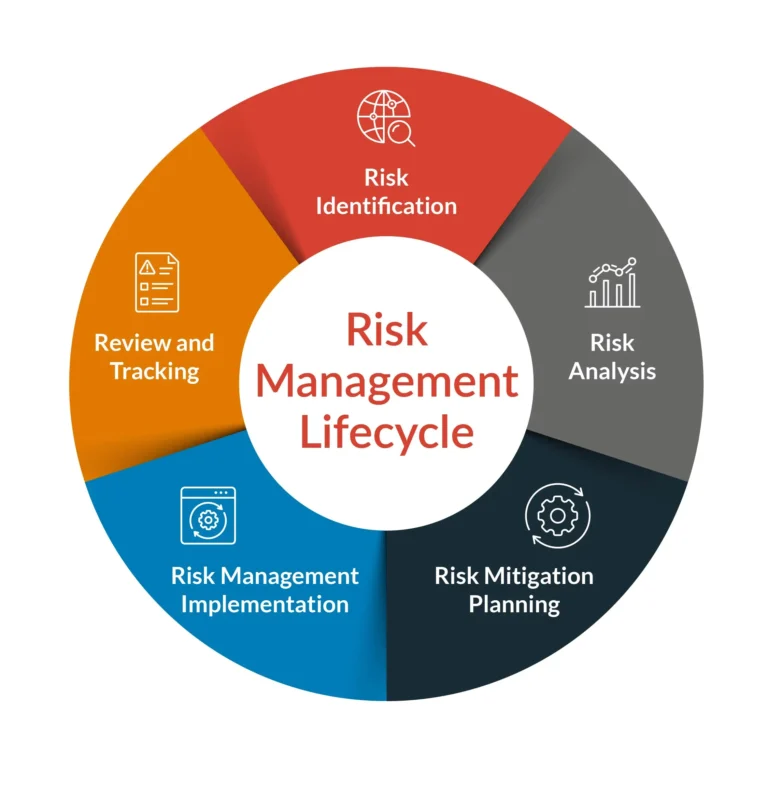
8. Risk Management and Decision Support
Technical and programmatic risks threaten project success if left unaddressed. This section provides a framework for identifying, assessing, and mitigating risks throughout the project lifecycle.
Risk Identification: Conduct structured risk identification sessions that explore technical risks (technology maturity, performance uncertainty), programmatic risks (budget constraints, resource availability), and external risks (regulatory changes, supplier dependencies).
Risk Assessment: Evaluate each identified risk in terms of likelihood and consequence using a consistent rating scale. Prioritize risks based on their potential impact to project objectives.
Risk Mitigation Strategies:
- Avoidance: Eliminate the risk by changing the approach or requirements
- Mitigation: Reduce likelihood or consequence through specific actions
- Transfer: Shift risk to another party through contracts or insurance
- Acceptance: Acknowledge the risk and prepare contingency plans
Decision Documentation: For key technical decisions, document the alternatives evaluated, the criteria used for evaluation, the chosen solution, and the rationale for the selection. This decision record provides context for future maintainers and supports audit requirements.
9. Metrics, Performance Indicators, and Continuous Improvement
Measurement provides objective insight into engineering health and enables data-driven decision making. This section defines the key performance indicators that will be tracked throughout the project.
Essential Metrics:
- Requirements Coverage: Percentage of requirements with at least one verification artifact
- Change Volume: Number of change requests submitted, approved, and implemented per reporting period
- Schedule Variance: Comparison of planned versus actual progress on technical milestones
- Risk Exposure: Aggregate score of active risks weighted by likelihood and consequence
- Verification Pass Rate: Percentage of verification tests passing on first execution
- Artifact Completeness: Ratio of required documents or models that are complete and approved
Measurement Collection Process: Define when, how, and by whom each metric will be collected. Automate data collection where possible to reduce burden and improve accuracy. Establish thresholds that trigger escalated review or corrective action.
Continuous Improvement Loop: Use metric data to identify process weaknesses, implement improvements, and verify that changes yield desired results. Conduct periodic retrospectives with the engineering team to discuss what is working and what needs adjustment.
10. Tailoring the SEP for Agile, Iterative, and MBSE Approaches
Not every project follows the same lifecycle model. This section explains how to adapt the SEP to different development approaches while maintaining the discipline that ensures project success.
| Approach | Documentation Style | Review Gates | Traceability Method |
|---|---|---|---|
| Waterfall | Comprehensive documentation at phase gates | Formal gates (SRR, PDR, CDR, TRR, SAR) | Document-based traceability matrix |
| Agile/Iterative | Living backlog with essential artifacts | Sprint reviews with continuous stakeholder feedback | Backlog items linked to requirements baseline |
| MBSE | Model-centric with selective documentation | Model-based reviews with simulation validation | Model-based traceability using SysML |
| Hybrid | Mixed approach per system element | Hybrid gates adapted to segment | Combination based on element characteristics |
Waterfall Projects: For traditional sequential lifecycles, employ the full SEP with detailed documentation at each phase gate. Emphasize formal review gates and complete artifact packages before proceeding to subsequent phases.
Agile Projects: Adapt the SEP into a living backlog of engineering tasks organized by system element and lifecycle phase. Maintain essential artifacts such as the requirements baseline and interface definitions while reducing administrative overhead. Organizations such as INCOSE provide guidance on scaling systems engineering for agile contexts.
Iterative Projects: Stage the SEP across development cycles, with each iteration producing an increment of the system. Preserve traceability and governance continuity across iterations while allowing the plan to evolve based on learnings from previous cycles.
Model-Based Systems Engineering (MBSE): Integrate MBSE practices to complement document-based artifacts with model-based representations. Use SysML or domain-specific modeling languages to capture requirements, architecture, and design. Industry practice typically demonstrates hybrid approaches where models supplement rather than entirely replace traditional documentation. The OMG SysML specification and INCOSE MBSE Capability Map provide guidance on implementation.
Hybrid Approaches: Many projects combine elements of multiple approaches. The key is to explicitly document which practices apply to which portions of the system and ensure smooth handoffs between different working modes.
11. Documentation Standards, Templates, and Artifacts
Consistent documentation practices improve communication and reduce rework. This section presents templates and artifact expectations aligned with industry standards.
Core SEP Template Structure:
1. Document Control (revision history, approval signatures)
2. Executive Summary
3. Project Overview (scope, objectives, constraints)
4. Technical Approach (per each SEP section)
5. Program Interface Requirements
6. Appendices (supplementary details, references)
Essential Artifacts by Phase:
- Concept Phase: Stakeholder requirements specification, concept of operations, preliminary risk register
- Development Phase: System requirements specification, architecture description, interface control documents, verification procedures
- Production Phase: As-built documentation, qualification test reports, training materials
- Operations Phase: Operating procedures, maintenance manuals, disposal plan
Standard References: Align documentation with ISO/IEC/IEEE 15288 for lifecycle process definitions and the NASA Systems Engineering Handbook (NPR 7123.1) for practical guidance. The Systems Engineering Body of Knowledge (SEBoK) provides additional contextual reference material. Note that EIA 632 has been retired; its content was incorporated into successor standards including ISO/IEC/IEEE 15288.
| SEP Section | ISO 15288 Process Area | Process Group |
|---|---|---|
| Stakeholder Needs | Stakeholder Needs and Requirements Definition | Agreement |
| Requirements Definition | System Requirements Definition | Technical Management |
| Architecture Design | Architecture Definition | Technical Management |
| Integration | Integration | Technical Management |
| Verification | Verification | Technical Management |
| Validation | Validation | Technical Management |
| Configuration Management | Configuration Management | Technical Management |
| Risk Management | Risk Management | Technical Management |
12. Review, Approval, and Lifecycle Governance
Formal reviews ensure that technical decisions are sound and that stakeholders remain aligned throughout the project. This section establishes the review structure and approval workflows that govern the SEP execution.
Technical Review Gates:
- System Requirements Review (SRR): Validates completeness and feasibility of stakeholder and system requirements
- Preliminary Design Review (PDR): Assesses the proposed architecture and design approach
- Critical Design Review (CDR): Verifies that the detailed design satisfies requirements and supports manufacturing
- Test Readiness Review (TRR): Confirms that verification procedures are complete and the system is ready for testing
- System Acceptance Review (SAR): Certifies that the system meets all requirements and is ready for deployment
Approval Workflow: Define the approval authority for each artifact and decision. Small technical decisions may be approved by the responsible engineer, while major decisions require Engineering Review Board (ERB) or customer approval. Document approvals with signatures or electronic records.
Governance Structure: Establish the organizational relationships between technical teams, program management, and oversight functions. Define escalation paths for issues that cannot be resolved at the working level. Ensure that governance supports rather than impedes technical progress.
13. Tool Support for SEP Development
Modern engineering tools provide capabilities that improve SEP quality and reduce administrative burden. This section highlights key tool categories and their applications.
Requirements Management Tools: IBM Rational DOORS, JAMA Connect, and similar platforms enable requirements capture, traceability matrix maintenance, and impact analysis. These tools support the requirements workflow from initial elicitation through verification confirmation. Selection should be based on organizational needs and integration requirements.
MBSE and Modeling Tools: Cameo Systems Modeler, IBM Rhapsody, and similar SysML-based platforms support architecture modeling, requirements allocation, and simulation. Models created in these tools can serve as living SEP artifacts that evolve throughout the project.
Project and Workflow Management: JIRA, Azure DevOps, and similar platforms integrate engineering tasks with project schedules and agile workflows. They provide visibility into technical progress and support collaborative review of SEP-related activities.
Configuration Management Tools: Tools such as Git, Subversion, or specialized platforms maintain version control, support change workflows, and preserve the audit trail required for regulatory compliance.
Integration Considerations: Select tools that integrate with each other to create a seamless digital thread connecting requirements through design, implementation, and verification. Avoid tool proliferation that creates data silos and requires manual synchronization.
Common Pitfalls and Anti-Patterns
Avoiding common mistakes can significantly improve SEP quality and project outcomes:
- Over-Documentation: Creating artifacts that no one reads or maintains dilutes the SEP’s value. Focus on essential deliverables that provide genuine value.
- Under-Documentation: Conversely, insufficient planning leads to misaligned expectations and costly rework. Find the appropriate balance for your project context.
- Traceability Gaps: Failing to maintain traceability links makes impact analysis impossible and compliance demonstrations difficult.
- Rigid adherence to templates: Each project requires tailoring. A SEP that doesn’t reflect the actual project approach becomes a compliance exercise rather than a useful planning tool.
- Out-of-date documentation: A stale SEP is worse than no SEP. Establish clear update triggers and revision responsibilities.
- Tool-first thinking: Tools should support the process, not define it. Begin with the engineering approach, then select appropriate tools.
Frequently Asked Questions
What is a Systems Engineering Plan and why is it essential for a project?
A Systems Engineering Plan (SEP) is a formal document that outlines the technical management approach for a system’s entire lifecycle. It ensures that stakeholder needs are translated into requirements, that all engineering activities are coordinated, and that risk, quality, and schedule objectives are met, thereby providing a roadmap for project success.
How do I write a SEP aligned with ISO/IEC/IEEE 15288?
To write a SEP aligned with ISO/IEC/IEEE 15288, structure your plan around the standard’s process areas: stakeholder needs definition, requirements definition, architecture definition, implementation, integration, verification, validation, operation, maintenance, and disposal. Include sections for risk management, configuration management, metrics, and lifecycle governance. The SEP should document how your project will implement each relevant process from concept through disposal.
What are the mandatory sections of a SEP?
Core SEP sections include: document control, executive summary, project overview (scope, objectives, constraints), stakeholder requirements, system requirements and architecture, integration planning, verification and validation strategy, operations and support planning, configuration management, risk management, metrics and performance indicators, lifecycle governance, and review gates. These may be tailored based on project size and complexity.
Where can I find a free SEP template?
Free SEP templates are available from organizations including INCOSE, the NASA Systems Engineering Handbook, and the SEBoK. Many organizations also provide templates through their engineering portals or process asset libraries. The template provided in this guide can serve as a starting point for customization.
How do I tailor a SEP for agile development?
For agile projects, express the SEP as a living backlog of engineering tasks organized by system element and lifecycle phase. Replace heavy documentation with working models and executable specifications where appropriate. Maintain essential artifacts such as the requirements baseline and interface definitions. Use sprint reviews in place of some formal gates while preserving governance oversight. INCOSE guidance on agile systems engineering provides additional tailoring recommendations.
What is the difference between verification and validation in a SEP?
Verification confirms “Did we build the system right?” by demonstrating that each requirement has been satisfied through analysis, inspection, demonstration, or testing. Validation confirms “Did we build the right system?” by demonstrating that the delivered system fulfills its intended use and satisfies stakeholder expectations. Both are essential and should be addressed separately in your test strategy.
How does the SEP integrate with the Project Management Plan?
The SEP sits alongside the Project Management Plan (PMP) as complementary documents. The SEP defines technical work packages, milestones, and deliverables that map to schedule, budget, and risk entries in the PMP. Technical milestones align with management phase gates, and engineering metrics feed into overall project health assessments. Clear alignment ensures a single source of truth for project status.
Glossary of Acronyms
- CCB
- Change Control Board
- CDR
- Critical Design Review
- ERB
- Engineering Review Board
- ICD
- Interface Control Document
- INCOSE
- International Council on Systems Engineering
- MBSE
- Model-Based Systems Engineering
- PDR
- Preliminary Design Review
- SEP
- Systems Engineering Plan
- SAR
- System Acceptance Review
- SEBoK
- Systems Engineering Body of Knowledge
- SRR
- System Requirements Review
- SysML
- Systems Modeling Language
- TRR
- Test Readiness Review
- WBS
- Work Breakdown Structure
References and Standards
- ISO/IEC/IEEE 15288:2023 – Systems and Software Engineering – System Life Cycle Processes
- NASA NPR 7123.1 – NASA Systems Engineering Processes and Requirements
- INCOSE Systems Engineering Handbook v4 or v5
- Systems Engineering Body of Knowledge (SEBoK)
- OMG SysML Specification
- ISO/IEC 33000 series – Process Assessment
Download the SEP Template
Get our comprehensive systems engineering plan template aligned with ISO/IEC/IEEE 15288. Includes document structure, example sections, and compliance mapping matrix.
Join our mailing list for additional systems engineering resources and guides.
Conclusion
A well-crafted Systems Engineering Plan is far more than a document—it is the embodiment of disciplined engineering practice. By clearly defining stakeholder expectations, translating them into traceable requirements, and establishing rigorous processes for design, integration, verification, and sustainment, the SEP ensures that projects deliver systems meeting their intended purpose.
The value of a comprehensive SEP extends beyond technical excellence. It provides program managers with the visibility needed to make informed decisions, gives stakeholders confidence that their needs are understood and addressed, and creates the audit trail required for regulatory compliance and contractual accountability.
Adopting the templates, techniques, and best practices presented in this guide will position your organization to develop SEPs that are both thorough and practical. Remember to scale the plan to your project’s actual complexity—avoid over-engineering simple efforts while ensuring that complex programs receive the depth of planning they require.
Embrace Model-Based Systems Engineering practices where appropriate, leverage modern tools to maintain traceability and reduce administrative burden, and commit to continuous improvement through metrics-driven process refinement. By doing so, you will deliver robust