In this guide
Systems Engineering Plan (SEP): Step-by-Step Tutorial
A Systems Engineering Plan (SEP) serves as the foundational document that guides how engineering activities will be conducted throughout a project’s lifecycle. Whether you are managing a defense program, developing a commercial product, or leading a complex infrastructure project, a well-structured SEP ensures that all technical efforts align with stakeholder expectations, regulatory requirements, and organizational standards.
This tutorial provides a comprehensive, step-by-step approach to developing a SEP that aligns with established frameworks such as ISO/IEC/IEEE 15288 and INCOSE best practices. The guide offers practical tools, templates, and examples tailored to your specific project needs.
Introduction to Systems Engineering Plan (SEP): Purpose and Importance
The Systems Engineering Plan defines the approach, processes, and outputs that will be used to transform stakeholder needs into a successful system solution. Unlike a traditional project management plan that focuses primarily on schedules and budgets, the SEP addresses the technical rigor required to ensure the system will meet its intended purpose.
Why is a SEP essential? Complex systems involve multiple disciplines, numerous stakeholders, and intricate dependencies. Without a clear SEP, teams risk misalignment, scope creep, and delivery of systems that fail to meet actual user needs. The SEP provides a roadmap that aligns engineering activities with project milestones, establishes verification and validation criteria, and defines how changes will be managed throughout development.
A well-crafted SEP typically references the Project Management Plan and integrates with risk registers, configuration management systems, and organizational process assets. In some defense and aerospace contexts, agencies such as NASA and the Department of Defense may require SEPs as part of their acquisition and engineering management frameworks—program managers should verify specific requirements against current agency guidance.
Understanding the Standards Landscape
Before developing your SEP, understanding the relevant standards helps ensure your plan addresses appropriate requirements and stakeholder expectations. The primary standards relevant to systems engineering planning include:
- ISO/IEC/IEEE 15288: This international standard defines system lifecycle processes, from concept definition through retirement. It organizes activities into four process groups: Agreement Processes, Organizational Project-Enabling Processes, Technical Management Processes, and Technical Processes. While the standard provides a comprehensive framework for systems engineering, it does not prescribe a specific SEP document structure—organizations typically tailor their SEP to align with these processes while meeting their specific needs.
- INCOSE Systems Engineering Handbook: Published by the International Council on Systems Engineering, this handbook provides guidance on applying systems engineering in practice. Organizations should reference the current edition (v4 or v5 depending on publication date) for the most applicable guidance.
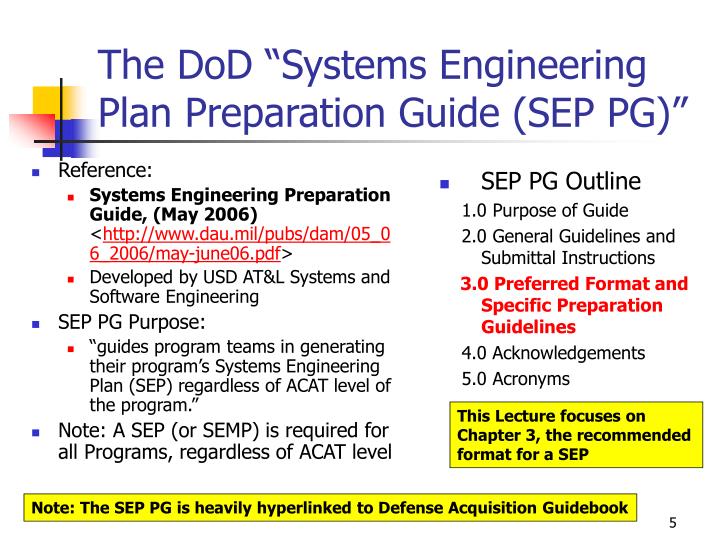
- DoD Systems Engineering Plan Guidance: For defense programs, the DoD provides specific SEP content requirements aligned with acquisition regulations such as DoDI 5000.02.
- NASA Systems Engineering Requirements: For NASA projects, NPR 7123.1 and related handbooks provide NASA-specific guidance on systems engineering practices.
Understanding these standards ensures your SEP is internally consistent and addresses relevant contractual and regulatory expectations. The SEP should explicitly reference which standards apply and how the plan addresses each requirement area.
ISO/IEC/IEEE 15288 Process Group Overview
The ISO/IEC/IEEE 15288 standard organizes system lifecycle processes into four groups that can inform SEP development:
- Agreement Processes: Govern how organizations acquire products and services and how suppliers provide them. These include Acquisition and Supply processes.
- Organizational Project-Enabling Processes: Establish the organizational capabilities and infrastructure needed for projects, including Lifecycle Model Management, Infrastructure Management, and Portfolio Management processes.
- Technical Management Processes: Coordinate and control technical efforts, including Project Planning, Assessment and Control, Decision Management, Risk Management, Configuration Management, Information Management, and Measurement processes.
- Technical Processes: Define the technical work, including Stakeholder Needs and Requirements Definition, System Requirements Definition, Architecture Definition, Design Definition, System Integration, Verification, Transition, Validation, Operation, Maintenance, and Disposal processes.
When developing your SEP, consider which process groups are applicable to your project and tailor your plan accordingly. The level of detail and rigor should be proportionate to project complexity, risk, and contractual requirements.
Step 1: Conduct Stakeholder Identification and Analysis
The first step in developing your SEP is identifying all parties who have an interest in or influence over the system. Comprehensive stakeholder identification prevents late-stage surprises and ensures the final system addresses real-world needs.
How to Conduct Stakeholder Identification
Begin by listing every individual, group, or organization that interacts with the system, affects its development, or will be affected by its deployment. This includes end users, operators, maintainers, regulators, suppliers, and internal stakeholders such as management and finance teams.
Document each stakeholder in a Stakeholder Register that captures their name, role, organization, contact information, and primary interests. The register should also note the level of influence and interest each stakeholder has regarding the project.
Performing Stakeholder Analysis
Once identified, analyze each stakeholder’s expectations, constraints, and potential concerns. This analysis helps prioritize engagement efforts and tailor communication strategies. Consider questions such as:
- What are the stakeholder’s key requirements or needs?
- What constraints do they impose on the design?
- How will success be measured from their perspective?
- What risks do they represent to the project?
For example, a regulatory agency may impose safety certification requirements, while end users may prioritize ease of use. Both perspectives must be captured and reconciled within the SEP.
Example Stakeholder Register Entry
| Stakeholder | Role | Organization | Primary Interest | Influence Level |
|---|---|---|---|---|
| Jane Smith | End User | Operations Division | System usability and reliability | High |
| Mark Johnson | Regulatory Officer | Compliance Office | Safety and certification compliance | High |
| Sarah Lee | Project Sponsor | Executive Management | Budget adherence and schedule | High |
Stakeholder Analysis Checklist
- [ ] All stakeholders identified and documented in register
- [ ] Stakeholder expectations clearly captured
- [ ] Constraints and requirements documented
- [ ] Influence and interest levels assessed
- [ ] Communication strategy defined for each stakeholder group
Step 2: Define System Requirements and Concept of Operations (ConOps)
With stakeholders identified, the next step is translating their needs into concrete system requirements and a Concept of Operations document. This step forms the bridge between user needs and technical specifications.
Eliciting and Defining Requirements
Requirements elicitation involves gathering information from stakeholders through interviews, workshops, observations, and analysis of existing systems. Document requirements in a structured format that clearly states what the system must do, under what conditions, and to what performance level.
Organize requirements hierarchically, starting with high-level stakeholder needs, then deriving functional and non-functional requirements. Each requirement should be:
- Unambiguous: Clearly stated without confusing language.
- Verifiable: Testable or demonstrable.
- Feasible: Achievable given current technology and resources.
- Traceable: Linked to stakeholder needs and design elements.
Developing the Concept of Operations (ConOps)
The ConOps describes how the system will be used in its operational environment. It provides context for requirements and helps stakeholders visualize the system’s intended use. A typical ConOps includes:
- System overview and objectives
- Operational scenarios and use cases
- User roles and responsibilities
- Operational phases (startup, normal operation, maintenance, shutdown)
- Interfaces with other systems and external entities
- Performance and quality-of-service expectations
Illustrative ConOps Example: “During normal operations, the system will monitor environmental conditions and automatically adjust output parameters to maintain optimal performance. Operators will receive alerts when parameters exceed defined thresholds, requiring manual intervention within a defined response window. Note: Specific response time requirements vary by project and should be determined through stakeholder analysis and risk assessment.”
Note: Performance thresholds in this example are illustrative only. Actual requirements should be determined based on your specific system context and stakeholder needs.
Requirements Management
Establish a requirements management process that defines how requirements will be baselined, changed, and tracked throughout the project. Use a requirements database or tool to maintain traceability links between stakeholder needs, system requirements, and design elements.
Requirements Definition Checklist
- [ ] Stakeholder needs documented and approved
- [ ] Requirements hierarchical structure established
- [ ] Each requirement is unambiguous, verifiable, feasible, and traceable
- [ ] ConOps developed and stakeholder-approved
- [ ] Requirements management process defined
- [ ] Traceability links established and maintained
Step 3: Develop System Architecture and Design Constraints
System architecture translates requirements into a structural framework that defines how system elements interact and satisfy performance goals. The architecture description provides the blueprint for subsequent design and development activities.
Creating the System Architecture Description
Begin by defining the system boundary and identifying major system elements, both hardware and software. For each element, specify its responsibilities, interfaces, and relationships with other elements. Use architectural views to communicate different aspects of the system:
- Functional View: Shows how the system performs its required functions.
- Physical View: Depicts the physical deployment of system components.
- Behavioral View: Illustrates how the system responds to events and stimuli.
- Allocation View: Maps functional requirements to physical elements.
Select an appropriate architectural style or pattern based on project needs. Common approaches include modular, layered, microservices, and federated architectures.
Model-Based Systems Engineering (MBSE) Considerations
Modern systems engineering increasingly employs Model-Based Systems Engineering (MBSE) methodologies, which use formal models to capture and communicate system information throughout the lifecycle. MBSE supports:
- Centralized system information repositories
- Automated traceability between requirements and design elements
- Simulation and analysis of system behavior
- Consistent documentation generation
- Improved communication among stakeholders
Tools such as Cameo Systems Modeler, MATLAB/Simulink, and Enterprise Architect support MBSE implementation using the Systems Modeling Language (SysML).
Defining Design Constraints
Design constraints restrict the solution space and must be respected throughout development. These include:
- Technical constraints: Platform limitations, compatibility requirements, standards compliance.
- Environmental constraints: Operating conditions, temperature ranges, radiation exposure.
- Regulatory constraints: Safety standards, certification requirements, export controls.
- Organizational constraints: Existing infrastructure, preferred suppliers, workforce capabilities.
Document these constraints explicitly and ensure traceability from each constraint to the relevant requirements and architecture decisions.
Ensuring Traceability
Establish bidirectional traceability between requirements and architecture elements. This ensures that every requirement is addressed by at least one architectural component, and every component contributes to fulfilling requirements. Traceability supports impact analysis when requirements change and demonstrates completeness during verification.
Architecture Development Checklist
- [ ] System boundary defined
- [ ] Major system elements identified
- [ ] Architectural views developed (functional, physical, behavioral, allocation)
- [ ] MBSE approach considered and documented if applicable
- [ ] Design constraints documented and traced to requirements
- [ ] Bidirectional traceability established
Step 4: Plan Verification, Validation, and Acceptance (V&V)
Verification and Validation planning ensures the system meets its requirements and fulfills stakeholder expectations. These activities are distinct but complementary, and both must be planned carefully.
Verification Activities
Verification answers the question: “Did we build the system correctly?” It confirms that each system element satisfies its allocated requirements. Verification methods include:
- Review: Peer reviews, inspections, and walkthroughs of artifacts.
- Analysis: Analytical methods such as calculation, simulation, and modeling.
- Demonstration: Observing system behavior under specific conditions.
- Testing: Physical or virtual execution to verify performance.
For each requirement, select the appropriate verification method and define acceptance criteria that indicate successful completion.
Validation Activities
Validation answers the question: “Did we build the right system?” It confirms that the system meets stakeholder needs and is suitable for its intended purpose. Validation typically involves:
- User acceptance testing: End users executing test scenarios to confirm usability and functionality.
- Operational testing: Evaluation in a realistic operational environment.
- Field trials: Limited deployment to gather real-world feedback.
Defining Acceptance Criteria
Acceptance criteria define the conditions that must be met for the system to be accepted by the customer or user. These criteria should be objective, measurable, and agreed upon by stakeholders before verification activities begin.
Illustrative Acceptance Criteria Example: “The system shall successfully process a defined number of transactions per minute with a response time meeting specified performance targets, under normal operating conditions.”
Note: Specific performance targets such as transaction throughput and response time are project-dependent and should be established through stakeholder requirements analysis. The values in this example are for illustration purposes only.
Technical Performance Measures (TPM)
For complex programs, consider establishing Technical Performance Measures (TPMs) to track progress on critical technical parameters. TPMs:
- Quantify technical performance risks
- Provide early warning of potential problems
- Enable data-driven decision-making
- Support earned value management integration
V&V Planning Checklist
- [ ] Verification methods defined for each requirement
- [ ] Validation activities planned with stakeholders
- [ ] Acceptance criteria defined and approved
- [ ] TPMs established for critical parameters (if applicable)
- [ ] Test environment requirements identified
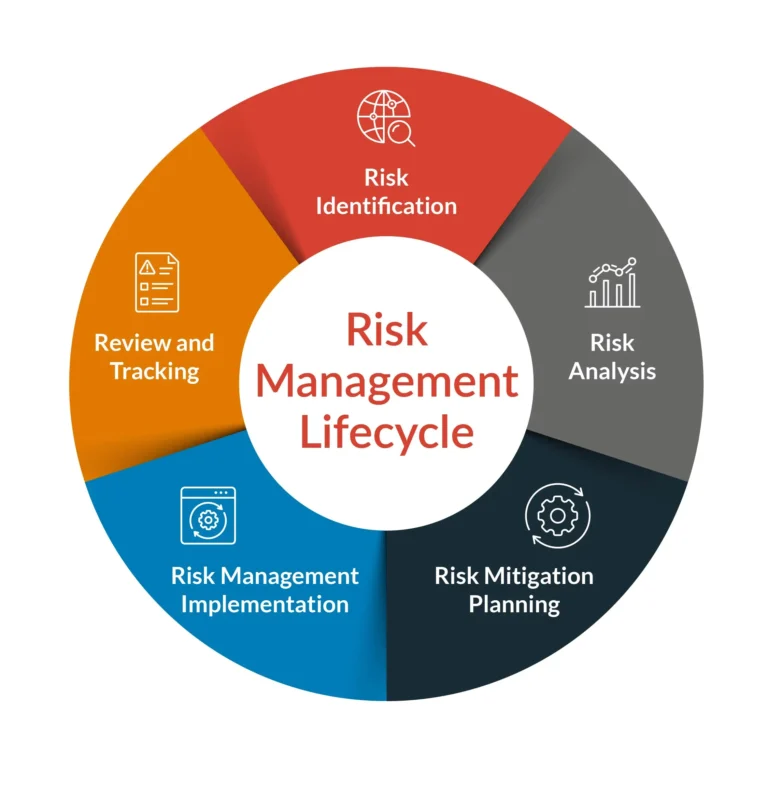
Step 5: Integrate Risk Management Planning
Risk management identifies and mitigates threats that could jeopardize project success. The SEP should integrate with the project’s broader risk management framework while addressing technical risks specific to systems engineering.
Identifying Risks
Risks can be technical, external, organizational, or project management-related. Common systems engineering risks include:
- Unclear or incomplete requirements
- Technology immaturity or unproven components
- Interface incompatibilities between system elements
- Supplier or supply chain disruptions
- Inadequate verification or validation coverage
Document each risk in a risk register with a unique identifier, description, category, and owner.
Analyzing Risks
Assess each risk in terms of its likelihood of occurrence and potential impact on project objectives. Use a probability-impact matrix to prioritize risks and focus mitigation efforts on the most significant threats.
Developing Mitigation Strategies
For each high-priority risk, develop a mitigation strategy that reduces likelihood, impact, or both. Common strategies include:
- Avoidance: Eliminating the risk by changing the approach.
- Mitigation: Reducing likelihood or impact through proactive measures.
- Transfer: Shifting risk to a third party, such as through insurance or contracts.
- Acceptance: Acknowledging the risk and preparing contingency plans.
Example Risk Entry
| Risk ID | Description | Likelihood | Impact | Mitigation Strategy | Owner |
|---|---|---|---|---|---|
| R-001 | Third-party component delivery delay | Medium | High | Identify backup supplier; include buffer in schedule | Procurement Lead |
Risk Management Checklist
- [ ] Risk register established and maintained
- [ ] Risk identification completed
- [ ] Risk analysis performed with probability-impact assessment
- [ ] Mitigation strategies developed for high-priority risks
- [ ] Risk tracking integrated with project reporting
Step 6: Establish Configuration Management and Change Control
Configuration management ensures that changes to system elements are introduced in a controlled and coordinated manner. Without effective configuration management, systems become difficult to maintain and evolve.
Setting Up Configuration Management Processes
Define the configuration management approach in the SEP, including:
- Configuration items: The artifacts to be controlled, such as requirements documents, designs, code, and test procedures.
- Baseline definitions: Approved sets of configuration items at specific points in the lifecycle.
- Change control procedures: The process for requesting, evaluating, approving, and implementing changes.
Change Control Board (CCB)
Establish a Change Control Board responsible for reviewing change requests and deciding on approvals. The CCB typically includes representatives from engineering, project management, quality assurance, and affected stakeholders.
Version Control
Implement version control for all configuration items, using a system that tracks changes, maintains history, and supports rollback if needed. Ensure that team members can access the correct version of artifacts relevant to their work.
Recommended Configuration Management Tools
Various tools support requirements management and configuration management:
- IBM Rational DOORS/DOORS Next: Industry-standard requirements management for capturing, tracing, and managing requirements.
- Jira: For tracking project tasks, risks, and change requests in alignment with the SEP.
- Confluence: Atlassian’s collaboration platform for creating and sharing documentation.
- Jama Connect: Requirements management platform for complex product development.
- Git/GitHub/GitLab: For version control of documents and code artifacts.
Configuration Management Checklist
- [ ] Configuration items identified and documented
- [ ] Baselines established at key milestones
- [ ] Change control procedures defined
- [ ] CCB established with defined roles
- [ ] Version control system implemented
Step 7: Outline Schedule, Milestones, and Resource Allocation
The SEP must align with the project schedule while ensuring adequate time and resources for systems engineering activities. Systems engineering is not an afterthought; it requires dedicated effort integrated throughout the project lifecycle.
Aligning with Project Schedules
Map systems engineering activities to project phases, identifying entry and exit criteria for each phase. Common phases include Concept, Development, Production, Utilization, Support, and Retirement.
Define milestones that mark significant achievements, such as requirements baselining, architecture review, preliminary design review, critical design review, and verification completion.
Defining Milestones
Milestones provide checkpoints to assess progress and make informed decisions about continuing or adjusting the project. Each milestone should have defined success criteria and be documented in the SEP schedule.
Example Milestone Schedule
| Milestone | Description | Planned Date | Success Criteria |
|---|---|---|---|
| M1 | Stakeholder requirements baseline | Month 2 | Requirements approved by stakeholders |
| M2 | System architecture review | Month 4 | Architecture approved by engineering team |
| M3 | Preliminary design review | Month 6 | Design meets requirements and constraints |
| M4 | Critical design review | Month 9 | Design ready for implementation |
| M5 | System acceptance | Month 18 | All acceptance criteria satisfied |
Resource Allocation
Allocate resources to systems engineering activities, including personnel, tools, facilities, and budget. Identify skill requirements and ensure team members have appropriate training and experience.
Tailoring for Project Size
The level of detail in SEP planning should be tailored to project characteristics:
- Small projects: Streamlined documentation, abbreviated reviews, simplified traceability
- Medium projects: Full SEP sections with moderate depth, standard review gates
- Large/complex programs: Comprehensive planning, formal reviews (ERBs), detailed traceability matrices, integrated tool environments
Schedule and Resources Checklist
- [ ] Systems engineering activities mapped to project phases
- [ ] Entry/exit criteria defined for each phase
- [ ] Key milestones identified with success criteria
- [ ] Resources allocated for systems engineering activities
- [ ] SEP tailored appropriately to project size/complexity
Step 8: Structure Documentation and Use Templates
Consistent documentation structure improves readability, reduces ambiguity, and facilitates review and approval processes. Templates ensure that all required content is captured and presented uniformly.
Creating a Documentation Structure
Organize SEP content into logical sections that mirror the step-by-step process described in this tutorial. Each section should include purpose statements, detailed guidance, examples, and reference links.
Using SEP Templates
Develop or adopt templates for each major artifact, including:
- Stakeholder register template
- Requirements specification template
- Concept of Operations template
- Architecture description template
- Verification and validation plan template
- Risk register template
- Configuration management plan template
Templates should include placeholders for key information, instructions for completion, and examples of completed entries. Many organizations provide standardized templates aligned with INCOSE and ISO standards.
SEP Template Download Reference
Organizations may obtain SEP templates from various sources:
- INCOSE publishes templates aligned with their Systems Engineering Handbook
- SEBoK (Systems Engineering Body of Knowledge) provides reference materials for SEP development
- Defense organizations often provide templates through program offices or engineering process groups
- Commercial template libraries are available through systems engineering consulting firms
Documentation Checklist
- [ ] Documentation structure defined
- [ ] Templates developed or adopted for all major artifacts
- [ ] Terminology and formatting conventions established
- [ ] Peer review process defined
Step 9: Review, Approve, and Baseline the SEP
Before project execution begins, the SEP must undergo formal review and approval to ensure stakeholder alignment and organizational buy-in. Baselining locks the plan and provides a reference point for measuring change.
Review Process
Schedule formal reviews with relevant stakeholders and subject matter experts. Reviews should assess:
- Completeness of all sections
- Alignment with stakeholder expectations
- Compliance with applicable standards
- Feasibility of schedules and resource allocations
- Clarity and consistency of documentation
Document review comments and track resolution until all issues are addressed.
Engineering Review Board (ERB) Process
For significant programs, an Engineering Review Board (ERB) may oversee technical decisions. The ERB typically:
- Reviews and approves major technical deliverables
- Resolves technical conflicts and issues
- Monitors technical risk and performance
- Approves changes to baselines
Approval Process
Obtain formal approval from authorized stakeholders, typically the project sponsor, chief engineer, and relevant program offices. Approval signatures indicate commitment to the plan and establish accountability.
Establishing the Baseline
Once approved, baseline the SEP by formally documenting the approved version in the configuration management system. The baseline represents the agreed-upon plan and serves as the basis for evaluating future changes.
Review and Approval Checklist
- [ ] Formal reviews scheduled with stakeholders
- [ ] Review comments documented and resolved
- [ ] ERB process established (if applicable)
- [ ] Approval signatures obtained
- [ ] SEP baselined in configuration management
Step 10: Maintain and Evolve the SEP Throughout the Lifecycle
The SEP is not a static document. As the project progresses, new information emerges, requirements change, and risks materialize. The SEP must evolve to reflect the current state of the project.
Updating the SEP
Define a process for updating the SEP that includes:
- Trigger events that initiate updates, such as requirement changes, schedule shifts, or risk materialization.
- Impact analysis to assess the effect of proposed changes.
- Review and approval of updates through the change control process.
- Configuration management to track versions and maintain traceability.
Managing Changes
All changes to the SEP should be documented, evaluated, and approved before implementation. Communicate changes to affected stakeholders promptly to ensure everyone remains aligned.
Ensuring Relevance
Schedule periodic reviews of the SEP to verify that it remains accurate and relevant. At minimum, review the SEP at each major project milestone and following significant changes to scope, schedule, or resources.
Living Document Checklist
- [ ] Update trigger events defined
- [ ] Impact analysis process established
- [ ] Change control process applied to SEP updates
- [ ] Version control maintained
- [ ] Periodic review schedule established
Agile and Incremental Systems Engineering
Traditional waterfall SEP approaches work well for programs with stable requirements and long timelines. However, organizations increasingly adapt systems engineering practices for Agile and Incremental development environments.
Adapting SEP for Agile
When integrating systems engineering with Agile methodologies:
- Define systems engineering activities at the program level while allowing iterative implementation
- Use sprint-based ceremonies for engineering reviews where appropriate
- Maintain traceability at the feature and epic level while allowing flexibility at the task level
- Establish verification activities that align with sprint demonstrations
- Plan system-level integration points across increments
Incremental Development Considerations
For incremental delivery approaches:
- Define capability increments and their dependencies
- Plan verification and validation for each increment
- Establish interface control documents (ICDs) between increments
- Consider architectural runway to support future increments
- Maintain overall system perspective while delivering partial capability
Cybersecurity Systems Engineering Integration
Modern