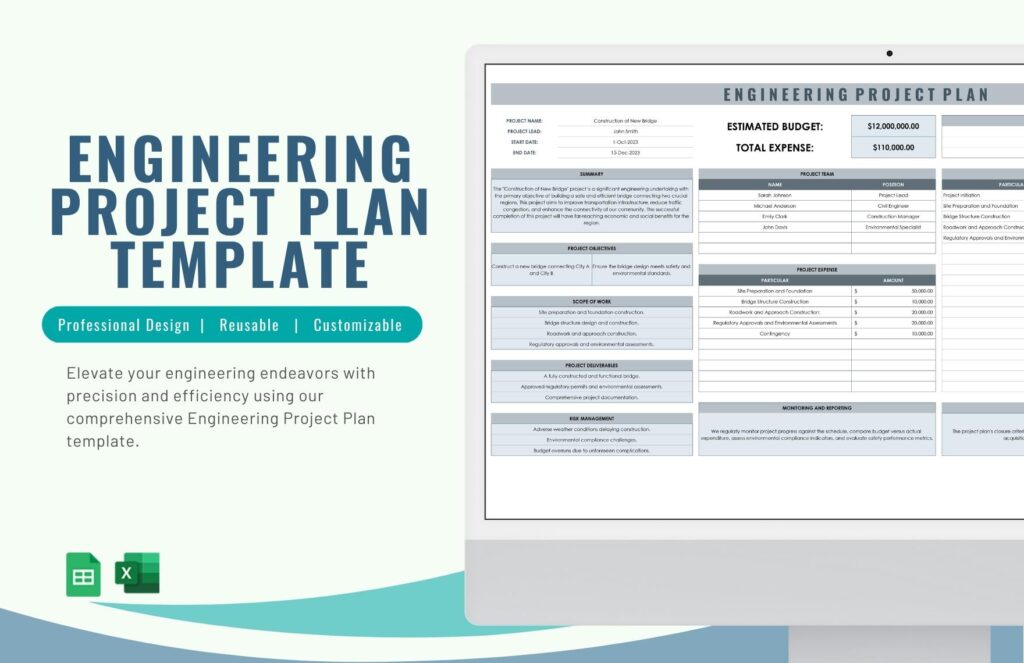
In this guide
Systems Engineering Plan: Essential Tools, Templates, and Real-World Examples for 2024
Table of Contents
- What Is a Systems Engineering Plan and Why Does It Matter?
- Essential Components of a Comprehensive SEP
- Standards Governing Systems Engineering Planning
- Tiered SEP Approach: Scaling from Small Projects to Enterprise Programs
- Systems Engineering Planning Tools and Software
- Templates and Documentation Examples
- Integrating SEP with Project Management and Risk Processes
- Model-Based Systems Engineering and the Modern SEP
- Common Pitfalls and How to Avoid Them
- Case Studies: SEP in Action
- Measuring SEP Success and Continuous Improvement
- Frequently Asked Questions
- Glossary of Key Terms
Introduction
The Systems Engineering Plan serves as the strategic blueprint that determines whether complex projects succeed or stumble. Yet practitioners across industries face a persistent challenge: navigating between prescriptive standards like INCOSE guidance, ISO/IEC/IEEE 15288, and the growing demand for agile, adaptable approaches that won’t stifle innovation or slow delivery.
This tension creates real friction. Organizations implementing rigorous standards risk drowning small teams in documentation overhead. Conversely, those chasing agility often discover their lightweight approaches cannot scale when regulatory requirements tighten or stakeholder complexity increases. The result? Either over-engineered plans that gather dust or under-engineered plans that leave critical risks unmanaged.
This article resolves that tension through a practical, tiered framework. You’ll discover how to scale Systems Engineering Plan complexity to match actual project needs—from lightweight two-page plans suitable for agile software teams to comprehensive compliance documentation for defense and aerospace programs. We’ve included actionable templates, a decision matrix for tool selection, real-world case studies, and self-assessment checklists you can apply immediately.
Whether you’re an engineering manager at a defense contractor, a technical lead planning a complex hardware development program, or a systems engineer at a startup navigating your first major project, this guide provides the roadmap you need.
Related: Agile Systems Engineering: Adapting Methods for Complex Projects | Requirements Management Best Practices | Technical Risk Management in Systems Engineering
1. What Is a Systems Engineering Plan and Why Does It Matter?
A systems engineering plan defines how technical management activities will orchestrate system development across the entire lifecycle. It answers fundamental questions: Who owns requirements? How will we manage changes? When do we verify that the system meets stakeholder needs? How do we control interfaces between subsystems?
Many practitioners view SEPs as bureaucratic overhead required by contracts or standards. This misconception costs organizations dearly. A well-crafted SEP helps prevent the communication failures and requirements misalignment that drive costly rework—according to industry research, rework costs frequently represent a significant portion of project budgets in complex systems development, though exact figures vary across studies and project contexts.
The Strategic Value Proposition
Consider what happens without a coherent SEP. Teams pursue divergent interpretations of stakeholder needs. Interface conflicts emerge late in integration when fixes become expensive. Risks materialize without early identification. Configuration chaos ensues. The result is predictable: schedule overruns, budget escalations, and stakeholder disappointment.
The INCOSE Systems Engineering Handbook v4 (2015) describes the SEP as a “living artifact” that should guide decisions and adapt as understanding evolves. The handbook emphasizes that effective SEPs evolve throughout the project lifecycle rather than serving as static compliance documents. NASA SEP documentation standards, as specified in NPR 7123.1 (NASA Systems Engineering Handbook), reinforce this by requiring plans that establish clear traceability from stakeholder needs through system requirements to verification evidence.
An effective SEP delivers three strategic benefits:
- Stakeholder Alignment: By explicitly documenting who needs what and when, the SEP creates shared understanding across organizational boundaries.
- Risk Mitigation: Structured planning surfaces technical risks early when mitigation options remain plentiful and inexpensive.
- Regulatory Compliance: In industries like aerospace, defense, and medical devices, the SEP demonstrates that engineering rigor meets regulatory expectations.
2. Essential Components of a Comprehensive SEP
ISO/IEC/IEEE 15288:2023 and INCOSE guidance define the canonical structure for Systems Engineering Plans. While tailoring is expected based on project needs and contractual requirements, certain sections form the core that most plans should address. Below is a comprehensive checklist organized by function.
Standards Reference: This section maps to the Technical Management Processes in ISO/IEC/IEEE 15288:2023 (Section 4.3), specifically the Project Planning (5.3.1), Risk Management (5.3.5), and Configuration Management (5.3.2) processes.
Stakeholder and Requirements Management
- Stakeholder identification and analysis methodology
- Stakeholder needs and expectations documentation
- Requirements derivation and management approach
- Requirements traceability strategy (bidirectional)
- Change control process for requirements
Technical Planning
- Lifecycle model selection (waterfall, iterative, agile, hybrid)
- Phase gate definitions and entry/exit criteria
- Technical review schedule and success criteria
- System architecture development approach
- Integration and testing strategy
Verification and Validation
- Verification approach for each requirement type
- Validation strategy demonstrating stakeholder needs are met
- Test coverage analysis methodology
- Defect tracking and resolution process
- Acceptance criteria definition
Configuration Management and Data Management
- Configuration item identification scheme
- Change control board composition and authority
- Baseline management strategy
- Data management and documentation requirements
- Archive and retrieval procedures
Risk and Interface Management
- Technical risk identification methodology
- Risk assessment and prioritization criteria
- Risk monitoring and mitigation tracking
- Interface identification and control approach
- Internal and external interface documentation
Technical Performance and Quality
- Technical performance measurement indicators
- Quality assurance approach
- Metrics collection and reporting schedule
- Decision analysis and resolution process
SEP Completeness Checklist
Use this checklist to audit your current SEP or validate a draft:
- ☐ Executive summary capturing key decisions and rationale
- ☐ Scope definition clearly bounding system of interest
- ☐ Stakeholder register with analysis results
- ☐ Requirements management plan with traceability approach
- ☐ Verification and validation matrix defined
- ☐ Configuration management procedures documented
- ☐ Risk register with mitigation strategies
- ☐ Interface control documents identified
- ☐ Review schedule with success criteria
- ☐ Tailoring rationale documented for omitted sections
3. Standards Governing Systems Engineering Planning
The systems engineering profession operates within a rich landscape of standards and guidance documents. Understanding this landscape helps you extract maximum value while avoiding the trap of standards worship that produces documentation without engineering value.
ISO/IEC/IEEE 15288:2023: The International Framework
ISO/IEC/IEEE 15288:2023 provides the fundamental vocabulary and process framework for system lifecycle management. The 2023 revision updated the 2015 version with enhanced guidance on system of interest definition, stakeholder needs, and life cycle stages. The standard defines four process groups:
- Agreement Processes: Acquisition and supply activities
- Organizational Project-Enabling Processes: Infrastructure, portfolio management, and human resource management
- Technical Management Processes: Project planning, assessment, control, decision management, and risk management
- Technical Processes: Stakeholder needs and requirements definition, architecture definition, design, system integration, verification, validation, operation, maintenance, and disposal
The SEP maps directly to the Technical Management Processes while referencing Technical Processes that will be executed across the lifecycle. The table below provides a cross-reference between INCOSE SEP guidance and ISO/IEC/IEEE 15288 process names.
| INCOSE SEP Section | ISO/IEC/IEEE 15288 Process | Process Group |
|---|---|---|
| Requirements Management | Requirements Management (5.3.3) | Technical Management |
| Technical Planning | Project Planning (5.3.1) | Technical Management |
| Risk Management | Risk Management (5.3.5) | Technical Management |
| Configuration Management | Configuration Management (5.3.2) | Technical Management |
| Technical Assessment | Assessment (5.3.4) | Technical Management |
| Requirements Definition | Requirements Definition (6.4.2) | Technical Processes |
| Architecture Definition | Architecture Definition (6.4.3) | Technical Processes |
| Verification | Verification (6.4.5) | Technical Processes |
| Validation | Validation (6.4.6) | Technical Processes |
INCOSE Systems Engineering Handbook
The INCOSE Systems Engineering Handbook v4 (2015) translates ISO/IEC/IEEE 15288 into practitioner guidance. While not a standard in the contractual sense, the handbook provides practical methods, techniques, and examples that help teams implement the standard’s intentions. INCOSE is currently developing v5 to address emerging practices in agile and MBSE approaches. Many organizations reference INCOSE guidance in their SEPs as the methodology of choice.
DO-178C: Aerospace Software Considerations
For airborne systems, DO-178C (2011) establishes software development considerations that must be addressed in planning documents. While focused on software, DO-178C influences the broader SEP by requiring specific evidence artifacts and verification rigor. Defense contractors often maintain separate software engineering plans that nest within the overall SEP.
Additional Standards References
- MIL-STD-973: Configuration Management standard historically referenced by DoD programs
- AFI 63-101/20-101: DoD Systems Engineering planning and execution guidance
- NIST SP 800-37: Risk Management Framework applicable to government IT systems
- IEC 62304: Medical device software lifecycle processes
- CMMI (Capability Maturity Model Integration): Organizational maturity assessment framework
The Tailoring Principle
All these standards explicitly support tailoring. ISO/IEC/IEEE 15288:2023 states that processes should be applied according to the needs of the organization or project, with explicit consideration for context and objectives. INCOSE guidance offers multiple tailoring examples in Chapter 4. The key insight: standards exist to serve engineering objectives, not to create compliance theater.
Effective tailoring considers:
- Contractual requirements that cannot be waived
- Organizational maturity and existing processes
- Project constraints (schedule, budget, team size)
- System complexity and novelty
- Regulatory environment
4. Tiered SEP Approach: Scaling from Small Projects to Enterprise Programs
The most common SEP failure is misapplication: over-engineering plans for small projects or under-engineering plans for complex programs. This section presents a three-tier framework that matches SEP complexity to actual project needs.
Tier 1: Small Projects and Agile Teams
Characteristics:
- Team size: 3-10 people
- Duration: Under 12 months
- Budget: Under $500K
- Complexity: Low to moderate
- Regulatory requirements: Minimal
SEP Approach: Lightweight 2-5 page plans that capture essential decisions without extensive documentation. Focus on stakeholder agreement, high-level requirements approach, and key milestone definitions. Leverage agile ceremonies (sprint reviews, retrospectives) as the primary review mechanism rather than formal technical reviews. For teams following Scaled Agile Framework (SAFe), integrate SEP elements into Program Increment planning.
Documentation Philosophy: Favor working software over comprehensive documentation. Maintain living documents in collaborative tools rather than static Word files. Use wikis or shared drives with clear naming conventions.
Tier 2: Medium Complexity Programs
Characteristics:
- Team size: 10-50 people
- Duration: 12-36 months
- Budget: $500K to $10M
- Complexity: Moderate to high
- Regulatory requirements: Some external oversight
SEP Approach: Comprehensive 15-30 page plans covering all standard sections with moderate depth. Include formal requirements traceability matrices, defined configuration management procedures, and scheduled technical reviews. Balance documentation with active engineering work.
Documentation Philosophy: Define necessary artifacts but set content thresholds that prevent gold-plating. Use templates to ensure consistency without requiring excessive detail. Implement document control with version tracking and approval workflows.
Tier 3: Large-Scale Defense and Aerospace Programs
Characteristics:
- Team size: 50+ people, often distributed
- Duration: 3+ years
- Budget: $10M+
- Complexity: High with multiple subsystems
- Regulatory requirements: Extensive (FAA, DoD, NASA, international partners)
SEP Approach: Full compliance documentation meeting contractual and regulatory requirements. Reference specific standards sections by number. Include detailed work breakdown structures, Earned Value Management System (EVMS) integration per ANSI/EIA-748 standards, and formal review gate structures with independent review team participation. Plans may span 50-100+ pages plus appendices.
Documentation Philosophy: Documentation is an artifact of engineering rigor, not a substitute for it. Invest in tools that maintain traceability across the documentation suite. Implement rigorous configuration management with formal change control board processes.
Tier Selection Decision Criteria
Use this decision matrix to select your appropriate tier:
| Factor | Tier 1 | Tier 2 | Tier 3 |
|---|---|---|---|
| Team Size | 3-10 | 10-50 | 50+ |
| Budget | <$500K | $500K-$10M | $10M+ |
| Regulatory Scope | Internal only | Some external | Extensive oversight |
| Distribution | Co-located | Some remote | Multi-site/global |
| Novelty | Incremental | Advanced | State-of-art |
| Customer Type | Internal/agile | Established contracts | Prime/subcontractor |
Note: Tier classification should be reassessed as projects evolve. A Tier 1 project that wins additional funding or regulatory requirements may need to transition to Tier 2 documentation practices mid-execution.
5. Systems Engineering Planning Tools and Software
Tool selection significantly impacts SEP execution effectiveness. The market spans from enterprise solutions with comprehensive features to lightweight tools that support rapid iteration. This section evaluates options across categories. Pricing information reflects general market positioning as of 2024; consult vendors for current quotes.
Commercial Enterprise Solutions
IBM Rational DOORS Next Generation (DNG) remains widely used for requirements management in large organizations, particularly in defense and aerospace sectors. Its strengths include robust bidirectional traceability, integration with other IBM engineering tools, and extensive customization options. However, licensing costs and learning curve are substantial. Training duration varies significantly based on organizational context, tool version, and user role—expect several weeks for meaningful proficiency. Best suited for Tier 3 programs with dedicated configuration management staff and existing IBM tool ecosystem investments.
Siemens Polarion offers cloud-native requirements management with strong collaboration features. Its web-based interface reduces deployment complexity compared to traditional client-server architectures. Polarion excels in organizations already using Siemens PLM tools. Version 24.x introduced enhanced AI-assisted requirements authoring. Integration with third-party tools requires careful evaluation for specific contexts.
PTC Windchill provides comprehensive lifecycle management combining requirements, configuration, and change management. Organizations invested in PTC’s broader ecosystem will find strong synergies. Smaller teams may find the platform heavyweight for their needs. Windchill Requirements & Quality (formerlyReq ONE) provides focused requirements management within the PTC suite.
Open-Source and Affordable Options
JAMA Connect has emerged as a popular mid-market alternative offering requirements management with traceability. The platform prioritizes usability, reducing onboarding time compared to enterprise alternatives. Pricing is typically lower than enterprise tools, though specific costs depend on deployment model and user count. JAMA works well for Tier 2 programs transitioning from spreadsheets toward structured requirements management.
JIRA with Plugins suits software-focused teams comfortable with agile methodologies. Native JIRA handles requirements and issue tracking; plugins add traceability and test management capabilities. Popular plugins include BigPicture, Structure, and Test Management for JIRA. The ecosystem is vast, but integration between plugins can become fragile. Best for Tier 1 teams already using Atlassian tools.
Confluence-Based Templates offer accessible entry points for teams prioritizing collaboration. Teams document requirements, interfaces, and plans in wiki pages with structured templates. This approach excels for distributed teams prioritizing accessibility. For organizations managing requirements across larger portfolios, this approach may face scalability challenges as requirements volume grows.
MBSE-Focused Tools
Cameo Systems Modeler (part of the CATIA portfolio, now part of Dassault Systèmes) provides comprehensive SysML modeling capabilities with strong requirements integration. It supports the transition toward Model-Based Systems Engineering by enabling living models that can replace static documentation sections. SysML v1.6 and v2 support is available. The learning curve is steep, but investment pays dividends for complex systems with significant interface complexity.
MagicDraw offers similar SysML capabilities with a more accessible interface. No Magic licensing provides a free community edition for evaluation and small projects. Organizations exploring MBSE should evaluate both Cameo and MagicDraw against their specific modeling needs and integration requirements.
Visual Paradigm provides cost-effective SysML modeling with strong diagram variety and reasonable licensing. It represents good value for teams prioritizing diagram quality over deep requirements integration.
Tool Selection Decision Matrix
| Tool | Category | Cost Range | Deployment | Integration | Learning Curve | Best For |
|---|---|---|---|---|---|---|
| IBM DOORS Next Generation | Requirements Management | $$$$ (Enterprise) | On-premise/Cloud | Excellent (IBM ecosystem) | Steep | Tier 3, defense/aerospace |
| Siemens Polarion | Requirements Management | $$$ (Subscription) | Cloud/On-premise | Good (Siemens ecosystem) | Moderate | Tier 2-3, cloud preference |
| PTC Windchill | ALM/PLM | $$$$ (Enterprise) | On-premise/Cloud | Excellent (PTC ecosystem) | Moderate-Steep | Tier 3, PLM integration |
| JAMA Connect | Requirements Management | $$ (Subscription) | Cloud | Good (REST API) | Low-Moderate | Tier 2, requirements focus |
| JIRA + Plugins | Agile/Requirements | $-$$ (Tiered pricing) | Cloud/Self-hosted | Good (Atlassian ecosystem) | Low | Tier 1, agile teams |
| Confluence | Documentation | $-$$ (Tiered pricing) | Cloud/Self-hosted | Excellent (Atlassian) | Low | Tier 1, documentation |
| Cameo Systems Modeler | MBSE/SysML | $$$$ (Floating license) | Desktop | Good | Steep | MBSE, complex systems |
| MagicDraw | MBSE/SysML | $$$ (Subscription) | Desktop | Moderate | Moderate | MBSE exploration |
Cost Legend: $ = under $50/user/month, $$ = $50-150/user/month, $$$ = $150-500/user/month, $$$$ = enterprise pricing (contact vendor)
6. Templates and Documentation Examples
This section provides actionable templates organized by tier. Each template includes key prompts to ensure you capture essential information without over-engineering the documentation.
Tier 1: Lightweight SEP Template
Agile Systems Engineering Plan Outline
Section 1: Project Vision and Scope (1 paragraph)
What problem are we solving? What is in scope and out of scope?
Section 2: Stakeholder Agreement
Who are our stakeholders? What are their key success criteria? How will we gather feedback?
Section 3: Requirements Approach
How will we capture and prioritize requirements? What format (user stories, specifications)?
Section 4: Development Cadence
Sprint length? Review cadence? Definition of done?
Section 5: Quality and Verification
How will we know the system works? Automated testing strategy? Definition of acceptable quality?
Section 6: Risks and Mitigations (Brief table)
Top 3-5 technical risks with mitigation approaches.
Total Expected Length: 2-5 pages
Template File: SEP-Tier1-Template-v1.0.docx
Tier 2: Standard SEP Template
Comprehensive Systems Engineering Plan
1.0 Executive Summary
Project overview, key engineering decisions, critical risks, and success criteria.
2.0 Scope and System Definition
System boundary, operational concept, system context diagram.
3.0 Stakeholder Analysis
Stakeholder registry, needs identification methodology, priority matrix.
4.0 Requirements Management Plan
Requirements hierarchy, traceability approach, change control process, tools.
5.0 Technical Approach
Lifecycle model with rationale, phase definitions, technical reviews schedule.
6.0 System Architecture
Architectural drivers, decomposition approach, major design decisions.
7.0 Verification and Validation Strategy
Verification approach matrix, validation demonstration plan, acceptance criteria.
8.0 Configuration Management Plan
CM tools, baseline strategy, change control board, documentation requirements.
9.0 Risk Management Plan
Risk identification methodology, assessment criteria, tracking approach.
10.0 Interface Management
Interface identification, control process, interface control documents.
11.0 Technical Performance Measurement
Key parameters, measurement approach, reporting schedule.
12.0 Appendices
Glossary, acronyms, reference documents, tool specifications.
Total Expected Length: 15-30 pages
Related Articles
- Systems Engineering Plan — Best Practices: A Practitioner's Complete Guide
- Avoiding the Top 7 Systems Engineering Plan Mistakes: A Practitioner's Guide to Robust SEP Development
- Systems Engineering Plan – Practical Guide: Step‑by‑Step Template for Engineering Projects
- Systems Engineering Plan: A Practitioner's Guide to Tailoring SE Processes for Project Success
Related guides

how to install Vissani portable air conditioner: Step-by-Step Gui
Learn how to install Vissani portable air conditioner with our step-by-step guide. Easy setup for venting, placement, and cooling.
Read guide : how to install Vissani portable air conditioner: Step-by-Step Gui
New Brunswick roofing contractor selection: How to Choose a Profe
Learn how to select a professional roofing contractor in New Brunswick, NJ. Verify licensing, insurance, and local expertise to protect your home.
Read guide : New Brunswick roofing contractor selection: How to Choose a Profe
Systems Engineering Plan — Part 12: Risk Management, Verification & Validation, and Configuration Management
Comprehensive guide to Systems Engineering Plan Part 12 covering risk management, V&V planning, configuration management, and interface control for aerospace and defense programs.
Read guide : Systems Engineering Plan — Part 12: Risk Management, Verification & Validation, and Configuration Management