
In this guide
Systems Engineering Plan: Best Practices Guide
A well-structured Systems Engineering Plan (SEP) serves as the cornerstone of successful project delivery across defense, aerospace, automotive, and software-intensive industries. This living document orchestrates every technical effort from initial concept through operational deployment, ensuring stakeholder expectations align with regulatory requirements and lifecycle objectives. This guide provides a comprehensive, actionable framework for developing, implementing, and maintaining a SEP that delivers measurable results while avoiding common pitfalls that derail programs.
Throughout this article, you will find practical checklists, comparison tables, and real-world implementation guidance that you can immediately apply to your program context. Whether you are establishing a SEP for a small software team or a multi-billion-dollar defense acquisition, these best practices scale to meet your specific needs.
1. Understanding the Systems Engineering Plan Purpose and Scope
The Systems Engineering Plan represents your program’s contractual and technical commitment to disciplined engineering practice. It defines how technical efforts will be organized, executed, and monitored throughout the system lifecycle. Without this foundational document, programs quickly fragment into disconnected technical silos that fail to integrate successfully.
What the SEP Actually Accomplishes
The SEP translates program objectives into executable technical strategies. It answers fundamental questions that stakeholders, contractors, and oversight bodies need answered: How will the system be defined? Who is responsible for each technical decision? What processes ensure requirements are met? How will risks be identified and mitigated? When and how will technical progress be verified?
For defense and aerospace programs, the SEP often carries contractual weight. Customers review and approve the SEP before program initiation, and deviations from the approved plan may require formal change documentation. This makes the SEP both a planning tool and a compliance mechanism.
Scope Boundaries and Level of Detail
Defining scope boundaries prevents two common failure modes: over-specification that creates bureaucratic burden, and under-specification that leaves critical activities unplanned. Your SEP scope should clearly delineate what the document covers and, equally important, what it explicitly does not cover.
Consider scope boundaries across multiple dimensions:
- Organizational boundaries: Identify which organizations, contractors, and suppliers the SEP applies to. Specify interface management requirements for external entities.
- Technical boundaries: Define the system-of-interest, its constituent elements, and what constitutes the engineering effort versus integration activities.
- Temporal boundaries: Specify lifecycle phases covered, and define when SEP updates occur.
- Geographic boundaries: For distributed programs, specify which sites or locations the engineering activities span.
Level of detail should scale with program complexity. A small program with five engineers requires a concise, integrated approach. A large defense acquisition with hundreds of engineers across multiple contractors demands comprehensive, formally structured documentation.
2. Regulatory Framework and Standards Alignment
Standards compliance forms the structural backbone of professional systems engineering. Your SEP must demonstrate alignment with applicable standards while avoiding the trap of generic compliance theater that adds process without adding value.
Mapping to Core Standards
IEEE 15288:2015 (Systems and Software Engineering — System Life Cycle Processes) provides the international baseline for systems engineering processes. It defines four process groups: Agreement, Organizational Project-Enabling, Technical Management, and Technical Processes. Your SEP should map its activities to these process groups, demonstrating systematic coverage.
ISO/IEC 15504 (also known as SPICE) focuses on process assessment and improvement. While primarily used for capability maturity evaluation, its process assessment model helps you identify which SEP components require enhanced rigor based on your current maturity level.
MIL-STD-499 historically served as the foundational DoD systems engineering standard. Note that the original MIL-STD-499A was cancelled in 2006, and defense programs should reference current acquisition guidance including DoD Instruction 5000.02 and the ANSI/AIAA G-020-1998 guide for systems engineering application in defense contexts.
NASA Systems Engineering Handbook (NASA SP-2014-3702, current version) offers extensive practical guidance developed through decades of space system development. The handbook provides a comprehensive framework that many complex system programs use as a foundation for their engineering practices.
INCOSE Systems Engineering Handbook (Version 4, 2015 and Version 5, 2020) synthesizes industry knowledge and serves as a comprehensive reference for practitioners. The INCOSE Standards Reference provides additional guidance on applying these practices.
AS9100 adds quality management requirements specific to aerospace organizations. For aerospace programs, your SEP must integrate with AS9100 quality management system requirements.
Selecting the Right Standard Baseline
Industry domain heavily influences which standards take precedence. Defense programs typically reference MIL-STD-499 heritage and current DoD acquisition guidance. Aerospace programs often require AS9100 integration with guidance from the SAE International. Automotive programs increasingly reference ISO 26262 for functional safety alongside IEEE 15288. Software-intensive programs may emphasize CMMI or Agile-related standards.
Your SEP should include a standards mapping section that explicitly identifies applicable standards, explains how each standard’s requirements are addressed, and justifies any cases where full compliance is not achievable or applicable.
| Industry Domain | Primary Standards | Key Integration Requirements |
|---|---|---|
| Defense | DoD 5000.02, IEEE 15288:2015, ANSI/AIAA G-020 | Program protection, cybersecurity, interoperability |
| Aerospace | AS9100 Rev D, NASA SE Handbook, FAA regulations | Airworthiness, safety, configuration management |
| Automotive | ISO 26262:2018, IATF 16949:2016, ISO 15288 | Functional safety, ASPICE, supplier management |
| Software-Intensive | IEEE 15288:2015, CMMI-DEV v2.0, Agile standards | Continuous integration, DevOps, security |
3. Essential Components of a Comprehensive SEP
A comprehensive SEP contains distinct sections that collectively address all aspects of technical program management. Each section serves a specific purpose and connects to other sections through defined interfaces. Understanding these components enables you to build a cohesive plan rather than a collection of disconnected sections.
Core SEP Sections
Technical Objectives: This section establishes clear, measurable technical goals that the program will achieve. Objectives should be specific enough to guide design decisions while allowing appropriate flexibility for technical innovation. Include both outcome objectives (what the system must accomplish) and process objectives (how the engineering effort will be conducted).
Stakeholder Requirements Management: Define how stakeholder needs will be captured, analyzed, prioritized, and maintained. This section establishes the requirements management approach, including tools, review cycles, and approval workflows.
System Definition: Describe the system being developed, including its purpose, intended use, operational environment, and success criteria. This section provides the context for all subsequent technical decisions.
Architectural Design: Define the approach for structuring the system, including major subsystems, interfaces, and design constraints. For complex systems, describe how the architecture will be developed and analyzed.
Technical Management: Establish how technical efforts will be coordinated, scheduled, resourced, and monitored. Include WBS integration, staffing plans, and technical review schedules.
Risk Management: Define the approach for identifying, analyzing, mitigating, and monitoring technical risks. Establish risk thresholds, reporting requirements, and governance.
Configuration Management: Specify how configuration items will be identified, controlled, and managed. Include baseline management, change control, and documentation requirements.
Verification and Validation: Define the approach for ensuring the system meets requirements and fulfills its intended purpose. Include test strategies, verification methods, and acceptance criteria.
Data Management: Establish how technical data will be created, stored, maintained, and distributed. Include data item requirements, access controls, and retention policies.
Metrics: Define quantitative measures for assessing technical progress, product quality, and process effectiveness. Metrics should be selected to provide actionable insight rather than administrative burden.
Program Size Tailoring
Tailoring the SEP to program size prevents both over-engineering and under-specification. The following table provides guidance for adapting SEP content to different program contexts.
| SEP Component | Small Program | Medium Program | Large Program |
|---|---|---|---|
| Technical Objectives | Single-page summary | Multi-page with success criteria | Full objectives tree with metrics |
| Requirements Management | Simple traceability matrix | Dedicated tools with baselines (e.g., Jama Connect, DOORS Next Generation) | Enterprise tools with change control (e.g., Polarion, Enterprise DOORS) |
| Risk Management | Integrated with team meetings | Formal risk register | Risk management plan with board |
| Configuration Management | Shared repository with version control | Designated CM with baselines | Formal CM plan with CCB |
| Reviews | Informal team reviews | Formal phase gate reviews | Multi-tier review hierarchy |
4. Stakeholder Requirements Capture and Traceability Strategies
Requirements form the contractual foundation between stakeholders and the development team. Poor requirements practices consistently rank among the top contributors to program failure. Your SEP must establish robust requirements management that captures stakeholder needs accurately and maintains clear connections throughout the development lifecycle.
Stakeholder Identification Methods
Effective requirements start with comprehensive stakeholder identification. Create a stakeholder register that captures not only who will use the system, but everyone who influences requirements, approves decisions, or is affected by system operation.
Stakeholder categories typically include:
- End users: Those who directly operate or interact with the system
- Acquirers: Organizations that procure the system
- Operators: Organizations responsible for system operation
- Maintainers: Organizations responsible for system support
- Regulators: Organizations that impose compliance requirements
- Affected parties: Those impacted by system operation but not directly involved
Requirements Elicitation Techniques
Each stakeholder category requires different elicitation approaches. Users benefit from context-based workshops and prototype demonstrations. Acquirers require structured interviews focused on constraints and success criteria. Regulators need compliance mapping exercises. Combining multiple techniques ensures comprehensive coverage.
Bidirectional Traceability Implementation
Traceability connects requirements through all development phases, enabling impact analysis when changes occur and verification coverage analysis to confirm all requirements are tested. Bidirectional traceability means you can trace both forward (requirement to implementation) and backward (implementation to requirement).
A properly implemented traceability matrix links:
- Stakeholder requirements → System requirements
- System requirements → Architectural design
- Architectural design → Detailed design
- Detailed design → Implementation components
- Implementation → Verification test cases
- Verification → Acceptance criteria
Tool Selection and Implementation
Requirements management tools provide the infrastructure for traceability and change management. Leading tools include IBM Engineering Requirements Management DOORS Next Generation, Jama Connect, and ReqIF-based tools. Selection criteria should include traceability capabilities, integration with design tools, change management workflows, and reporting flexibility.
5. Risk and Opportunity Management Integration
Technical risk management cannot be a periodic exercise or a document that gets written at program start and forgotten. Your SEP must integrate risk management as a continuous, embedded activity that influences daily decisions and receives appropriate governance attention.
Risk Management Process Integration
The risk management process consists of four interconnected activities: identification, analysis, mitigation planning, and monitoring. Each activity should be explicitly addressed in your SEP with clear responsibility assignments and schedule integration.
Risk Identification: Establish systematic approaches for identifying risks across all technical domains. Techniques include brainstorming sessions, checklist-based reviews, assumption analysis, and scenario analysis. Schedule risk identification activities to coincide with major technical milestones when new risks emerge.
Risk Analysis: Assess identified risks for both likelihood and consequence. Use qualitative approaches for initial screening and quantitative methods for risks requiring detailed attention. Establish probability and impact thresholds that trigger different response levels.
Mitigation Planning: Develop specific mitigation strategies for each significant risk. Strategies typically include avoidance, reduction, transfer, or acceptance. Ensure mitigation plans include concrete actions, responsible owners, and completion criteria.
Risk Monitoring: Establish regular risk review activities that assess risk status changes, verify mitigation effectiveness, and identify emerging risks. Monitoring frequency should scale with program volatility and risk exposure.
Risk Register Structure
A well-structured risk register serves as the central repository for risk information. Essential fields include risk identifier, description, category, probability assessment, impact assessment, risk score, mitigation strategy, mitigation actions, owner, status, and review date.
ID: RISK-2024-042
Description: Software integration delays due to interface specification ambiguity
Category: Technical / Integration
Probability: Medium (40-60%)
Impact: High (schedule delay > 4 weeks)
Score: High
Mitigation: Conduct joint interface specification workshops with all affected teams; implement mock interfaces for early integration testing
Owner: Lead Integration Engineer
Status: Active – Mitigation in Progress
Risk Thresholds by Program Complexity
Risk thresholds define what constitutes an acceptable risk and what requires elevated attention. Small programs can use simple red/yellow/green assessments. Large programs typically require more granular scoring systems with specific thresholds that trigger governance actions.
6. Configuration Management and Change Control Best Practices
Configuration management provides the discipline that prevents your program from descending into chaos as changes accumulate. Without rigorous configuration control, you cannot establish reliable baselines, conduct meaningful verification, or maintain system integrity.
Configuration Item Selection
Configuration items are the hardware, software, documentation, and other elements that must be managed under configuration control. Selection criteria should include items that affect form, fit, or function; items required for verification; items with regulatory significance; and items subject to contractual delivery requirements.
Create a configuration item register that documents each item’s identification, responsible organization, baseline status, and change sensitivity. This register becomes the foundation for all configuration control activities.
Baseline Management
Baselines represent agreed-upon definitions of configuration items at specific points in the lifecycle. Your SEP should define three primary baselines:
- Functional baseline: The approved functional requirements and interface documentation
- Allocated baseline: The approved detailed design and implementation specifications
- Product baseline: The approved deliverable product documentation
Each baseline requires formal approval through designated authority and serves as the reference point for subsequent change evaluation.
Change Board Governance
A Configuration Control Board (CCB) provides governance for proposed changes. Your SEP should define CCB membership, meeting schedules, decision criteria, and escalation paths. For small programs, the CCB might be a single person or a small team. Large programs require multi-level CCBs with different authorities for different change categories.
Related guides

how to install Vissani portable air conditioner: Step-by-Step Gui
Learn how to install Vissani portable air conditioner with our step-by-step guide. Easy setup for venting, placement, and cooling.
Read guide : how to install Vissani portable air conditioner: Step-by-Step Gui
New Brunswick roofing contractor selection: How to Choose a Profe
Learn how to select a professional roofing contractor in New Brunswick, NJ. Verify licensing, insurance, and local expertise to protect your home.
Read guide : New Brunswick roofing contractor selection: How to Choose a Profe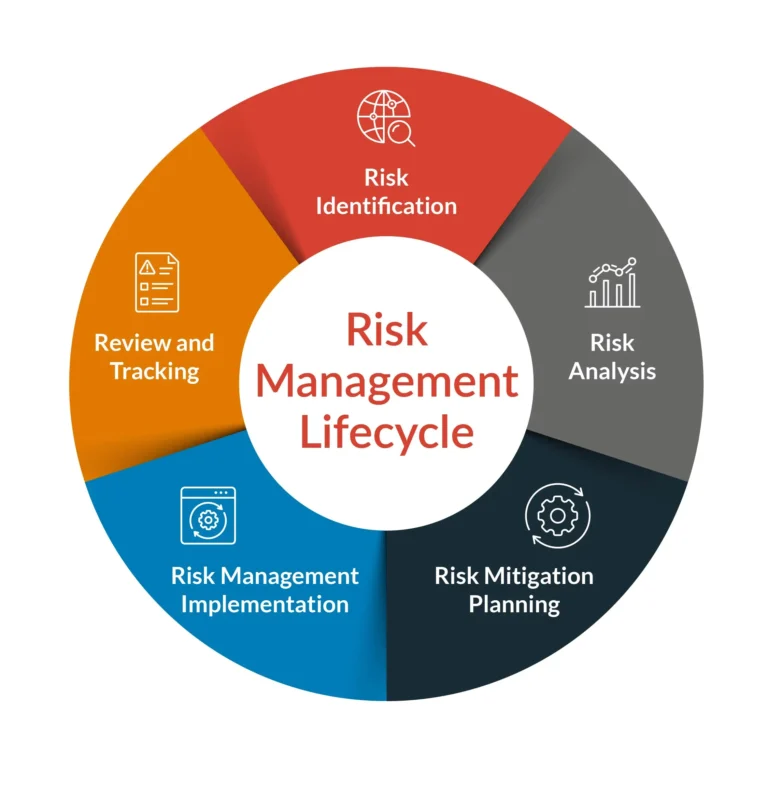
Systems Engineering Plan — Part 12: Risk Management, Verification & Validation, and Configuration Management
Comprehensive guide to Systems Engineering Plan Part 12 covering risk management, V&V planning, configuration management, and interface control for aerospace and defense programs.
Read guide : Systems Engineering Plan — Part 12: Risk Management, Verification & Validation, and Configuration Management