In this guide
Systems Engineering Plan Case Studies
Key Takeaways
- Treat SEPs as living documents that guide engineering work, not compliance artifacts
- Tailor rigor to project characteristics—not all programs require the same documentation depth
- Maintain requirements traceability regardless of development methodology
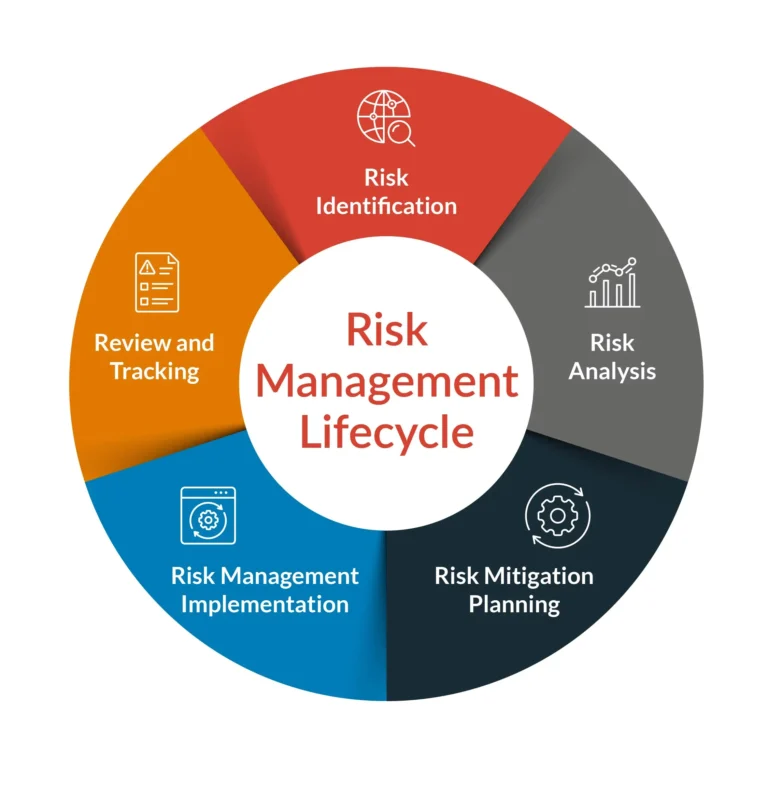
- Integrate risk management throughout development rather than as periodic review
- Balance documentation with agility—preserve discipline while adapting to modern methods
Introduction: The Stakes of Systems Engineering
When a space telescope worth billions of dollars sits folded inside a rocket, waiting for its moment to unfurl in the cold vacuum of space, the difference between success and catastrophic failure often traces back to decisions made years earlier—decisions about requirements, interfaces, risk response, and verification. These decisions, and how organizations capture, communicate, and execute them, are the essence of what a Systems Engineering Plan addresses.
Systems Engineering Plans have existed as formal documents since the aerospace industry’s formative decades, but their importance has only grown as systems have become more complex, stakeholders more numerous, and integration challenges more daunting. Every major engineering failure of the past half-century—space shuttle disasters, defense program cost overruns measured in billions, automotive recalls affecting millions of vehicles—carries some thread of inadequate systems engineering. Conversely, some of the most successful engineering achievements in history, from the International Space Station to modern electric vehicles, demonstrate what becomes possible when organizations implement robust systems engineering process discipline.
This article examines how organizations across aerospace, defense, and automotive industries have approached Systems Engineering Plan implementation in practice. Rather than presenting SEPs as abstract frameworks, we explore real implementations, extracting lessons that engineers and managers can apply regardless of their specific domain. The goal is to bridge the gap between theoretical SEP frameworks and the messy reality of engineering practice, where schedule pressure, budget constraints, and evolving requirements constantly challenge even the best intentions.
Understanding SEP Frameworks and Core Components
Before examining case studies, establishing a common vocabulary helps. Systems Engineering Plans are mandated or strongly recommended by multiple international standards and industry handbooks, each bringing slightly different perspectives on what these documents should contain.
Canonical Standards and Frameworks
The INCOSE Systems Engineering Handbook serves as the primary reference for practitioners worldwide, providing guidance on systems engineering processes and the role of planning documents in supporting those processes. It emphasizes that the SEP should describe how an organization will execute systems engineering for a specific program or project.
ISO/IEC/IEEE 15288, the international standard for systems and software engineering, frames systems engineering through a lifecycle perspective, with the SEP serving as an artifact that describes technical management processes. The standard establishes four lifecycle stages—concept, development, production, utilization, support, disposal—and requires planning to address each relevant stage.
Note: IEEE 1220, previously a detailed standard for systems engineering application and management, was withdrawn in 2014 and superseded by ISO/IEC/IEEE 15288. Organizations citing standards for current systems engineering practice should reference ISO/IEC/IEEE 15288 rather than the withdrawn IEEE 1220.
These standards share common ground while allowing organizational adaptation. Understanding their commonalities helps engineers navigate requirements when operating in regulated environments that reference specific standards.
Essential SEP Components
Across standards and industry practice, several core components consistently appear in effective SEPs:
- Requirements Traceability: A structured approach for managing requirements from stakeholder needs through system requirements to verification criteria, ensuring that every requirement can be traced to its source and every verification can be traced to the requirement it validates.
- Configuration Management: Processes for controlling changes to baselines, managing versions of documentation and artifacts, and maintaining integrity across distributed development environments.
- Risk Integration: Approaches for identifying, analyzing, and responding to technical and programmatic risks throughout development, integrated with program management rather than treated as a separate activity.
- Verification and Validation Planning: Strategies for demonstrating that the system meets requirements (verification) and fulfills its intended purpose (validation), including test planning, inspection approaches, and analysis methods.
- Technical Management: Processes for planning, assessing, and controlling technical progress, including technical reviews, decision analysis, and interface management.
These components will serve as evaluation criteria throughout the case studies that follow, helping identify what works, what fails, and why.
NASA’s Approach: Space Exploration Systems Engineering
NASA represents perhaps the most demanding environment for systems engineering: systems that must function in conditions where human intervention is impossible, where failure is often irreversible, and where public and political scrutiny adds another layer of complexity to program management. Understanding how NASA implements SEPs provides insights applicable far beyond the space industry.
The NASA Systems Engineering Handbook Framework
NASA’s approach centers on the NASA Systems Engineering Handbook, which provides detailed guidance for implementing systems engineering across NASA’s diverse programs. The handbook acknowledges that NASA missions range from small spacecraft with focused objectives to large human spaceflight endeavors, and it provides frameworks for tailoring systems engineering rigor accordingly.
A key insight from NASA’s approach is the concept of differentiated rigor based on mission characteristics. Not all NASA projects carry the same consequences of failure. A mission that demonstrates a new technology might accept higher risk than one that supports ongoing human spaceflight operations. NASA’s SEP framework allows programs to tailor their systems engineering rigor based on these considerations, focusing resources where they deliver the most value for mission success.
James Webb Space Telescope: Managing Unprecedented Complexity
The James Webb Space Telescope (JWST) provides an instructive case study in systems engineering at the extreme end of complexity. JWST required the development of technologies that had never been demonstrated at scale—the segmented mirror, the sunshield, the cryogenic systems—all while maintaining unprecedented precision requirements across enormous physical scales.
NASA’s SEP for JWST placed heavy emphasis on requirements traceability given the consequence of any requirement being misunderstood or lost. The verification planning required extensive development, with test articles designed to validate analytical predictions before flight hardware commitment.
The program also demonstrated effective stakeholder management across government, academic, and international partners. The European Space Agency contributed launch services and instrumentation; the Canadian Space Agency contributed key sensor systems; academic institutions contributed to instrument development. The SEP had to address interface control across these boundaries and establish clear lines of technical authority.
Configuration management for a development program spanning more than two decades required careful attention to baseline stability and change control. NASA implemented technical review gates that served as commitment points, where programs had to demonstrate readiness before proceeding to subsequent phases.
Lessons from NASA Implementation
Several practices from NASA’s approach transfer well to other domains:
- Tailoring based on mission characteristics allows organizations to apply appropriate rigor rather than treating all projects identically.
- Early investment in verification planning pays dividends later, as demonstrated by extensive ground testing that validated flight performance.
- Clear interface control across partner boundaries prevents integration problems that often plague complex programs.
- Technical review gates as commitment mechanisms create discipline around major decisions without becoming bureaucratic obstacles.
Defense Acquisition: DoD SEP Guidance
The Department of Defense acquisition environment presents unique systems engineering challenges. Programs often span decades, involve multiple contractors across complex supply chains, face evolving requirements driven by changing threat environments, and operate under intense oversight from congressional committees and executive leadership. Understanding how DoD implements SEP requirements illuminates both best practices and persistent challenges.
DoD Instruction 5000.02 and SEP Documentation Requirements
DoD Instruction 5000.02 establishes the framework for defense acquisition programs, with specific requirements for Systems Engineering Plans. The instruction mandates that programs develop SEPs that address technical planning, requirements management, risk management, and other essential systems engineering activities. These requirements are not optional—they represent conditions for proceeding through acquisition milestones.
The DoD SEP guidance places particular emphasis on systems-of-systems considerations, recognizing that defense capabilities increasingly depend on interoperability across platforms, domains, and organizational boundaries. A fighter aircraft must communicate with ground systems, naval assets, and coalition partners; an air defense system must integrate with command and control infrastructure. The SEP must address these integration requirements explicitly.
Major Defense Programs: Implementation Examples
Major defense programs from companies such as Lockheed Martin, Raytheon, and Boeing (as a defense contractor) have implemented varied approaches to SEP execution. Programs such as the F-35 Joint Strike Fighter demonstrate how large-scale defense acquisition integrates SEP practices across a global supply chain, while programs like DDG-1000 Zumwalt have faced challenges related to requirements complexity and technology insertion.
Defense acquisition programs frequently implement technical management practices that balance documentation requirements with engineering flexibility. The programs that succeed use SEPs to establish technical management discipline that enables rather than constrains decision-making.
Multi-Stakeholder Interface Management
Defense acquisition typically involves government program offices, prime contractors, subcontractor teams, and various oversight bodies. Interface control across these boundaries presents significant challenges. The SEP must establish clear protocols for managing interface documentation, change notification, and integration verification.
When interface control fails, integration problems cascade. Programs that have struggled often point to inadequate interface management as a contributing factor. The solution lies not just in documentation but in active technical engagement across organizational boundaries.
Boeing 787: Commercial Aerospace Implementation
The Boeing 787 program offers a compelling case study in systems engineering adaptation for commercial aerospace, where market pressures demand cost efficiency alongside safety and performance. The program’s scale, international complexity, and development challenges provide lessons applicable across industries.
Global Supply Chain Integration
The 787 represented a fundamental shift in how Boeing approached commercial aircraft development. Rather than developing aircraft primarily in-house, Boeing distributed design and manufacturing across international partners and risk-sharing partners. This approach brought advantages—access to global talent, shared development costs, and political benefits in international markets—but it also created unprecedented systems engineering challenges.
The SEP for 787 development had to address requirements flow-down across organizational and national boundaries. Ensuring that Boeing’s requirements were correctly interpreted and implemented by partners scattered across continents required robust communication protocols, interface control documentation, and verification approaches that could accommodate distributed development.
Model-Based Systems Engineering Implementation
The 787 program incorporated Model-Based Systems Engineering (MBSE) approaches in commercial aerospace development. Organizations including Boeing have utilized MBSE tools such as those from Cameo (No Magic) and IBM Rational to capture system behavior, requirements, and interfaces in forms that could be shared, analyzed, and verified across extended enterprises.
MBSE implementation in commercial aerospace programs demonstrated both the potential and the challenges of model-based approaches. The models provided value for requirements traceability and interface control, but the initial investment in establishing model-based workflows was substantial. Organizations considering MBSE adoption should recognize that it changes SEP execution fundamentally—documentation practices, review approaches, and configuration management all require adaptation.
Requirements Changes and Production Challenges
The 787 program experienced significant cost growth and schedule delays. While multiple factors contributed to these challenges—including technology development and supplier issues—requirements management played a role. Changes during development created rework that propagated through the global supply chain. The complexity of managing these changes across international partners amplified their impact.
These challenges highlight the importance of requirements stability and change control in complex programs. While some requirements evolution is inevitable, programs that allow requirements volatility to persist pay significant costs. The SEP should establish clear thresholds for requirements change and ensure that change impact analysis is conducted rigorously.
Lessons from Commercial Aerospace
The Boeing 787 experience demonstrates that effective SEPs must accommodate global development models while maintaining engineering discipline. Key lessons include:
- Global supply chains amplify requirements management challenges, requiring enhanced communication and verification protocols.
- MBSE adoption changes SEP execution fundamentally, not just the artifacts produced.
- Requirements volatility has cascading costs that increase with program complexity.
- Early production challenges often trace to systems engineering weaknesses that compound over time.
Automotive Innovation: Vehicle Development Systems Engineering
Automotive development presents a distinct set of systems engineering challenges. Vehicles are high-volume products requiring manufacturing efficiency. Development cycles have compressed dramatically while vehicle complexity has increased exponentially with software content, electrification, and autonomous driving features. Understanding how automotive manufacturers approach SEP-like frameworks illuminates adaptation strategies for other industries facing similar pressures.
Toyota’s Systems Engineering Integration
Toyota’s approach to systems engineering integrates with their broader Toyota Production System philosophy, which emphasizes continuous improvement and waste reduction. This integration provides a model for how systems engineering discipline can support organizational objectives rather than existing as a parallel compliance activity.
Toyota’s framework balances standardization for repeatability with flexibility for problem-solving. Their approach recognizes that excessive standardization can inhibit improvement, while insufficient standardization allows problems to persist. This balance applies directly to SEP implementation—documents and processes should guide engineering work without becoming rigid constraints.
Tesla and Software-Defined Vehicles
Companies such as Tesla have pioneered software-defined vehicle approaches that challenge traditional systems engineering frameworks. Tesla’s over-the-air update capabilities allow vehicles to receive feature improvements after deployment, requiring SEP adaptations that traditional aerospace practices did not anticipate. The boundary between development and operations has blurred.
Tesla’s approach demonstrates how requirements traceability must extend into the operational phase when software updates can modify vehicle behavior. Configuration management practices must accommodate post-deployment changes while maintaining safety and regulatory compliance.
Hardware-Software Co-Development Challenges
Modern vehicles integrate hardware and software in ways that challenge traditional systems engineering approaches. Automotive manufacturers have developed approaches for managing software-intensive systems that maintain vehicle-level integration while allowing software to evolve. These approaches include architecture frameworks that isolate software changes, robust verification at software and vehicle levels, and configuration management practices that accommodate post-deployment updates.
Organizations such as SAE International develop standards for automotive systems engineering that address hardware-software integration, functional safety, and cybersecurity considerations.
Electric Vehicle and Autonomous Driving Programs
Electric vehicles and autonomous driving systems present requirements that evolve rapidly as technology matures. Traditional systems engineering, with its emphasis on stable requirements before design begins, conflicts with the reality of emerging technology development where specifications must accommodate learning.
Leading automotive manufacturers have adapted their SEP practices to accommodate technology uncertainty. They use staged requirements development, with early stages focused on feasibility demonstration and later stages on detailed specification. They maintain architectural flexibility that allows design evolution without wholesale redesign. They implement verification approaches that can accommodate both defined requirements and exploratory testing.
Cross-Industry Comparison
Having examined specific industry implementations, synthesizing patterns across domains provides actionable insights for practitioners. The following comparison highlights how organizations adapt common SEP principles to their specific contexts.
Documentation Depth vs. Agility Trade-offs
| Industry | Documentation Tendency | Agility Adaptation |
|---|---|---|
| Aerospace (NASA) | High documentation rigor | Tailoring by mission criticality; technical review gates |
| Defense (DoD) | High documentation requirements | Agile/iterative acquisition pathways; modular open systems approaches |
| Commercial Aerospace | High documentation, model-based | MBSE for documentation efficiency; supplier integration |
| Automotive | Lean documentation tradition | Rapid iteration; software update capabilities |
Stakeholder Complexity and Management Approaches
All industries examined face increasing stakeholder complexity, but the nature of that complexity differs. NASA manages academic institutions, international partners, and diverse government stakeholders. Defense programs navigate contractor relationships with companies such as Lockheed Martin, Raytheon, and Airbus, along with oversight bodies and operational user communities. Automotive manufacturers manage supplier networks, dealer networks, regulatory bodies, and end customers. The common thread is that effective SEPs must explicitly address stakeholder management, not just technical requirements.
Risk Management Integration Patterns
Risk management appears in all effective SEPs, but implementation varies. NASA integrates risk management through technical review gates where risks must be formally assessed before proceeding. Defense programs often require risk registers with specific documentation standards. Automotive manufacturers tend toward more informal risk management integrated with engineering review processes.
The pattern that emerges is that risk management integration depth correlates with program consequence. Systems where failure carries severe consequences (human safety, national security, massive financial exposure) tend to implement more formal risk management practices.
Configuration Management Strategies
Configuration management strategies also reflect industry context. Aerospace and defense programs typically implement formal baseline control with change review boards and impact assessment requirements. Automotive programs have historically used less formal approaches but are evolving toward more structured configuration management as vehicle software content increases.
Transferable Practices
Several practices demonstrate value across industries:
- Requirements traceability regardless of methodology or domain
- Risk management integrated throughout development rather than treated as periodic review
- Interface control across organizational boundaries
- Verification planning that begins early and aligns with development phasing
- Tailoring based on project characteristics rather than applying one-size-fits-all approaches
Emerging Challenges: AI/ML, Cybersecurity, and Digital Twins
Modern systems engineering planning must address emerging challenges that cut across industries:
- AI and Machine Learning Integration: Systems incorporating AI/ML components require new approaches to verification and validation, as traditional requirements-based testing cannot fully characterize learned behaviors. SEPs must address how AI components are trained, validated, and monitored.
- Cybersecurity: Connected systems across all domains require cybersecurity considerations integrated throughout the systems engineering process rather than addressed as an afterthought. NIST standards provide frameworks for incorporating cybersecurity into SEPs.
- Digital Twins: Virtual system representations used for simulation, prediction, and operational support require SEP adaptations that address model management, synchronization with physical systems, and validation of predictive accuracy.
Common SEP Failures and Prevention
Understanding failure modes helps organizations avoid similar mistakes. Examining documented examples of project challenges that can be attributed, at least partially, to SEP weaknesses provides cautionary guidance.
Insufficient Requirements Traceability
When requirements traceability is inadequate, organizations lose visibility into what the system must do and why. This manifests in several ways:
- Scope creep: Undocumented requirements or untraced features accumulate, driving cost and schedule growth
- Missed functionality: Stakeholder needs are not captured or are lost in translation to system requirements
- Verification gaps: Requirements exist without corresponding test plans, leading to incomplete validation
Requirements traceability failures compound over time. Early in a program, missing traces may seem acceptable. Later, when integration problems emerge or stakeholders question why certain capabilities were included or excluded, the lack of traceability makes diagnosis difficult.
Inadequate Interface Control in Multi-Contractor Programs
When multiple organizations contribute to system development, interface control becomes critical. Common failures include:
- Ambiguous interface specifications that allow incompatible implementations to proceed undetected until integration
- Change notification failures where one organization changes an interface without notifying affected partners
- Insufficient interface verification that assumes partners