In this guide
Systems Engineering Plan — Expert Tips
The definitive guide for building SEPs that drive successful complex system delivery—from foundational concepts to advanced integration strategies.
systems engineering plan — Expert Tips
Direct Answer: A robust Systems Engineering Plan (SEP) is the master blueprint that transforms stakeholder needs into delivered capabilities. This expert guide provides proven strategies for structuring your SEP, tailoring it to project complexity, integrating MBSE approaches, and avoiding the pitfalls that derail even well-funded engineering programs. Whether you are overseeing a defense acquisition, automotive development, or software-intensive system, these techniques will sharpen your planning discipline and improve delivery outcomes.
1. Why a Systems Engineering Plan is Your Project’s North Star
Complex engineering projects succeed or fail based on planning discipline. A Systems Engineering Plan serves as the living document that connects what stakeholders need to what engineers design, build, and verify. Without this guiding blueprint, projects drift into scope creep, stakeholder misalignment, and verification gaps that manifest as expensive rework or, worse, system failures in the field.
The consequences of proceeding without a well-structured SEP extend beyond schedule delays. Teams develop solutions in isolation, integration becomes chaotic, and the evidence trail for regulatory compliance simply does not exist. A mature SEP establishes the governance framework that keeps all engineering activities synchronized toward a common goal.
Consider what happens when a SEP is absent or poorly maintained. Stakeholder needs evolve but engineering responses are not captured. Design decisions made early conflict with later requirements. Verification evidence is scattered across notebooks, emails, and disconnected documents. The result is a program that may technically deliver something, but delivers the wrong thing late and over budget.
2. Understanding the Standards Landscape for Systems Engineering
Navigating the standards landscape for systems engineering can feel overwhelming, but understanding the purpose and scope of each standard helps you apply them appropriately. These standards are not competing frameworks but complementary perspectives on engineering excellence.
| Standard | Primary Focus | Best For |
|---|---|---|
| ISO/IEC/IEEE 15288 | System lifecycle processes and vocabulary | International framework foundation; all domains |
| INCOSE SE Handbook | Practitioner guidance, templates, techniques | Implementation support; bridging theory to practice |
| EIA-632 | Engineering process emphasis | Process compliance demonstration |
| DoD SEP Guidance | Defense acquisition requirements | Military programs; U.S. defense contracts |
| NASA SE Handbook | Tailored aerospace guidance | NASA programs; space systems |
| ISO 26262 | Functional safety for automotive | Automotive systems; safety-critical road vehicles |
ISO/IEC/IEEE 15288: The Foundation Standard
This international standard defines the system lifecycle processes that apply across all domains. It provides the vocabulary and process framework that other standards build upon. When you reference IEEE 15288 in your SEP, you are establishing that your program follows internationally recognized engineering discipline.
INCOSE Systems Engineering Handbook
The INCOSE Handbook translates standards into practitioner guidance. It offers practical techniques, templates, and examples that bridge the gap between what standards require and what engineers actually do. For teams building SEPs, the INCOSE Handbook provides the how-to content that ISO 15288 lacks.
Industry-Specific SEP Considerations
Different sectors have specific documentation requirements for their acquisition programs:
Aerospace
ARP4754A guidelines for aircraft systems development; emphasis on functional hazard analysis integration with SEP content.
Defense
DoD SEP Guidance with MIL-STD-499 interface requirements; detailed supplier integration and configuration management sections.
Automotive
ISO 26262 functional safety integration; ASPICE process assessment alignment; software-intensive system considerations.
Medical Devices
IEC 62304 software lifecycle requirements; FDA submission documentation alignment; risk management file integration.
3. Mandatory vs. Optional Sections: Building Your SEP Architecture
Understanding which sections are essential versus those that add value based on project context is critical for creating an appropriately scoped SEP. Over-engineering leads to documentation burden that slows execution; under-engineering creates gaps that cause problems later.
| Section | Classification | When Essential |
|---|---|---|
| Purpose and Scope | Mandatory | Every SEP |
| Stakeholder Needs and Requirements | Mandatory | Every SEP |
| System Definition and Architecture | Mandatory | Every SEP |
| Lifecycle Stage Definitions | Mandatory | Every SEP |
| Integration, Verification, Validation Planning | Mandatory | Every SEP |
| Risk Management Approach | Mandatory | Every SEP |
| Configuration Management Strategy | Mandatory | Every SEP |
| MBSE Implementation Plan | Optional | Programs adopting model-centric approaches |
| Security Engineering Section | Optional | Systems with security requirements |
| Logistics Support Planning | Optional | Systems requiring sustainment planning |
| Specialized Safety Engineering | Optional | Safety-critical domains (medical, aerospace, automotive) |
4. Tailoring the SEP for Project Size, Complexity, and Risk Profile
The principle of proportionality guides SEP tailoring. A small software project with a colocated team requires different planning rigor than a multinational defense acquisition involving dozens of suppliers. The key is matching planning effort to actual project risk.
Small Projects: Streamlined Approach
For projects under a certain size threshold, consider a consolidated SEP that addresses all required content in fewer sections. You might combine stakeholder requirements and system definition into a single section. Use informal review mechanisms instead of formal gate reviews. Focus on essential traceability but simplify matrix formats.
Large-Scale Programs: Comprehensive Coverage
Large defense, aerospace, or automotive programs require full SEP treatment with detailed traceability matrices, formal milestone gates, integrated MBSE implementation, and extensive stakeholder coordination plans. These programs typically involve multiple organizations, significant regulatory oversight, and high consequences for failure.
Tailoring Decision Criteria
Use these factors to determine appropriate SEP depth:
- Technology Readiness Level (TRL): Lower TRL systems require more flexibility for plan evolution and additional risk management content
- Program Criticality: Life-safety and mission-critical systems demand comprehensive verification and validation planning
- Regulatory Environment: Heavily regulated industries require documented compliance evidence that drives SEP content
- Team Experience: Less experienced teams benefit from more prescriptive planning
- Supply Chain Complexity: Programs with external suppliers need robust interface and configuration management
Example Tailoring Scenarios
Scenario A (Small Project): A four-person software team building an internal tool might use a two-page SEP covering purpose, requirements summary, development approach, and verification strategy with informal weekly reviews.
Scenario B (Large Defense Program): A defense acquisition involving multiple prime contractors and hundreds of engineers requires a comprehensive SEP with appendices for interfaces, MBSE model governance, detailed risk registers, and formal gate review criteria.
5. Stakeholder Alignment and Requirements Traceability
Stakeholder alignment is the foundation of systems engineering. If you build the wrong system with perfect engineering discipline, you have still failed. Your SEP must establish the mechanisms for capturing stakeholder needs and converting them into system requirements that guide design.
Requirements Elicitation Techniques
Effective requirements gathering goes beyond sending stakeholders a template to fill out. Use structured workshops to facilitate dialogue. Employ techniques such as structured interviews, use case analysis, and objectives-based approaches to surface not just stated needs but underlying constraints and concerns. Note: While various elicitation frameworks exist in practice, formal standards like IEEE 29148 provide authoritative guidance for requirements engineering processes.
Document requirements in clear, unambiguous language. Each requirement should be verifiable, achievable, and necessary. Avoid requirements that encode specific solutions when the actual need is an outcome.
Establishing Bidirectional Traceability
Bidirectional traceability links customer needs to system requirements, requirements to architectural elements, architectural elements to design artifacts, and design artifacts to verification procedures. This traceability chain enables impact analysis when requirements change and provides evidence that the delivered system satisfies all stakeholder needs.
Use requirements management tools such as IBM DOORS or DOORS Next to automate traceability links where possible. Manual traceability is error-prone and quickly becomes stale. Generate coverage reports at each milestone to identify gaps in traceability coverage.
6. Integrating Model-Based Systems Engineering (MBSE) into Your SEP
Model-Based Systems Engineering represents a fundamental shift from document-centric to model-centric engineering. Rather than describing systems in text documents, MBSE captures requirements, architecture, behavior, and interfaces in structured models that can be analyzed, simulated, and automatically transformed into documentation.
Defining MBSE Scope and Governance
Your SEP should specify what system elements will be modeled, what tools will be used, and how model artifacts will be governed. Define the model architecture upfront—who owns which model views, what conventions govern model element naming, and how models will be versioned and baselined.
SysML Modeling and Tool Selection
Common MBSE tools implement the Systems Modeling Language (SysML) for architecture, requirements, and behavior representation. Popular options include:
- Cameo Systems Modeler (No Magic) – Comprehensive SysML support with enterprise integration
- IBM Rational Rhapsody – Strong simulation and code generation capabilities
- Visual Paradigm – Accessible option with good SysML coverage
- ARCADIA (Capgemini Engineering) – Method-driven approach with CAPELLA tool
- MATLAB Simulink – Signal processing and control systems emphasis
Select tools based on team familiarity, stakeholder tool access requirements, and interoperability with your requirements management and configuration management infrastructure.
Hybrid Approaches
Many organizations transition incrementally from document-centric to model-centric engineering. Your SEP should address this transition explicitly. Define which artifacts will remain document-based and which will be model-based. Establish integration points between models and documents. Plan for dual maintenance during the transition period.
7. Defining Metrics, KPIs, and Progress Tracking
What gets measured gets managed. Your SEP must define the metrics that communicate program health to leadership and enable teams to course-correct before problems become crises. However, metrics selection requires care—poorly chosen metrics drive counterproductive behaviors.
Requirements Health Metrics
Track requirements growth rate and change frequency to assess stability. A healthy program sees requirements stabilize after initial definition. Persistent requirements churn signals stakeholder misalignment or scope management problems. Track traceability coverage as a quality indicator.
Model Maturity Metrics (for MBSE Programs)
If you are implementing MBSE, measure model element growth, model consistency metrics, and model utilization rates. These metrics indicate whether your model-based approach is gaining traction or stagnating.
Review Gate Performance
Measure on-time closure of review findings, finding rates by severity, and finding recurrence. Recurring findings in the same area indicate incomplete corrective action or fundamental technical problems.
Risk Management Effectiveness
Track risk mitigation completion rates, time-to-close for new risks, and trends in risk identification. A program that stops identifying new risks has either achieved perfect risk coverage (unlikely) or is experiencing risk acceptance fatigue.
8. Risk and Opportunity Management Within the SEP Framework
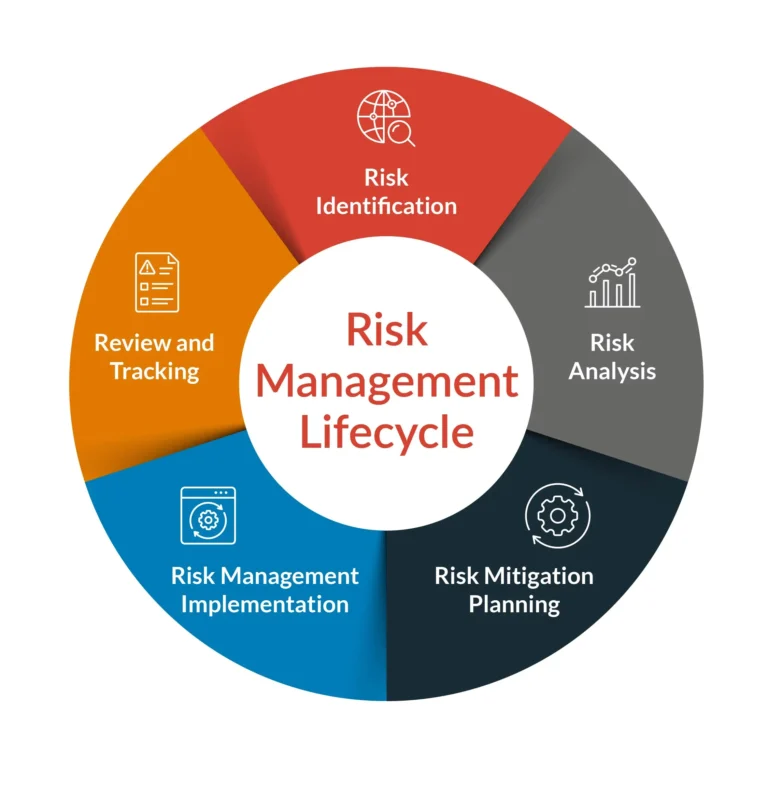
Risk management often exists as an afterthought in poorly structured SEPs. Effective risk management is a first-class engineering activity woven throughout your plan. Your SEP must establish the risk management process, define thresholds, and specify how risk response integrates with engineering planning.
Risk Register Structure
Each risk entry should include a unique identifier, description, likelihood assessment, impact assessment, risk owner, mitigation strategy, status, and trigger conditions. Align risk register entries to SEP milestones so that risk response activities appear in project schedules.
Risk Thresholds and Triggers
Define thresholds that require SEP revision. If technical risks exceed certain thresholds, the SEP should mandate additional design reviews or analyses. If schedule risks threaten milestone dates, the SEP should specify escalation procedures.
Risk Response Strategies
For each identified risk, select an appropriate response: mitigate (reduce likelihood or impact), transfer (allocate to another party through contract or insurance), avoid (eliminate the risk by changing approach), or accept (acknowledge the risk and plan contingency). Document the rationale for strategy selection.
9. Configuration Management, Change Control, and Artifact Governance
Configuration management is the mechanism that keeps your SEP alive and authoritative. Without rigorous configuration management, engineering artifacts diverge, teams work from outdated information, and the traceability chain breaks. Your SEP must establish the configuration management infrastructure from day one.
Baseline Management
Define baselines for your SEP artifacts: requirements baseline, design baseline, product baseline. Each baseline represents a stable point that can be changed only through controlled change processes. Specify what constitutes a baseline, who approves it, and how it is documented.
Change Control Integration
Establish a change control board (CCB) with defined membership, authority, and procedures. Changes to baseline artifacts must go through the CCB process. Your SEP should specify change categories, approval authorities for different change magnitudes, and the timeline for change processing.
Tool Integration
Modern engineering environments use multiple tools: requirements management (DOORS, DOORS Next), collaboration platforms (Confluence, SharePoint), project tracking (JIRA), and modeling tools (Cameo, Rhapsody). Your configuration management strategy must define how these tools integrate and how consistency across tools is maintained.
10. Tools of the Trade: Recommended Platforms for SEP Management
Tool selection significantly impacts SEP execution efficiency. The right tools automate tedious tasks, enforce consistency, and enable collaboration. The wrong tools create data silos, integration challenges, and team frustration.
Enterprise Solutions
For large organizations with complex requirements, the IBM Rational suite provides integrated requirements management (DOORS, DOORS Next), modeling (Rhapsody),