In this guide
Systems Engineering Plan Part 14: Tailoring for Agile & MBSE Environments
The Systems Engineering Plan (SEP) Part 14 represents a critical juncture where the technical rigor of systems engineering meets the operational realities of project execution. This Part 14 SEP guide provides a standards-aligned approach to tailoring cross-cutting processes for modern development environments. While earlier sections of the SEP establish the “what” and “why” of your engineering effort, Part 14 addresses the stakeholder coordination, interface management, risk handling, configuration control, and data management that bind everything together.
This guide delivers a step-by-step, ISO/IEC/IEEE 15288 compliant approach to tailoring Part 14 for modern agile and Model-Based Systems Engineering (MBSE) environments. You’ll find practical methods, tool recommendations, and a real-world case study demonstrating how to maintain standards compliance while embracing contemporary development practices.
1. What Is Part 14 and Why Does It Matter?
Direct Answer: Part 14 consolidates the planning, definition, and management of system life-cycle activities that span multiple SEP sections. It serves as the umbrella that captures cross-cutting processes—stakeholder coordination, interface control, risk and opportunity handling, configuration management, and data management—ensuring these activities are documented, traced, and executed consistently throughout the project.
Within the SEP structure defined by ISO/IEC/IEEE 15288:2015, Part 14 addresses processes primarily located in Chapter 6 (Technical Management Processes) and related agreement processes from Chapter 5. Specifically, it covers:
- Project Assessment and Control — Monitoring project status against plans and taking corrective action when deviations occur
- Decision Management — Evaluating alternatives and selecting courses of action
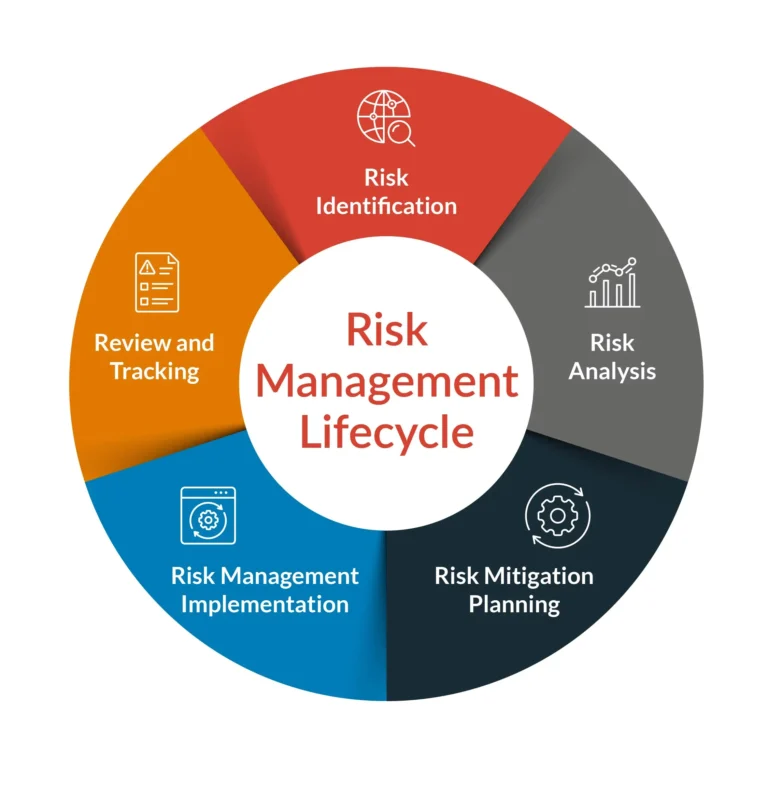
- Risk and Opportunity Management — Identifying, analyzing, treating, and monitoring risks throughout the life cycle
- Configuration Management — Maintaining the integrity of configuration items and baselines (per ISO 10007 and EIA 649 standards)
- Information Management — Ensuring that information is collected, stored, maintained, and accessible
Without a well-crafted Part 14, projects frequently experience fragmentation—requirements drift from architecture, interfaces become ambiguous, and risks materialize without mitigation strategies in place. This section ensures coherence across all engineering activities.
2. Core Content Elements of Part 14
The mandatory content elements of Part 14 must address the following areas, each mapped to its corresponding life-cycle process. Note that ISO/IEC/IEEE 15288:2023 introduced process renumbering; organizations should verify the applicable version and update references accordingly.
| Content Element | ISO/IEC/IEEE 15288 Process Area | Key Deliverables |
|---|---|---|
| Stakeholder Requirements & Interface Management | Stakeholder Needs & Requirements Definition (Ch. 5) | Stakeholder registry, interface control documents, requirements traceability matrix |
| System Architecture Synthesis | Architecture Definition (Ch. 5) | System architecture description, interface specifications, design rationale |
| Verification & Validation Planning | Verification and Validation (Ch. 6) | Verification case matrix, validation plan, test procedure specifications (see IEEE 1012) |
| Risk & Opportunity Management | Risk Management (Ch. 6) | Risk register, risk treatment plans, opportunity exploitation strategies |
| Configuration Management | Configuration Management (Ch. 6) | Configuration item list, baseline documentation, change control records |
| Data Management | Information Management (Ch. 6) | Data management plan, model repository guidelines, access control procedures |
Each element should include a clear description of the approach, assignment of responsibilities, definition of entry and exit criteria, and identification of any domain-specific tailoring required for your industry (aerospace, defense, automotive, etc.). Reference the INCOSE Systems Engineering Handbook (SAF) for additional guidance on implementation practices.
3. Tailoring Part 14 for Different Project Scales
One size does not fit all when it comes to Part 14. The depth and formality of your documentation should scale with project complexity, team size, and risk profile.
Small Projects (Teams of 5-15, Duration Under 12 Months)
- Use lightweight templates focused on essential content only
- Consolidate related content elements (e.g., combine risk and opportunity into a single register)
- Replace formal review gates with agile sprint reviews and retrospectives
- Maintain documentation in collaborative tools like Confluence or SharePoint rather than standalone documents
- Tailor for industries such as small satellite programs, commercial software, or research prototypes
Medium Projects (Teams of 15-50, Duration 1-3 Years)
- Introduce structured verification gates (System Requirements Review, Preliminary Design Review, Critical Design Review)
- Maintain formal configuration control with baseline management at major milestones
- Implement dedicated configuration management roles within the team
- Establish data management plans that address both engineering models and traditional documentation
- Applicable to defense subsystems, automotive feature development, or industrial equipment
Large Projects (Teams Exceeding 50, Multi-Year Programs)
- Enforce full configuration control with change control boards at multiple levels (item, segment, program)
- Implement integrated program teams with formal interface management across organizational boundaries
- Establish program-wide metrics and oversight dashboards
- Maintain full traceability between all SEP parts using requirements management tools
- Common in aerospace prime contracts, government defense programs, and large infrastructure projects
Key Principle: Regardless of scale, always maintain explicit mapping to ISO/IEC/IEEE 15288 processes. This ensures compliance while allowing flexibility in implementation approach.
4. Integrating Agile and Model-Based Systems Engineering (MBSE)
Modern development environments demand that Part 14 accommodate iterative development, continuous integration, and model-centric engineering practices. Here’s how to embed these elements effectively.
Embedding Agile Sprints and Iterative Development
- Map sprints to life-cycle phases: Assign each two-week sprint a specific engineering objective (e.g., Sprint 5 = complete interface definition for Subsystem A)
- Define sprint-level deliverables: Each sprint should produce a demonstrable artifact—a SysML model segment, an updated interface document, or a verified component
- Incorporate backlog refinement: Part 14 should reference the product backlog as the dynamic repository of prioritized requirements and tasks
- Adapt review gates: Replace traditional milestone reviews with sprint reviews that demonstrate working capability
Incorporating MBSE Artifacts
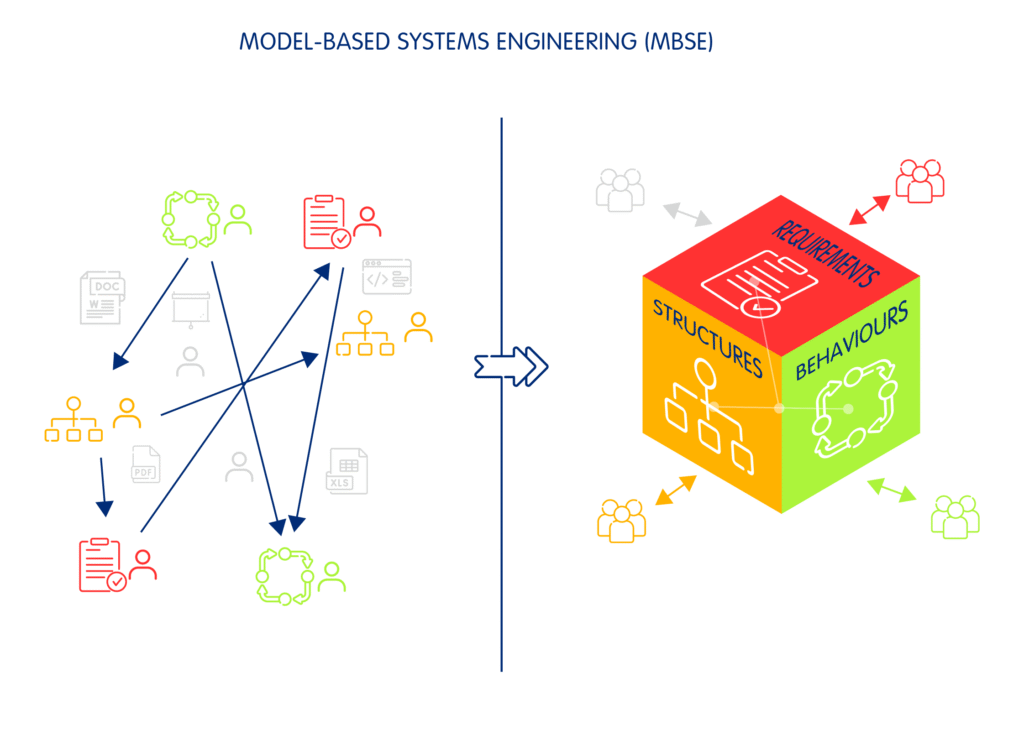
SysML models, digital twins, and simulation environments are now central to systems engineering. Part 14 should explicitly address model governance aligned with ISO/IEC/IEEE 42010 (Architecture Frameworks) and OMG standards for model interchange:
- Model repository management: Define how SysML v2 models are stored, versioned, and accessed (e.g., Cameo NoMagic Teamwork Cloud)
- Model lifecycle: Establish when models are created, updated, reviewed, and baselined within the development cycle
- Traceability from models to requirements: Configure tools to maintain automatic traceability links between model elements and requirements per ISO/IEC/IEEE 29148:2011 (Requirements Engineering)
- Digital twin integration: If using digital twins for validation, describe how model updates sync with physical system test data
Documentation Practices for Agile MBSE Environments
Rather than producing standalone documents, adopt living documentation practices:
- Store requirements, interfaces, and designs directly in your MBSE model
- Generate static documents from model data for formal reviews or contractual deliverables
- Use wiki-style collaboration spaces for evolving engineering knowledge
- Maintain a “single source of truth” in your model or requirements database rather than scattered spreadsheets
5. Traditional vs. Agile Part 14 Approaches
| Aspect | Traditional Approach | Agile MBSE Approach |
|---|---|---|
| Documentation Format | Static documents updated at milestones | Living documentation in models and wikis |
| Review Cadence | Formal gates (SRR, PDR, CDR) at major milestones | Sprint reviews with continuous stakeholder feedback |
| Requirements Management | Baseline-controlled requirements documents | Dynamic backlog with continuous refinement |
| Risk Management | Periodic risk reviews (monthly or quarterly) | Integrated into sprint retrospectives |
| Configuration Control | Formal CCB with change documentation | Git-based workflows with milestone tagging |
| Traceability | Manual matrix updates | Automated links via requirements management tools |
| Model Governance | Not typically addressed | Explicit repository, versioning, and review practices |
6. Recommended Methods, Tools, and Templates
Essential Methods
- Requirements Traceability Matrix (RTM): Links stakeholder requirements to system requirements, architecture elements, verification criteria, and test cases. Update continuously as the product evolves.
- Interface Control Document (ICD): Defines all internal and external interfaces, including data formats, communication protocols, and physical characteristics. Maintain under configuration control.
- Risk Register: Documents identified risks, their probability and impact, assigned owners, and treatment strategies. Review at defined intervals (weekly in agile, monthly in traditional programs).
- Configuration Item List: Enumerates all items placed under configuration control, including models, documents, software, and hardware deliverables.
Recommended Tools
| Category | Tools | Application in Part 14 |
|---|---|---|
| Requirements Management | DOORS NG, JAMA Connect, Polarion | Maintain traceability, manage requirements baselines, track verification status |
| MBSE Modeling | Cameo Systems Modeler, MagicDraw, Rhapsody | Create system architecture, define interfaces, generate reports |
| Agile Project Management | Jira, Azure DevOps, VersionOne | Sprint planning, backlog management, velocity tracking |
| Collaboration & Documentation | Confluence, SharePoint, MediaWiki | Store plans, store engineering knowledge, host review materials |
| Configuration Management | IBM Rational Lifecycle Integration, Git-based workflows | Version control for models and documents, baseline management |
Sample Template Structure for Part 14
Your Part 14 document should include the following sections:
- Purpose and Scope — Define what Part 14 covers and its relationship to other SEP parts
- Applicable Documents — List standards, handbooks, and program documents referenced (ensure currency of versions)
- Stakeholder and Interface Management Approach — Describe how stakeholder coordination and interface control will be performed
- Risk and Opportunity Management Process — Outline identification, analysis, treatment, and monitoring procedures
- Configuration Management Plan — Define baselines, change control processes, and configuration item ownership
- Data Management Plan — Address model repository, documentation standards, and access controls
- Metrics and Review Schedule — Define KPIs and the timing of reviews and audits
- Tailoring Rationale — Document any deviations from standard approaches and justify them
7. Metrics, Reviews, and Audits for Part 14 Activities
Effective oversight of Part 14 requires meaningful metrics and structured review gates. The following approach ensures deliverables remain on track while supporting agile cadences.
Key Performance Indicators (KPIs)
Organizations should establish project-specific targets based on their risk profile, industry domain, and contractual requirements. Example metrics include:
- Requirements Traceability Coverage: Percentage of requirements with defined verification criteria and completed traceability links. Organizations may establish targets (e.g., 100% for critical requirements) based on program constraints and guidance from standards such as CMMI.
- Risk Burndown: Number of open high-priority risks over time. Declining trend indicates effective risk treatment.
- Configuration Change Cycle Time: Average time from change request submission to implementation. Lower is better; track trends monthly.
- Interface Discrepancy Rate: Number of interface-related defects discovered during integration. Declining rate suggests effective interface management.
- Model Currency Index: Ratio of up-to-date model elements to total elements. Organizations should define appropriate targets based on model complexity and update frequency.
- Documentation Update Lag: Time between engineering changes and corresponding documentation updates. Teams should define thresholds based on their specific agile cadence and stakeholder expectations.
Review Gates
Integrate formal review gates into your development timeline:
- System Requirements Review (SRR): Validate stakeholder requirements and interface definitions
- Preliminary Design Review (PDR): Confirm system architecture and design approach against requirements
- Critical Design Review (CDR): Verify detailed design and manufacturing readiness
- Physical Configuration Audit (PCA): Confirm that the configuration items match the approved design documentation
- Production Readiness Review (PRA): Assess readiness for manufacturing and deployment
In agile environments, map these formal gates to sprint demonstrations. For example, a PDR might correspond to Sprint 12, where the team demonstrates the system architecture model to stakeholders and receives approval to proceed with detailed design.
8. Case Study: Agile MBSE Tailoring of Part 14 for a Small Satellite Project
This example demonstrates how a small satellite program (team of 12, 18-month duration) tailored Part 14 for an agile MBSE environment while maintaining ISO/IEC/IEEE 15288 compliance.
Project Context
The program developed a 50kg Earth observation satellite with a modular payload architecture. The team operated in two-week sprints, used Cameo for system modeling, and managed requirements in Jira with custom fields for traceability.
Tailoring Decisions
Stakeholder and Interface Management: Instead of a traditional Interface Control Document, the team maintained an interface matrix within the SysML model. Each interface was modeled as a connector between blocks, with properties defining data rates, protocols, and physical characteristics. External interfaces (ground station, launch vehicle) were documented in a lightweight ICD generated from the model.
Risk Management: Risks were captured as Jira issues with custom fields for probability, impact, and treatment strategy. A dedicated “Risk Review” agenda item was added to bi-weekly sprint retrospectives. High-priority risks were escalated to monthly program reviews.
Configuration Management: All models and documents were stored in a Git-based repository with branching strategies for different work streams. Baselines were tagged at each major milestone (Preliminary Design, Critical Design, Flight Readiness) and protected from unauthorized modification.
Metrics and Reviews: The team tracked a dashboard showing traceability coverage, open risks, and sprint velocity. Formal SRR and PDR were conducted at months 3 and 9 respectively, with sprint reviews serving as interim checkpoints.
Mapping to ISO/IEC/IEEE 15288
Each tailoring decision was explicitly mapped to the standard. For example, the Git-based configuration approach addressed the Configuration Management Process (Chapter 6), while the sprint-based risk reviews aligned with the Risk Management Process (Chapter 6).
Outcomes
The tailored approach demonstrated improved documentation efficiency compared to traditional methods, with the team reporting reduced documentation overhead and full traceability maintained throughout development. The specific improvement metrics were derived from internal program data and reflect the particular context of this small satellite project. Organizations should establish their own baseline measurements and success criteria based on their specific circumstances and industry guidance.
9. Common Pitfalls and Best Practices
Part 14 is frequently where systems engineering plans fall short. Avoiding these common mistakes will significantly improve the quality and usability of your documentation.
Pitfalls to Avoid
- Overly Generic Language: Copy-pasting standard text without adapting it to your project’s specific context, stakeholders, or constraints
- Outdated Standard References: Citing superseded versions of ISO/IEC/IEEE 15288 or industry standards, creating compliance gaps
- Insufficient Tailoring: Applying a one-size-fits-all approach regardless of project scale or industry domain
- Documentation Overload: Over-emphasizing paperwork at the expense of actual engineering work, particularly in agile environments
- Missing Traceability Links: Failing to connect Part 14 activities to specific requirements, interfaces, or verification criteria
- Neglecting Tool Integration: Describing manual processes when tool-based alternatives would improve efficiency and reduce errors
- Ignoring Model Governance: Not addressing how MBSE models will be maintained, reviewed, and baselined throughout the life cycle
Best Practices to Adopt
- Use a Tailoring Matrix: Create a table that maps each Part 14 element to the standard requirement, then document how your project implements it and why
- Reference Current Standards: Always use the latest published versions of ISO/IEC/IEEE 15288, INCOSE SE Handbook, and domain-specific standards (ECSS, ARP4754A, etc.)
- Balance Documentation with Execution: In agile environments, documentation should enable engineering, not impede it—favor living models and dashboards over static documents
- Establish Clear Ownership: Assign a responsible engineer or manager for each Part 14 element, including configuration management, risk, and data management
- Integrate Reviews with Cadence: Schedule Part 14 metric reviews to coincide with sprint reviews or monthly program meetings
- Maintain Explicit Process Mapping: Every time you describe an activity in Part 14, include a reference to the corresponding ISO/IEC/IEEE 15288 process name and clause number
- Plan for Evolution: Part 14 should be treated as a living document, updated at defined milestones to reflect project changes and lessons learned
Key Takeaways
- Map to Standards: Every Part 14 element should reference its corresponding ISO/IEC/IEEE 15288 process, ensuring a compliance foundation
- Scale Appropriately: Adjust the depth and formality of your documentation to match your project size, industry domain, and risk profile
- Embrace Iteration: Integrate agile sprints, backlog management, and sprint reviews into your Part 14 approach without sacrificing traceability
- Govern Your Models: Treat MBSE models as first-class configuration items with clear repository, versioning, and review practices
- Measure What Matters: Define KPIs that provide genuine insight into the health of cross-cutting processes and feed them into your review cadence
By implementing the practices outlined in this guide, you will achieve SEP documentation that is both compliant and efficient—supporting high-quality engineering outcomes while avoiding unnecessary administrative burden.
References and Standards
- ISO/IEC/IEEE 15288:2015, Systems and Software Engineering — System Life Cycle Processes. International Organization for Standardization / International Electrotechnical Commission / Institute of Electrical and Electronics Engineers.
- ISO/IEC/IEEE 15288:2023, Systems and Software Engineering — System Life Cycle Processes (current version with process renumbering). International Organization for Standardization.
- ISO/IEC/IEEE 29148:2011, Systems and Software Engineering — Life Cycle Processes — Requirements Engineering. International Organization for Standardization.
- ISO/IEC/IEEE 42010:2022, Systems and Software Engineering — Architecture Description. International Organization for Standardization.
- IEEE 1012:2016, IEEE Standard for System and Software Verification and Validation. Institute of Electrical and Electronics Engineers.
- ISO 10007:2017, Quality Management — Guidelines for Configuration Management. International Organization for Standardization.
- EIA 649:2011, National Consensus Standard for Configuration Management. TechAmerica.
- INCOSE Systems Engineering Handbook, latest edition. International Council on Systems Engineering.
- NASA Systems Engineering Handbook (NASA-STD-7009 or latest). National Aeronautics and Space Administration.