In this guide
Systems Engineering Plan Part 13: Verification, Validation & Acceptance Guide
A comparative analysis of INCOSE and NASA SEP approaches with actionable tailoring strategies for projects of all sizes
1. Understanding SEP Part 13: Scope, Objectives, and Core Elements
The V&VIA section of a Systems Engineering Plan addresses the critical question: “How do we know the system actually works as intended?” While preceding sections establish the “what” and “why” of system development—defining requirements, architectural approaches, and technical management strategies—this section focuses on confirming system integrity.
The V&VIA section encompasses four interconnected disciplines:
- Verification: Confirmation that work products meet specified requirements through objective evidence
- Validation: Confirmation that the system, as delivered, meets stakeholder needs and intended use
- Integration: The systematic process of combining components, subsystems, and elements into complete systems
- Acceptance: The formal determination that the system satisfies acceptance criteria and is ready for deployment
Position Within the SEP Structure
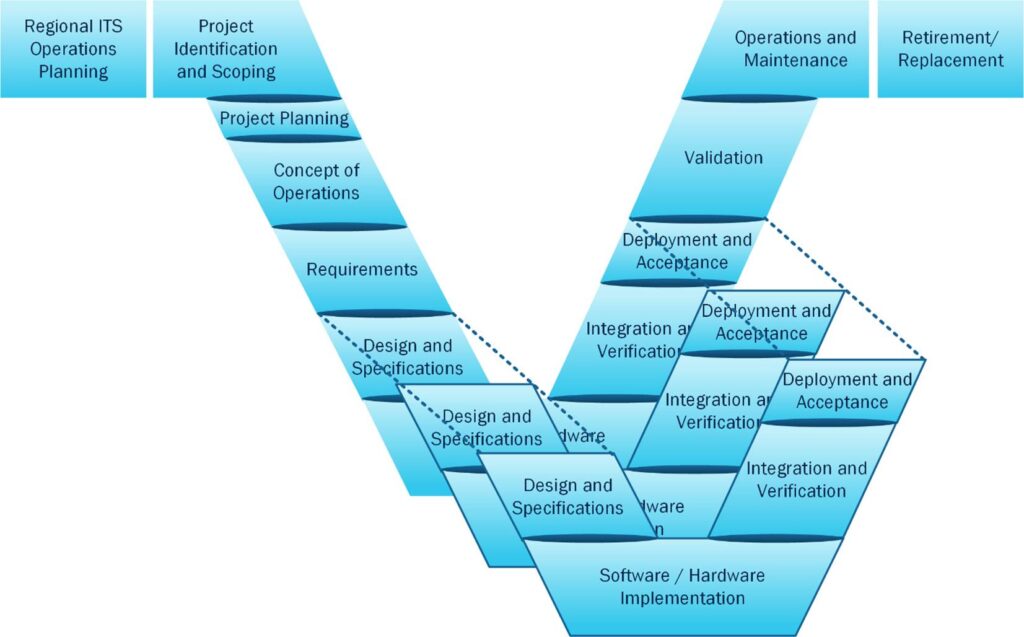
The V&VIA section receives inputs from multiple upstream SEP sections and provides outputs to downstream activities. Understanding these interdependencies is essential for effective implementation.
Essential Objectives of V&VIA Planning
Primary objectives that V&VIA planning must address include:
- Requirements Confirmation: Ensuring each requirement can be traced to verification evidence
- Stakeholder Need Satisfaction: Validating that the delivered system addresses actual operational needs
- Technical Risk Reduction: Identifying deficiencies early when correction costs are lowest
- Compliance Demonstration: Providing auditable evidence of regulatory and contractual conformance
- Acceptance Basis Establishment: Defining clear criteria for determining when the system is ready for transition
2. Comparative Analysis: INCOSE vs. NASA SEP — V&V Planning Approaches
Two primary standards commonly inform V&VIA planning: the INCOSE Systems Engineering Handbook and the NASA Systems Engineering Handbook. While these documents share foundational principles aligned with ISO/IEC/IEEE 15288, significant differences in emphasis, terminology, and tailoring guidance require careful attention.
| Aspect | INCOSE SEP Guidance | NASA SEP Guidance |
|---|---|---|
| Section Focus | Verification and Validation (V&V) | Verification and Validation (V&V) / Independent V&V (IV&V) |
| Primary Framework Reference | INCOSE Systems Engineering Handbook; ISO/IEC/IEEE 15288 | NASA Procedural Requirements (current NPR version) |
| Independence Approach | Emphasizes team-based V&V; independence is recommended based on risk | IV&V required for certain mission categories; independence is a core principle |
| Tailoring Guidance | High flexibility; tailoring based on project attributes | Structured tailoring with defined gates; more prescriptive |
| Integration Coverage | Integration addressed within V&V context | May include separate Integration and Checkout process thread |
| Acceptance Focus | Acceptance as verification completion; general guidance | Detailed acceptance phases with formal review gates |
| Documentation Approach | Outcome-focused; artifact flexibility encouraged | Prescriptive artifact lists with templates and review criteria |
| Lifecycle Integration | V&V activities span all lifecycle phases | May employ phased approach with distinct verification phases |
Terminology Considerations
Terminology differences exist between frameworks. NASA employs the term “IV&V” (Independent Verification and Validation) as a distinct concept with dedicated organizational structures and reporting chains for applicable programs. INCOSE guidance treats independence as a potential attribute that can be adjusted based on project risk, allowing teams to determine appropriate independence levels. Organizations should consult current framework documentation for specific requirements.
Common Ground
Despite differences, both frameworks converge on fundamental principles:
- Verification confirms compliance with specified requirements
- Validation confirms fitness for intended purpose
- Both processes require documented plans, procedures, and evidence
- Traceability between requirements and verification artifacts supports completeness
- Tailoring based on project characteristics is expected and necessary
3. Key Processes: Verification, Validation, Integration, and Acceptance
V&VIA planning encompasses four primary process areas, each with distinct objectives and methodologies. Understanding these processes in depth enables practitioners to design comprehensive, efficient programs.
Verification Methods
Verification methods establish objective evidence that work products satisfy requirements. Four primary methods form the verification toolkit:
Analysis
Analytical verification employs mathematical, computational, or logical methods to demonstrate requirement compliance without physical testing. This method is valuable for proving compliance with performance requirements that may be impractical to test exhaustively.
Inspection
Inspection involves visual examination, measurement, or review of documents to establish compliance. This method is efficient for verifying design characteristics, manufacturing quality, and documentation completeness.
Demonstration
Demonstration shows that a system or component performs its intended function under specified conditions, though typically without the full range of formal testing rigor. This method bridges analysis and formal testing.
Test
Formal testing provides rigorous verification evidence when conducted under controlled conditions with measured inputs and recorded outputs, generating quantitative evidence of requirement compliance.
Validation Approaches
Validation confirms that the system meets stakeholder needs in its operational environment. While verification addresses “did we build the system right?”—validation addresses “did we build the right system?”
- Operational Testing: System evaluation in realistic operational scenarios with actual or representative users
- Human Factors Evaluation: Assessment of operator interfaces, workload, situational awareness, and error prevention
- Environment of Intended Use: Validation in conditions approximating the actual deployment environment
- Stakeholder Acceptance Trials: Formal confirmation that the system satisfies contractual or operational acceptance criteria
Integration Strategies
Integration connects components, subsystems, and elements into cohesive systems. Effective integration requires careful sequencing and interface management.
Interface Verification
Confirm that all physical, electrical, logical, and data interfaces comply with interface specifications before integration proceeds.
Component Integration
Progressively integrate lower-level components, verifying function at each stage before adding complexity.
Subsystem Verification
Verify that integrated subsystems meet their allocated requirements independently.
System Integration
Combine subsystems into the complete system, verifying end-to-end functions and performance.
Acceptance Criteria Definition
Acceptance criteria define the conditions that must be satisfied before the system transitions to the next phase or to the customer. Well-defined acceptance criteria are specific, measurable, achievable, relevant, and time-bound (SMART).
4. Documentation Requirements and Artifacts for V&VIA
Documentation provides the evidence trail demonstrating that verification, validation, and acceptance activities have been performed correctly. V&VIA documentation serves multiple audiences: development teams, quality assurance, program management, customers, and regulators.
Core Documentation Artifacts
| Artifact | Purpose | Typical Timing |
|---|---|---|
| V&V Plan | Defines approach, methods, resources, and schedule for verification and validation activities | Completed during planning phase; updated as needed |
| V&V Procedures | Detailed step-by-step instructions for executing verification and validation activities | Developed before test execution; reviewed before use |
| V&V Reports | Documents execution results, anomalies, and compliance determination | Following each verification or validation activity |
| Requirements Verification Matrix | Maps each requirement to its verification method and status | Maintained continuously; baselined at major milestones |
| Test Plans and Procedures | Defines test scope, approach, resources, and detailed test steps | Before test execution; reviewed and approved before tests |
| Test Reports | Documents test execution, results, and deviations | Following test completion |
| Acceptance Documentation | Formal records of system acceptance decisions | Upon completion of acceptance activities |
| Lessons Learned | Captures knowledge for future programs and process improvement | During and after V&V activities |
Balancing Rigor and Efficiency
Documentation requirements must be scaled to project needs. Over-documentation consumes resources without adding value; under-documentation creates compliance gaps and knowledge loss.
Documentation Timing Strategy
Documentation production should follow a logical sequence aligned with the system life cycle:
- Planning Phase: Develop the V&V Plan documenting the overall approach
- Design Phase: Begin developing procedures and test plans while design is stable
- Development Phase: Execute verification activities; produce reports incrementally
- Integration Phase: Document integration results and interface verification
- Validation Phase: Conduct and document operational validation
- Acceptance: Compile all evidence; produce formal acceptance documentation
5. Tailoring V&VIA for Small vs. Large, Complex Programs
Tailoring is an expected practice in systems engineering. V&VIA planning must be adapted to fit project characteristics, constraints, and risk profiles. A one-size-fits-all approach leads to either excessive burden on small projects or insufficient rigor on large ones.