In this guide
Drafting and Auditing SEP Part 17: Verification, Risk, and Compliance
Systems engineering plans are living documents that guide technical execution across the entire system life cycle. Part 17 of a Systems Engineering Plan (SEP) often serves as the critical convergence point where verification, validation, risk management, logistics, and stakeholder coordination come together. This article provides a comprehensive, actionable guide for systems engineers, project managers, QA/compliance staff, and students who need to draft, review, or audit Part 17 of a multi-part SEP.
1. Understanding Part 17’s Role in the SEP
Part 17 occupies a unique position within the SEP architecture. While earlier sections typically define requirements, architecture, and design, Part 17 addresses the critical question of how you will prove the system meets those requirements and how you will manage the risks along the way. This section serves as the technical control point that bridges the gap between system development and operational readiness.
In most SEP structures, Part 17 addresses one or more of the following domains depending on program-specific tailoring:
- Verification and Validation (V&V): Defining how each requirement will be tested, inspected, analyzed, or demonstrated.
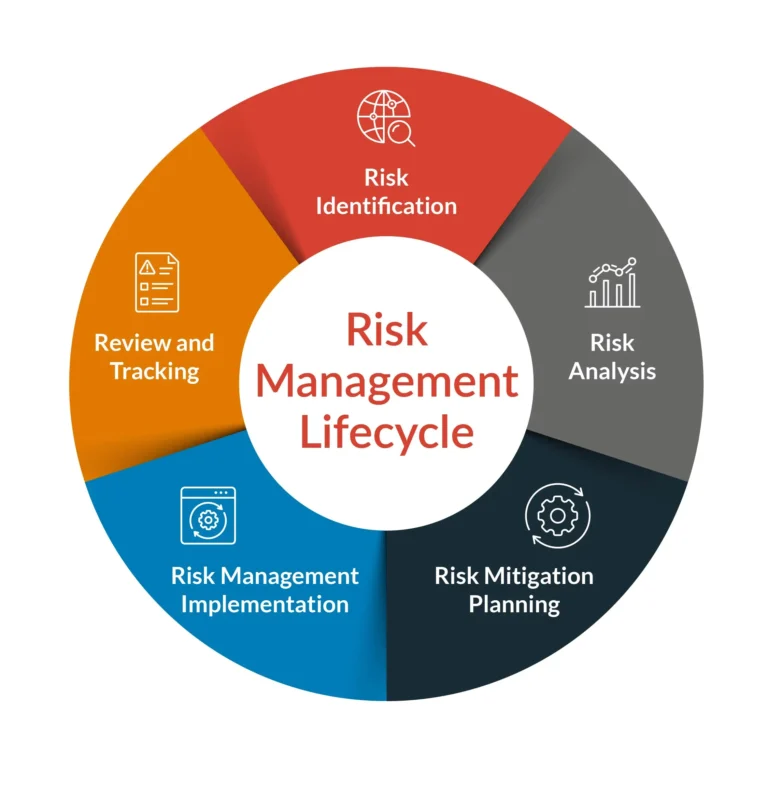
- Risk Management: Identifying, analyzing, and planning mitigation for technical, programmatic, and operational risks.
- Logistics and Support: Planning for system sustainment, maintenance, and supply chain considerations.
- Interface Control: Managing internal and external interfaces to ensure seamless integration.
- Data Management: Controlling technical data throughout the system life cycle.
The relationship between Part 17 and other SEP sections is bidirectional. Requirements defined in early sections flow into Part 17 as verification tasks, while lessons learned from verification activities may trigger updates to design or requirements sections. Configuration management processes link all sections together, ensuring consistency as the program evolves.
Typical deliverables expected from Part 17 include verification matrices mapping requirements to test cases, V&V reports documenting results, risk registers with mitigation plans, interface control documents, logistics assessments, and data management plans. Each deliverable should be under configuration control and reviewed according to program governance schedules.
2. Aligning Part 17 with ISO/IEC/IEEE 15288 Life-Cycle Stages
The ISO/IEC/IEEE 15288 standard defines four primary system life-cycle stages: concept, development, production, utilization, and retirement. Some interpretations group support activities within the utilization stage or as a separate consideration. Part 17 activities must be mapped to these stages to ensure comprehensive coverage and standards alignment.
Concept Stage: During this stage, Part 17 should define the initial V&V strategy and identify stakeholder concerns that verification activities must address. Risk identification begins with preliminary hazard analyses and technology readiness assessments.
Development Stage: This is where Part 17 activities intensify. Verification planning matures from high-level strategies to detailed test plans. Risk analysis becomes more quantitative as design information becomes available. Interface control documentation develops in parallel with design activities.
Production Stage: Part 17 transitions to executing verification tasks against produced articles. Acceptance testing, inspection procedures, and analysis methods are applied to demonstrate manufacturing conformance. Risk monitoring continues with focus on production-specific concerns.
Utilization Stage: Validation activities shift focus to operational environments. Part 17 should address in-service monitoring, maintenance planning, and logistics support analysis. Risk registers are updated with operational feedback. For aerospace programs, standards such as AS9100 and AS9110 may apply, while medical device programs may reference FDA 21 CFR Part 820.
Retirement Stage: System disposal, life extension, or transition activities are addressed. Verification may include confirmation that decommissioning requirements are met.
Mapping Part 17 activities to ISO/IEC/IEEE 15288 process outcomes ensures that V&V processes satisfy stakeholder requirements, risk management processes identify and mitigate threats, and agreement processes maintain proper communication with all parties.
3. Core Content Areas for Part 17
Effective Part 17 sections address five essential content areas. Each area contributes to the overall goal of proving system compliance while managing technical risk.
3.1 V&V Strategy and Test Planning
The V&V strategy defines the overall approach for proving that the system meets its requirements. This includes selecting appropriate verification methods—inspection, analysis, demonstration, or test—for each requirement type. Test planning then elaborates specific test procedures, test cases, test environments, and success criteria.
A robust V&V strategy considers the verification lifecycle, from unit-level testing through system integration, system verification, and acceptance. It also addresses validation planning to confirm the system satisfies stakeholder needs in its intended operational environment. For safety-critical systems, methodologies such as FMEA, Fault Tree Analysis, and Preliminary Hazard Analysis support thorough risk-based testing.
3.2 Risk Identification, Analysis, and Mitigation Planning
Part 17 must include a systematic approach to risk management. This begins with risk identification techniques such as failure mode effects analysis, fault tree analysis, and preliminary hazard analyses. Each identified risk undergoes qualitative or quantitative analysis to determine probability, consequence, and detectability.
Mitigation planning assigns specific actions to reduce risk probability or impact. These actions become tracked work products with assigned owners, schedules, and success metrics. The risk register serves as the living document that captures this information. For aerospace applications, ARP4761 provides safety assessment methodologies that can inform risk analysis approaches.
3.3 Logistics and Support Considerations
Even during development, Part 17 should address logistics and support planning. This includes identifying maintainability requirements, spares provisioning needs, training requirements, and technical documentation needs. The goal is to ensure the system can be supported effectively throughout its operational life.
3.4 Interface Control
Interface control documentation captures the agreements between interfacing parties regarding data exchange formats, timing, physical connections, and environmental conditions. Part 17 should reference the interface control documents and describe how interface verification will be conducted.
3.5 Data Management and Configuration Control
Technical data management ensures that information is properly created, reviewed, stored, and distributed. Configuration control processes maintain traceability between baseline documents and approved changes. Part 17 must describe how these processes apply to verification artifacts and SEP sections. Requirements management tools such as DOORS Next or Jama Connect can support traceability and verification tracking throughout the program.
4. Requirements Traceability and Derivation in Part 17
Bidirectional traceability between system requirements and verification tasks is essential for demonstrating complete requirements coverage. Part 17 must establish and maintain this traceability throughout the program.
A Requirements Traceability Matrix (RTM) serves as the primary artifact for managing this relationship. The RTM typically includes columns for requirement identifier, requirement text, verification method, test case identifier, test case description, and verification result.
Example: Linking Requirement to Test Case
Consider a requirement stating: “The system shall display sensor data within 100 milliseconds of receipt.” Part 17 would establish the following traceability chain:
| Requirement ID | Requirement Text | Verification Method | Test Case ID | Test Case Description |
|---|---|---|---|---|
| REQ-001 | System shall display sensor data within 100ms of receipt | Test | TC-042 | Inject synthetic sensor data and measure display latency |
The test case would specify input parameters, expected results, pass/fail criteria, and environmental conditions. As verification is performed, the RTM is updated with actual results, creating an audit trail from requirement through verification.
Derivation traceability flows in the opposite direction—from system-level requirements to lower-level component requirements. Part 17 should reference allocation tables showing how system requirements are allocated to subsystems and how verification at lower levels aggregates to system-level verification.
5. Leveraging Model-Based Systems Engineering Artifacts
Model-Based Systems Engineering (MBSE) provides powerful tools for enhancing Part 17 content. MBSE models can illustrate verification pathways, validate design assumptions, and support early risk identification.
SysML Diagrams in Part 17: Requirements diagrams can show the hierarchical relationship between system and lower-level requirements. Activity diagrams can model verification processes and test flows. Sequence diagrams can illustrate timing-critical verifications such as latency measurements. Digital twin methodologies may be employed to create virtual representations that support validation activities in simulated or operational environments.
Simulation Outputs: When analytical verification is appropriate, simulation models can generate evidence that requirements are satisfied. Part 17 should describe how simulation results will be captured, documented, and reviewed.
Integrated Verification Planning: MBSE models can be linked to requirements management tools, creating automated traceability between requirements and verification activities. This reduces manual effort and improves accuracy.
Integration Tips
- Reference MBSE model elements by unique identifiers within Part 17 text.
- Include model snapshots or excerpts as verification evidence where appropriate.
- Define the role of the MBSE model as verification input versus verification artifact.
- Establish processes for keeping models synchronized with verification status.
6. Stakeholder Engagement and Communication Plan
Part 17 must specify how stakeholders will be engaged throughout verification and validation activities. Effective stakeholder management prevents surprises and ensures verification results meet stakeholder expectations.
Stakeholder Identification
Internal stakeholders include engineering teams, test organizations, quality assurance, and program management. External stakeholders may include customers, regulators, suppliers, and end users. For programs requiring government oversight, regulatory bodies such as the FAA, FDA, or NRC may be engaged. Independent Verification and Validation (IV&V) agencies may be employed for additional assurance on critical programs.
Engagement Mechanisms
Technical Review Boards (TRBs) provide independent assessment of verification results and technical risk status. Technical Interchange Meetings (TIMs) facilitate information sharing between organizations. Formal reviews such as System Verification Reviews and Validation Reviews mark major milestones.
Communication Cadence
Part 17 should define regular communication schedules:
- Weekly: Test execution status, immediate risk updates
- Monthly: Verification progress against plan, trend analysis
- At Milestones: Formal verification results, risk closure reports
Tailoring for Different Stakeholders
Internal engineering stakeholders require detailed technical data. Program management needs summarized metrics and schedule impacts. Customers and regulators require evidence packages demonstrating compliance. Part 17 should describe how communication products will be tailored for each audience.
7. Metrics, KPIs, and Progress Monitoring
Measuring verification and risk management progress requires well-defined metrics and Key Performance Indicators (KPIs). Part 17 should establish these measures early and track them throughout the program.
Verification Metrics
- Test Completion Rate: Percentage of planned test cases executed versus scheduled
- First-Pass Success Rate: Percentage of tests passing on initial execution
- Requirements Coverage: Percentage of requirements with completed verification
- Defect Escape Rate: Number of defects found in later phases versus earlier phases
Risk Metrics
- Risk Exposure Trend: Change in aggregate risk score over time
- Mitigation Effectiveness: Reduction in risk probability or impact following mitigation actions
- Open versus Closed Risks: Ratio of active mitigations to retired risks
Interface Control Metrics
- Interface Discrepancy Rate: Number of interface issues identified during integration
- Interface Change Impact: Schedule and cost impact of approved interface changes
Sample KPI Dashboard Template
| Metric | Target | Current | Status | Trend |
|---|---|---|---|---|
| Test Completion Rate | 90% by milestone | 85% | At Risk | Improving |
| First-Pass Success | > 80% | 82% | On Target | Stable |
| Risk Exposure Index | < 0.3 | 0.25 | On Target | Decreasing |
Technical Performance Measures
For programs requiring detailed performance tracking, Technical Performance Measures (TPMs) can be defined to monitor critical system parameters. These measures compare actual performance against established thresholds throughout the development cycle, providing early warning of potential shortfalls that may require verification approach adjustments.
8. Documentation Standards, Templates, and Version Control
Part 17 documentation must meet industry standards and program-specific requirements. Using established templates ensures consistency and completeness while facilitating review and audit activities.
Standards and References
The INCOSE Systems Engineering Handbook provides guidance on verification planning templates and risk register structures. The NASA Systems Engineering Handbook offers additional V&V report format recommendations. EIA-632 provides process-oriented documentation requirements. For aerospace applications, AS9100 establishes quality management system requirements that influence documentation practices. Programs may also reference CMMI for process maturity guidance or DO-178C for software verification considerations where applicable.
Key Documentation Types
- Verification Plan: Defines verification approach, methods, resources, and schedules
- Verification Procedures: Step-by-step instructions for executing tests
- Verification Reports: Documents actual results and conformance determinations
- Risk Register: Captures identified risks, analysis, and mitigation status
- Interface Control Documents: Specifies interface requirements and agreements
Version Control Best Practices
- Assign unique version identifiers following program conventions
- Record author, reviewer, and approval information for each version
- Maintain a change log documenting modifications and rationale
- Archive superseded versions with clear retention policies
- Use configuration control board (CCB) processes for formal changes
- Ensure all stakeholders access current approved versions
9. Tailoring Part 17 for Different Program Types
Not all programs require the same depth and formality in Part 17. Tailoring should reflect program size, complexity, risk level, and regulatory environment.
Decision Matrix for Tailoring
| Program Factor | Low Complexity | Medium Complexity | High Complexity |
|---|---|---|---|
| Program Size | Small team, single location | Multiple teams, coordinated | Large enterprise, distributed |
| Risk Level | Low technical risk | Moderate technical risk | Safety-critical, high consequence |
| Regulatory Environment | Minimal oversight | Customer oversight | Government regulation required |
| Part 17 Depth | Streamlined V&V summary, basic risk register | Detailed verification matrices, formal risk analysis | Comprehensive plans, quantitative risk analysis, independent verification |
Small-Scale Programs
For rapid prototype efforts or research projects, Part 17 can use simplified V&V tables that map requirements to basic test approaches. Risk registers may use a simple likelihood-impact matrix rather than quantitative analysis. Stakeholder engagement can be informal with documented decisions rather than formal review boards. Agile or DevOps verification approaches may be appropriate for iterative development environments.
High-Risk Programs
Safety-critical aerospace programs or medical device development require rigorous Part 17 content. This includes detailed verification matrices with independent review, formal failure modes and effects analyses, quantitative risk assessments with statistical confidence levels, and multiple levels of stakeholder review including regulatory bodies. For aerospace programs, MIL-STD-499 or MIL-STD-499B may provide military systems engineering guidance.
Highly Regulated Programs
Programs subject to government regulation must incorporate regulatory requirements into Part 17. This may include specific verification methods required by regulation, mandatory documentation formats, and required review cycles with regulatory agencies. FAA AC 20-115 provides airworthiness certification guidance relevant to aerospace programs, while FDA 21 CFR Part 820 addresses quality system requirements for medical devices.
Comparison: SEP Structures Across Standards
| Content Area | INCOSE SE Handbook | NASA SE Handbook | ISO/IEC/IEEE 15288 |
|---|---|---|---|
| V&V Planning | Detailed guidance with templates | Comprehensive coverage | Process outcomes defined |
| Risk Management | Techniques and approaches | Risk categorization methods | Process framework |
| Requirements Traceability | Bidirectional approach | Matrix-based methods | Information item definition |
| Stakeholder Engagement | Communication planning | Review board structures | Agreement processes |
10. Common Pitfalls and Mitigation Strategies
Experience across programs reveals recurring mistakes in Part 17 development. Understanding these pitfalls enables proactive mitigation.
Pitfall 1: Missing Critical Verification Activities
Problem: Verification coverage gaps result in requirements that are never demonstrated to be satisfied.
Mitigation: Conduct verification coverage workshops during early planning. Use traceability matrix to identify requirements without verification tasks. Include independent review of verification completeness.
Pitfall 2: Weak Traceability to Requirements
Problem: Verification activities do not clearly link to specific requirements, making it impossible to prove complete coverage.
Mitigation: Establish bidirectional traceability before verification begins. Update traceability matrices as changes occur. Include traceability review in verification milestone criteria.
Pitfall 3: Inadequate Risk Coverage
Problem: Risks are identified but not systematically analyzed or mitigated.
Mitigation: Use standard risk identification techniques. Assign risk owners with clear accountability. Include risk status in regular program reviews.
Pitfall 4: Insufficient Stakeholder Review Cycles
Problem: Verification results surprise stakeholders who were not engaged in planning.
Mitigation: Define stakeholder engagement requirements in Part 17. Schedule regular technical interchange meetings. Include stakeholder representatives in verification milestone reviews.
Pitfall 5: Poor Configuration Control of SEP Artifacts
Problem: Multiple versions of verification plans or reports create confusion during audits.
Mitigation: Implement CCB oversight for Part 17 changes. Use document control systems with access restrictions. Maintain baseline documentation for each program milestone.
Case Study: Verification Planning Gap
During a space exploration program, verification activities were initially planned without sufficient detail regarding environmental testing requirements. When the program reached system verification, additional tests were required to address thermal vacuum conditions, causing schedule delays and cost growth. This outcome was mitigated through implementation of comprehensive environmental verification reviews during subsequent program phases. Key lessons included the importance of early engagement with environmental specialists and comprehensive verification planning that accounts for all operational environments.
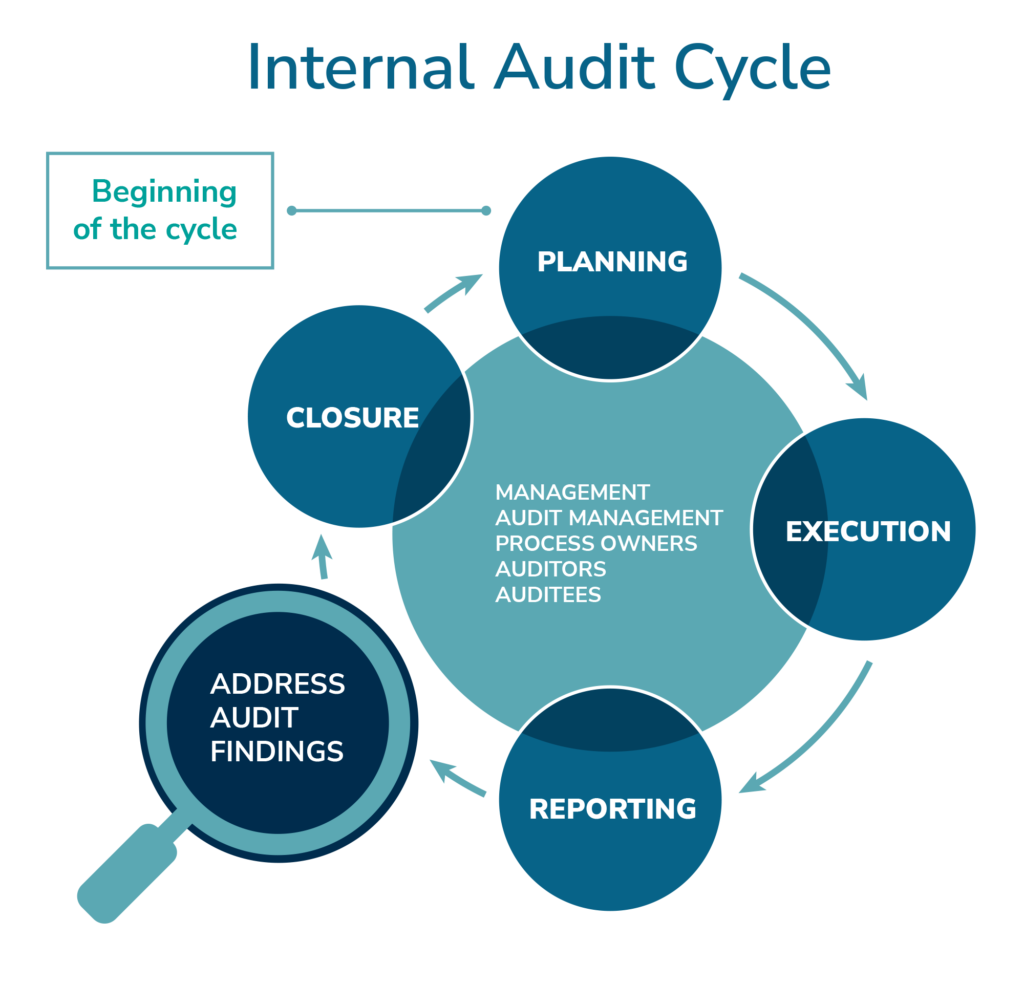
11. Review, Approval, and Audit Process: TRBs and CCBs
Technical Review Boards and Configuration Control Boards provide governance for Part 17 deliverables. Establishing clear processes ensures quality and maintains traceability.
Technical Review Board Process
TRBs review technical content for accuracy, completeness, and adequacy. For Part 17, TRB reviews should address verification plan adequacy, test procedure correctness, risk analysis validity, and results interpretation.
TRB meetings should follow a structured agenda: presentation of material, reviewer questions, technical discussion, identification of action items, and disposition determination (approve, approve with comments, or reject).
Configuration Control Board Process
CCBs manage changes to Part 17 and its subordinate artifacts. When verification approaches change or requirements are modified, CCB processes ensure appropriate impact assessment and approval.
Sample Review Checklist
- All required Part 17 sections are present and complete
- Verification approach addresses all allocated requirements
- Traceability matrix is current and bidirectional
- Risk register includes all identified technical risks
- Stakeholder engagement schedule is defined
- Metrics and KPIs are established and tracked
- Documentation templates comply with program standards
- Configuration control processes are documented
- Action items from previous reviews are resolved
- Approvals from appropriate authorities are obtained
Handling Change Requests
During the V&V phase, changes may be required due to test failures, design changes, or new requirements. Part 17 should describe the change request process: submission, impact assessment, approval disposition, implementation, and verification of effectiveness.
12. Quick-Reference Checklist for Drafting and Auditing Part 17
This checklist summarizes the key elements for creating or reviewing Part 17 of the systems engineering plan.
Scope Definition
- Part 17 scope is clearly defined and consistent with overall SEP structure
- Tailoring decisions are documented with rationale
- Dependencies on other SEP sections are identified
Standards Alignment
- Part 17 maps to ISO/IEC/IEEE 15288 life-cycle stages
- INCOSE SE Handbook guidance is incorporated
- NASA-SE-HBK and EIA-632 requirements are addressed as applicable
- Regulatory requirements are identified and addressed
Requirements Traceability
- Bidirectional traceability is established between requirements and verification tasks
- Traceability matrix includes all required columns
- Derivation traceability links system to lower-level requirements
- Traceability is updated for all approved changes
V&V Content
- Verification strategy defines methods for each requirement type
- Test plans include procedures, criteria, and environmental requirements
- Validation approach addresses operational stakeholder needs
- Independent verification is planned where required
Risk Management
- Risk identification techniques are applied systematically
- Risk analysis includes probability, impact, and detectability
- Mitigation plans assign owners, schedules, and success criteria
- Risk register is current and reviewed regularly
Stakeholder Sign-offs
- Stakeholder identification is complete
- Engagement mechanisms are defined (TRBs, TIMs, reviews)
- Communication cadence is established
- Tailored communication products are planned
Documentation Quality
- Templates follow program standards
- All documents are under configuration control
- Version control practices are documented
- Superseded versions are properly archived
Metrics and Monitoring
- KPIs are defined for verification, risk, and interface control
- Dashboard or reporting mechanism is established
- Metrics are reviewed at defined intervals
- Corrective actions are taken when metrics exceed thresholds
Frequently Asked Questions
What content is typically covered in Part 17 of a Systems Engineering Plan?
Part 17 usually focuses on verification and validation (V&V) planning, risk management activities, logistics and support considerations, interface control, data management, and configuration control. The exact emphasis can vary by program, but the core goal is to define how the system will be proven to meet its requirements and how associated risks are mitigated.
How does Part 17 relate to the overall SEP structure and other sections?
Part 17 is the culminating technical control point where the outputs of earlier sections such as requirements, architecture, and design are traced to concrete test and validation tasks. It bridges the gap between system design and operational readiness, ensuring that each requirement is verifiable and that the associated risks are continuously managed throughout the system life cycle.
Which industry standards provide templates or requirements for Part 17?
Key references include ISO/IEC/IEEE 15288 which defines system life-cycle processes, the INCOSE Systems Engineering Handbook, NASA Systems Engineering Handbook, EIA-632 for engineering a system, and AS9100 for aerospace quality management. Programs may also reference CMMI for process maturity guidance and DO-178C for software verification considerations.
What deliverables or artifacts are expected from Part 17?
Typical artifacts include a Verification and Validation Plan, Verification Matrix for tracing requirements to tests, Risk Register with Mitigation Plan, Interface Control Documentation, Logistics and Support Plan, Data Management Plan, and Configuration Management Records. Each artifact should be version-controlled and reviewed according to program governance.
How can traceability be maintained between Part 17 and earlier SEP sections?
Establish bidirectional traceability by linking each system requirement to one or more verification tasks. Use a requirements traceability matrix that includes columns for requirement ID, description, verification method, test case ID, and result. Requirements management tools such as DOORS Next or Jama Connect can help maintain traceability automatically as changes occur.
What common mistakes are observed in Part 17 and how can they be mitigated?
Frequent pitfalls include missing critical verification activities, weak traceability to requirements, inadequate risk coverage, insufficient stakeholder review cycles, and poor configuration control of SEP artifacts. Mitigation involves early scoping workshops, mandatory traceability reviews, integrated risk registers, scheduled TRB and CCB meetings, and disciplined version-control practices.
What tailoring guidance exists for small-scale or high-risk projects?
Tailoring should be based on program size, complexity, and regulatory environment. A decision matrix can map these factors to appropriate levels of detail. A small research project may use simplified V&V tables and a lightweight risk register, while a high-risk defense program may require full-scale verification matrices, formal risk