In this guide
Systems Engineering Plan: Practical Guide
A Systems Engineering Plan serves as the technical governance foundation for any complex engineering effort. Whether you are leading a small software development team or managing a multi-billion-dollar defense acquisition program, the quality of your SEP determines your ability to translate stakeholder needs into delivered system capabilities. Yet many engineering leaders treat their Systems Engineering Plan as a compliance checkbox rather than a strategic tool. This practical guide provides the frameworks, components, and decision criteria you need to create and maintain a Systems Engineering Plan that actually governs your technical effort—not just satisfies a document requirement.
What Is a Systems Engineering Plan and Why Does It Matter?
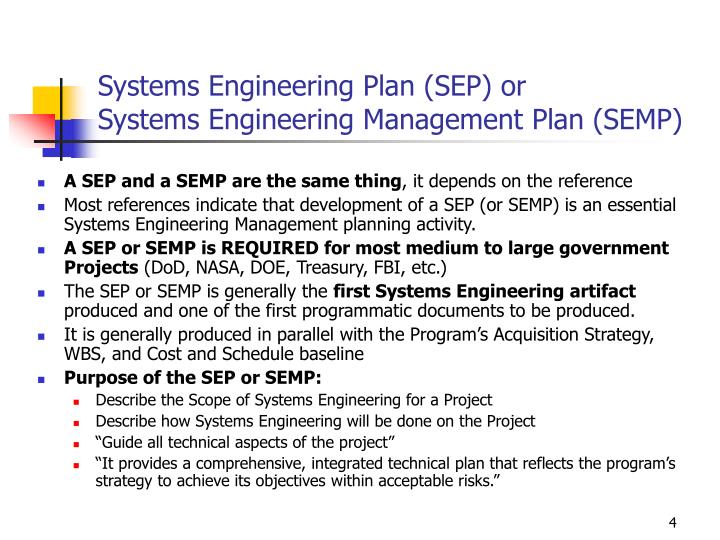
The Systems Engineering Plan defines the approach, processes, and activities that will guide your team through the technical work of defining, developing, integrating, verifying, and validating your system. Within the framework established by ISO/IEC/IEEE 15288:2015 and INCOSE Systems Engineering Handbook v4, the SEP functions as the technical counterpart to the Project Management Plan—where program management addresses schedule, cost, and resources, systems engineering addresses how you will make sound technical decisions that ultimately satisfy stakeholder needs.
The relationship between these two plans is symbiotic. Your Project Management Plan cannot meaningfully assess schedule risks without understanding the technical dependencies documented in the SEP. Conversely, your SEP cannot succeed without the resource commitments and stakeholder engagements documented in the program management plan. Organizations that treat these documents as isolated requirements inevitably create planning gaps that manifest as integration failures, requirement misunderstandings, or stakeholder misalignment.
Consider the contrast between two hypothetical scenarios. In the first, a defense contractor developing a radar system treats the SEP as a boilerplate document—copying sections from a previous program, updating the program name, and filing it for approval. When the program enters integration testing, they discover that their verification approach never addressed software-hardware integration, their stakeholder engagement strategy failed to capture changing threat scenarios, and their risk coordination process had no mechanism for surfacing technical disagreements between subsystem teams. This illustrates how inadequate SEP development can lead to significant program challenges.
In the second scenario, an aerospace company developing a satellite communications payload tailors their SEP specifically to the program scope. They identify the critical interfaces between their payload and the bus provider, establish joint reviews with the bus team, and define verification approaches that address both factory testing and on-orbit checkout. When a supplier change occurs mid-program, their configuration management integration and stakeholder engagement strategy allow them to assess impacts systematically and maintain schedule confidence.
The difference between these outcomes illustrates the value of treating the SEP as a living governance document rather than a one-time deliverable. For related guidance, see our Project Management Plan Guide and Requirements Management Best Practices.
Core Components of an Effective Systems Engineering Plan
While tailoring determines how deeply you address each element, every effective SEP includes several core components that provide the structural foundation for technical governance.
Stakeholder Engagement Strategy
Your SEP must define how you will identify, engage, and maintain alignment with all stakeholders—not just the primary customer. This includes regulatory bodies, maintenance organizations, end users, supporting contractors, and internal program management. The stakeholder engagement strategy should address how you will capture and validate requirements, how you will communicate technical decisions and trade studies, and how you will manage conflicts between competing stakeholder needs. Without explicit stakeholder engagement guidance, programs may default to engaging only the vocal stakeholders, which often leads to missed requirements and late-stage surprises.
Requirements Management Approach
Effective requirements management extends far beyond documenting requirements in a tracking tool such as DOORS Next, Jira, or Confluence. Your SEP should define how requirements will be decomposed from stakeholder needs through system requirements to lower-level specifications. It should establish the criteria for requirement quality, the process for requirement approval and change control, and the traceability approach that connects stakeholder needs to verifiable system characteristics. A common failure mode is treating requirements management as a documentation exercise rather than an ongoing governance activity that requires dedicated tooling, process discipline, and trained personnel.
Technical Processes Framework
The heart of your SEP is the description of how you will execute the core technical processes: requirements analysis, system design, subsystem design, interface management, integration, verification, and validation. Each process area should define inputs, outputs, key activities, responsible roles, and integration points with other processes. For example, your integration approach should describe the build sequence, the environments required, the criteria for successful integration, and the feedback mechanisms that surface integration findings back into design activities.
Design analysis activities warrant particular attention in complex systems. Your SEP should define what analyses you will perform to support design decisions—trade studies, performance modeling, reliability analysis, or manufacturing readiness assessment. Without explicit planning for these activities, programs either skip analysis entirely or perform ad hoc studies that lack rigor and traceability.
Configuration Management Integration
Configuration management provides the discipline that keeps your technical effort coherent as changes occur. Your SEP must define the configuration management approach, including the items under configuration control, the change control process, the baseline structure, and the responsibilities of the configuration management organization. Critically, your SEP should describe how configuration management integrates with your technical processes—when baselines are established, how changes affect downstream activities, and how you will maintain technical data package integrity throughout the program. Tools such as PLM systems, Windchill, or Teamcenter often support these activities in complex programs.
Risk Coordination Approach
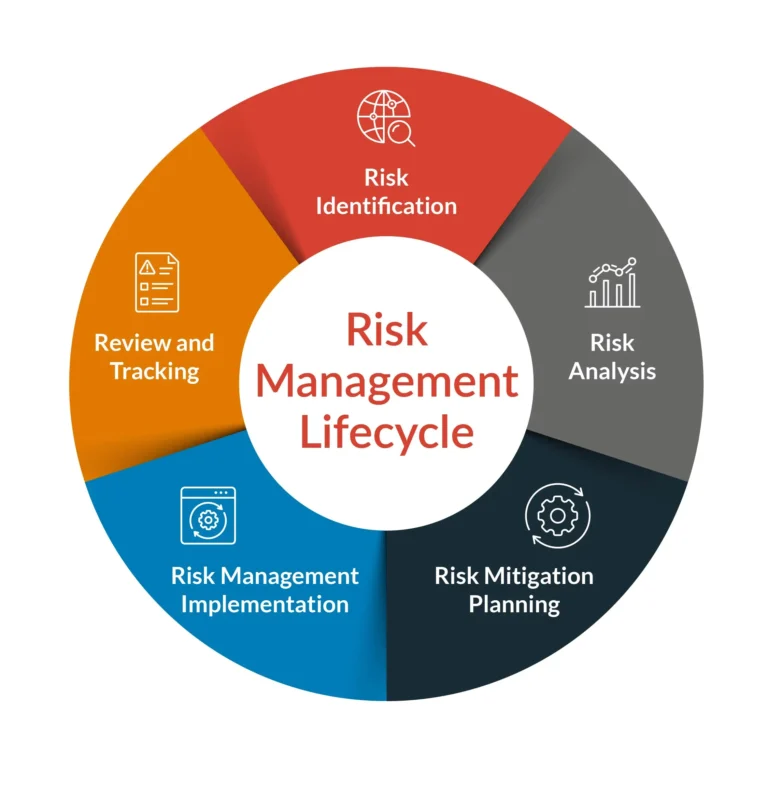
Technical risk management cannot be separated from systems engineering governance. Your SEP should define how technical risks will be identified, analyzed, tracked, and mitigated. This includes the relationship between technical risk activities and program risk management, the criteria for risk prioritization, and the approach for incorporating risk mitigation into your technical work breakdown structure. When risk coordination is deferred entirely to program management, technical risks may be inadequately understood until they materialize as schedule and cost impacts.
Aligning Your SEP with Project Life Cycle Phases
Systems engineering rigor must scale appropriately across project phases while maintaining traceability and decision authority at each gate. Your SEP should map specific activities and deliverables to the life cycle phases relevant to your program, as defined in ISO/IEC/IEEE 15288:2015 and ISO/IEC/IEEE 12207:2017.
Concept and Front-End Exploration
During concept exploration, your SEP should emphasize stakeholder needs identification, concept selection processes, and the definition of technical performance measures. The focus is on establishing clear understanding of what success looks like before committing to a specific approach. Your SEP should define how concepts will be evaluated, what criteria drive selection decisions, and how you will maintain technical baselines during this phase when changes are least costly.
Detailed Design and Development
As you move into detailed design, your SEP should shift emphasis to requirements decomposition, interface definition, design verification planning, and the analytical activities that support design decisions. This phase typically requires the most intensive application of systems engineering processes, and your SEP should define the cadence of technical reviews, the design data requirements, and the traceability mechanisms that connect lower-level designs to system requirements.
Manufacturing, Integration, Test, and Evaluation
The transition to production and integration requires explicit planning for producibility, build standard definition, and the stepwise integration approach that will verify your system meets requirements. Your SEP should address how design documentation flows to manufacturing, how integration events are structured, how verification evidence is captured, and how anomalies are processed. The SEP should also define the validation approach that confirms the system satisfies its intended use in its intended environment.
Operations and Support
For systems with significant operational lifecycles, your SEP should address how systems engineering activities continue into operations—addressing configuration management of operational systems, feedback mechanisms for field performance, and the transition planning that enables effective handover to maintenance organizations.
Phase Gate Integration
Throughout all phases, your SEP should define how technical decision authority aligns with program milestones. This includes the documentation required to support go/no-go decisions, the review boards that assess technical readiness, and the criteria that trigger phase transitions. When phase gate integration is absent, reviews may become bureaucratic exercises rather than meaningful governance checkpoints.
Tailoring Strategies for Different Project Contexts
The most critical skill in SEP development is tailoring—right-sizing your systems engineering approach to match your project context. Both over-engineering and under-specifying create failure modes that are equally damaging but manifest differently.
Tailoring by Project Scale
A small software project with three engineers operates fundamentally differently than an enterprise defense program with hundreds of engineers across multiple organizations. For small teams, the SEP can be condensed to focus on how requirements will be captured, the key reviews that will occur, and how interfaces will be defined. Detailed process documentation adds little value when the entire team can fit in one room and maintain shared understanding through direct communication. However, even small teams benefit from explicit requirement traceability and defined verification approaches—the discipline prevents the common erosion of system intent as incremental changes accumulate.
Large programs require comprehensive SEPs that define organizational relationships, interface control processes, supplier integration approaches, and the governance structures that coordinate distributed engineering efforts. Without this depth, large programs may develop stovepipe behaviors and integration failures that characterize program challenges across the industry.
Tailoring by Regulatory Environment
Programs operating under different regulatory frameworks face different tailoring requirements. Defense acquisition programs following current guidance such as MIL-STD-499B (when finalized) or ANSI/AIAA G-020 must address specific systems engineering activities and documentation requirements. Aerospace programs following DO-178C need to integrate software development planning with systems engineering governance. Commercial programs may have more latitude but still must address customer contractual requirements and internal quality standards such as EIA-632 or CMMI-DEV. Your SEP should explicitly address which standards and practices apply, how you will satisfy regulatory requirements, and where you have latitude to tailor for efficiency.
Tailoring by Development Methodology
Plan-driven, agile, and hybrid approaches require different SEP emphases. Traditional plan-driven programs will implement comprehensive process documentation with formal baselines and change control. Agile programs will emphasize lightweight documentation with strong emphasis on working products and continuous stakeholder engagement. Hybrid approaches such as SAFe (Scaled Agile Framework), LeSS, or DA DevSecOps require explicit definition of where each methodology applies—often using plan-driven approaches for stable interfaces and external commitments while employing agile methods for rapidly evolving internal development.
NASA programs provide instructive examples of tailoring. Human spaceflight programs maintain rigorous systems engineering discipline appropriate to crew safety requirements per NASA-STD-7120.1, while technology demonstration programs may accept higher technical risk in exchange for faster learning cycles. Both follow the NASA Systems Engineering Handbook guidance, but the application intensity differs significantly based on mission criticality and acceptable risk posture.
Integrating the SEP with Other Project Planning Documents
The SEP does not exist in isolation. Effective programs maintain explicit integration points with other planning documents to avoid duplication, inconsistency, and governance gaps. Reference the SEBoK (Systems Engineering Body of Knowledge) for additional guidance on planning document integration.
Relationship to Project Management Plan
The SEP and Project Management Plan are peer documents within the overall program planning structure. The SEP provides the technical foundation; the program management plan addresses the enabling resources and administrative controls. Integration points include milestone alignment, resource allocation for systems engineering activities, and the definition of how technical and programmatic risks interact. Organizations that develop these plans independently may discover significant misalignments when program execution begins.
Integration with Integrated Master Plan
The Integrated Master Plan provides the time-phased logic that connects program events and activities. Your SEP should reference the IMP structure and define how systems engineering milestones align with IMP events. This integration ensures that technical readiness assessments and program schedule milestones are coordinated rather than developed in isolation.
Relationship to Risk Management and Quality Assurance
Your SEP should define clear boundaries with the risk management plan and quality assurance plan. Technical risk activities belong in the SEP; programmatic risk activities belong in the risk management plan. Quality assurance activities that validate systems engineering processes belong in the quality assurance plan. Explicit boundary definition prevents both gaps and duplication.
Securing Stakeholder Commitments and Resource Allocation
A common failure mode is developing an excellent SEP that goes unfunded and unsupported because the engineering leader failed to build appropriate business cases and stakeholder alignment. Technical excellence that lacks organizational commitment does not produce program success.
Building the Business Case for Systems Engineering
Engineering leaders must articulate the value of systems engineering investment in terms decision-makers understand. This means connecting systems engineering activities to outcomes that matter to the organization: reduced rework, fewer integration failures, improved traceability that enables faster anomaly resolution, and governance that enables confident milestone achievement. When presenting SEP content to leadership, emphasize the risks of inadequate systems engineering and the costs of underinvestment.
Staffing and Competency Planning
Your SEP should define the systems engineering staffing and competency requirements for your program. This includes not only the number of systems engineers but the skill mix required—are you addressing hardware, software, human factors, safety, or reliability concerns that require specialized expertise? Staffing plans should address both the initial team composition and the ramp-up and ramp-down curves across program phases. Programs that understaff systems engineering may experience missed requirements and integration problems that more experienced systems engineering would have prevented.
Review Board Structure
Effective programs establish review board structures that provide governance authority for technical decisions. Your SEP should define the boards that will govern your program—their membership, authority, decision criteria, and relationship to program management governance. Common structures include a technical review board for day-to-day technical decisions, a change control board for configuration item changes, and a program review board for major milestone decisions. The specific structure should match your program complexity and governance needs.
Structuring Reviews, Metrics, and Milestones
Your SEP should establish the review structure that provides technical governance throughout the program lifecycle. These reviews serve as checkpoints where the program assesses technical progress and readiness to proceed.
Technical Review Checkpoints
Standard technical reviews provide the framework for assessing technical readiness. While specific naming conventions vary by organization and sector, the typical sequence includes:
- System Requirements Review (SRR)—Assesses the completeness and correctness of system requirements and the stakeholder engagement that produced them
- Preliminary Design Review (PDR)—Assesses the system design approach and the ability to meet requirements, including the selected architecture and key trade study results
- Critical Design Review (CDR)—Assesses the detailed design against requirements, verifies design adequacy for manufacturing and integration, and confirms the technical data package is complete
- Test Readiness Review (TRR)—Assesses readiness to execute verification and validation testing, confirming test procedures, environments, and success criteria are adequate
- System Verification Review (SVR)—Confirms the system meets all verification requirements before operational deployment
Your SEP should define which reviews apply to your program, the entrance and exit criteria for each, the required participants, and the decision authority that governs advancement. International programs may reference equivalent European standards such as ECSS or ASME standards for review terminology.
Leading and Lagging Metrics
Metrics provide insight into program health and enable proactive intervention before problems manifest as schedule slips or system failures. Your SEP should define both leading indicators that predict future performance and lagging indicators that confirm past performance.
Leading metrics might include requirements stability trends, open action age distributions, design review action item closure rates, and interface control document currency. Lagging metrics include defect rates discovered during testing, rework occurrences, and milestone achievement against plan. Programs that rely solely on lagging metrics may discover problems too late for effective intervention.
Measuring SEP Effectiveness
Your SEP should define how you will assess whether the systems engineering approach is achieving its intended outcomes. Key performance indicators may include requirements traceability completion rates, technical review action item closure timeliness, baseline stability indices, and integration defect discovery rates. This includes periodic health assessments, lessons learned capture, and criteria for determining when SEP adjustments are needed. Treating the SEP as a static document rather than a managed artifact is a common failure that prevents continuous improvement and adaptation to changing conditions.
Maintaining Your SEP as a Living Document
The SEP is not a document you write once and file away. It is a living governance artifact that requires active maintenance throughout the program lifecycle.
Configuration Management of the SEP
Your SEP should be under formal configuration management from its initial approval. This means it has a baseline, changes are processed through change control, and stakeholders can access the current approved version. Configuration management prevents the common problem of multiple uncontrolled versions circulating, where different teams work from different understandings of program governance.
Change Control for Plan Updates
Your SEP should define the circumstances that trigger plan updates and the change control process for those updates. Major scope changes, methodology pivots, significant stakeholder changes, and phase transitions all may warrant SEP updates. Minor clarifications might be handled through less formal processes. The key is establishing explicit criteria and processes rather than allowing uncontrolled drift.
Incorporating Lessons Learned
Effective programs capture lessons learned throughout execution and incorporate them into planning artifacts. Your SEP should define the mechanisms for capturing technical lessons and the criteria for determining which lessons warrant plan updates versus organizational retention. Programs that fail to incorporate lessons learned may repeat the same mistakes across successive efforts.
Model-Based Systems Engineering and Documentation Currency
Model-Based Systems Engineering approaches using SysML or similar languages can help maintain documentation currency by establishing the model as the authoritative source and generating documentation from model elements. This approach reduces the burden of keeping multiple artifacts synchronized and can improve traceability. However, MBSE requires initial investment in model development and tooling. Your SEP should address whether MBSE approaches apply to your program context and, if so, how the model will be maintained and integrated with other program documentation. Reference the INCOSE MBSE Methodology and SEBoK guidance for implementation approaches.
Special Considerations: Agile, MBSE, and Regulatory Environments
Modern systems engineering practice must address methodologies and environments that challenge traditional plan-driven approaches.
Agile Development Approaches
Agile approaches emphasize responsiveness, incremental delivery, and continuous stakeholder engagement. Your SEP can incorporate agile practices by emphasizing lightweight documentation that focuses on intent and outcomes rather than comprehensive process description. Key adaptations include defining how requirements elaboration occurs incrementally through product backlog refinement, how verification activities map to sprint cycles, and how stakeholder engagement continues throughout development rather than front-loading to a requirements phase.
Hybrid approaches are increasingly common, particularly in organizations transitioning between traditional and agile methods. These programs may use agile approaches for rapidly evolving software development while maintaining plan-driven approaches for stable hardware and external interfaces. Frameworks such as SAFe, LeSS, or Spotify model provide structures for scaling agile across complex systems engineering efforts. Your SEP should explicitly define where each methodology applies and how the approaches integrate.
MBSE Implementation Considerations
Organizations implementing MBSE should consider how the systems engineering model integrates with program planning and documentation. The model can serve as the authoritative source for requirement definitions, interface specifications, and design descriptions, with traditional documents generated as views or reports. This approach requires careful consideration of access controls, version management, and the competency requirements for model development and maintenance. Programs that implement MBSE without addressing these organizational factors may find the model underutilized or inconsistent with program execution.
Regulatory Environment Adaptation
Aerospace programs following DO-178C must address software planning as an integral part of systems engineering, ensuring that software development plans align with system architecture and verification approaches. Defense programs following current defense acquisition guidance must address specific requirements for systems engineering process documentation. Commercial programs may have more flexibility but should still address customer contractual requirements and any applicable industry standards. International programs may reference ECSS standards (European Space Agency) or ASME standards for equivalent guidance. Your SEP should explicitly address which standards and practices apply and how you will satisfy requirements while maintaining practical tailoring.
Frequently Asked Questions
What is the difference between a Systems Engineering Plan and a Project Management Plan?
While both are top-level planning documents, the SEP focuses specifically on the technical approach, processes, and activities required to define, develop, integrate, verify, and validate the system. The Project Management Plan addresses schedule, cost, resource allocation, and administrative controls. The SEP provides the technical governance foundation upon which programmatic decisions are made. In practice, these documents must be developed together to ensure consistency and avoid planning gaps.
How detailed should a SEP be for a small project with a three-person team?
Tailoring is essential—small projects should capture essential SEP elements in condensed form, focusing on requirements management approach, key technical reviews, and interface definitions while streamlining documentation of processes that naturally occur in small, collaborative teams. The goal is governance adequate for project risk, not compliance overhead. Even small teams benefit from explicit requirement traceability and defined verification approaches that prevent erosion of system intent through incremental changes.
How does the SEP work with Agile or hybrid development approaches?
Modern SEPs incorporate Agile by emphasizing incremental requirements elaboration, continuous stakeholder engagement, and lightweight documentation—while maintaining systems engineering rigor through backlog traceability, sprint-based verification, and appropriate technical reviews at iteration boundaries. The SEP should define how agile ceremonies integrate with traditional systems engineering governance and where each approach applies in the program context.
When should an organization use MBSE versus document-based systems engineering planning?
MBSE is particularly valuable for complex systems with extensive stakeholder interactions, probabilistic behavior, or significant interface complexity. The investment in model development pays returns when traceability, impact analysis, and design coordination are difficult to maintain through document-based approaches. Document-based approaches remain appropriate for straightforward systems, regulatory environments requiring specific deliverables, or teams still building MBSE competency. Organizations should assess their specific context rather than adopting MBSE for its own sake.
What are the most common mistakes when creating a SEP?
The primary failures are over-specifying the plan for project complexity—creating bureaucratic burden that slows execution—or under-specifying for complex programs—leaving governance gaps that allow integration failures and requirement misunderstandings. Other common issues include disconnecting the SEP from the Project Management Plan, treating it as a one-time deliverable rather than a living document, and failing to secure adequate resource commitments for planned systems engineering activities. Each of these failures has predictable consequences that good planning can prevent.
How often should a SEP be updated?
The SEP should be under formal configuration management and updated through change control when significant project shifts occur—major scope changes, methodology pivots, stakeholder changes, or phase transitions. However, teams should review SEP currency at each technical baseline review and incorporate updates within agreed change cycles rather than allowing drift between controlled and uncontrolled versions. The key is establishing explicit processes for determining when updates are needed rather than treating the SEP as static or making uncontrolled changes.
Conclusion: Your Actionable Systems Engineering Plan Framework
Effective Systems Engineering Plans share a common philosophy: they are tailored to their project context, integrated with other program planning, maintained as living documents, and resourced adequately for execution. The frameworks presented in this guide provide the structure you need to develop and maintain a SEP that actually governs your technical effort.
Rather than treating systems engineering as a compliance requirement, approach your SEP as a strategic tool that enables confident decision-making, clear stakeholder alignment, and proactive risk management. The investment in thoughtful SEP development returns dividends throughout the program lifecycle in the form of fewer surprises, smoother integration, and greater confidence at milestone reviews.
Quick-Reference Checklist for Your Systems Engineering Plan
- Context Definition
- Project scope and objectives clearly stated
- Stakeholders identified and engagement strategy defined
- Applicable standards and regulatory requirements addressed
- Development methodology selected and rationale documented
- Core Components
- Requirements management approach with traceability framework
- Technical processes defined with inputs, outputs, and responsibilities
- Interface definition and management approach established
- Verification and validation strategy documented
- Configuration management integration defined
- Risk coordination approach established
- Life Cycle Integration
- Activities mapped to project phases
- Technical reviews defined with entrance/exit criteria
- Phase gate decision criteria established
- Stakeholder commitments secured
- Governance Structure
- Review board structure defined with authority and membership
- Metrics identified for program health monitoring
- SEP itself under configuration management
- Change control process established for plan updates
- Integration Points
- Consistency with Project Management Plan verified
- Integration with IMP/Schedule defined
- Boundaries with risk management and QA plans explicit
- Resource commitments secured for planned activities
Use this checklist to assess your current SEP and identify gaps. For each element, ask whether it is appropriately tailored for your project context, adequately resourced, and integrated with other program planning. Improvement is iterative—address the most significant gaps first, and continuously refine your approach as your program and organization mature.
Engineering leaders who invest in thoughtful systems engineering planning consistently achieve better program outcomes. The SEP is your opportunity to define how technical excellence will manifest in your specific context. Treat it accordingly.
Ready to implement? Download our Systems Engineering Plan Template or explore our Systems Engineering Fundamentals course for additional training. For tailored guidance for your specific program context, connect with our engineering consulting team.