In this guide
Systems Engineering Plan: A Practical Guide for Modern Projects
A comprehensive roadmap for aligning technical work with stakeholder expectations across any industry or methodology
Introduction
A systems engineering plan serves as the foundational document that aligns technical work with stakeholder needs, providing structure and direction for complex projects across industries. Imagine launching a satellite only to discover that the communication subsystem cannot interface with the ground station. Or releasing a software platform that meets every technical specification yet fails to address how users actually work. These scenarios share a common root cause: inadequate planning that disconnects technical decisions from stakeholder needs. When engineering teams rush past upfront planning, they trade short-term speed for long-term rework, cost overruns, and frustrated customers.
This guide bridges the gap between theoretical frameworks like ISO/IEC/IEEE 15288 and INCOSE standards and the practical reality of executing complex projects. Whether you are building aerospace systems, automotive controls, medical devices, or enterprise software, a well-crafted systems engineering plan serves as your living roadmap—aligning technical work, managing dependencies, and ensuring that what you build actually solves the problem you intended to solve.
The approach presented here adapts to your context. A two-person startup building a minimum viable product needs a fundamentally different plan than a defense contractor developing a missile defense system. This guide introduces a tiered methodology that scales planning rigor to project complexity, ensuring you invest effort where it delivers value without drowning smaller efforts in unnecessary documentation.
What Is a Systems Engineering Plan and Why Does It Matter?
Defining the Systems Engineering Plan
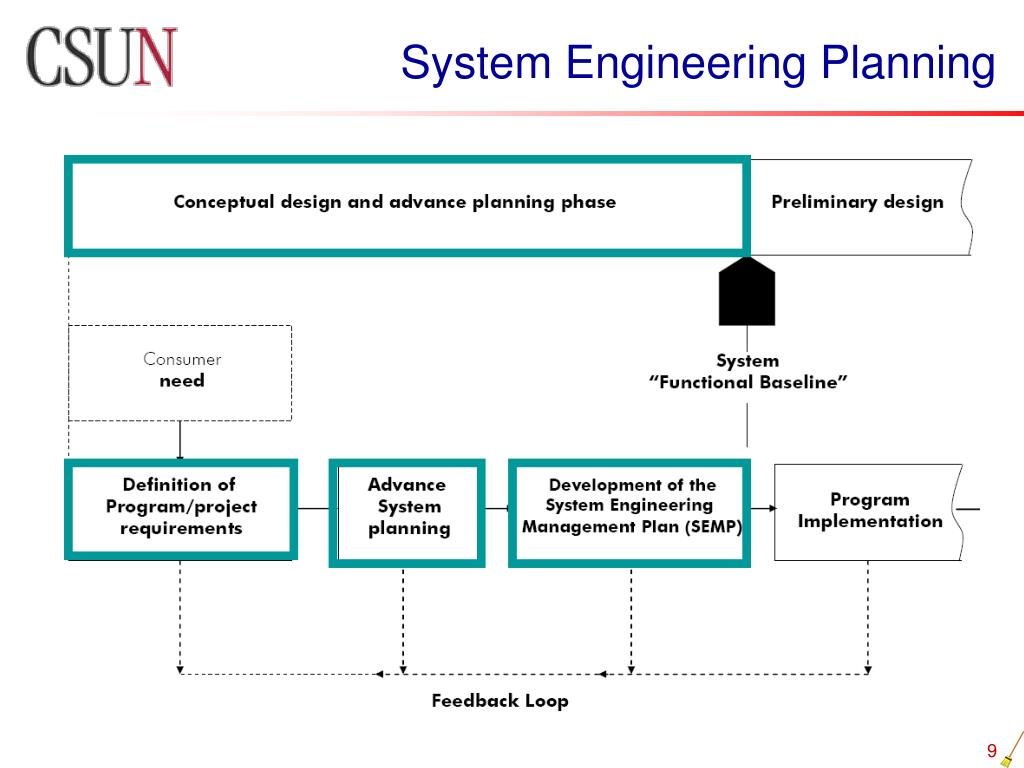
The Systems Engineering Plan (SEP) documents how you will apply systems engineering principles to your specific project. It establishes the technical framework that governs how the system will be defined, designed, built, verified, validated, and sustained throughout its lifecycle.
The INCOSE Systems Engineering Handbook describes systems engineering as an interdisciplinary approach and means to enable the realization of successful systems. The SEP operationalizes this definition by specifying which processes you will follow, which artifacts you will produce, how progress will be measured, and how technical decisions will be made and documented.
According to DoD Systems Engineering Fundamentals, the SEP serves as the roadmap for applying systems engineering to a program, establishing a shared understanding among all stakeholders about technical approach, timeline, and success criteria.
The SEP Versus the Project Management Plan
Teams sometimes confuse the systems engineering plan with the project management plan. While both are essential, they serve different purposes:
- Systems Engineering Plan: Focuses on the technical approach—how the system will be defined, architected, built, verified, and sustained. It addresses requirements traceability, interface management, technical baselines, and verification strategy.
- Project Management Plan: Addresses scheduling, budgeting, staffing, procurement, and program-level risk management. It answers “when” and “who” questions.
The two plans must be aligned. The SEP constrains the technical scope, which directly affects schedule and budget estimates in the project management plan. Conversely, resource constraints in the project management plan influence which technical approaches are feasible.
The City Planning Analogy
Consider building a new city district. The project management plan would specify the construction timeline, budget, workforce allocation, and material procurement schedule. The systems engineering plan would define the urban design: where roads and transit lines connect, how residential and commercial zones integrate, where utilities infrastructure runs, and how different building types relate to create a functional community.
You could build individual buildings without urban planning—but residents would face impossible commutes, inadequate utilities, and disconnected services. Similarly, you can build systems without systems engineering planning—but you risk creating technically impressive solutions that fail to meet user needs, cannot integrate with other systems, or become maintenance nightmares.
Why the SEP Matters
The SEP provides four critical functions:
- Communication: Creates a shared mental model of the technical approach among stakeholders, engineers, managers, and suppliers.
- Coordination: Aligns activities across teams, disciplines, and organizations by establishing clear interfaces and dependencies.
- Traceability: Links stakeholder needs to requirements, requirements to design, design to implementation, and implementation to verification—ensuring every technical decision connects back to user value.
- Adaptation: Provides a controlled baseline that enables managed change rather than uncontrolled drift.
Essential Components of Any Systems Engineering Plan
While SEP formats vary by industry and contract requirements, certain elements appear in every effective plan. These components translate ISO/IEC/IEEE 15288 and INCOSE guidance into actionable documentation.
Stakeholder Requirements and Needs Analysis
The SEP must establish who the stakeholders are, what they need from the system, and how conflicting needs will be resolved. This section documents the stakeholder identification process, the methods used to capture needs, and the approach for validating that captured needs accurately reflect stakeholder expectations.
Effective stakeholder analysis goes beyond listing customer requirements. It identifies all parties affected by the system—including operators, maintainers, end users, regulators, and surrounding systems—and explicitly addresses their potentially conflicting priorities.
System Requirements
System requirements translate stakeholder needs into measurable technical specifications. The SEP documents how requirements will be developed, structured, reviewed, and approved. This includes the requirements hierarchy (from high-level stakeholder needs through functional and non-functional requirements to derived requirements), the format standards for requirements statements, and the rationale behind key requirements choices.
Technical Baselines
Technical baselines establish points of agreement that enable controlled progress. The SEP defines:
- Functional baseline: What the system must do (aligned with stakeholder needs)
- Allocated baseline: How the system will do it (architecture and design decisions)
- Product baseline: What the system actually includes (as-built configuration)
Each baseline represents a milestone where specific artifacts are frozen and change requires formal control processes.
Lifecycle Stages and Stage Gates
The SEP establishes the project’s lifecycle model—the stages the project will pass through from concept to retirement. Common models include:
- Sequential stages: Concept, Development, Production, Utilization, Support, Retirement
- Iterative stages: Cycles of concept, development, and demonstration with feedback loops
- Agile increments: Sprint-based delivery with evolving understanding
Stage gates define criteria for progressing between phases, ensuring technical maturity before commitment of significant resources. Technical performance measures (TPMs) help assess progress toward technical objectives, while technology readiness levels (TRLs) provide a standardized approach for assessing maturity of system technologies.
Verification and Validation Strategy
Verification answers: “Did we build the system right?” (Does it meet specifications?) Validation answers: “Did we build the right system?” (Does it meet stakeholder needs?) The SEP documents how each requirement will be verified, which validation activities confirm the system solves the actual problem, and the relationship between verification and validation timelines.
Risk Management Approach
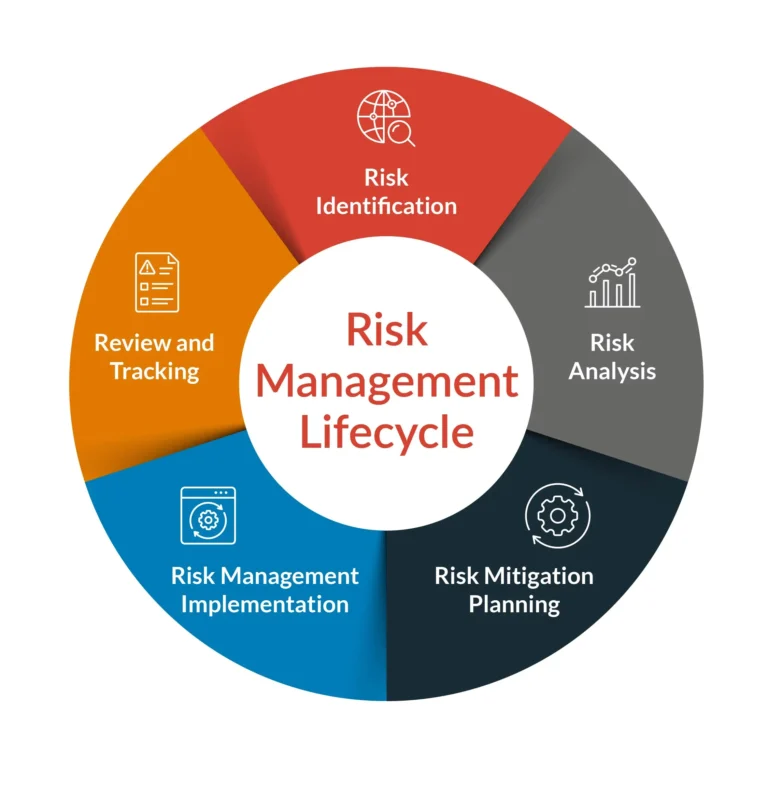
Technical risk management integrates with project risk management through the SEP. This section defines how technical risks will be identified, analyzed, prioritized, and mitigated. It establishes risk categories relevant to the system type (technology maturity, integration complexity, supplier dependencies) and the threshold for acceptable risk levels. NIST SP 800-37 provides guidance on integrating risk management with systems engineering processes.
Configuration Management
Configuration management ensures you can recreate any version of the system. The SEP establishes which items require configuration control, how changes will be evaluated and approved, how baselines are maintained, and who holds authority for configuration decisions.
Interface Management
Modern systems rarely exist in isolation. The SEP defines how the system interfaces with:
- External systems: Other products, services, and infrastructure the system depends upon or connects to
- Internal elements: Subsystems, components, and modules within the system architecture
- Human interfaces: Operator interactions, maintenance procedures, and user experiences
Interface control documents formalize these relationships, preventing integration failures during development and operation.
Complementary Standards Context
While ISO/IEC/IEEE 15288 provides the primary framework for systems engineering lifecycle processes, several complementary standards address specific aspects:
- ISO/IEC/IEEE 12207: Software life cycle processes, essential for software-intensive systems
- EIA 632: Processes for engineering a system, providing an alternative process framework
- CMMI (Capability Maturity Model Integration): Organizational process improvement across multiple domains including systems engineering and software development
Tiered Planning: Matching Systems Engineering Plan Depth to Project Scope
Experience and practitioner guidance suggest that overly prescriptive systems engineering plans can create challenges for some projects. Teams may find themselves spending more time updating plans than executing work, and losing flexibility that modern development methods require. The solution is not to abandon systems engineering planning but to scale it appropriately to project complexity and stakeholder needs.
Three Tiers of Systems Engineering Planning
The following framework presents planning scale guidelines that practitioners commonly adapt based on their specific context. Teams should adjust these ranges to fit their organizational needs and project characteristics rather than treating them as strict thresholds.
| Aspect | Tier 1: Small/Agile Projects | Tier 2: Medium Complexity | Tier 3: Large-Scale Programs |
|---|---|---|---|
| Typical Team Size | Small teams (often 2-15 people) | Multiple coordinated teams (typically 15-100 people) | Large programs (often 100+ people) |
| Document Length | Lightweight (often 2-5 pages) | Moderate (typically 15-40 pages) | Comprehensive (often 50+ pages) |
| Lifecycle Model | Agile, iterative | Hybrid or defined stages | Waterfall or stage-gate |
| Contract Requirements | Minimal | Moderate (industry standards) | Extensive (DoD, NASA, FAA) |
| Configuration Management | Lightweight (Git-based) | Defined process | Full CMII or equivalent |
| Risk Management | Informal, team-level | Documented approach | Formal risk register with mitigation |
Decision Matrix: Which Tier Fits Your Project?
Consider these factors when selecting your planning tier:
Select Tier 1 if:
- Your team fits in one room
- Stakeholders are directly accessible
- The system has few external interfaces
- You are using agile or DevOps methods
- Failure consequences are manageable
Select Tier 2 if:
- Multiple teams need coordination
- Some requirements are externally imposed
- Integration with existing systems is required
- Regulatory compliance matters
- You need to demonstrate due diligence
Select Tier 3 if:
- Contractual or regulatory requirements mandate formal processes
- Failure could cause harm to life, property, or mission
- Multiple organizations or suppliers are involved
- You need to meet defense, aerospace, or medical device standards
- Long system lifespan requires formal sustainment planning
The Anti-Patterns Tier Planning Prevents
Without tiered thinking, organizations fall into two failure modes:
Over-engineering small projects: Applying defense-grade systems engineering to a small software startup wastes resources and frustrates teams. The plan becomes a compliance exercise rather than a useful tool.
Under-engineering complex projects: Applying agile principles without adequate planning to a multi-team, multi-year program leads to integration failures, scope creep, and inability to demonstrate technical maturity to stakeholders or regulators.
Step-by-Step: Creating Your Systems Engineering Plan
This section walks through a practical seven-step process for developing your SEP. Each step applies regardless of project tier, though the depth and formality of execution should scale appropriately.
Step 1: Define Scope and Stakeholder Needs
Begin by establishing what you are building and for whom. Document the system boundary—what is in scope and, equally important, what is explicitly out of scope. Identify all stakeholders and capture their needs through interviews, workshops, or existing documentation.
Example: For a hospital scheduling system, stakeholders include doctors, nurses, administrative staff, patients, IT operations, compliance officers, and potentially insurance providers. Each group has distinct needs: doctors need quick access to slots, patients need mobile booking, IT needs maintainability, compliance needs audit trails.
Tailoring for agile: Instead of comprehensive upfront stakeholder analysis, identify primary personas and their key jobs-to-be-done. Add detail iteratively as you learn from user feedback.
Step 2: Establish Technical Baselines
Define the technical baseline structure for your project. For simple projects, this may be a single baseline. For complex projects, establish functional, allocated, and product baselines with clear definition of what constitutes each.
Identify the artifacts that will define each baseline and the review process for baselining them. Establish who has authority to approve baselines and under what circumstances changes can be made.
Example: For the hospital scheduling system, the functional baseline might include use case diagrams and high-level requirements. The allocated baseline adds architecture decisions, interface specifications, and detailed requirements. The product baseline includes the actual code, configuration files, and deployment specifications.
Step 3: Select Lifecycle Model
Choose the lifecycle model that best fits your project characteristics. Consider factors including:
- How well requirements are understood upfront
- How much design exploration is needed
- How frequently you can deliver value to stakeholders
- How much technical risk needs to be retired before commitment
- What your regulatory environment requires
Waterfall/sequential: Best when requirements are stable, regulations mandate documented phase completion, or significant design exploration is not needed.
Iterative: Best when you need to retire technical risk through prototyping or when early stakeholder feedback shapes requirements evolution.
Agile/hybrid: Best when requirements are uncertain, you want frequent stakeholder validation, or you are building software-intensive systems where speed matters.
Step 4: Plan Requirements Management
Define how requirements will be developed, documented, reviewed, approved, and managed throughout the project. Specify:
- Requirements structure and hierarchy
- Formatting standards (SMART criteria: Specific, Measurable, Achievable, Relevant, Time-bound)
- Traceability approach (requirements to stakeholders, to design, to tests)
- Change control process
- Tools for requirements management
Example: A medium-complexity project might use tools like Jama Connect or CodeBeamer for requirements management with links connecting stakeholder needs to system requirements to software requirements to test cases. A small agile project might use Jira epics and stories with test coverage linked through CI/CD pipeline traceability.
Step 5: Plan Verification and Validation
Define how you will prove the system meets requirements (verification) and solves the right problem (validation). For each requirement, identify the verification method:
- Test: Execute the system or component to observe behavior
- Demonstration: Show system capability through operation
- Analysis: Use calculations, simulations, or models to prove compliance
- Inspection: Examine artifacts (code review, design review)
Establish validation activities that confirm stakeholder needs are addressed—not just that specifications are met. Include user acceptance testing, operational demonstrations, or pilot programs where appropriate.
Step 6: Integrate Risk and Configuration Management
Define the risk management approach for technical risks:
- How technical risks will be identified (reviews, analyses, team input)
- How risks will be characterized (probability, consequence, detectability)
- How risks will be tracked and reported
- Who is responsible for risk monitoring and mitigation
Define configuration management:
- Which items require configuration control
- How changes will be submitted, evaluated, and approved
- How baselines will be stored and maintained
- How you will ensure reproducibility of any system version
Example: For a software project, configuration management might include Git repositories for code, documentation in Confluence or SharePoint, Grafana dashboards for monitoring, and deployment configurations in infrastructure-as-code. For a defense program, this might include formal drawing control, CMII processes, and configuration status accounting.
Step 7: Review and Baseline the Plan
Once drafted, the SEP should undergo review by key stakeholders: engineering leads, project management, customer representatives (if applicable), and any other parties who will execute or depend upon the plan.
Address review comments, resolve conflicts, and obtain formal approval. Then baseline the plan—establish it as the controlled baseline against which future changes will be measured.
Agile tailoring: For agile projects, consider maintaining the SEP as a living artifact in your project wiki or documentation repository. Revisit it at program increment boundaries rather than treating it as a static document.
Industry-Specific Considerations: Aerospace, Defense, Automotive, Medical Devices, and Software
While core systems engineering principles remain constant, industry contexts shape how the SEP is documented, reviewed, and enforced. Understanding these variations helps you navigate sector-specific requirements while maintaining focus on essential practices.
Aerospace and Defense
The aerospace and defense sectors have the most prescriptive systems engineering requirements, driven by high consequence of failure, long system lifecycles, and extensive regulatory oversight.
Key standards include:
- DoD Systems Engineering Fundamentals: Establishes the foundational approach for U.S. defense programs
- Mil-Std-499: Historical military standard for systems engineering management (organizations should verify current status through official DoD sources, as standards evolve)
- DI-MGMT-81365: Data item description format for Systems Engineering Plans on certain DoD contracts (verify current requirements through official DoD documentation libraries)
- NASA Systems Engineering Handbook (NASA/SP-2007-6105 Rev 1): NASA-specific guidance reflecting space system characteristics
- ARP 4754A: Aerospace Recommended Practice for Systems Development, addressing aircraft and systems development
- DO-178C: Software Considerations in Airborne Systems and Equipment Certification
Typical requirements: Formal SEP with specific sections, milestone-driven reviews (System Requirements Review, Preliminary Design Review, Critical Design Review), configuration management per CMII standards, extensive traceability documentation, and government oversight of technical baseline changes.
Example: A military aircraft program might require the SEP to document interface control with ground support equipment, logistics requirements for depot-level maintenance, cybersecurity considerations for mission-critical systems, and technology readiness levels for key technologies.
Automotive
The automotive industry integrates systems engineering with functional safety standards, particularly for autonomous and electrification features.
Key standards include:
- ISO 26262: Functional safety standard for road vehicles
- Automotive SPICE: Process assessment model adapted for automotive software development
- IATF 16949: Quality management for automotive production
Typical requirements: SEPs often integrate with safety plans per ISO 26262, hazard analysis and risk assessment (HARA), and requirements for fault tree analysis. Traceability from safety goals through hardware and software components is essential.
Example: An autonomous driving system SEP would document how safety goals from the HARA flow down to software requirements, how sensor fusion algorithms will be verified, and how the system achieves safe state when failures occur.
Medical Devices
Medical device development requires systems engineering integration with regulatory compliance and patient safety considerations.
Key standards include:
- IEC 62304: Medical device software life cycle processes
- IEC 62366: Usability engineering for medical devices
- ISO 14971: Risk management for medical devices
Typical requirements: SEPs must demonstrate linkage between system requirements and risk management file entries, software documentation per IEC 62304, and verification/validation against design inputs.
Industrial Control and Functional Safety
Key standards include:
- IEC 61508: Functional safety of electrical/electronic/programmable electronic safety-related systems
- GAMP 5: Good Automated Manufacturing Practice for pharmaceutical and regulated industries
Software Sector
Software-intensive systems increasingly adopt lighter-weight systems engineering that integrates with agile and DevOps practices.
Key approaches include:
- INCOSE Software Engineering Working Group guidance: Tailoring systems engineering for software-heavy projects
- Agile systems engineering: Adapting iterative and incremental approaches to systems work
- DevOps and CI/CD integration: Embedding verification and validation in continuous delivery pipelines
Typical characteristics: Shorter or omitted formal documentation in favor of living artifacts, requirements managed in agile tools, traceability through automated testing, and frequent delivery with stakeholder feedback.
Example: A SaaS platform developing new features might maintain a lightweight “technical approach” document, manage requirements in Jira epics and stories, link tests to requirements through coverage reports, and deliver validated increments every two weeks.
Common Core Elements Across Industries
Regardless of sector, effective SEPs share common elements:
- Clear stakeholder needs and requirements traceability
- Defined verification and validation approach
- Risk awareness and management strategy
- Configuration management and change control
- Defined interfaces and integration strategy
These elements adapt in form and rigor but not in substance across industries. A medical device company and a video game studio both need to understand user needs, prove their system meets specifications, manage risk, and control what gets released.
Modern Practices: MBSE, Agile Systems Engineering, and Emerging Approaches
Model-Based Systems Engineering (MBSE)
Model-Based Systems Engineering represents a shift from document-based to model-centric systems engineering. Instead of writing requirements documents and design descriptions as separate artifacts, teams create interconnected models that capture system behavior, structure, requirements, and parametrics in a unified representation.
SysML (Systems Modeling Language) provides the standard notation for MBSE models, supporting requirements modeling, structure definition, behavior specification, and parametric constraints.
When MBSE adds value:
- Complex systems with significant architectural decisions
- Early lifecycle exploration where models enable simulation before implementation
- Multi-disciplinary systems involving mechanical, electrical, software, and human factors integration
- Organizations ready to invest in training and tool infrastructure
- Systems where interface complexity makes textual documentation insufficient
When traditional document-based approaches suffice:
- Simple to moderately complex systems
- Teams new to systems engineering (master document-based approaches first)
- Agile environments where excessive upfront modeling creates waste
- Short-duration projects where model investment cannot amortize
INCOSE maintains the Model-Based Systems Engineering Initiative, providing guidance on MBSE adoption and maturity assessment.
Agile Systems Engineering
Agile systems engineering adapts iterative and incremental development principles to systems-level work. Key practices include:
- Systems backlog management: Prioritizing technical work alongside feature delivery
- Scaled agile frameworks: SAFe, LeSS, and Scrum at Scale provide structures for multi-team coordination
- Continuous integration of systems: Regular build-test-integrate cycles at the system level
- Embedded systems engineering: SE practitioners integrated into agile teams rather than siloed
The challenge lies in maintaining systems engineering rigor (traceability, technical baselines, interface control) while embracing agile responsiveness. Successful approaches typically:
- Maintain lightweight requirements traceability linked to agile acceptance criteria
- Establish system-level baselines at program increment boundaries
- Use architectural runway to enable near-term feature delivery
- Conduct system-level reviews less frequently but more thoroughly
Digital Engineering and Model-Based Enterprise
Advanced organizations are moving toward model-based enterprises where the MBSE model becomes the authoritative source for system definition, replacing traditional document baselines. This approach requires:
- Digital thread connectivity across lifecycle stages
- Model-based quality and verification approaches
- Integrated data environments (IDE) consolidating system data
- Skilled practitioners in MBSE methods and tools
Common Mistakes to Avoid in Systems Engineering Planning
Organizations repeatedly fall into predictable pitfalls when developing and maintaining systems engineering plans. Learning from these patterns helps you avoid costly rework and maintain stakeholder confidence.
Treating the Plan as a One-Time Deliverable
The mistake: Completing the SEP at project initiation and filing it away, never to be consulted again. The plan becomes a checkbox exercise rather than a living guide.
The mitigation: Establish regular SEP reviews aligned with milestone gates. Define specific triggers for plan updates: scope changes, phase transitions, significant risks materializing, or stakeholder expectation shifts. Assign responsibility for plan currency to a specific role (systems engineering lead or project manager).
Missing Traceability Links
The mistake: Documenting requirements without linking them to stakeholder needs, design decisions, or verification activities. When requirements change, teams cannot determine impact. When defects occur, teams cannot identify which requirements are affected.
The mitigation: Invest in traceability infrastructure early. Use requirements management tools that support link creation. Even in lightweight approaches, maintain at least a matrix connecting primary user stories to acceptance criteria and test coverage. Review traceability completeness at major milestones.
Over-Engineering for Small Projects
The mistake: Applying defense-grade systems engineering rigor to small, fast-moving projects. Teams spend more time documenting than building. Plans become so elaborate they cannot be maintained, leading to abandonment.
The mitigation: Apply the tiered approach from this guide. For small projects, a two-to-five page plan covering scope, key risks, verification approach, and stakeholder needs may suffice. Reserve comprehensive documentation for projects where the investment delivers proportional value.
Failing to Sync with Project Management
The mistake: Developing the SEP in isolation from project planning. Schedule estimates ignore technical dependencies. Risk responses in project management contradict technical approach. Teams receive conflicting direction.
The mitigation: Co-develop the SEP and project management plan. Ensure technical milestones align with schedule milestones. Define who resolves conflicts between technical ideal and resource reality. Establish joint reviews where both plans are assessed together.
Ignoring Supply Chain Dependencies
The mistake: Planning the system as if you control all elements. In reality, subsystems, components, and services come from suppliers with their own capabilities, risks, and timelines. Inadequate supplier planning creates downstream integration failures.
The mitigation: Identify supplier dependencies early. Define interface requirements and verification expectations for acquired items. Include supplier technical deliverables in your baselines. Plan for supply chain risks like single-source dependencies, supplier financial stability, and long lead times.
Insufficient Training on Planned Activities
The mistake: Documenting sophisticated systems engineering processes in the SEP without ensuring teams understand how to execute them. Plans call for requirements traceability, but engineers do not know the tooling or methodology. Risk reviews happen without effective facilitation techniques.
The mitigation: Treat SEP development as a team exercise, not a documentation exercise. Build capability before requiring performance. Provide training on systems engineering methods, tools,