In this guide
Systems Engineering Plan — Step-by-Step Tutorial: A Practical Guide to Building a Scalable SEP
Every systems engineering project, regardless of size, faces the same fundamental challenge: how do you organize technical and management activities into a coherent, achievable plan that satisfies stakeholders while managing complexity? The answer lies in developing a well-structured Systems Engineering Plan (SEP). This tutorial provides a practical, tiered approach that scales from small agile projects to large defense programs, giving you the actionable framework you need to create a SEP that actually works for your context.
What Is a Systems Engineering Plan and Why Do You Need One?
A Systems Engineering Plan is the foundational document that defines how technical and management activities will be conducted throughout a project’s life cycle. It serves as the blueprint that guides your team from initial concept through final deployment and sustainment, ensuring that all engineering efforts align with stakeholder needs, contractual requirements, and organizational objectives.
The SEP establishes the framework within which all other engineering activities occur. It answers critical questions: Who is responsible for what? When will key decisions be made? How will requirements be managed? What technical reviews will occur? How will we know if the system meets its objectives? Without this guiding document, engineering teams often find themselves reactive rather than proactive, addressing problems after they emerge rather than preventing them through careful planning.
From a contractual standpoint, many organizations and government agencies require a SEP as part of their program documentation. Defense programs governed by current MIL-HDBK-61 guidance and ISO/IEC/IEEE 15288 frameworks typically mandate comprehensive systems engineering planning documentation. However, the belief that SEPs are exclusively for defense applications is a misconception that has led many commercial and agile projects astray. Whether you are developing a medical device, automotive system, enterprise software platform, or consumer electronics product, a well-structured approach to systems engineering planning provides significant value.
The key insight that separates successful SEPs from burdensome documentation exercises is proportionality. A two-page SEP for a six-month agile project serves the same fundamental purpose as a fifty-page document for a defense program: it provides a clear, shared understanding of how engineering activities will be conducted. The content, depth, and formality scale based on project complexity and stakeholder requirements, but the underlying philosophy remains constant.
This tutorial embraces that philosophy. Rather than prescribing a single template that either overwhelms small projects or leaves large programs underspecified, we present a tiered approach that helps you build the right SEP for your specific context.
SEP Standards and Reference Frameworks
Before diving into SEP development, you should understand the standards landscape that governs systems engineering practice. These references provide validation frameworks rather than prescriptive mandates—tools to ensure your approach is sound rather than rigid requirements that dictate every decision.
ISO/IEC/IEEE 15288:2015 establishes the international standard for system life cycle processes. It defines four process groups: agreement processes, organizational project-enabling processes, technical management processes, and technical processes. The SEP primarily addresses technical management processes, which include planning, assessment, and control activities. This standard provides the overarching framework within which most modern SEPs operate. Per ISO/IEC/IEEE 15288:2015, Clause 6.2, planning processes establish the technical management plan that governs project execution.
INCOSE Systems Engineering Handbook v4 (with v5 forthcoming) publishes practical guidance that translates standards into actionable practitioner recommendations. While not a standard itself, the INCOSE handbook provides accessible explanations of SEP components and examples that illustrate how standards translate into practice.
The Systems Engineering Body of Knowledge (SEBoK) serves as a comprehensive knowledge repository maintained by the INCOSE Board of Trustees. The SEBoK provides reference material on virtually every aspect of systems engineering, including detailed guidance on SEP development and the relationship between planning and other technical management activities.
The NASA Systems Engineering Handbook (NASA/SP-2016-6105 Rev 2) offers particularly valuable guidance for aerospace and defense applications. It provides detailed procedures and examples specific to government program environments while maintaining principles applicable across domains.
For defense programs specifically, MIL-HDBK-61A provides guidance on systems engineering planning requirements. Current DoDI 5000.02 and DoDI 5000.03 govern defense acquisition and establish the framework within which defense SEP development occurs.
ISO/IEC/IEEE 29148:2018 addresses requirements engineering processes, which are fundamental to SEP scope definition and requirements management sections. ISO 9001:2015 and AS9100:2016 provide quality management system requirements that intersect with systems engineering planning in regulated industries.
For most projects, you will not need to reference all of these documents exhaustively. Instead, use them strategically: consult the SEBoK for conceptual clarity, reference IEEE 15288:2015 for process definitions, and use INCOSE or NASA guidance for practical implementation examples. Your SEP should demonstrate awareness of relevant standards without becoming a compliance exercise that prioritizes documentation over engineering outcomes.
The practical approach: identify which standards apply to your specific context based on contractual requirements, regulatory environment, and organizational mandates. Document your selected standards and explain how your SEP addresses their key requirements. This demonstrates due diligence without requiring comprehensive compliance mapping that adds little value to your program.
SEP Components Quick Reference
The following table summarizes essential SEP components across the three tiers of project complexity. Use this as a checklist when developing or tailoring your SEP.
| SEP Component | Tier 1: Agile/Small | Tier 2: Mid-Complexity | Tier 3: Defense/Government |
|---|---|---|---|
| Scope Definition | 1-2 paragraphs | 2-3 pages | 5-10 pages with compliance matrix |
| Organizational Structure | Brief roles description | RACI matrix | Org chart + detailed RACI + board structure |
| Technical Milestones | Mapped to sprints/releases | IMP linkage | Complete IMP/IMS integration |
| Requirements Management | Lightweight approach | Process definition + tools | Detailed procedures + DOORS/JAMA |
| Configuration Management | Basic version control | Formal CM plan reference | Complete CM with audits |
| Risk Management | Team-level tracking | Formal process | Risk management plan + integrated risk register |
| Verification & Validation | Definition of done | Methods specified | Detailed V&V plan with test procedures |
| Supplier Oversight | Minimal | Supplier matrix | Comprehensive flow-down + surveillance |
| Tools & Techniques | Simple approach | Tool specifications | Enterprise tools + MBSE approach |
| Maintenance Cadence | Quarterly review | Phase-based updates | Formal CCB control |
| Total Length | 2-4 pages | 15-30 pages | 40-100+ pages |
Step 1: Define Project Scope and Stakeholder Requirements
The foundation of any effective SEP is a clear, well-defined scope that establishes boundaries, objectives, and constraints. Without this foundation, subsequent planning efforts build on unstable ground, leading to scope creep, missed expectations, and rework.
Your scope definition should address several interconnected elements. First, articulate the project overview—a concise description of what the system does, its primary purpose, and the value it delivers to stakeholders. This overview should be accessible to both technical and non-technical readers, establishing common understanding across the program team.
Second, define system boundaries explicitly. What is included within the scope of this project, and what lies outside? Interface control documents typically define boundaries between your system and external systems, but the SEP scope should address functional, organizational, and temporal boundaries as well. For example, are you responsible for development only, or does your scope include integration, test, deployment, and initial sustainment? Are there organizational boundaries that affect your responsibilities?
Third, identify and document constraints that affect your approach. Common constraints include budget limitations, schedule targets, technology restrictions, regulatory requirements, physical environment specifications, and organizational policies. Constraints are not negotiable—they define the boundary conditions within which you must operate. Acknowledging constraints explicitly prevents later surprises and informs tailoring decisions throughout your SEP.
Capturing stakeholder expectations requires proactive engagement. Identify all stakeholders—not just the primary customer, but also end users, operators, maintainers, regulators, acquisition authorities, and organizational leadership. For each stakeholder group, document their expectations and requirements in terms that can be translated into system requirements. Stakeholder expectations often include implicit needs that must be made explicit: usability goals, availability targets, training requirements, and lifecycle cost expectations.
Transform stakeholder expectations into scope statements that drive all subsequent planning. A scope statement should be specific enough to provide clear guidance but flexible enough to accommodate design evolution. Consider using a structured format that includes system purpose, boundaries, major functions, and exclusion list.
Scope Definition Checklist
- Project overview and purpose statement
- System boundaries and interfaces
- Major functions and capabilities to be delivered
- Organizational responsibilities and roles
- Lifecycle phases included in scope
- Constraints (budget, schedule, technology, regulatory)
- Explicit exclusions—what is not in scope
- Assumptions underlying scope definition
- Stakeholder list with key expectations documented
- Success criteria and acceptance thresholds
Example scope statement for a mid-complexity project: “The SmartGrid Energy Management System (SEMS) will provide real-time monitoring and automated load balancing for distribution substations within the metropolitan service area. The system comprises hardware sensors, communication infrastructure, and software applications for grid operators. Scope includes design, development, integration, factory acceptance testing, and deployment support through initial operational capability. Scope excludes ongoing operational support and long-term maintenance beyond warranty period. Constraints include interoperability with legacy SCADA systems and compliance with applicable critical infrastructure protection requirements.”
Step 2: Establish the Systems Engineering Organizational Structure
Once you have defined scope, the next step is establishing who does what. The organizational structure defines roles, responsibilities, reporting relationships, and integration points across the engineering team and with adjacent functions.
For classical hierarchical structures, the SEP should define a clear chain of authority. The Systems Engineering Lead holds overall responsibility for technical execution. Chief Engineers or Lead Engineers provide domain-specific guidance. Technical specialists execute detailed engineering within their domains. Configuration management, risk management, and quality assurance functions typically have dedicated roles reporting independently to ensure objective assessment.
Agile and flattened team models require different structural approaches. Rather than hierarchical reporting, you might define cross-functional teams with embedded systems engineering, product owners who represent stakeholder interests, and scrum masters who facilitate process execution. For agile programs following SAFe or similar frameworks, clarify how these structures map to traditional systems engineering functions—ensuring that requirements management, risk management, and technical oversight occur even when traditional role titles are absent.
Integration points deserve particular attention. Systems engineering does not operate in isolation. Your SEP must address how SE activities integrate with program management, safety engineering, security engineering, reliability engineering, supply chain management, manufacturing, and logistics. For each integration point, define the interface mechanism: regular meetings, shared artifacts, joint reviews, or other coordination methods.
Example organizational structure description: “The program employs a matrixed organization with systems engineering functions embedded within four domain teams: Hardware, Software, Integration, and Test. The Chief Systems Engineer provides technical direction across all domains and chairs the weekly Technical Integration Panel. Configuration Management reports independently to the Program Manager to ensure objective status reporting. Interface control activities are jointly managed by a dedicated Interface Control Working Group comprising representatives from each domain team.”
Consider including an organizational chart as a figure within the SEP, with role descriptions that clarify responsibilities. For small projects, a simple table mapping roles to primary responsibilities may suffice. For large programs, a more detailed RACI matrix (Responsible, Accountable, Consulted, Informed) helps clarify decision authority for key technical and management activities.
Step 3: Identify Technical Milestones and Deliverables
Technical milestones and deliverables provide the temporal structure for your SEP. They answer when key decisions occur, when major reviews happen, and what artifacts mark progress. This structure enables tracking, reporting, and accountability throughout the program.
Begin with your system life cycle model. Most programs follow some variation of concept, development, production, utilization, and support phases. Within these phases, identify major phase transitions that represent significant decision points or technical commitments. These transitions typically coincide with technical reviews where the program assesses progress and readiness to proceed.
Standard technical reviews for defense and complex systems include, per current defense acquisition frameworks (DoDI 5000.02, Operation of the Defense Acquisition System):
- System Requirements Review (SRR): Validates that stakeholder requirements are captured completely and consistently, and that they can be allocated to system elements.
- Preliminary Design Review (PDR): Assesses the preliminary design against requirements, evaluating system architecture, interfaces, and technical approach.
- Critical Design Review (CDR): Examines detailed design to ensure it meets specifications and supports manufacturing, integration, and testing.
- Test Readiness Review (TRR): Confirms that the system or component is ready for formal testing.
- System Verification Review (SVR): Validates that the system meets all requirements through testing and analysis.
- Operational Readiness Review (ORR): Confirms that the system is ready for deployment and operational use.
Not all projects require all reviews. Agile projects might replace these milestone-based reviews with sprint reviews, release reviews, and demonstration events. The principle remains constant: define meaningful checkpoints where you assess progress, identify issues, and make informed decisions about proceeding.
Key deliverables extend beyond reviews to include documentation, models, prototypes, and other artifacts. Common deliverables include system specifications, interface control documents, design descriptions, test plans and procedures, analysis reports, and training materials. For each deliverable, specify the format, content expectations, review requirements, and approval authority.
The SEP must establish linkage between technical milestones and the Integrated Master Plan (IMP) or similar event-based scheduling mechanism. The IMP defines program events and their relationships; the SEP should reference IMP events that coincide with technical reviews and clarify the technical criteria for event achievement. This integration prevents the common problem of SEP milestones that exist in isolation from program scheduling.
Step 4: Plan Core Systems Engineering Processes
Core systems engineering processes provide the operational methodology that executes your plan. Each process requires definition in terms of objectives, activities, inputs, outputs, and responsibilities. The depth of process definition should scale with project complexity.
Requirements Management per ISO/IEC/IEEE 29148:2018 establishes how requirements are identified, documented, traced, maintained, and controlled throughout the program. Your process definition should address requirements elicitation, analysis, specification, validation, and traceability. For small projects, a lightweight requirements database with established change control may suffice. For large programs, you may need detailed procedures for requirements allocation, flow-down, and impact analysis using tools such as IBM DOORS or JAMA Connect.
Interface Control manages the relationships between system elements and external systems. Interface control processes establish interface requirements, develop interface control documents, maintain interface baselines, and manage interface changes. This process is critical for programs with multiple subsystems or external integration points.
Configuration Management per ISO 10007 maintains integrity through identification, control, status accounting, and audits. Your SEP should define the configuration items, the control board structure, change request processing, and the baseline management approach. Configuration management ensures that everyone works from a common, controlled baseline.
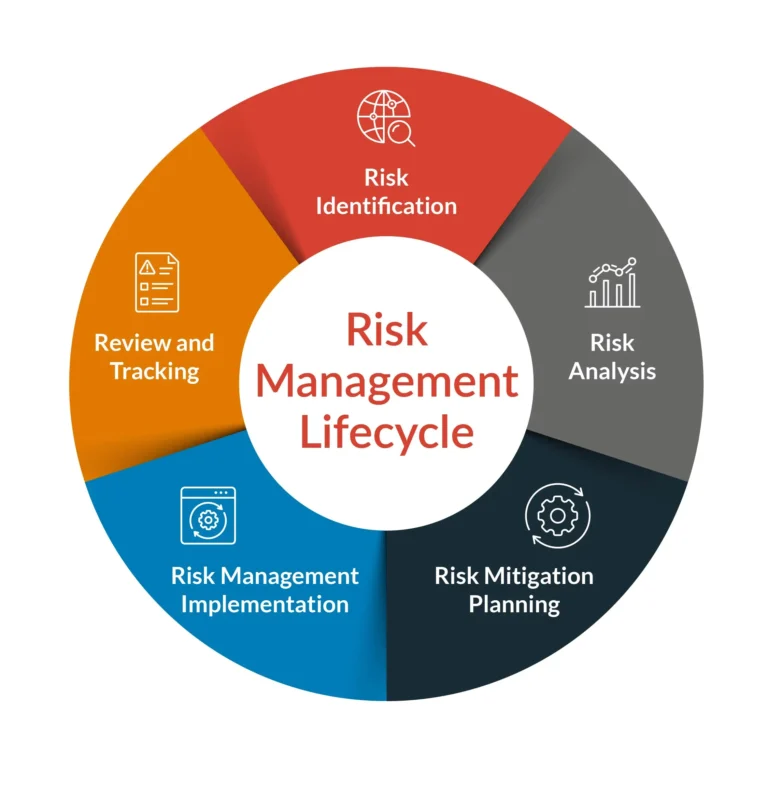
Risk Management identifies, analyzes, mitigates, and monitors technical and programmatic risks. Define your risk management approach including risk identification methods, assessment criteria, mitigation strategy development, risk tracking mechanisms, and reporting requirements. Integrate risk management with schedule and cost estimation to ensure risks are reflected in program planning.
Verification and Validation (V&V) confirms that your system meets its requirements (verification) and fulfills its intended purpose for stakeholders (validation). Define the methods you will employ: test, analysis, inspection, demonstration, or simulation. Specify the relationship between verification activities and technical reviews.
Metrics and KPIs provide objective measures of technical and management performance. Define the metrics you will collect and report, how they relate to program objectives, and how they will be used for decision-making. Effective metrics balance leading indicators (that predict future performance) with lagging indicators (that confirm past performance).
Tiered guidance for process definition:
- Small/Agile Projects: Define essential processes in brief paragraphs within the SEP. Focus on requirements management, basic configuration control, and team-level risk identification. Avoid procedural overhead that impedes agility.
- Mid-Complexity Programs: Include dedicated process sections with clear objectives, key activities, and defined outputs. Reference process documents where detailed procedures are maintained separately.
- Large Defense/Government Programs: Provide comprehensive process definitions that satisfy contractual requirements. Include detailed work breakdown structures, data item descriptions, and formal review criteria.
Step 5: Tailor Your SEP for Project Size and Complexity
This section serves as the centerpiece of the tutorial, presenting the tiered scaling framework that enables you to build the right SEP for your specific project. Tailoring is perhaps the most critical skill in SEP development—the difference between a useful planning document and an administrative burden often lies in how well you match rigor to context.
The fundamental principle of tailoring is proportionality: apply enough engineering rigor to manage risk and satisfy stakeholder requirements, but no more. Excessive documentation burden slows programs, consumes resources better directed at technical work, and often creates documentation that is maintained less rigorously than intended. Insufficient rigor leaves gaps in planning that manifest as execution problems, rework, and missed requirements.
Tier 1: Agile and Small Projects
For projects typically lasting less than a year, with teams under ten people, and limited regulatory requirements, your SEP should be lightweight yet comprehensive in scope.
Typical Format: Two to four pages
Core Sections:
- Project overview and objectives (one page)
- Scope definition and boundaries
- Team roles and responsibilities (brief)
- Key milestones mapped to sprint/release cycles
- Essential processes (requirements approach, review cadence)
- Risk identification and tracking method
- Basic configuration approach
Example Scenario: A software development team building a new customer portal. The SEP might be a single document that establishes the sprint-based cadence for requirements refinement, defines the definition of done criteria that includes testing and documentation, identifies the weekly design review, and commits to quarterly stakeholder demonstrations. The emphasis is on lightweight process that integrates with agile ceremonies rather than standalone documentation.
Tier 2: Mid-Complexity Programs
For projects lasting one to three years, with teams of ten to fifty people, and moderate stakeholder complexity, your SEP should provide comprehensive coverage with moderate formality.
Typical Format: Fifteen to thirty pages
Core Sections:
- Executive summary
- Project scope and objectives
- Organizational structure and responsibilities
- Technical milestones with linkage to IMP
- All core SE processes with defined procedures
- Tools and techniques specification
- Metrics and reporting approach
- Supplier oversight provisions
- Update and maintenance schedule
Example Scenario: A healthcare technology company developing a new diagnostic system. The SEP addresses hardware-software integration, regulatory requirements (FDA submission), multi-site development coordination, and established review gates. Process definitions are thorough but not excessive, with clear responsibilities and decision criteria.
Tier 3: Large Defense and Government Systems
For major programs with multi-year timelines, large integrated teams, and stringent contractual and regulatory requirements, your SEP must be comprehensive and formal.
Typical Format: Forty to one hundred+ pages
Core Sections:
- All sections from Tier 2 with extensive detail
- Contractual compliance matrix
- Detailed technical review criteria
- Data management and delivery requirements
- Government Furnished Equipment/Information provisions
- Security, export control, and classified handling
- Reliability, maintainability, and availability engineering
- Human systems integration
- System safety and environmental compliance
- Long-lead item and manufacturing planning
- Independent review board provisions
Example Scenario: A defense contractor developing a new radar system for naval application. The SEP addresses current systems engineering guidance per MIL-HDBK-61A, addresses CMMI requirements, establishes a complete work breakdown structure, specifies DOORS for requirements management, defines Technical Performance Measures, and includes provisions for interface control with shipboard systems. Every section addresses contractual data item requirements.
Decision Criteria for Choosing Your Tier
Use these factors to determine your appropriate tier:
- Contract type: Firm-fixed-price contracts often favor lighter SEPs; cost-reimbursement contracts may require more detail and auditability.
- System criticality: Life-safety systems, defense systems, and medical devices warrant higher rigor than commercial consumer products.
- Regulatory environment: Heavily regulated industries (aerospace, defense, medical, nuclear) require more comprehensive documentation.
- Stakeholder requirements: Customer-mandated SEP formats, approval authority expectations, and governance requirements drive formality.
- Team experience: Experienced teams with established processes may require less prescriptive documentation; newer teams benefit from more detailed guidance.
- Program phase: Proposal phase SEPs may need to address evaluation criteria; execution phase SEPs may emphasize implementation details.
Common Tailoring Mistakes to Avoid
Mistake 1: Under-tailoring for agile projects. Attempting to apply defense-grade rigor to small agile efforts creates documentation burden that impedes delivery. Agile projects need lightweight planning that focuses on integration points, review mechanisms, and essential risk management.
Mistake 2: Over-tailoring for simple projects. Large programs that adopt templates without tailoring often include sections irrelevant to their context, wasting effort and confusing readers.
Mistake 3: Inconsistent tailoring. Applying rigorous documentation to some sections while neglecting others creates gaps. Maintain consistency by applying your tier criteria across all sections.
Mistake 4: Tailoring without stakeholder alignment. Your SEP must satisfy stakeholder expectations. Tailor to your technical needs but verify that tailoring decisions are acceptable to customers, regulators, and other stakeholders.
Step 6: Integrate the SEP with Other Project Plans
The SEP does not exist in isolation—it must integrate vertically with higher-level program documents and horizontally with other technical and management plans. Integration failures are a leading cause of review failures, schedule delays, and stakeholder dissatisfaction.
Vertical integration connects the SEP to program-level documentation. The Program Management Plan (PMP) or equivalent document establishes how the program will be managed, including organizational relationships, resource allocation, and schedule management. Your SEP must align with the PMP’s resource and schedule assumptions. If the PMP commits to a twelve-month schedule, your SEP milestones must fit within that timeline.
The Integrated Master Plan (IMP) defines program events and milestones in an event-based structure. The SEP’s technical reviews should map directly to IMP events. For example, if the IMP defines Event 4.0 as “System Preliminary Design Complete,” your SEP should identify the PDR as the technical review that supports achievement of this event, and specify the technical criteria that must be satisfied.
The Integrated Master Schedule (IMS) provides the detailed timeline that supports the IMP. Your technical milestones should be reflected in the IMS with appropriate dependencies on supporting activities. Ensure that your SEP identifies when technical reviews occur relative to other program activities and that IMS dates reflect these requirements.
Horizontal integration connects the SEP to other technical plans. The Risk Management Plan should define how technical risks are identified, assessed, and mitigated. Your SEP’s risk management section should reference the Risk Management Plan rather than duplicating its content, ensuring consistency and avoiding conflicting guidance.
The Quality Assurance Plan defines quality objectives, inspection approaches, and compliance verification. Integrate by ensuring your SEP’s technical review criteria align with quality assurance expectations and that verification activities satisfy quality requirements.
The Acquisition Strategy and Contract Strategy influence SEP development by establishing constraints on contractor relationships, source selection approaches, and contractual flow-down requirements. Ensure your SEP addresses supplier oversight consistent with acquisition strategy provisions.
Integration techniques that work:
- Cross-reference documents: Explicitly reference related plans within your SEP rather than duplicating content. “Refer to the Risk Management Plan for detailed risk identification and mitigation procedures.”
- Maintain traceability matrices: Map SEP milestones to IMP events, IMS activities, and risk register entries. Traceability matrices during reviews quickly identify gaps and inconsistencies.
- Coordinate updates: Establish a process for coordinating updates across plans. When the PMP changes schedule, trigger SEP review to assess impact.
- Joint review sessions: Conduct integrated program reviews that assess multiple plans together, identifying misalignments across documentation.
Common misalignments that lead to review failures include SEP milestones that postdate IMS activities, risk responses that conflict with budget allocations, and technical review criteria that cannot be satisfied given organizational structure commitments.
Related Articles
- Systems Engineering Plan: Tools, Templates, and Real-World Examples
- Systems Engineering Plan — Best Practices: A Practitioner's Guide to SEP Development and Implementation
- Avoiding the Top Pitfalls: A Practitioner’s Guide to Systems Engineering Plan — Common Mistakes
- Systems Engineering Plan: A Practical Guide for Engineering Leaders
- Systems Engineering Plan: A Practical Guide for Modern Projects
- Systems Engineering Plan — Part 20: Operational, Support, and Disposal Guidance