In this guide
Systems Engineering Plan: Expert Tips for Creating a Living SEP
A systems engineering plan (SEP) is far more than a contractual checkbox. When crafted thoughtfully, a SEP becomes the backbone of technical project execution—a living roadmap that guides your team from concept through delivery while adapting to the inevitable changes that occur throughout any complex endeavor. Whether you are developing a commercial product with a small cross-functional team or managing a multi-billion-dollar defense acquisition program, the principles of effective SEP development remain consistent: tailor appropriately, plan deliberately, and update continuously.
This article delivers actionable guidance on creating and maintaining a systems engineering plan that genuinely supports project success. You will learn how to structure a SEP for adaptability, scale depth to project complexity, integrate with broader program documentation, and avoid the most common pitfalls that cause SEPs to become disconnected from actual engineering practice.
What is a Systems Engineering Plan and Why Does It Matter?
A Systems Engineering Plan is a project-specific document that defines how systems engineering processes will be applied to achieve technical objectives. It serves as your organization’s commitment to a structured approach for understanding stakeholder needs, defining requirements, architecting solutions, managing risk, and verifying that delivered systems meet their intended purpose.
Within the defense and aerospace communities, the SEP draws formal structure from EIA/IS 632 (Processes for Engineering a System) and finds alignment with IEEE Std 15288 (2015) and ISO/IEC/IEEE 15288 (2023 edition). These standards establish a common vocabulary and framework for systems engineering activities while deliberately leaving room for project-specific tailoring. The SEP translates these generic processes into concrete plans appropriate for your project’s scope, complexity, and contractual environment.
Many organizations treat the SEP as purely a compliance document—something created to satisfy contractual requirements and then filed away. This approach fundamentally misrepresents the SEP’s purpose and sacrifices potential value. When properly developed and maintained, the SEP may provide several benefits that extend beyond regulatory compliance.
The potential value of a well-crafted SEP includes improved stakeholder alignment through documented shared understanding of technical approaches and success criteria, technical baseline establishment that provides a reference point for measuring progress and managing change, facilitation of knowledge transfer when team members transition, provision of a framework for making trade-off decisions throughout the project, and creation of documentation demonstrating that engineering rigor was applied.
Essential Sections of a Compliant SEP
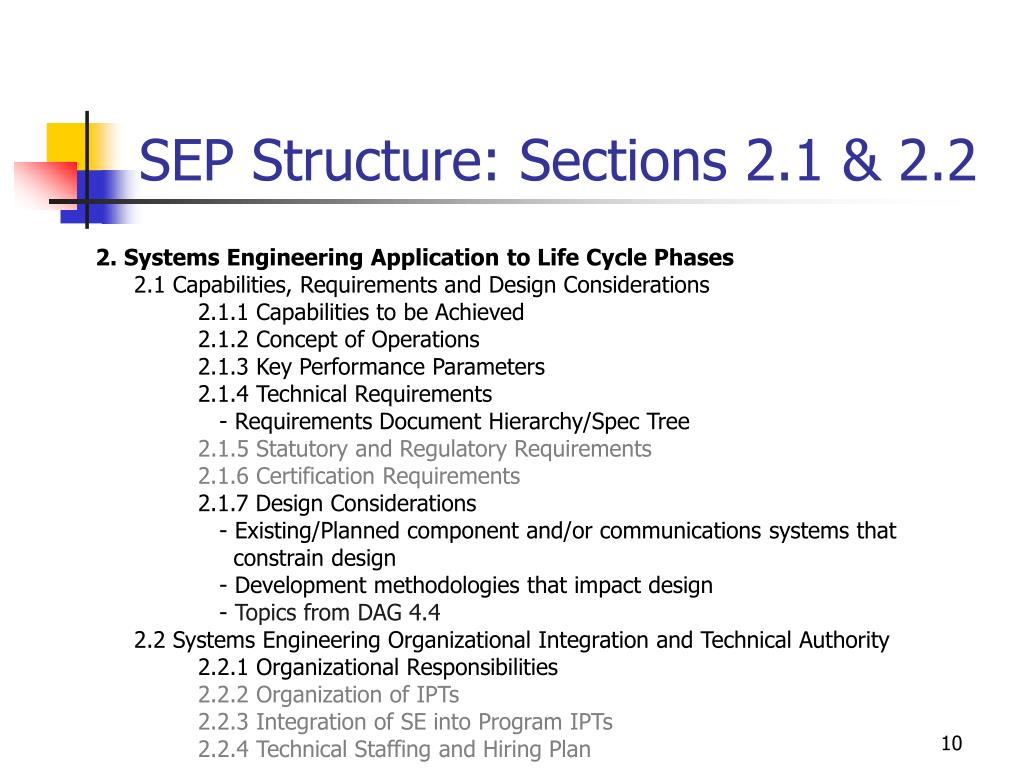
While SEP content must be tailored to each project’s unique circumstances, certain core sections appear in virtually every Systems Engineering Plan. These sections align with the process areas defined in governing standards—including ISO/IEC/IEEE 15288:2023 (System Life Cycle Processes) and EIA/IS 632—and address the fundamental questions any systems engineering effort must answer.
Technical Planning Overview
This section establishes the overall approach for applying systems engineering processes to your project. It defines the technical lifecycle you will follow, identifies key milestones and phase gates, and specifies how systems engineering activities integrate with broader project management functions. The technical planning section should articulate your approach to the technical review cycle and describe how engineering specialties will be integrated.
Requirements Management Approach
Effective requirements management is the foundation of successful system development. Your SEP should describe how requirements will be identified, documented, traced, and managed throughout the project. This includes the tools and methods you will use, the hierarchy of requirements from stakeholder needs through system requirements to component specifications, and your approach for handling requirements changes.
Risk Management Strategy
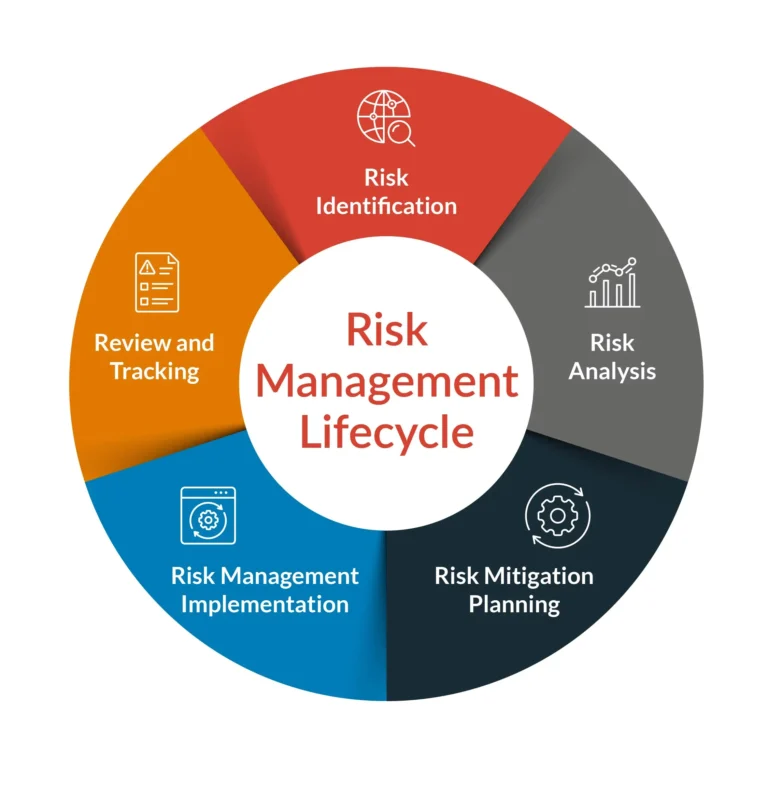
Technical risk management requires dedicated planning that extends beyond general project risk registers. Your SEP should define how technical risks will be identified, analyzed, prioritized, and monitored. Include your risk threshold definitions, the cadence of risk reviews, and the escalation paths for risks that exceed acceptable thresholds.
Configuration Management Plan
Configuration management ensures that changes to the system are controlled and that the current approved configuration is always known. Describe your approach to configuration identification, change control, configuration status accounting, and configuration audits. For complex systems, address how you will maintain traceability between requirements, designs, implementations, and test artifacts.
Verification and Validation Strategy
Your SEP must define how you will demonstrate that the system meets its requirements (verification) and that it fulfills its intended purpose for stakeholders (validation). This includes the types of tests you will conduct, the environment in which testing will occur, and the criteria for determining that each verification and validation activity has achieved its objectives.
Interface Management
Interface management is frequently underestimated but critically important, especially for systems that must integrate with existing infrastructure or other system elements. Define your approach for identifying, documenting, controlling, and verifying internal and external interfaces throughout the system lifecycle.
Technical Assessment Methods
Describe how you will assess technical progress and readiness throughout the project. This includes your approach to technical performance measurement, the metrics you will track, and the methods for evaluating system maturity at each phase gate.
Specialty Engineering Integration
Most systems require contributions from engineering specialties such as reliability, maintainability, safety, cybersecurity, human factors, and logistics. Your SEP should identify which specialties are relevant to your project and describe how their activities will be integrated with core systems engineering processes.
The depth and formality of each section must scale appropriately with project complexity. A small commercial project might address each section in a few paragraphs, while a major defense acquisition program may require detailed subsections with specific deliverables, decision criteria, and success metrics.
SEP vs. Project Management Plan: Understanding the Distinction
Organizations frequently struggle to delineate the boundary between the Systems Engineering Plan and the Project Management Plan. This confusion leads to either significant overlap or critical gaps in planning coverage. Understanding the fundamental distinction between these documents is essential for effective project execution.
The SEP focuses exclusively on technical achievement and the engineering processes that produce it. It answers questions such as: What technical approaches will we use? How will we manage technical risk? What technical artifacts will we produce? How will we verify that the system meets requirements? The SEP is fundamentally about the what and the how of engineering work.
The Project Management Plan, in contrast, addresses schedule, cost, and resource management. It defines when work will occur, what budget supports it, who will perform it, and how project performance will be measured against contractual and business objectives.
Despite these distinct focuses, the SEP and PMP must align at critical integration points. Schedule milestones in the PMP must correspond with technical reviews and deliverables defined in the SEP. Risk registers should reference both project management risks and technical risks, with clear ownership for each category. Configuration control boards may address both technical and programmatic changes, requiring coordinated processes. Technical assessments in the SEP should inform project decisions documented in the PMP.
A practical approach to maintaining alignment is to include explicit cross-references between documents and to review both plans together at major phase gates. When a change is proposed to either document, the reviewer should assess implications for the other and make corresponding updates as needed. Some organizations create a shared project lifecycle view that maps both technical and programmatic milestones, providing a single reference point for integrated planning.
Tailoring Your SEP: Small Projects vs. Large-Scale Programs
Perhaps the most critical skill in SEP development is appropriate tailoring. An over-prescriptive SEP for a small project creates unnecessary bureaucracy that teams will inevitably ignore, defeating the purpose of planning. An under-specified SEP for a complex program leaves critical requirements undefined and creates misalignment among stakeholders. Expert practitioners develop judgment about when to elaborate and when to simplify.
Tailoring Factors for Systems Engineering Documents
Several factors should drive your tailoring approach. Contract type may influence SEP requirements—cost-plus contracts frequently include detailed earned value integration requirements, while fixed-price contracts may allow more flexibility but still demand rigor for technical success. Organizational maturity matters as well; organizations with established systems engineering practices may rely on standard processes and require less SEP elaboration, while organizations building capability may benefit from more explicit documentation.
Stakeholder requirements often define minimum SEP content. Government programs typically have regulatory drivers that mandate specific sections and detail levels. Commercial efforts generally have more latitude but should consider what stakeholders such as major customers, investors, or partners might expect.
Project complexity encompasses multiple dimensions: technical complexity of the system being developed, the number of external interfaces and dependencies, the novelty of technologies being employed, and the stringency of performance requirements. More complex projects generally require more elaborate SEP coverage.
Tailoring Decision Matrix for SEP Templates
Use this framework to determine appropriate SEP depth for each section:
- Small Simple Projects: Use templates with core sections only. Each section may be one to two pages. Focus on what is essential for technical success and regulatory compliance. Rely on organizational standard processes where they exist.
- Medium Complexity Projects: Expand core sections with project-specific detail. Add sections as needed based on stakeholder requirements. Include explicit integration points with the PMP. Maintain concise but complete coverage of all major process areas.
- Large-Scale Programs: Develop comprehensive SEPs with detailed subsections. Include specific deliverables, decision criteria, and success metrics for each process area. Address all mandatory content required by governing standards. Provide extensive appendices for detailed procedures where appropriate.
Regardless of project size, certain elements should always be present: a clear statement of technical objectives, an approach for managing requirements, a defined risk management strategy, and a commitment to regular SEP updates. These elements form the foundation that scales appropriately whether you are developing a single-component product or a complex multi-system architecture.
The Living Document Principle: Keeping Your SEP Relevant
The most important distinguishing characteristic of an effective SEP is that it remains a living document throughout the project lifecycle. An SEP created during proposal phase and never updated becomes increasingly irrelevant as the project evolves. An SEP that is actively maintained becomes an invaluable reference that guides decision-making and ensures continued alignment among stakeholders.
Structuring Your SEP for Adaptability
Design your SEP with modularity in mind. Separate stable content that changes infrequently from dynamic content that requires regular updates. For example, your verification approach for a particular requirement may be stable, while your risk register entries and technical performance measure tracking require continuous updating. By structuring these differently, you make the update process more manageable and reduce the likelihood that important changes are overlooked.
Version control practices are essential. Your SEP should be maintained under configuration management with clear version identification. Define the conditions under which a new version will be issued and ensure that stakeholders always have access to the current approved version. For large programs, consider whether the SEP should be a single document or a collection of controlled documents with explicit relationships.
Establishing Update Triggers for Technical Planning
Define specific conditions that will initiate SEP updates. Common triggers include scope changes that affect technical approach or requirements, risk threshold breaches that require new mitigation strategies, phase transitions that change technical emphasis or review requirements, stakeholder changes that affect technical objectives or constraints, and significant schedule changes that alter milestone timing.
Proactively schedule SEP reviews at regular intervals rather than waiting for triggers to occur. Some programs establish quarterly reviews as a baseline cadence, while others may use monthly or semi-annual schedules depending on project pace. Phase-gate reviews and event-driven reviews triggered by significant project changes together ensure that your SEP remains current. Each review should assess whether the documented approach still reflects actual planned practice and whether the planned practice still represents the best path to technical success.
Integrating SEP Updates into Project Cadence
The biggest obstacle to maintaining an updated SEP is treating it as an independent activity. Instead, integrate SEP updates into your normal project management and engineering processes. Every risk review should assess whether risk content in the SEP is current. Every configuration control board meeting should consider SEP implications of approved changes. Every milestone review should include an assessment of SEP currency as part of readiness evaluation.
Assign explicit responsibility for SEP maintenance. In large organizations, this may be a dedicated systems engineering function. In smaller teams, it might be a shared responsibility with regular checkpoints. Regardless of organizational structure, someone must own the SEP and be accountable for its currency.
Key Milestones and Review Cycles for SEP Execution
SEP execution does not occur in isolation—it integrates with the broader systems engineering review cycle that gates technical progress throughout the project lifecycle. Understanding how SEP activities support and are supported by these milestones is essential for effective planning.
System Requirements Review (SRR)
The SRR validates that stakeholder needs and requirements are adequately defined and understood. Your SEP should plan for the artifacts and analyses that will be available to support this review. The SEP itself should be sufficiently mature to demonstrate that your approach for managing requirements is defined and that initial risk identification has occurred. Following the SRR, update your SEP to reflect any changes to requirements scope or approach that resulted from the review.
Preliminary Design Review (PDR)
PDR validates that the system architecture and design approach can satisfy requirements. Your SEP should address how architecture decisions will be documented, how interface definitions will be managed, and how preliminary designs will be verified against requirements. Prior to PDR, your SEP should be updated to reflect the selected architecture, updated risk assessment based on design activities, and preliminary verification planning.
Critical Design Review (CDR)
CDR validates that the detailed design is mature enough to proceed to fabrication and that remaining technical risks are manageable. Your SEP should plan for detailed design verification, configuration item definitions, and integration testing approaches. Updated SEP content prior to CDR should reflect detailed designs, final interface definitions, updated risk assessments, and refined verification and validation plans.
Test Readiness Review (TRR)
TRR validates that the system is ready to enter formal testing. Your SEP planning should ensure that verification procedures are documented, test environments are defined, test article configurations are controlled, and success criteria are established. The SEP should address how test results will be evaluated and how anomalies will be managed.
System Acceptance Review
The final milestone validates that the delivered system meets all requirements and is ready for operational use. Your SEP should plan for final verification documentation, user manual validation, training material verification, and logistics support confirmation. The SEP should address how closeout activities will be documented and how lessons learned will be captured.
Planning SEP Development Across the Lifecycle
Begin SEP development during concept phase or pre-solicitation when basic technical approaches are being defined. Refine the SEP through proposal development, ensuring that planned approaches align with solicitation requirements. Finalize the core SEP early in program execution, typically before or during initial technical planning. Plan updates at each phase gate, with the depth of update scaling to the magnitude of changes since the previous version.
Technical Performance Measures and Modern SEP Approaches
Modern systems engineering practice offers capabilities that can enhance SEP effectiveness when properly integrated. Technical Performance Measures and Model-Based Systems Engineering represent valuable additions to traditional SEP approaches.
Technical Performance Measures (TPMs)
TPMs provide objective indicators of technical progress and system capability development. A TPM has three essential components: the metric itself (what is being measured), the threshold (the minimum acceptable value), and the objective (the desired value). Your SEP should identify the TPMs relevant to your project, define each measure’s threshold and objective values, establish the measurement methodology and data sources, and specify the reporting cadence and format.
Effective TPM tracking requires integration with your verification and risk management activities. Measurement results should feed into technical assessments and risk updates. When a TPM approaches or exceeds threshold, your risk management process should be activated to assess implications and develop responses.
Model-Based Systems Engineering Integration
Model-Based Systems Engineering (MBSE) represents a fundamental shift from document-centric to model-centric systems engineering. Rather than expressing requirements, architecture, and design in separate documents, MBSE maintains these elements as interconnected model elements that can be analyzed, simulated, and traced programmatically.
Your SEP should address how MBSE artifacts will be created, maintained, and used throughout the project. Define the modeling tools and languages you will employ (such as SysML as referenced in ISO/IEC/IEEE 42010), the model architecture and structure, how model elements will be linked to requirements and verification artifacts, and how model-based analyses will support decision-making.
MBSE should be positioned as an enabler rather than an additional burden. When properly implemented, MBSE may reduce redundancy, improve traceability, enable earlier detection of inconsistencies, and facilitate exploration of design alternatives. Your SEP should describe how MBSE benefits will be realized while acknowledging the initial investment required to establish modeling capability.
Integrate MBSE artifacts with your document deliverables. While models may provide the authoritative technical representation, documents often serve as contractual deliverables or stakeholder communication vehicles. Define clear relationships between model elements and document content so that changes propagate appropriately and traceability is maintained regardless of where content is viewed or modified.
Agile and Hybrid Approaches in Systems Engineering
Traditional SEP approaches originated in waterfall and staged delivery contexts, but many organizations now employ agile, iterative, or hybrid development approaches. The SEP should be tailored to reflect your chosen lifecycle model while maintaining the rigor that governing standards require.
For programs using agile methods, the SEP may emphasize timeboxed planning, incremental delivery, and continuous stakeholder engagement. The plan should define how systems engineering activities integrate with sprint cadences, how requirements are managed in backlogs, and how technical reviews align with iteration boundaries. For hybrid approaches combining waterfall and agile elements, the SEP should clearly delineate which aspects follow traditional phase structures and which operate under iterative frameworks.
Common Pitfalls and How to Avoid Them
Through extensive practice across diverse project types, certain failure patterns emerge repeatedly in SEP development and execution. Understanding these pitfalls and their remedies will help you avoid the most costly mistakes.
Over-Specification for Project Scope
Creating an excessively detailed SEP for a small or simple project is perhaps the most common mistake. Teams end up with a document that cannot realistically be maintained, leading to either ignored planning or significant schedule impact from update activities. The remedy is disciplined tailoring—apply your sizing matrix rigorously and resist pressure to add detail that does not provide commensurate value for your project context.
Under-Specification Leading to Missed Requirements
Conversely, insufficient SEP detail for complex projects leaves critical processes undefined and creates misalignment among team members. This often occurs when experienced engineers assume that standard practices are understood without explicit documentation. The remedy is comprehensive coverage of all process areas, even if some sections are concise for lower-risk activities. Document your approach and assumptions rather than assuming common understanding.
Disconnect Between SEP and Actual Execution
An SEP that does not reflect actual practice is worse than no SEP at all—it creates false confidence that planning has occurred when it has not. This disconnect typically results from inadequate review during SEP development, overly optimistic planning that teams do not expect to follow, or failure to update the SEP when project circumstances change. The remedy is treating SEP credibility as a priority—only commit to planned activities that you genuinely intend to perform, and immediately update the SEP when intentions change.
Treating the SEP as a One-Time Deliverable
Many organizations create an SEP during proposal phase, get it approved by the customer, and then never touch it again. This approach guarantees that the SEP becomes increasingly irrelevant as the project evolves. The remedy is institutionalizing the living document principle—schedule regular SEP reviews, assign update responsibility, and integrate SEP maintenance into project cadence.
Inadequate Stakeholder Alignment
SEP content that is not aligned with stakeholder expectations creates rework, disputes, and potential compliance issues. This often occurs when SEP development occurs in isolation from customer representatives, when contracting requirements change without SEP updates, or when internal stakeholders are not consulted on technical approaches that affect their work. The remedy is proactive stakeholder engagement—ensure that relevant stakeholders review and approve SEP content, particularly at major version releases.
Tools and Templates to Accelerate SEP Development
While tool choice should follow process definition rather than drive it, appropriate resources can significantly accelerate SEP development and improve consistency across projects. Several authoritative sources provide valuable starting points.
The International Council on Systems Engineering (INCOSE) publishes systems engineering handbooks and maintains a library of templates contributed by practitioners. These resources reflect accumulated industry experience and provide solid foundations for project-specific tailoring.
The NASA Systems Engineering Handbook (NASA/SP-2007-6105, Rev 1 or current edition) offers particularly practical guidance for SEP development. It provides detailed explanations of each process area, examples of how NASA programs have implemented requirements, and insights into tailoring approaches for different program types.
The National Defense Industrial Association (NDIA) Systems Engineering Division publishes guidance documents that address defense-specific SEP requirements. These resources are particularly valuable for programs subject to DoD acquisition regulations and defense acquisition framework requirements.
For requirements management, established tools such as IBM Engineering Requirements Management DOORS and Jama Connect provide platforms for requirements traceability and change management. These tools can maintain the authoritative requirements baseline that the SEP references.
Configuration management tools support SEP maintenance by providing version control, change tracking, and audit capabilities. Options range from enterprise tools like IBM Engineering Lifecycle Management to modern Git-based workflows that may be more appropriate for agile development contexts.
When selecting tools, prioritize those that support your process over those with the most features. A simpler tool that your team will actually use effectively provides more value than a comprehensive platform that becomes a burden to maintain. Integrate tools with your SEP workflows rather than creating parallel processes.
References and Further Reading
The following standards and publications provide authoritative guidance on SEP development and systems engineering processes:
- ISO/IEC/IEEE 15288:2023 — Systems and Software Engineering: System Life Cycle Processes
- IEEE Std 15288-2015 — IEEE Standard for System and Software Engineering (previous edition)
- EIA/IS 632 — Processes for Engineering a System
- ISO/IEC/IEEE 42010:2022 — Systems and Software Engineering: Architecture Description
- INCOSE Systems Engineering Handbook, current edition — Published by John Wiley & Sons for INCOSE
- NASA Systems Engineering Handbook, NASA/SP-2007-6105 Rev 1 or current edition
- NDIA Systems Engineering Division Publications — National Defense Industrial Association
Frequently Asked Questions
What is a Systems Engineering Plan (SEP) and why is it required?
A SEP is a project-specific document that defines how systems engineering processes will be applied to achieve technical objectives. It is required by standards such as EIA/IS 632 for defense programs and referenced in ISO/IEC/IEEE 15288. Beyond compliance, it serves as a roadmap for technical planning, risk management, and stakeholder alignment throughout the project lifecycle.
What are the essential sections of a SEP per EIA/IS 632 and IEEE Std 15288?
Core sections include technical planning overview, requirements management approach, risk management strategy, configuration management plan, verification and validation strategy, interface management, technical assessment methods, and specialty engineering integration. The depth of each section should be tailored to project complexity and contractual requirements.
How does a SEP differ from a Project Management Plan (PMP)?
While both are contractual documents, the SEP focuses on technical processes and outcomes—how systems engineering will be performed to meet stakeholder needs. The PMP addresses schedule, cost, resources, and procurement. The SEP defines what technical work occurs and how; the PMP defines when, how much, and by whom. They must align at milestones and through shared risk registers.
When should a SEP be developed in the project lifecycle?
The SEP should be initiated during concept phase or pre-solicitation, refined through proposal development, and finalized early in the program. It is a living document requiring updates at major phase gates, scope changes, and risk threshold breaches. Beginning SEP development too late risks misalignment between planned and actual engineering approaches.
What are the key milestones and reviews associated with SEP execution?
SEP execution aligns with systems engineering milestone reviews: System Requirements Review (SRR), Preliminary Design Review (PDR), Critical Design Review (CDR), Test Readiness Review (TRR), and System Acceptance Review. SEP artifacts and activities should be planned to support each review, with updates occurring between phases.
How do you tailor a SEP for small projects vs. large-scale programs?
Tailoring considers project complexity, contract type, organizational maturity, and stakeholder requirements. Small projects may use simplified templates with core sections only, while large defense and acquisition programs require comprehensive coverage per EIA/IS 632. Use a sizing matrix based on lifecycle phases, technical complexity, and budget magnitude to determine appropriate SEP depth.
What are common pitfalls in SEP development and execution?
Primary pitfalls include over-specification for project scope, under-specification leading to missed requirements, disconnect between SEP content and actual execution, treating it as a one-time deliverable, and inadequate stakeholder alignment. Mitigation requires treating the SEP as a living document with defined update triggers and regular review cycles.
Conclusion
The Systems Engineering Plan is most valuable when it functions as a living document—a dynamic planning artifact that guides engineering practice throughout the project lifecycle rather than serving as a static compliance deliverable filed away after creation. By embracing this principle, you transform the SEP from administrative burden into genuine value generator.
Key takeaways for SEP success include appropriate tailoring based on project scope and complexity rather than one-size-fits-all approaches, integration of SEP updates into normal project cadence so maintenance occurs naturally rather than as a separate effort, alignment with the Project Management Plan and broader program documentation to ensure coherent coverage, and avoidance of both over-specification that creates burden and under-specification that creates gaps.
Looking forward, the evolution of Model-Based Systems Engineering, digital engineering initiatives, and agile approaches is reshaping SEP practices. The fundamental principles remain constant—plan deliberately, tailor appropriately, update continuously—but the artifacts and tools supporting those principles continue to advance. Organizations that treat their SEP as a living document position themselves to adopt these innovations while maintaining the rigor that ensures technical success.
Approach your next Systems Engineering Plan as an investment in project success rather than a compliance exercise. The discipline of explicit planning, thoughtfully tailored to your project context and actively maintained throughout execution, yields returns far exceeding the effort required to create and update it. Your SEP becomes the reference point that keeps your team aligned, your stakeholders informed, and your technical approach disciplined—regardless of how your project scope evolves.