In this guide
Systems Engineering Plan: Tools, Templates, and Real-World Examples
A Systems Engineering Plan (SEP) is the foundational document that transforms organizational standards into executable project guidance. Whether you are working on a NASA mission, a defense acquisition program, or a commercial product development effort, the SEP serves as the master blueprint that aligns technical rigor with practical execution.
In this comprehensive guide, you will find a modular template approach aligned with INCOSE and ISO/IEC/IEEE 15288, tool recommendations organized by use case, and a real-world example demonstrating how theoretical requirements translate into project documentation. The goal is not to create perfect documentation that delays execution, but to build a practical SEP that evolves with your project while satisfying contractual and regulatory requirements.
What is a Systems Engineering Plan and Why Does It Matter?
The Systems Engineering Plan is the master planning document that describes how systems engineering activities will be conducted on a specific program or project. It establishes the technical management approach, defines key milestones, identifies resources, and maps stakeholder requirements to technical solutions. The SEP is not merely a bureaucratic requirement; it is the strategic document that guides every engineering decision from concept through deployment and sustainment.
Many practitioners confuse the SEP with related documents. The Systems Engineering Management Plan (SEMP) historically refers to the management approach for systems engineering activities, while the SEP is the formal planning document that encompasses both technical planning and management oversight for government programs. The specific terminology and requirements vary by agency and acquisition category—always verify requirements with your program office or contracting officer.
For aerospace programs, NASA-STD-7123B establishes requirements for Systems Engineering Plans on NASA missions. Defense programs should consult current Defense Acquisition University (DAU) guidance and program office requirements, as legacy standards have been updated or withdrawn in recent years.
The frustration many practitioners experience is not understanding what a SEP should contain—they grasp the theory—but rather how to efficiently build one that actually guides execution without becoming a static document that no one reads. This guide addresses that gap directly.
Understanding SEP Standards: INCOSE, ISO 15288, and Government Requirements
Before constructing your SEP, you must understand the standards landscape that governs its content. ISO/IEC/IEEE 15288:2023 defines the system life cycle processes that underpin all modern systems engineering practice. These include agreement processes, organizational project-enabling processes, technical management processes, and technical processes. Your SEP documents how your project will implement these processes.
The INCOSE Systems Engineering Handbook (currently in version 4 with v5 in development) provides practitioner guidance on applying systems engineering principles and maps directly to ISO 15288 processes. The ISO/IEC/IEEE 12207 standard addresses software life cycle processes and is often referenced alongside 15288 for software-intensive systems.
Compliance Checklist for Standards Alignment
- ISO/IEC/IEEE 15288 Alignment: Map your SEP sections to the relevant system life cycle processes (Agreement, Organizational Project-Enabling, Technical Management, and Technical Processes).
- INCOSE Handbook References: Reference applicable sections of the INCOSE Systems Engineering Handbook v4 for practitioner guidance.
- NASA-STD-7123B Requirements: If working NASA contracts, ensure SEP addresses NASA-specific technical rigor requirements and review gate definitions.
- DoD Programs: Align with current DAU guidance, program office requirements, and applicable acquisition regulations. Note that MIL-STD-499 was withdrawn in 2021; consult current directives.
- Customer-Specific Tailoring: Obtain early agreement from your customer or program office on which sections require full treatment versus streamlined approaches.
Understanding how these frameworks align helps you create a SEP that satisfies multiple stakeholders simultaneously. A well-structured SEP written against ISO 15288 terminology will satisfy international commercial requirements while also addressing NASA and DoD expectations when appropriately tailored.
The 10 Essential Sections of a Compliant SEP
While specific requirements vary by standard and contract, ten content areas form the core of any Systems Engineering Plan. Each section serves a distinct purpose and requires specific attention to avoid common pitfalls.

1. Project Overview
Purpose: Provide context for the entire document and establish the scope of systems engineering activities.
Required Content: Program or project name, classification, program office, contractor information, document purpose, reference documents, and definitions. Include a high-level description of the system being developed and its mission or business purpose.
Common Pitfalls: Failing to clearly define scope boundaries leads to scope creep. Not establishing document purpose creates ambiguity about audience and usage.
2. Stakeholder Requirements
Purpose: Capture who needs what from the system and the constraints that will shape the solution.
Required Content: Stakeholder identification, stakeholder requirement definitions, regulatory and environmental constraints, interface constraints, and assumptions.
Common Pitfalls: Missing key stakeholders leads to requirements gaps. Treating constraints as negotiable when they are fixed creates downstream problems.
3. System Requirements
Purpose: Define what the system must do and the properties it must exhibit.
Required Content: Functional requirements, performance requirements, interface requirements, safety requirements, security requirements, and reliability requirements. Define the requirements development and management approach.
Common Pitfalls: Writing requirements that prescribe solutions rather than state needs. Incomplete interface definitions create integration problems later.
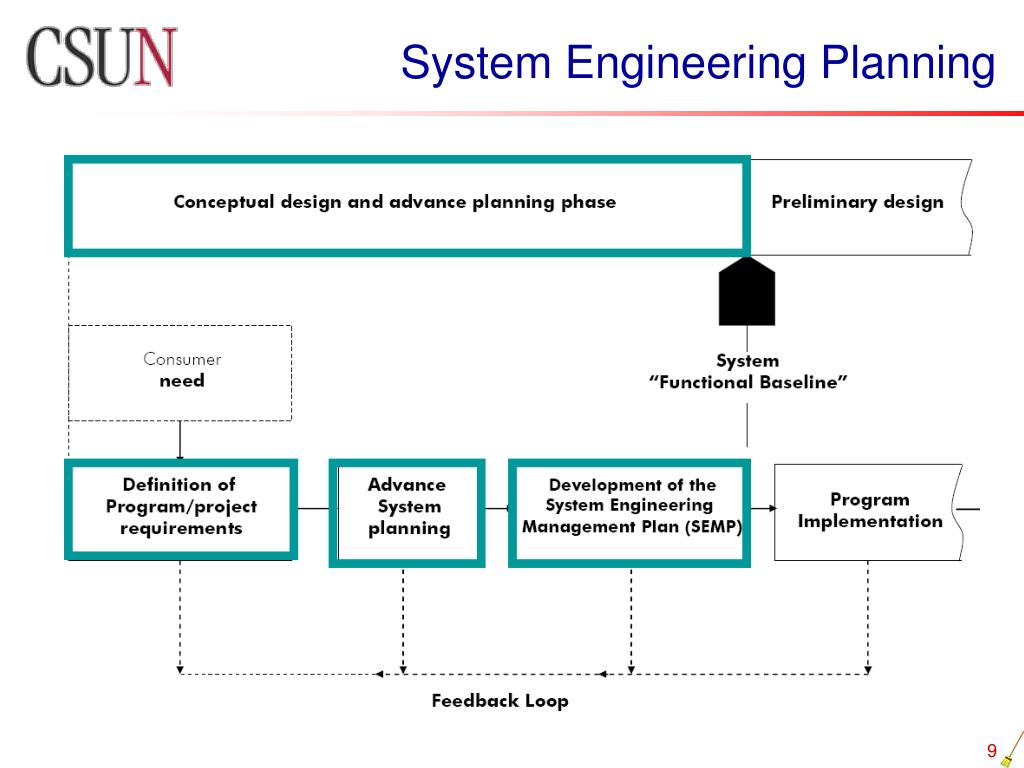
4. Technical Baseline
Purpose: Establish the agreed-upon definition of the system at key milestones.
Required Content: Definition of technical baselines (conceptual, preliminary, functional, allocated, product), baseline management approach, and configuration identification.
Common Pitfalls: Allowing baselines to drift without formal change control. Treating baselines as checkpoints rather than living agreements.
5. Technical Management
Purpose: Define how technical activities will be planned, executed, and monitored.
Required Content: Technical planning approach, schedule and milestones, resource allocation, technical review and assessment approach, and decision management.
Common Pitfalls: Disconnecting technical schedules from project schedules. Overly optimistic milestone planning that does not account for rework or integration challenges.
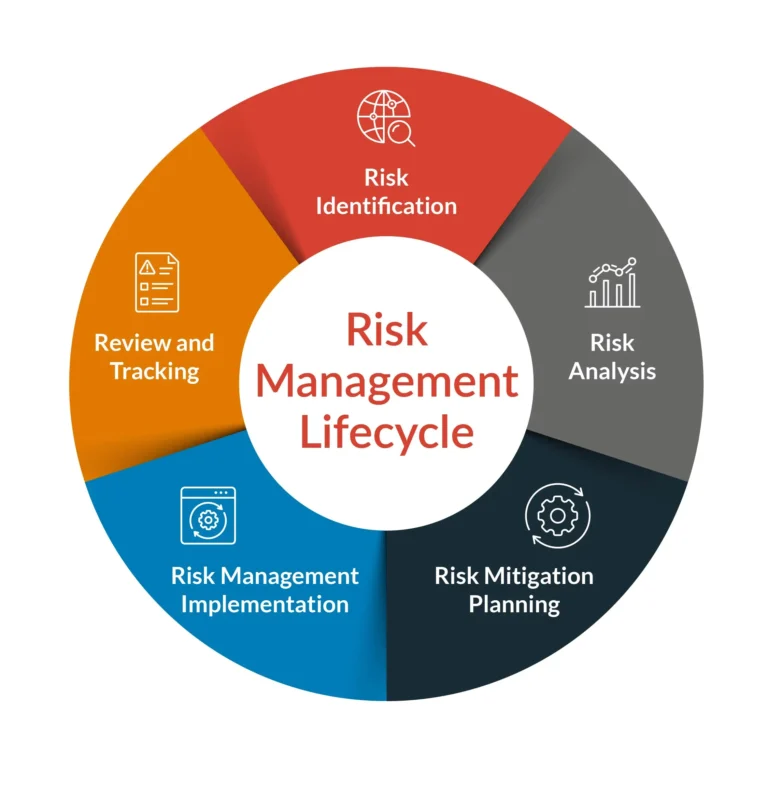
6. Risk Management
Purpose: Establish the approach for identifying, analyzing, and mitigating technical risks.
Required Content: Risk management strategy, risk identification methods, risk analysis and prioritization approach, risk mitigation strategies, and risk monitoring plan.
Common Pitfalls: Treating risk management as a checklist rather than a continuous activity. Only identifying technical risks and missing programmatic and external risks.
7. Configuration Management
Purpose: Define how system definition information will be controlled and maintained.
Required Content: CM organization and responsibilities, configuration identification scheme, configuration change control process, configuration status accounting, and configuration audits.
Common Pitfalls: Overly burdensome CM processes for small projects. Inadequate change control leading to configuration chaos.
8. Data Management
Purpose: Establish how engineering data will be created, stored, accessed, and maintained.
Required Content: Data management approach, data rights and delivery requirements, data access and distribution, data archiving, and model-based systems engineering data handling if applicable.
Common Pitfalls: Not addressing data rights early in commercial or international contexts. Failing to plan for data continuity if key personnel leave.
9. Verification and Validation
Purpose: Define how you will prove the system meets requirements and fulfills its intended purpose.
Required Content: Verification approach (test, analysis, inspection, demonstration), validation approach, verification planning by requirement type, test article acquisition approach, and test facility requirements.
Common Pitfalls: Planning verification without requirements traceability. Insufficient early planning for test infrastructure and facilities.
10. Metrics and Success Criteria
Purpose: Define how you will measure technical progress and system quality.
Required Content: Technical performance measures, program health indicators, quality metrics, earned value metrics if applicable, and thresholds for acceptable performance.
Common Pitfalls: Measuring activity rather than outcomes. Collecting metrics that nobody uses for decision-making.
SEP Structure by Project Scale: Tailoring for Small, Medium, and Large Programs
A common failure in SEP development is applying inappropriate rigor for the project scale. Large defense programs with thousands of requirements and decade-long timelines require comprehensive treatment of every section. Small commercial software projects may combine multiple sections and focus only on value-adding content. Understanding where your project falls on the spectrum prevents both over-documentation and under-documentation.
Small-Scale Projects (Informal Teams, Short Duration)
Projects with fewer than ten team members, timelines under twelve months, and limited regulatory requirements fall into this category. Combine sections freely—the Project Overview, Technical Management, and Risk Management often work well merged into a single Technical Planning section. Use concise narrative paragraphs rather than detailed tables. Focus on stakeholder alignment, key milestones, and top risks rather than comprehensive process documentation.
Medium-Scale Projects (Formal Teams, Defined Contracts)
Projects with twenty to fifty engineers, multi-year timelines, and customer delivery requirements need more structure. Maintain all ten sections but reduce depth where content is straightforward. Use rolling wave planning—detail the current phase thoroughly while keeping future phases at higher levels. Ensure requirements traceability exists but manage it through lightweight tools rather than enterprise-scale systems.
Large-Scale Programs (Enterprise Programs, Defense/Aerospace)
Programs with hundreds of engineers, complex subcontractor structures, and regulatory compliance requirements demand full SEP treatment. Each section requires detailed content, formal baselines, and rigorous change control. Plan for integrated product teams, formal reviews at major milestones, and enterprise tool deployment. These programs typically require dedicated systems engineering management resources.
Decision Criteria for Tailoring
When deciding how much detail to include in each section, consider contract requirements first—if your customer specifies content, that content must appear. Second, consider risk—sections addressing high-risk areas deserve more attention regardless of project size. Third, consider team experience—less experienced teams benefit from more prescriptive guidance. Fourth, consider program phase—early phases require more planning detail while later phases focus on execution tracking.
SEP Templates: Downloadable Structures and Customization Guidelines
A well-structured SEP template accelerates development while ensuring compliance. The following template structure aligns with NASA and defense acquisition requirements while remaining flexible enough for commercial applications.
Generic SEP Template Structure
- Executive Summary (1-2 pages): High-level overview for leadership and stakeholders who need the gist without detailed reading
- Document Control: Version history, approval signatures, distribution list
- Section 1: Project Overview: Scope, objectives, system description, governing standards
- Section 2: Stakeholder Requirements: Stakeholder registry, requirements constraints, interface constraints
- Section 3: System Requirements: Requirements development approach, traceability strategy
- Section 4: Technical Baseline: Baseline definitions, management approach
- Section 5: Technical Management: Planning approach, schedule, reviews, decision management
- Section 6: Risk Management: Strategy, identification, analysis, mitigation, monitoring
- Section 7: Configuration Management: Organization, identification, change control, status accounting
- Section 8: Data Management: Approach, rights, access, archiving
- Section 9: Verification and Validation: Methods by requirement type, test planning
- Section 10: Metrics and Success Criteria: TPMs, health indicators, reporting
- Appendix A: Glossary
- Appendix B: Acronym List
- Appendix C: Reference Documents
Domain-Specific Customization
For software-intensive systems, expand the Requirements section with agile sprint planning integration and continuous integration/continuous deployment considerations. For aerospace programs, add detailed verification matrices linking requirements to specific test events. For defense systems, incorporate cybersecurity requirements, countermeasure planning, and export control considerations. Commercial product development might reduce the CM and Data Management sections while expanding the risk and validation sections.
The key principle is that your template should be comprehensive enough to capture everything that matters while excluding content that adds no value to your specific context. Obtain early agreement from your customer on tailoring decisions to avoid rework.
Industry-Specific SEP Examples
Defense Programs: Defense SEPs typically emphasize configuration management, data rights, and cybersecurity requirements. The Defense Acquisition University offers guidance templates and courses on systems engineering planning for defense acquisition. These programs often require formal earned value management and periodic program status reviews.
Commercial Aerospace: Commercial aerospace SEPs balance FAA/EASA certification requirements with commercial schedule pressures. Focus areas include safety analysis, continued airworthiness planning, and supplier quality requirements.
Automotive: Automotive systems engineering plans address functional safety per ISO 26262, AUTOSAR integration, and supplier development requirements. SEPs in this domain often emphasize Model-Based Systems Engineering (MBSE) for complex vehicle electronics.
Medical Devices: Medical device SEPs incorporate FDA design control requirements, risk management per ISO 14971, and software lifecycle documentation per IEC 62304. Verification and validation sections receive expanded treatment.
Real-World SEP Example: NASA Mission Approach
Understanding how theoretical SEP sections translate to actual project documentation clarifies the practice. The following example, appropriately anonymized, demonstrates a NASA mission approach to SEP development.
Project Context
Consider a robotic science mission with a seven-year development timeline, a $500 million budget, and involvement from three government centers, two universities, and one industrial partner. The mission requires multiple technical reviews, international collaboration, and compliance with NASA mission standards.
Sample Section: Technical Management
“Section 5.0 Technical Management
5.1 Technical Planning Approach
The project will employ a phased approach aligned with NASA project lifecycle definitions. Phase A focuses on concept maturation through Preliminary Definition Review. Phase B progresses through detailed design culminating in Critical Design Review. Phase C conducts integration and testing through System Integration Review. Phase D completes launch, deployment, and commissioning through Operational Readiness Review.
5.2 Technical Schedule and Milestones
Key technical milestones include:
- Mission Definition Review (MDR): Month 8
- Preliminary Design Review (PDR): Month 18
- Critical Design Review (CDR): Month 30
- System Integration Review (SIR): Month 42
- Flight Readiness Review (FRR): Month 54
- Launch Readiness Review (LRR): Month 60
5.3 Technical Review Approach
All technical reviews will follow NASA technical review guidance. Independent Review Teams (IRT) will be constituted for each major review. Review criteria will be documented in Review Packet packages distributed 60 days prior to each review. Action items will be tracked in the project action tracking system with 30-day closure requirements.
Common Mistakes and Corrections
Before establishing a baseline, the project team made several corrections based on lessons learned from previous missions. Initially, the schedule showed CDR occurring only twelve months after PDR. Historical program data indicated that such compressed timelines often led to significant rework on comparable missions. The schedule was extended to eighteen months with explicit risk acknowledgment if acceleration proved possible. This adjustment allowed adequate time for design maturation, interface definition, and hardware development long-lead procurement.
Another correction involved the verification section. Early drafts planned verification primarily through analysis due to test budget constraints. Review feedback noted that for a mission with life-critical reliability requirements, analysis alone was insufficient for certain reliability and safety requirements. The verification approach was revised to include accelerated life testing and environmental stress screening for key components, requiring reallocation of budget from reserves.
These examples illustrate how SEP development is iterative. Initial drafts provide starting points; review and lessons learned refine the plan before it becomes the governing document. The NASA systems engineering handbook provides additional guidance on technical review approaches and documentation expectations.
Tools for SEP Development and Management
Effective SEP development and management requires tools suited to your organizational context, team size, and compliance requirements. The following comparison evaluates tools across several categories.
Requirements Management Tools
| Tool | Best For | Pros | Cons | Typical Cost |
|---|---|---|---|---|
| IBM Engineering DOORS | Large defense/aerospace programs requiring rigorous traceability | Industry standard, robust compliance features, excellent traceability, mature tool | Complex administration, dated user interface, expensive licensing | $200K+ annually for enterprise |
| JAMA Connect | Mid-size teams transitioning to modern platforms | Modern UI, cloud deployment, good traceability, agile integration | Limited offline capability, newer product with less maturity | $50-150K annually |
| ReqSync | Agile teams seeking lightweight requirements | Simple interface, Jira integration, affordable pricing | Limited compliance features, may not satisfy government programs | $20-50K annually |
| Polarion ALM | Industrial and automotive organizations | IEC 62304 and ISO 26262 support, integrated ALM, good traceability | Requires Siemens ecosystem, complex configuration | $50-100K annually |
Model-Based Systems Engineering (MBSE) Tools
Modern SEPs increasingly reference MBSE approaches and digital thread integration. Key tools include:
- Cameo Systems Modeler (by No Magic, now part of Dassault Systèmes): Excellent SysML support, government-friendly licensing, strong verification features
- MagicDraw: Comprehensive modeling capabilities, good for complex system architecture
- Enterprise Architect: Sparx Systems tool with SysML support, affordable pricing, good for smaller teams
- IBM Engineering Systems Design Rhapsody: Deep integration with IBM tool ecosystem, good for embedded systems
Collaboration Tools
| Tool | Best For | Pros | Cons | Typical Cost |
|---|---|---|---|---|
| Atlassian Confluence + Jira | Teams already using Atlassian ecosystem | Excellent documentation, workflow integration, familiar interface, active community | Requires manual traceability configuration, plugin complexity | $10-50K annually depending on users |
| Microsoft Teams + SharePoint | Enterprise organizations with Microsoft infrastructure | Deep Office integration, familiar tools, good collaboration | Limited systems engineering-specific features, SharePoint complexity | Part of M365 Enterprise licensing |
| GitHub/GitLab + Wiki | Software-focused teams with DevOps culture | Excellent version control, markdown documentation, CI/CD integration | Limited SE-specific features, requires workflow customization | $0-50K annually |
Life Cycle Management Tools
| Tool | Best For | Pros | Cons | Typical Cost |
|---|---|---|---|---|
| Siemens Teamcenter | Large enterprises with complex product data | Comprehensive PLM, excellent MBSE integration, enterprise scale | Significant implementation cost, complex administration | $500K+ implementation plus ongoing |
| PTC Windchill | Manufacturing-focused enterprises | Strong CAD integration, good PLM capabilities | Complex implementation, expensive licensing | $400K+ implementation plus ongoing |
Document-Centric Approaches
Many organizations still use Microsoft Word templates for SEP development. This approach offers simplicity and familiarity but requires discipline to maintain traceability and consistency. Word templates work well for small projects and proposals but become unwieldy for large programs requiring cross-document traceability. LaTeX offers better version control integration and consistent formatting for academic or research contexts.
AI and Automation Tools for SEP Development
Emerging tools are beginning to assist with SEP development:
- Documentation